Nayoro Sights: Snow, Stars and Mochi Rice
Supervised by Suzuking. (KARASU CHANNEL / Occult & horror reporting, 7 years)
Contents
Places to visit in this town (north to south)
Numbers follow the order in the article, from north to south. Select a pin to see its name. Positions are approximate.
- Mount Piyashiri (ピヤシリ山) A mountain 986.8 meters high on the border of Nayoro, Shimokawa and Omu. The northernmost raised bog in Japan lies near its summit.
- Nayoro Piyashiri Ski Resort and Jump Hill (名寄ピヤシリスキー場とシャンツェ) A municipal ski area at the western foot of Mount Piyashiri. Known for snow quality and severe cold, it also hosts a national jumping competition in winter.
- Nayoro Municipal Observatory and Sun Pillar Park (なよろ市立天文台とサンピラーパーク) A public observatory with a large 1.6-meter telescope, located in a park named after the winter phenomenon of the sun pillar.
- Nayoro City North Country Museum (名寄市北国博物館) A museum conveying life with snow and cold. The only Kimaroki snow-clearing train formation in Japan is preserved outdoors.
- Furen Bokodai Nature Park (ふうれん望湖台自然公園) A quiet park overlooking a lake, surrounded by birch woods. Set in the mountains of the former Furen Town, its calm is its charm.
Show basic information about this town (location, last checked, notes)
- Location
- Nayoro, Hokkaido, Japan
- Last checked
- 2026.10.06
- Please note
- Opening hours, prices and closing days change often, so we do not list them. Please check each facility's official site before you go.
What Kind of Town Is Nayoro?
Nayoro is a city in the Nayoro Basin in northern Hokkaido, and the central city of northern Kamikawa. Its urban area took shape on land between two rivers, a little upstream from where the Teshio River meets its tributary, the Nayoro River. It grew as a gathering place for farm products and is now also known as a leading producer of glutinous rice (mochigome).
The name is said to come from an Ainu word for the place where the Nayoro River and the Teshio River meet. Winters are severe, and the city is designated a special heavy-snowfall area. In 2006 it merged with neighboring Furen Town to become the large municipality it is today. In this article we introduce the sights in order of descending latitude, that is, from north to south.
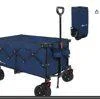
A folding utility cart for hauling heavy, bulky gear — a generator, large lights, a tripod, a full camera kit — in one trip from the parking lot to a ruin or mountain haunted spot. Its brake keeps it stable on slopes, and a 100kg load capacity lets it carry several people's gear at once.
MOON LENCE Folding Utility Cart with Brake, Large Capacity 156L, Wide Big Tires, 100kg Load Capacity
We may earn a referral fee on purchases made through these links.
1. Mount Piyashiri (ピヤシリ山)
Mount Piyashiri is a mountain 986.8 meters high on the border of Nayoro, Shimokawa and Omu. It belongs to the Kitami Mountains, its shape is gentle, and a forest road and trail extend from the southwest, so the summit is said to be easy to reach. One theory holds that the name comes from an Ainu word meaning “mountain of stone.” The position given for the sight is the summit point.
Near the summit lies Piyashiri Wetland, which together with Matsuyama Wetland about 4 kilometers to the north is regarded as the northernmost raised bog in Japan. A raised bog is a rain-fed wetland formed under a cool climate as sphagnum moss and other plants pile up, and precious plant communities can be seen there.
Wetland plants take a long time to recover once trampled. If you climb, please stay on the trail and boardwalks and take care not to damage nature. The weather changes quickly, so adequate equipment and planning are necessary.
2. Nayoro Piyashiri Ski Resort and Jump Hill (名寄ピヤシリスキー場とシャンツェ)
Nayoro Piyashiri Ski Resort lies on the south slope of Kudoyama, at the western foot of Mount Piyashiri. It is a publicly owned, privately operated ski area, with the city owning the facilities and a development corporation running them, and it is known for good snow quality in one of Hokkaido’s coldest places, advertising itself as having “Japan’s best snow quality.” Next to it is the Piyashiri Jump Hill, with a hill size of 100 meters.
Every December this jump hill hosts the Nayoro Piyashiri Jumping Competition, the opening round of the domestic season. Development of the ski area began in the 1960s, and there is a record that in 1970 the forest road was improved with support from a Ground Self-Defense Force engineering unit. The history of developing the mountain for tourism has become, as it is, the town’s winter face.
Winter mountains are cold and the weather turns suddenly, so please take full care with cold protection and safety. Check the operating season and conditions in the official guide before you go.
3. Nayoro Municipal Observatory and Sun Pillar Park (なよろ市立天文台とサンピラーパーク)
The Nayoro Municipal Observatory is a public observatory on Hoshimi Hill in Hokkaido’s Sun Pillar Park. Its nickname is “Kita Subaru.” Its predecessor was a private observatory opened by Hideo Kihara, a high-school teacher, and it was donated to Nayoro City in 1992. From 2005 Hokkaido University and the city signed a research agreement, and it opened under its present name in 2010.
Here stands the 1.6-meter Pirka Telescope, installed by Hokkaido University. It is said to be the second largest telescope at a public observatory in Japan, and its main purpose is observing planets. When it is not used for research, tours and viewing are possible. The “sun pillar” in the park’s name is a phenomenon in which ice crystals reflect sunlight so that a vertical column of light seems to rise from the sun, and it can be seen in the severe cold of winter.
A sunflower field for tourism has also been moved to this park. Nayoro’s sunflowers began in 1987 with the cooperation of farmers in the Chiebun district, and later oil pressing began as well. Night stars, winter pillars of light and summer flowers all come together on the same land. Check visiting dates and times in the official guide.
4. Nayoro City North Country Museum (名寄市北国博物館)
The Nayoro City North Country Museum is a municipal museum that opened in 1996. Its permanent exhibits introduce why Nayoro has so much snow and cold, nature and human life after the Ice Age, Ainu nature and culture seen from the winter forest, and the history of homes and daily life that have faced snow and cold. The Suzuishi and Takashi Kozo, designated national natural monuments, are also displayed, and there is a hometown corner for Nayoiwa, a celebrated sumo wrestler.
Outdoors, the “Kimaroki” formation of steam-locomotive snow-clearing trains is preserved. It is the only such formation in Japan, coupling a locomotive, a Macleay snowplow car, a rotary car and a locomotive in that order. In 1971 Nayoro City petitioned the national railway to lend it a steam locomotive, the request grew into a call to preserve the whole formation, and in 1976 it was put on display and preserved in Nayoro Park.
The idea of keeping trains that removed snow from the tracks is something only a heavy-snow town would have. Here are the ingenuity that railway workers built up to overcome winter. Please check admission dates and times in advance before you visit.
5. Furen Bokodai Nature Park (ふうれん望湖台自然公園)
Furen Bokodai Nature Park is a park in the mountains of what was formerly Furen Town. Below it spreads Lake Chuuretsunai, a reservoir held back by the Furen Dam, and you can enjoy the lakeside scenery surrounded by birch woods. Clearings in the woods, cottages and other facilities are provided, and its quiet is said to be its greatest charm. The position given is a representative point in the park.
The place name Furen is said to come from an Ainu word meaning “red river.” Furen Town merged with Nayoro in 2006 and became part of present-day Nayoro. The background of this park is that a lake made by human hands has now become a quiet landscape.
On a fine day the rustling of the trees by the lake is pleasant, and it is especially quiet at times when few people are about. Check the period of use and the condition of the facilities in the official guide. You may encounter wild animals, so please take care in how you act.
Local Specialties, Food and Drink
When speaking of Nayoro’s food, first comes glutinous rice. The Nayoro area is the northernmost large-scale producing region of glutinous rice in Japan, and its production has even ranked first in the country. Nayoro rice is widely used as an ingredient for Japanese sweets and rice cakes nationwide.
Asparagus and pumpkin are also actively produced. Sunflowers are used not only for viewing but also for oil pressing, and sunflower oil has become a product.
Shop names change easily, so they are not listed in this article. Before you go, please check the latest information through tourist information.
Rare Creatures and Nature
The Nayoro Basin is a plain where the Teshio and Nayoro rivers meet, surrounded by mountains. Centered on Mount Piyashiri, peaks such as Higashi-Naibuyama and Nukanan-yama line up, and in the mountains of the city there are waterfalls such as Hiyoku Falls. The summit of Miharashiyama is a huge rock, and it is also known as a place for rock climbing.
The wetland on Mount Piyashiri is the northernmost raised bog in Japan, where precious plant communities can be seen. In winter, natural phenomena that appear in severe cold, such as diamond dust and sun pillars, can also be observed.
The average annual temperature is about 5.8 degrees Celsius, and annual snowfall comes to about 829 centimeters. In February 2014 a temperature of minus 29.9 degrees was recorded. This cold supports both the good snow quality and the clear starry skies.
Other Notable Things About This Town
The area around Nayoro is thought to have been inhabited since the Jomon period, the Ainu people lived here, and legends of the small spirit Korpokkur also remain. At the end of the Edo period Matsuura Takeshiro visited this land and recorded conditions along the Teshio River.
In 1900 a group of settlers moved here together from the former Toei Village in Yamagata Prefecture. In 1903 the railway from Asahikawa opened, becoming what later turned into the Soya Main Line. It became Nayoro Town in 1915 and was granted city status in 1956.
Making use of the severe cold, a tire test course has been placed here, and that the winter climate itself has become an industry is very much Nayoro. There is also a curling hall in the city, and winter sports have taken root.

Ideal for a night-vision-based spot investigation report.
Night Vision Goggles, 4K Quality, Digital Night Vision, Rechargeable, Binoculars for Adults, 10x Zoom, FHD 3-inch Screen, for Hunting/Surveillance/Security, with 64GB Memory Card
We may earn a referral fee on purchases made through these links.
The Night Side: Ghost Stories and Haunted Places of This Town
So far we have walked the daytime face of Nayoro: memories of railways that conquered snow, a telescope for watching stars, the northernmost wetland in Japan. Every place overlaps with the time of people who have lived and faced the severe winter.
That depth connects to the night side as well. Ghost stories and rumors of Nayoro are sometimes told in connection with particular places, but we do not recommend going to look for them. Winter nights can drop to nearly minus 30 degrees, which is dangerous. In our view, a ghost story is something like a shadow that a land’s history casts on people’s hearts.
On KARASU CHANNEL, we set out true ghost stories and haunted places not to visit them but to record them. Having learned the daytime scenery, please read the stories of the night as well.
Before You Go
Opening hours, fees, closing days and access change easily, so they are not listed in this article. Before you go, please check the latest information on the official website of each facility or local government. Some places may be restricted from entry because of weather or disasters.
Frequently Asked Questions
Q. Why is Nayoro said to have “Japan’s best snow quality”?
A. Nayoro is one of Hokkaido’s coldest places, and its ski area is said to have good snow thanks to the cold, advertising “Japan’s best snow quality.” This is a title the city itself puts forward, so please check actual conditions in the official guide.
Q. What is the Kimaroki formation?
A. It is the name of a snow-clearing train formation coupled in the order steam locomotive, Macleay car, rotary car, steam locomotive. It is preserved outdoors at the Nayoro City North Country Museum as the only such formation in Japan.
Q. In what order is it efficient to tour Nayoro’s sights?
A. This article introduces them from north to south. It is easier to group them into three areas: the mountain side with Mount Piyashiri and the ski area, the urban area around the observatory and museum, and the Furen direction with Bokodai. Because the distances are long, please check transportation and seasonal road conditions in the official guide.
Sources consulted
https://ja.wikipedia.org/wiki/名寄市
https://ja.wikipedia.org/wiki/ピヤシリ山
https://ja.wikipedia.org/wiki/名寄ピヤシリスキー場
https://ja.wikipedia.org/wiki/なよろ市立天文台
https://ja.wikipedia.org/wiki/なよろひまわり畑
https://ja.wikipedia.org/wiki/名寄市北国博物館
https://ja.wikipedia.org/wiki/風連町

Supervised by Suzuking.
Affiliation: KARASU CHANNEL
Occult & horror reporting: 7 years (since 2020)
Followers: YouTube 5,000+ / X 25,000+
On-site investigations: 30+