Nishiokoppe Sights: Orange Forest Village
Supervised by Suzuking. (KARASU CHANNEL / Occult & horror reporting, 7 years)
Contents
Places to visit in this town (north to south)
Numbers follow the order in the article, from north to south. Select a pin to see its name. Positions are approximate.
- Deer Ranch (鹿牧場) A park of about 7 hectares of grassland enclosed by a fence. You can see a herd of Ezo sika deer up close, and the village's canned venison is a known specialty.
- Gyoja Falls, Akaiwa Falls and Kuroiwa Falls (行者の滝) Falls with a legend of a woman ascetic praying beneath them at the end of the Meiji era. Akaiwa Falls farther in stands out for its red riverbed.
- Kamiokoppe Railway Museum (上興部鉄道資料館) A museum that keeps the abolished Nayoro Main Line's Kamiokoppe Station as it was, building and tracks included. A diesel railcar is also displayed.
- Forest Museum Komu (森の美術館「木夢」) A village facility where you can experience the warmth of wood, with a wooden sandbox, large wooden play equipment and handmade wooden toys.
- Nishiokoppe Village Forest Park (西興部村森林公園) A forest park near the town center. It has a campground and log houses made of Hokkaido wood, for forest bathing and stays.
Show basic information about this town (location, last checked, notes)
- Location
- Nishiokoppe, Hokkaido, Japan
- Last checked
- 2026.10.06
- Please note
- Opening hours, prices and closing days change often, so we do not list them. Please check each facility's official site before you go.
What Kind of Village Is Nishiokoppe?
Nishiokoppe is an inland village bordering Okoppe Town on its west. About 90 percent of its area is forest, and it spreads quietly through the mountains of eastern Hokkaido. The village’s name comes from its position west of its parent town, Okoppe, and it was born in 1925 when it split off from Okoppe Village.
The village has an ordinance for building a beautiful village, and it promotes a townscape in which orange is used on the exterior walls of public buildings and private homes. In this article we introduce the sights in order of descending latitude, that is, from north to south. Please read it as if strolling slowly through the daytime face of a small village surrounded by forest.
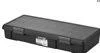
A slim, sturdy storage box for keeping your whole exploration kit — flashlight, EMF meter, camera, spare batteries — together in the trunk. Its lid keeps out dust and impacts, and it stacks, making good use of cargo space.
IRIS OHYAMA Storage Box/Case 31L 'RVBOX', Outdoor Storage Container RV900F, Charcoal Gray
We may earn a referral fee on purchases made through these links.
1. Deer Ranch (鹿牧場)
The Deer Ranch is a park about five minutes by car from Nishiokoppe’s town center, with roughly 7 hectares of grassland enclosed by a fence 2 to 3 meters high. Inside the fence a herd of Ezo sika deer lives at ease, and you can see them up close from outside the fence.
A volunteer research group that runs this ranch sells canned venison as a village specialty. The village’s history records that the deer ranch opened in 1990, showing the footprints of a forest village seeking an industry that walks together with nature.
Deer are timid animals. When you approach the fence, please do not shout or throw things in, and watch quietly. Also avoid feeding them. The parking lot holds only about ten cars, so please share it considerately.
2. Gyoja Falls, Akaiwa Falls and Kuroiwa Falls (行者の滝)
Gyoja Falls lies deep in the mountains of Kamiokoppe, in the upper reaches of the Okoppe River. It is said to be named after a real woman ascetic who, around the end of the Meiji era, prayed beneath the falls for her parent’s recovery from illness. It is said that people still visit.
Further in are Akaiwa Falls and Kuroiwa Falls. Akaiwa Falls is only about 8 meters high, but downstream of the plunge pool the riverbed is covered with soft, brick-like reddish-brown rock, and the sight in the dappled sunlight is said to be fantastical.
You can drive to Gyoja Falls, but Akaiwa and Kuroiwa Falls lie in a section beyond a gate where forest-entry procedures are required. The festival held at Gyoja Falls every July 19 has not been held since 2020. The mountain interior is habitat for wild animals such as bears. Please avoid going alone, take full care with the weather and your footing, and enjoy nature quietly.
3. Kamiokoppe Railway Museum (上興部鉄道資料館)
The Kamiokoppe Railway Museum is the former Kamiokoppe Station on the Nayoro Main Line, kept as it was and turned into a museum. The building uses the station house from the time of the line’s closure, and the old waiting room, the tracks and a nostalgic diesel railcar are preserved in their original form.
Inside, about 100 panels and other railway materials convey the history of the Nayoro Main Line from opening to closure. The period covered runs from 1926 (Taisho 15) to 1989 (Heisei 1), a record of the roughly 60 years in which this line supported the village’s life.
The wooden station house stands quietly in the calm mountain village. It is open from late April to late October and is said to be closed on Wednesdays. It is closed off by snow in winter, so please check the latest information before visiting.
4. Forest Museum “Komu” (森の美術館「木夢」)
The Forest Museum “Komu” is a hands-on facility opened in 1997 that conveys the gentleness and warmth of wood. Its concept is four experiences, “look, touch, play and make,” and it is a museum of wood fit for a village surrounded by forest.
According to the facility’s official website, inside a hall of about the same floor area as the base of the Tokyo Skytree are a “wooden sandbox” laid with about 140,000 wooden blocks and a slide about 9 meters long. Floor heating keeps it warm even in snowy winters.
It is a place where children are the stars, but adults too can spend a relaxed time wrapped in the scent of wood. Opening days and hours vary by season, and it is said to be closed on days such as Tuesday, so please check the official guide before you go.
5. Nishiokoppe Village Forest Park (西興部村森林公園)
Nishiokoppe Village Forest Park is a park surrounded by forest near the town center. The village’s tourist guide also lists it as a main attraction. The park has a campground and proper Canadian-style log houses made of Hokkaido-grown Ezo spruce and Sakhalin fir.
The log houses have the minimum facilities needed for cooking for yourself, and beds are provided. The village guide says it hopes people will use the place as somewhere to leave crowded city life and regain a sense of ease, and as a base for touring the village and nearby sights.
In the forest park you may encounter wild animals. Always take your trash home and take great care with fire. Use of the campground and log houses requires advance reservations and checking the usage rules.
Local Specialties, Food and Drink
Nishiokoppe’s best-known specialty is canned Ezo sika venison. It was developed by a volunteer research group in the village, and the venison is said to be mostly lean, low in fat and high in protein.
The village’s specialties and places to eat are introduced in the village’s tourist guide. Which shops serve them and when changes easily, so please check the latest information before you go.
Rare Creatures and Nature
About 90 percent of Nishiokoppe’s area is forest, and it belongs to the humid continental climate, with winters falling in a special heavy-snowfall area. The village’s mountains include Mount Wenshiri (1,142 meters) and others, and the Okoppe River flows through.
The village once had a tunnel called the “ice tunnel,” where snow remained even in midsummer, but a collapse accident occurred in 2001, so it can no longer be visited. The mountain interior holds many dangers, so please never enter places where entry is restricted.
Other Notable Things About This Town
Nishiokoppe was Matsumae domain territory in the Edo period. In 1925 it split off from Okoppe Village, introduced the second-class village system, and became the present village. The Nayoro Main Line ran through it until it was abolished in 1989, and the village had Kamiokoppe, Nishiokoppe, Rokko and Nakaokoppe stations.
The village holds the Murokoshi Festival in late August. The effort to protect the townscape of a small village lined with orange buildings also reflects the village’s attitude of valuing life in the forest.
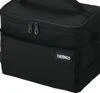
Drinks warm up fast during summer haunted-spot exploration, so a 5-layer insulated soft cooler with an ice pack gives peace of mind. At 3–5L, holding about two 500ml bottles, it's easy to carry beside a car seat or as a secondary bag on foot.
THERMOS Soft Cooler 5L, All Black RFD-0051
We may earn a referral fee on purchases made through these links.
The Night Side: Ghost Stories and Haunted Places of This Town
So far we have followed Nishiokoppe’s daytime face from north to south: a deer ranch, a wooden museum, a forest park, a closed railway station and falls. Every place overlaps with the time of people who have lived together with the forest.
As for the night side, we have not been able to identify any story that stands as a ghost tale or haunted spot. In our view, the legend of the woman ascetic who stood beneath the falls praying for recovery from illness, and the quiet of a station that has finished its role, seem to hold a feeling of prayer and parting. But that is nothing more than the movement of the visitor’s own mind. The falls and forest are dark at night and carry dangers such as bears, so please visit during the day.
On KARASU CHANNEL, we set out true ghost stories and haunted places not to visit them but to record them. Having learned the daytime scenery, please read the stories of the night as well.
Before You Go
Opening hours, fees, closing days and access change easily, so they are not listed in this article. Before you go, please check the latest information on the official website of each facility or local government. Some places may be restricted from entry because of weather or disasters.
Frequently Asked Questions
Q. What kind of village is Nishiokoppe?
A. It is a village west of Okoppe Town, about 90 percent forest. It promotes a townscape using the color orange, and has a wooden museum, a deer ranch and a museum at a former railway station.
Q. Can anyone go to Akaiwa Falls and Kuroiwa Falls?
A. They lie beyond Gyoja Falls, and there is a section beyond a gate where forest-entry procedures are required. The forest road is also habitat for wild animals, so please check the latest guidance and put safety first.
Q. How do I get to Nishiokoppe?
A. The railway that ran through the village has been abolished. The nearest station is Nayoro Station on the Soya Main Line, and going by bus or car is the basic way. In winter there is snow and icy road surface, so please check timetables and road conditions.
Sources consulted
https://ja.wikipedia.org/wiki/西興部村
https://ja.wikipedia.org/wiki/上興部駅
https://www.vill.nishiokoppe.lg.jp/feeuub000000189k.html
https://www.vill.nishiokoppe.lg.jp/feeuub00000019fy.html
https://www.vill.nishiokoppe.lg.jp/feeuub000001ul9d.html
https://www.vill.nishiokoppe.lg.jp/komu/
https://www.vill.nishiokoppe.lg.jp/feeuub00000dpkr0.html
https://www.okhotsk.pref.hokkaido.lg.jp/sr/ssr/nishiokoppe_wf.html
https://www.okhotskool.jp/okhotsk_info/1712/

Supervised by Suzuking.
Affiliation: KARASU CHANNEL
Occult & horror reporting: 7 years (since 2020)
Followers: YouTube 5,000+ / X 25,000+
On-site investigations: 30+