Kofu Sights: Shingen’s Castle Town and Shosenkyo
Supervised by Suzuking. (KARASU CHANNEL / Occult & horror reporting, 7 years)
Contents
Places to visit in this town (north to south)
Numbers follow the order in the article, from north to south. Select a pin to see its name. Positions are approximate.
- Kanazakura Shrine and the Mitake Village (金櫻神社と御岳の里) The central shrine of Mount Kinpu worship, in the mountains of Mitake upstream of Shosenkyo. Its history is tied to cedar groves and crystal treasures.
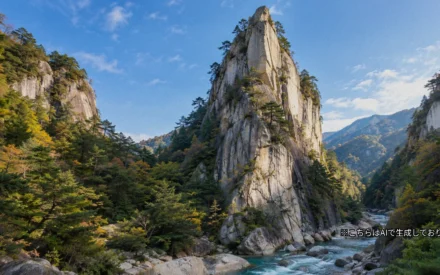
- Mitake Shosenkyo (御岳昇仙峡) A gorge of about 5 kilometers carved from granite by the Arakawa River. Kakuenpo's cliff and Sengataki Falls form the heart of this Special Place of Scenic Beauty.
- Sekisui-ji Temple and Yogaisan Castle (積翠寺と要害山城) A mountain castle built as the last-resort fortress guarding the Takeda mansion. Said to be Shingen's birthplace, it is a national Historic Site.
- Takeda Shrine, Tsutsujigasaki Mansion Site (武田神社) A shrine standing on the site of Tsutsujigasaki Mansion, where Shingen lived. It was the political center of three Takeda generations and the origin of the castle town.
- Yumura Onsen (湯村温泉) An old hot spring said to have been found by Kobo Daishi, or to be waters in which an eagle healed its wounds. Shingen's secret bath and a town loved by writers.
- Kai Zenko-ji Temple (甲斐善光寺) A temple Shingen built to receive the principal image of Shinano's Zenko-ji. Another Zenko-ji born from the aftermath of the Battle of Kawanakajima.
- Kofu Castle, Maizuru Castle Park (甲府城) A stone-walled castle on Ichijo Koyama just north of Kofu Station. Only the keep platform remains, and restored turrets and gates convey its appearance.
- Yamanashi Prefectural Museum of Art (山梨県立美術館) A museum known for Millet's The Sower and Summer: The Gleaners. Set in Geijutsu no Mori Park, it was built with the strong backing of the prefecture's people.
Show basic information about this town (location, last checked, notes)
- Location
- Kofu, Yamanashi, Japan
- Last checked
- 2026.10.05
- Please note
- Opening hours, prices and closing days change often, so we do not list them. Please check each facility's official site before you go.
What Kind of Town Is Kofu?
Kofu is the prefectural capital, located almost at the center of Yamanashi Prefecture, with its urban area spreading across the northern side of the Kofu Basin. The city is shaped like a long, thin crescent running north to south. Its lowest point, along the Fuefuki River, is about 250 meters above sea level, while Mount Kinpu at its northern tip reaches 2,599 meters, a difference in height of 2,350 meters within a single city. The name “Kofu” is said to have begun in 1519, when Takeda Nobutora moved his residence here and called it “Kofu,” meaning the provincial seat of Kai Province.
In this article we introduce the city’s sights in order of descending latitude, that is, from north to south. The route heads south from the gorge and old shrine in the mountains, past a mountain castle and residence site tied to Shingen, to Kofu Castle at the heart of the castle town, and on to the museum in the western basin. Please savor the depth of a town where memories of the Warring States era and the rocks of a gorge overlap.

Ideal for a night-vision-based spot investigation report.
Night Vision Goggles, 4K Quality, Digital Night Vision, Rechargeable, Binoculars for Adults, 10x Zoom, FHD 3-inch Screen, for Hunting/Surveillance/Security, with 64GB Memory Card
We may earn a referral fee on purchases made through these links.
1. Kanazakura Shrine and the Mitake Village (金櫻神社と御岳の里)
Kanazakura Shrine stands in Mitake-cho, beyond Shosenkyo, in the upper reaches of the Arakawa River. According to the shrine’s tradition it was first enshrined on Mount Kinpu in the fifth century, and it flourished as the central shrine of mountain worship. Its principal deities are gods connected with the creation of the land and Yamato Takeru, and until the end of the Edo period it is said to have been called by the name Zao Gongen. It shows the form of prayer of the people of Kai, who saw the mountain itself as a place where gods dwell.
A distinctive feature of this shrine is that it keeps as sacred treasures the “water jewel” and “fire jewel,” rounded and polished crystal spheres. On the summit of Mount Kinpu stands a huge rock called Gojoiwa, and the village shrine and the summit have long been linked as one continuous faith. Because the mountain is also a source of water, rain-praying festivals are said to have been held for the god of water that moistens the fields. The cedar grove in the precincts is designated a natural monument of the city.
The present vermilion-lacquered shrine buildings were rebuilt in 1959, after a fire in 1955 destroyed the old shrine buildings and other structures. Losing the medieval main hall, which had been a national Important Cultural Property, must have been a heavy blow for local people. This is only our speculation, but old shrines that remain in deep mountain country may be the ones with the longest history of facing familiar disasters such as fire and water. It is a living shrine, so please visit with attention to proper worship manners and to its quiet.
2. Mitake Shosenkyo (御岳昇仙峡)
Shosenkyo is a gorge cut deep into granite by the Arakawa River. Over about 5 kilometers from Nagatsuro Bridge to Sengataki Falls, strange rock formations of columnar-jointed granite and andesite appear one after another. It was designated a national Place of Scenic Beauty in 1923 (Taisho 12) and a Special Place of Scenic Beauty in 1953, and is known as a representative scenic spot of Chichibu-Tama-Kai National Park.
The centerpiece sights are Kakuenpo, a rock peak about 180 meters high rising almost vertically from the water, and Sengataki Falls, which drops 30 meters at its foot. The name Sengataki is said to refer to the myth of Chang’e, the woman who ascended to the moon, and the falls are among Japan’s 100 Best Waterfalls. There are many places named after the shapes of rocks, such as the “Sekimon,” a natural arch of granite, and there is pleasure in finding them as you walk.
In ancient times it was a valley that people passed through as an ascetic route for climbing Mount Kinpu. The present road along the gorge is based on a new road opened in the Tenpo era of the late Edo period by villagers who made charcoal, so that they could carry goods to the castle town more easily, and it is said to have been completed around 1843. It became a tourist site after the Meiji era, and in 1887 it was given the name “Mitake Shosenkyo.” There are peak periods with the most visitors and days with restrictions on car traffic, so please check in advance before visiting.
3. Sekisui-ji Temple and Yogaisan Castle (積翠寺と要害山城)
Yogaisan Castle is a mountain castle built on Mount Yogai, 780 meters high, rising north of Kofu. It is said to have been built in June 1520, the year after Takeda Nobutora moved to Tsutsujigasaki Mansion, to serve as a last-resort fortress in case anything happened to the mansion. It was designated a national Historic Site in 1991 and chosen as one of the Continued 100 Fine Castles of Japan in 2017.
In 1521, when a commander of the Imagawa of Suruga attacked Kai, Nobutora is said to have sent his wife, Lady Oi, to take refuge in this castle. In the midst of that, on November 3, the future Takeda Harunobu, that is, Shingen, was born inside the castle, according to records of the time. At Sekisui-ji Temple at the foot of the mountain there is a well said to have been used for his first bath, which conveys the memory of his birthplace to this day.
After the fall of the Takeda, daimyo of the Toyotomi camp repaired the castle, and the stone walls that remain today are thought to reflect the technology of that time. The castle ended its role after the Battle of Sekigahara. In our view, the idea of building a mansion and a mountain castle as a pair expresses the practical sense of a Warring States lord, placing everyday life and preparation for war in the same place. The mountain trail is maintained, but it is a mountain path, so please walk with proper footwear.
4. Takeda Shrine (Tsutsujigasaki Mansion Site) (武田神社)
Takeda Shrine stands on the site of Tsutsujigasaki Mansion, the Takeda family’s residence, and its enshrined deity is Takeda Shingen. Nobutora built the mansion in 1519, and it was the center of rule over the domain for three generations: Nobutora, Shingen and Katsuyori. After the Takeda fell in 1582, Kofu Castle was built and the political center moved south, and the mansion ended its role.
The shrine took shape in the Taisho era. From the Meiji period there was a movement to build a shrine honoring Shingen, and the shrine buildings were completed in 1919 (Taisho 8). It may seem surprising, but Shingen’s reputation has swung with the times. While a view of him as the man who exiled his father Nobutora persisted, local historians of the late Meiji era unearthed an image of Shingen as loyal and filial, and created a current of honoring him.
The shrine keeps as a sacred treasure the sword “Yoshioka Ichimonji,” a national Important Cultural Property. The Shingen-ko Festival, held around the annual rite on April 12, is still a representative event of Kofu’s spring. It is a living shrine, so please look around the grounds with consideration for the quiet of worship. That people kept gathering in this northern corner even after the castle town moved south seems to tell of the strength of feeling toward Shingen.
5. Yumura Onsen (湯村温泉)
Yumura Onsen is an old hot-spring area spreading northwest of Kofu Station. As to how it began, there is a theory that Kobo Daishi found it in 808 and another that villagers found a wounded eagle healing its wounds in the hot water, and both remain in the realm of tradition. In the Warring States period it was spoken of as one of Takeda Shingen’s secret baths, and a story that Shingen took a 30-day cure here after the Battle of Uedahara appears in war chronicles.
In the late Edo period Katsushika Hokusai took up “Koshu Yumura” in his series of fan pictures depicting the strange sights of the provinces. From the Meiji era onward it has also been known as a place where many writers and haiku poets stayed for long periods, including Ibuse Masuji, Dazai Osamu, Matsumoto Seicho and Yamaguchi Hitomi. That writers pushed their pens along here shows better than anything the calm air of this hot-spring town.
On Mount Yumura behind it are the remains of a mountain castle said to have been used from Nobutora’s time, and a beacon platform was rebuilt on its summit in autumn 2022. In 2021, for the 500th anniversary of Shingen’s birth, the name was changed to “Shingen no Yu Yumura Onsen.” In the hot-spring district in recent years the preservation of historic buildings and redevelopment have also continued, so it looks like a town where you can stroll among old temples and shrines alongside new initiatives.
6. Kai Zenko-ji Temple (甲斐善光寺)
Kai Zenko-ji is a Jodo-sect temple founded in 1558 by Takeda Shingen in the Itagaki district of northeastern Kofu. To distinguish it from the Zenko-ji in Nagano, it is also called Kai Zenko-ji or Shin Zenko-ji. Its founding priest is said to have been Kyoku Shonin, who had been head priest of Shinano’s Zenko-ji.
Behind its founding lies the Battle of Kawanakajima, fought against Uesugi Kenshin in Shinano. As the fighting reached the Zenko-ji plain, Shingen had the principal image, Amida Nyorai, and the temple treasures of Shinano’s Zenko-ji moved to Kofu together with the people. It is recorded that when the Nyorai arrived in Kai in September 1558, the people of the domain rejoiced greatly. The main hall was completed and the enshrining ceremony held in 1565, and work on the temple continued for a long time afterward.
This is only our speculation, but Shingen’s aim in receiving the principal image seems to have been not only devotion but also to show the legitimacy of his rule over Shinano. The justification of protecting the Buddha image and people caught up in the fighting would be a major backing for running a domain. It is a living temple, so please walk the grounds quietly, in the spirit of worship.
7. Kofu Castle (Maizuru Castle Park) (甲府城)
Kofu Castle is a hill-and-plain castle built on Ichijo Koyama, a small rise just north of Kofu Station. After the Tokugawa who governed Kai following the fall of the Takeda, full-scale construction is thought to have taken place in the era of Toyotomi-camp daimyo. In the Edo period it became a castle of a related house close to the shogun’s family, and later Yanagisawa Yoshiyasu also held it for a time. It was abolished in 1873 and designated a national Historic Site in 2019.
A major feature of this castle lies in its stonework. In Kai, stone-wall building techniques had not taken root in the Warring States period, and the castle is explained as the first to introduce stone-laying methods from western Japan. The keep platform remains, but whether a keep ever stood there has no decisive answer from documents or excavation, and debate continues even now. A mystery that remains unanswered after repeated surveys is one of the castle’s charms.
After the Meiji era the castle site was divided by the opening of the railway, and in 1904 it was opened as Maizuru Castle Park. Later improvements restored the Kajikuruwa Gate, the Inari Turret and, in 2013, the Kurogane Gate in wood. There is also a story of a precious remain: the Bishamon Hall that stood in the main enclosure in the Yanagisawa era was moved and confirmed to have survived as a Taishi Hall at a temple in the city. The best way to enjoy Kofu Castle is to approach the stone walls and compare the differences in how they were laid.
8. Yamanashi Prefectural Museum of Art (山梨県立美術館)
The Yamanashi Prefectural Museum of Art is a museum in Geijutsu no Mori Park in the western part of the city, which opened on November 3, 1978. Yamanashi was long described as a “cultural wasteland,” and in that setting construction went forward under the leadership of the governor of the time. The core of the collection is the 19th-century French Barbizon school painters.
Among them, Jean-Francois Millet’s “The Sower” was acquired at an American auction in 1977. It is said that the costly purchase drew objections from residents and the assembly, but it later became known to enthusiasts at home and abroad as “the Millet museum.” Millet holdings number 41 works, including drawings and prints as well as oil paintings, and “Summer: The Gleaners” was added later.
There is also a memorial room introducing the work of Hagiwara Hideo, a printmaker from Yamanashi, so local artists are cherished too. In Geijutsu no Mori Park, modern sculpture such as Rodin’s also stands outdoors. Kofu has a strong image as a Warring States town, but having a place where you can face paintings amid quiet greenery can be called another face of this city.
Local Specialties, Food and Drink
The dish that cannot be left out of Kofu’s food is the local dish hoto. Wide noodles are stewed in a miso-based broth together with vegetables such as pumpkin, and in 2007 it was chosen as one of the 100 Local Dishes of Farming, Mountain and Fishing Villages by the Ministry of Agriculture, Forestry and Fisheries. Because the dough is not rested and no salt is added, the broth becomes thick, and around the Kofu Basin in particular people are said to like simmering the pumpkin until it melts.
Another specialty is Kofu torimotsu-ni. Chicken gizzards, hearts, livers, kinkan (unlaid egg yolks) and the like are simmered down with only sugar and soy sauce until glossy, and it is said that around 1950 a soba shop in the city began it, thinking it a waste to throw those parts away. It won first prize on its first entry at the B-1 Grand Prix in 2010 and became a leading example of town revitalization.
Other specialties of the city include awabi no nigai (simmered abalone) and Mitake soba. Mitake soba is known as a specialty bearing the name of Mitake, where Shosenkyo lies. It seems you could enjoy it after visiting the mountain gorge.
Rare Creatures and Nature
Kofu lies in a basin ringed by mountains, and the northern side of the city is included in Chichibu-Tama-Kai National Park. At Shosenkyo in the upper Arakawa you can see up close how granite has been carved by wind, rain and flowing water into strange rocks. In the best season for autumn leaves the crowds are such that roads in the area become congested on holidays.
In the bed of the Aikawa River, fossil molars of the Naumann’s elephant have been found. Although no Paleolithic sites have been confirmed within the city, it is a precious clue that large animals lived in the basin. Summer in Kofu is hot, as befits an inland basin, and 40.7 degrees was recorded in August 2013. In contrast, the high northern mountains are cool, and the climate differs so much that it hardly seems the same city.
Other Notable Things About This Town
The town of Kofu began in 1519 when Takeda Nobutora moved to Tsutsujigasaki Mansion. The castle town moved south with the building of Kofu Castle, and in the Edo period it also prospered as a post town on the Koshu Kaido. In the town’s framework, the memories of two castle towns, that of the Takeda era and that of the Toyotomi-camp daimyo era, overlap.
In the city, gem polishing, Inden leatherwork and hand-carved seals are carried on as national traditional crafts. That it is a town where gem polishing flourishes can also be seen from facilities such as the Yamanashi Jewelry Museum. The spring Shingen-ko Festival is also a representative event of the town.
From late at night on July 6 to the early hours of July 7, 1945, Kofu suffered a large-scale air raid by B-29 bombers. Also called the “Tanabata air raid,” it is said to have burned about three-quarters of the urban area. The number of victims varies between surveys at the time and later ones, and some sources say it exceeded one thousand. Knowing the history of the town’s recovery also gives a quiet depth to how one sees the present streets.

A best-of collection from Sohiko Koike, known for his evidence-based reportage on the strange — a reference for our analysis pieces.
Fragments of the Uncanny: Best Reportage by ‘Occult Detective’ Sohiko Koike (Sohiko Koike & Unga Asamiya, eds. / Futami Shobo)
We may earn a referral fee on purchases made through these links.
The Night Side: Ghost Stories and Haunted Places of This Town
So far we have walked the daytime face of Kofu: an old shrine of mountain worship, Shingen’s mountain castle and mansion, a castle of stone walls. Every place overlaps with a time in which people prayed, fought and sometimes paid great sacrifices.
That depth connects to the night side as well. In Yamanashi Prefecture there are ghost stories and rumors of haunted spots that have been handed down, but we do not recommend taking up and visiting specific places in Kofu. In our view, a ghost story is something like a shadow that a land’s history and terrain cast on people’s hearts. The more one learns of the rise and fall of the Takeda and of the memory of the air raid that burned the basin, the deeper one’s respect for quiet places becomes.
On KARASU CHANNEL, we set out true ghost stories and haunted places not to visit them but to record them. Having learned the daytime scenery, please read the stories of the night as well.
Before You Go
Opening hours, fees, closing days and access change easily, so they are not listed in this article. Before you go, please check the latest information on the official website of each facility or local government. Some places may be restricted from entry because of weather or disasters.
Frequently Asked Questions
Q. In what order is it efficient to tour Kofu’s sights?
A. This article introduces them from north to south. It is easier to group them by area: the mountain area of Shosenkyo and Kanazakura Shrine, the northern area from Sekisui-ji to Takeda Shrine and Yumura Onsen, Kofu Castle and Kai Zenko-ji around Kofu Station, and the museum in the west. Because the distances are long, please check transportation and seasonal road conditions with the local governments or official tourist information.
Q. What are Kofu’s specialties?
A. Hoto, Kofu torimotsu-ni, simmered abalone and Mitake soba are well known. What is served varies from shop to shop, so please check the latest information before you go.
Q. When is the best time to visit Shosenkyo?
A. Autumn, usually regarded as the best season for leaves, is especially crowded, and roads in the area get congested on holidays. Spring to early summer greenery is also a beautiful time. There are days with traffic restrictions, so please check the latest situation in official tourist information.
Sources consulted
https://ja.wikipedia.org/wiki/甲府市
https://ja.wikipedia.org/wiki/昇仙峡
https://ja.wikipedia.org/wiki/仙娥滝
https://ja.wikipedia.org/wiki/金櫻神社
https://ja.wikipedia.org/wiki/武田神社
https://ja.wikipedia.org/wiki/要害山城
https://ja.wikipedia.org/wiki/信玄の湯_湯村温泉
https://ja.wikipedia.org/wiki/甲斐善光寺
https://ja.wikipedia.org/wiki/甲府城
https://ja.wikipedia.org/wiki/山梨県立美術館
https://ja.wikipedia.org/wiki/甲府鳥もつ煮
https://ja.wikipedia.org/wiki/ほうとう
https://ja.wikipedia.org/wiki/甲府空襲

Supervised by Suzuking.
Affiliation: KARASU CHANNEL
Occult & horror reporting: 7 years (since 2020)
Followers: YouTube 5,000+ / X 25,000+
On-site investigations: 30+
Haunted locations near this town
Besides its daytime face, this land has a night side too. Read it as a record if you are curious. Some of these places are not safe or permitted to enter.