◎ Lucky dream Traditionally a lucky sign
Kintaro, the mighty boy: a lucky dream of healthy growth and strength; a child's wellbeing or your own honest vigour.
Category: Local lore & folktales (how to read this category)
Psychology
A lively child can be the Jungian child archetype, purity and future potential. Strong Kintaro may appear when you want to act with your body rather than reason, or to regain straightforward strength. For parents, it may mirror hopes for a child's health.
Folklore and history
Kintaro, raised among animals on Mount Ashigara, wrestled a bear and is shown with an axe and red apron. Later, as Sakata no Kintoki, he served Minamoto no Raiko as one of his four retainers. His dolls are a Boys' Day charm for healthy growth.
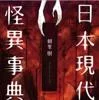
An encyclopedia of strange tales still told today — a reference for our kaidan and urban-legend articles.
Encyclopedia of Modern Japanese Strange Phenomena (Itsuki Asazato / Kasama Shoin)
We may earn a referral fee on purchases made through these links.
This site's view
In this site's view, Kintaro's strength grew in the mountains, not the capital. Playing with animals means your power thrives outside conventional paths. A raised axe means a way you should cut without hesitation. Descending the mountain signals time to leave familiar ground.
Going deeper: our reading
Kintaro is a beloved subject for the warrior dolls displayed on Boys' Day, and his image in a red bib with an axe on his shoulder carries parents' wishes that a child grow strong and sturdy. A boy raised wild who later serves in the capital is also a story of putting natural strength to use in society. In this site's reading, whether you were Kintaro or watching him changes the dream. Being Kintaro suggests a wish to move your body freely and regain natural vigour without overthinking. Watching shows you are thinking about nurturing a younger person's strength. Winning a sumo bout with a bear means you can face big opponents fearlessly; laughing in defeat shows you enjoy the challenge itself. This is our speculation, but Kintaro heading down the mountain shows you are ready to join a new organisation while staying yourself.
What to do on waking
Spend some time outside touching soil or trees. Even a hearty breakfast can bring back Kintaro's simple vigour.
In this scene
- ◎Good It helps you or gives treasure: like the zashiki-warashi, luck is coming (good)
- ▲Warn Tricked or taken: a hidden trap, or words to doubt (warning)
- Seeing what it really is: a fear becomes clear and fades
- It felt good: the lucky reading gets stronger
- ▲Warn It felt frightening or painful: the warning reading gets stronger — rest first
- The same dream again and again: something your mind has not settled yet

A comical occult report by Ginty Kobayashi, a writer known for his hands-on, in-the-field reporting — a reference for our reading-feature articles.
Tasteless Ghost Stories (Ginty Kobayashi / Futami Shobo)
We may earn a referral fee on purchases made through these links.
FAQ
Q. Is dreaming of kintaro a good or bad sign?
A. Traditionally a lucky sign. Kintaro, the mighty boy: a lucky dream of healthy growth and strength; a child's wellbeing or your own honest vigour.
Q. Why do I keep dreaming of kintaro?
A. A recurring dream usually points to something your mind has not settled yet. Research suggests such dreams tend to stop once the underlying worry is resolved. Keeping a dream diary helps you notice what triggers it.
Q. What should I do after dreaming of kintaro?
A. Spend some time outside touching soil or trees. Even a hearty breakfast can bring back Kintaro's simple vigour.
Related dream essays
- True Dreams and Reverse Dreams: Why We Read Dreams Backwards
- Buying Dreams, Turning Dreams: A Japanese History of Dream Trading and Dream Charms
Read this dream with your own scene in the Dream Dictionary →
More dreams in "Local lore & folktales"
- Oiwa
- Counting Plates
- The Peony Lantern
- Hoichi the Earless
- A Head Mound
- The Hour of Demons
- The Grateful Crane
※ Dream interpretation here is entertainment drawing on psychology and folklore — it is not scientifically proven. "This site's view" is our own interpretation.
