▲ Leans unlucky (a warning) Traditionally a warning — read it as pointing to what to watch, not as doom
Yokai that throw sand or grow heavy on your back: unexpected obstacles or burdens getting heavier.
Category: Japanese yokai (how to read this category)
Psychology
A sand-throwing crone or an old man who grows heavy on your back can reflect sudden obstacles, or kindness turning into a burden. Neither attacks head-on; both slowly stop you. They may show roles you took on unnoticed now weighing on you.
Folklore and history
Sunakake-baba, from Nara and Hyogo, throws sand from woods or shrine shadows, though no one has seen her. Konaki-jiji, from the mountains of Tokushima, cries like a baby and grows heavier once picked up. Both were small local legends until manga made them famous.
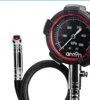
Getting to a haunted spot often means unpaved mountain roads or gravel, where low tire pressure easily leads to a flat or worse fuel economy. Checking your tires with a gauge before you set out reduces the risk on rough roads.
amon Air Gauge, Standard Grade Tire Gauge 8821
We may earn a referral fee on purchases made through these links.
This site's view
In this site's view, what stings in the Konaki-jiji tale is that it is the kind person who picks him up. If a weight grew on your back, you may be exploited for not saying no, or carrying too much by choice. If sand was thrown, ask whether you are silently swallowing small harassments.
Going deeper: our reading
Many have carried a child who fell asleep after playing and felt the weight on their back seem to grow on the way home; a sleeping child goes limp and is said to feel heavier than when awake. In this site's reading, whom you carried and how the sand got in mirror your heart. A weight like a child or ageing parent suggests the heavy duty of supporting family coexisting with love you won't let go of. Managing to set the burden down means you are ready to share an overloaded role. Sand in your eyes may show trivial events or rumours distracting you from your real aim. Sand in your shoes reflects small grievances piling up unspoken. This is our speculation, but people caring for children or relatives alone may see themselves in this dream of a growing weight.
What to do on waking
List your current roles and favours, and see if one can be handed to someone else. Stretching your shoulders and back helps too.
In this scene
- ◎Good It helps you or gives treasure: like the zashiki-warashi, luck is coming (good)
- ▲Warn Tricked or taken: a hidden trap, or words to doubt (warning)
- Seeing what it really is: a fear becomes clear and fades
- It felt good: the lucky reading gets stronger
- ▲Warn It felt frightening or painful: the warning reading gets stronger — rest first
- The same dream again and again: something your mind has not settled yet
Turning a bad dream
In Japan, people once tried to turn a worrying dream for the better: a baku charm under the pillow, telling the dream to a nandina bush, or reciting an old dream-turning poem. Read the column on dream trading and dream-turning

A hands-free COB work light worn across the chest like a sash — unlike a headlamp, it puts no weight on your head, and the roughly 59–69cm strap adjusts to fit your build.
Takagi EARTH MAN LED COB Work Light 'Tebura' Shoulder-Strap Type WLT-10TLiA
We may earn a referral fee on purchases made through these links.
FAQ
Q. Is dreaming of sunakake-baba & Konaki-jiji a good or bad sign?
A. Traditionally a warning — read it as pointing to what to watch, not as doom. Yokai that throw sand or grow heavy on your back: unexpected obstacles or burdens getting heavier.
Q. Why do I keep dreaming of sunakake-baba & Konaki-jiji?
A. A recurring dream usually points to something your mind has not settled yet. Research suggests such dreams tend to stop once the underlying worry is resolved. Keeping a dream diary helps you notice what triggers it.
Q. What should I do after dreaming of sunakake-baba & Konaki-jiji?
A. List your current roles and favours, and see if one can be handed to someone else. Stretching your shoulders and back helps too.
Related dream essays
- True Dreams and Reverse Dreams: Why We Read Dreams Backwards
- Buying Dreams, Turning Dreams: A Japanese History of Dream Trading and Dream Charms
Read this dream with your own scene in the Dream Dictionary →
More dreams in "Japanese yokai"
- A Noppera-bo
- A One-Eyed Boy
- An Umbrella Ghost
- A Tool Spirit
- A Nurikabe
- An Ittan-momen
- A Nurarihyon
- A Yamamba
- A Ghost Cat
- A Lantern Ghost
- A Sea Monk
- An Ushi-oni
※ Dream interpretation here is entertainment drawing on psychology and folklore — it is not scientifically proven. "This site's view" is our own interpretation.
