Sightseeing in Akita: From Ancient Stockade to the Kanto Lantern Castle Town, North to South
Supervised by Suzuking. (KARASU CHANNEL / Occult & horror reporting, 7 years)
Contents
Places to visit in this town (north to south)
Numbers follow the order in the article, from north to south. Select a pin to see its name. Positions are approximate.
- Mount Taihei (太平山) A 1,170-meter mountain rising east of Akita, with an ancient place of worship on the summit and trails that can be climbed in a day.
- Akita Castle Ruins (秋田城跡) The remains of a stockade fortress placed in the Nara period as a northern defense on the Sea of Japan coast, a National Historic Site where an ancient flush toilet has been found.
- Senshu Park (Kubota Castle Ruins) (千秋公園(久保田城跡)) A park on the main and second enclosures of Kubota Castle, built by the Satake clan, an earthen castle with few stone walls and a favorite cherry-viewing spot for residents.
- Akita City Folk Performing Arts Heritage Center (Neburinagashi-kan) (秋田市民俗芸能伝承館( A facility preserving Akita's folk performing arts, including the Kanto, where visitors can learn the background of this representative Tohoku summer festival, which grew out of Nemuri-nagashi.
- Akita Museum of Art (秋田県立美術館) A prefectural museum opened in 2013 beside Senshu Park, holding the Hirano Masakichi Collection moved from the former prefectural museum.
- Akita Red Brick Folk Museum (赤れんが郷土館) A red-brick building completed in 1912 as the head office of the former Akita Bank, an Important Cultural Property now used to tell local history.
Show basic information about this town (location, last checked, notes)
- Location
- Akita, Akita Prefecture, Japan
- Last checked
- 2026.10.05
- Please note
- Opening hours, prices and closing days change often, so we do not list them. Please check each facility's official site before you go.
What Kind of City Is Akita?
Akita, on the Sea of Japan coast, is the capital of Akita Prefecture and its most populous city. It adopted city status on April 1, 1889 (Meiji 22), as one of Japan’s first 31 cities, and in April 1997 it became the first designated core city in the Tohoku region. In January 2005 it absorbed the towns of Kawabe and Yuwa, giving it a territory that stretches from the sea to the mountains.
This article introduces the city’s sights from north to south, in descending order of latitude. We start with a mountain rising east of the city, then move down through the remains of an ancient stockade, an Edo-period castle town, Meiji-era Western architecture and, finally, the lore of the Kanto lanterns. Please take in the daytime face of a town where a harbor and a castle town overlap.
A skeptical study of the prehistory behind postwar Japan's occult boom — a reference for our occult-history columns.
A Study of Pre-War Showa Occult History (ASIOS / Cyzo)
We may earn a referral fee on purchases made through these links.
1. Mount Taihei (太平山)
Mount Taihei is the main peak of the Taihei mountains in central Akita Prefecture, straddling Akita City and the village of Kamikoani. Its elevation is 1,170 meters, according to the revised figure of April 1, 2014 from the Geospatial Information Authority of Japan. Looking east from the city center, you can see this mountain rising beyond gentle ridgelines.
On the summit stands the inner shrine of Taiheizan Miyoshi Shrine, with the village shrine in Hirōmote, Akita City. The deities enshrined are Onamuchi no Mikoto, Sukunabikona and Miyoshi Reijin, and tradition holds that the shrine was founded by En no Ozunu and later revived by Sakanoue no Tamuramaro. From the mid-Edo period, faith in the mountain spread among ordinary people, and many worship associations (kochu) formed across the country. It is an active sacred mountain, so please walk quietly and with respect when you climb.
Trails have been developed so that the summit can be reached in a single day, including the Asahimata route, a ridge-traverse route, the Nodaguchi route and the Iwami-Sannai-guchi route. However, bears appear throughout the year, and there are dangers from steep slopes and falls. This is our own speculation, but the fact that such deep mountains and faith survive so close to the city may support the depth of life in Akita. Please be sure to check your equipment and the weather.
2. Akita Castle Ruins (秋田城跡)
The Akita Castle Ruins are the remains of an ancient stockade fortress in the northwest of Akita City. It is said to have begun in 733 (Tenpyo 5), when the Dewa Stockade was moved from the Shonai region to Takashimizu Hill in Akita Village, and around 760, in the Tenpyo-hoji era, it is said to have been renamed Akita Castle. It was designated a National Historic Site in 1939 (Showa 14).
In the Unoki district, remains of a flush toilet facility have been found. It consisted of a building on embedded posts, a waste pit, a settling tank and a wooden channel, with three private stalls. It is surprising that a northern fortress of the Nara period had a system that used water. This is our own speculation, but it may show that continental technology and ways of living reached even this northern land.
Excavation began in earnest with a survey tied to the 1958 site preparation for the prefectural Gokoku Shrine, and a nationally directed survey followed from 1959 to 1962. In 1998, about 45 meters of the outer east gate and the earthen wall were reconstructed. In this site’s view, the appeal of these ruins lies not in showy keeps but in the way the feel of people’s lives, who held a frontier far from the capital on a northern seashore, comes up out of the ground.
3. Senshu Park (Kubota Castle Ruins) (千秋公園(久保田城跡))
Senshu Park was made from the remains of the main and second enclosures of Kubota Castle in the Edo period. Kubota Castle was built by the Satake clan to move their base from Minato Castle, and construction is said to have begun in May 1603, with the main enclosure completed on August 28, 1604.
The great feature of Kubota Castle is that it has almost no stone walls. Stone appears only slightly at the base, with earthen ramparts piled above in a “hachimaki-dote” (headband bank) form. One explanation is deference to the shogunate, and another is that building castles without stone walls was common in Hitachi Province, the Satake’s former domain. A great fire in 1880 burned almost all the buildings in the castle, and the site was developed as a park.
Today the Honmaru Shin-hyogu Sumi Yagura (the corner turret) has been rebuilt as a replica three-story, four-level turret with a watchtower-style observation deck added. On the Sannomaru side, facilities such as Akita Arts and Culture Center Milhas and the Akita City Central Library Meitokukan have also been developed. A cherry blossom festival is held in spring and an azalea festival in azalea season, and memories of the castle town and present-day life overlap in the same greenery.
4. Akita City Folk Performing Arts Heritage Center (Neburinagashi-kan) (秋田市民俗芸能伝承館(ねぶり流し館))
The Akita City Folk Performing Arts Heritage Center preserves Akita’s folk performing arts, starting with the Kanto, and is known affectionately by its nickname, “Neburinagashi-kan.” Located in the city center, it lets you experience the world of the Kanto even outside the festival season.
The Akita Kanto Festival is a summer festival held every year from August 3 to 6. Its prototype was “Nemuri-nagashi,” said to derive from a ritual for driving away midsummer evil spirits and drowsiness, and it is said that the present form had taken shape by the mid-Edo period. Tradition has it that craftsmen and merchants of the outer town made the tall lanterns erected in front of gates at the Obon festival into ones that could be carried around.
Kanto poles are classified by size, and the largest, the Oowaka, is 12 meters tall, weighs 50 kilograms and carries 46 lanterns. The performers (sashite) balance the pole using basic techniques called nagashi, hirate, gaku, kata and koshi (on the palm, forehead, shoulder and hip), and the chant “Dokkoisho, dokkoisho” is said to carry a prayer for a good harvest. This is our own speculation, but the gesture of balancing a heavy pole on the forehead or hip, almost like a sport, may be a prayer to drive away drowsiness grown into the common people’s pride in skill.
5. Akita Museum of Art (秋田県立美術館)
The Akita Museum of Art is a prefectural art museum in the Area Nakaichi district of Akita City, opened in 2013 (Heisei 25). It stands right beside Senshu Park, within walking distance from the center of the castle town.
Its predecessor was the former prefectural art museum, which opened in 1967 and was also called the Hirano Masakichi Museum of Art. The Hirano Masakichi Collection held there was moved to the new museum. The way one collector’s dedication later became the prefecture’s property and was passed on to a museum in the heart of the city speaks to the depth of the town’s culture.
In this site’s view, part of the fun of strolling Akita is that a park on the castle ruins, an old bank building and a modern art museum are all within walking distance. Exhibits change by season, so please check the official website for the latest information before you go.
6. Akita Red Brick Folk Museum (赤れんが郷土館)
The Akita Red Brick Folk Museum makes use of the “Red Brick Hall,” completed in 1912 (Meiji 45) as the head office of the former Akita Bank. It was designated an Important Cultural Property on December 27, 1994 (Heisei 6).
On July 31, 1985 (Showa 60), it opened to the public year-round as the Akita City Red Brick Folk Museum. The building, which was used as a bank, became a place that tells the history of the region after it finished its first role, a process that mirrors the changes of the town itself.
In this site’s view, the appeal of this building is that, near the heart of the castle town, it shows the economic power of Meiji in the form of red brick. After walking from the earth-and-wood castle ruins, seeing this weighty brick architecture lets you see the town’s path from the Edo period to the modern era as one continuous landscape.
Local Specialties: Food and Drink
The first Akita specialty that comes to mind is kiritanpo. It is mashed rice wrapped around a stick and grilled, said to have originated in the Kazuno area of northern Akita Prefecture, after which Odate became known as its “home.” Burdock, chicken, maitake mushrooms, green onion, tanpo and Japanese parsley (seri) are regarded as the basic ingredients.
The prefectural fish of Akita is the hatahata (sailfin sandfish). Its eggs are called “burikko” in the Akita dialect, a name said to come from the “buri-buri” sound they make when bitten. They are processed into salt-grilled fish, dried fish, salted fish, miso-pickled fish and the fish sauce shottsuru, and were a valuable source of protein in winter. Because catches declined, a complete fishing ban was in place from September 1992 to August 1995.
Also well known as Akita foods are iburi-gakko (smoked pickled daikon) and Inaniwa udon from Yuzawa. Offerings differ from shop to shop, so please check the latest information before you go.
Rare Wildlife and Nature
Akita has a Sea of Japan climate, but winter precipitation is on the low side for the Tohoku Sea of Japan coast. The normal snowfall is 273 centimeters and the deepest snow cover is 37 centimeters, so it has a surprisingly mild winter within a prefecture with a strong image of snow.
Temperature records are a high of 38.5 degrees Celsius (August) and a low of minus 24.6 degrees (February), showing that this is a land with a large difference between summer and winter.
On the east side of the city lie the Taihei mountains, where deep nature spreads out. It is also a mountain where bears appear, so when walking in nature, please follow local warning information.
Other Notable Things About This City
Akita developed as the castle town of the Kubota domain. Meanwhile, Tsuchizaki Port flourished as a port of call for the Kitamaebune trading ships and has a face as a harbor town. In 1941, Tsuchizaki-minato and other towns were incorporated, so that castle town and port became one city.
In the Yabase and Terauchi districts of the city lies the Yabase oil field, sometimes introduced as “Japan’s largest oil field.” It is a town of many faces: a harbor town, a castle town and an oil town.
Festivals are varied too. Besides the Kanto Festival in August, the Tsuchizaki Minato Hikiyama Festival is held on July 20 and 21, and the Omono River Fireworks Festival on August 10. Seasonal events in Senshu Park, such as the cherry and azalea festivals, also color the town.
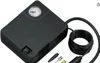
Getting to a haunted spot over mountain roads or unpaved surfaces makes a gravel- or nail-caused flat more likely. A compact compressor that runs off the cigarette lighter socket lets you top up air on the spot, and doubles for a spare tire, a bicycle, or a ball.
BAL (Ohashi Sangyo) Air Compressor No.498, DC12V, 450kPa, Lightweight, Emergency Tire Inflator, with Bicycle Valve & Ball Needle Leisure Adapters
We may earn a referral fee on purchases made through these links.
The Night Side: Ghost Stories and Haunted Spots of This City
So far we have walked Akita’s daytime face: an ancient stockade, an earthen castle, the summer of the Kanto, and its harbor and mountains. Each place layers the time of people who lived there, prayed there, and sometimes faced a harsh nature.
That depth connects to the night side as well. Akita has ghost stories and urban legends that are often told, but their locations are not specified and we do not recommend searching for them. In this site’s view, a ghost story is something like a shadow that a land’s history and terrain have cast on people’s minds. The more you learn about castle ruins and ancient sacred mountains, the deeper your respect for quiet places becomes.
At KARASU CHANNEL, we present true ghost stories and haunted spots not so that you can visit them but so that they are recorded. After getting to know the daytime scenery, please read the night stories too.
Before You Go
Opening hours, fees, closing days and access change easily, so they are not included in this article. Before you go, please check the latest information on the official website of each facility or local government. Some places may be restricted from entry because of weather or disasters.
Frequently Asked Questions
Q. In what order is it efficient to see Akita’s sights?
A. This article introduces them from north to south. In the city center, Senshu Park, the Akita Museum of Art, the Red Brick Folk Museum and the Heritage Center are easy to visit on foot; the Akita Castle Ruins are to the northwest and Mount Taihei to the east, so grouping by area makes it easier. Mount Taihei is far away and bear information applies, so please check your means of travel and the latest information with the local government or the official tourist guide.
Q. What is Akita’s specialty food?
A. Kiritanpo, hatahata and iburi-gakko are well known. Offerings differ from shop to shop, so please check the latest information before you go.
Q. When is the Kanto Festival held?
A. It is held every year from August 3 to 6. Schedules and venue conditions may change, so please check the latest official information before you go.
Official sites and references consulted
https://ja.wikipedia.org/wiki/秋田市
https://ja.wikipedia.org/wiki/秋田城
https://ja.wikipedia.org/wiki/久保田城
https://ja.wikipedia.org/wiki/秋田県立美術館
https://ja.wikipedia.org/wiki/秋田市立赤れんが郷土館
https://ja.wikipedia.org/wiki/太平山_(秋田県)
https://ja.wikipedia.org/wiki/竿燈
https://ja.wikipedia.org/wiki/きりたんぽ
https://ja.wikipedia.org/wiki/ハタハタ

Supervised by Suzuking.
Affiliation: KARASU CHANNEL
Occult & horror reporting: 7 years (since 2020)
Followers: YouTube 5,000+ / X 25,000+
On-site investigations: 30+
Haunted locations near this town
Besides its daytime face, this land has a night side too. Read it as a record if you are curious. Some of these places are not safe or permitted to enter.