Kenbuchi Sights: Picture Books, Vanished Stations
Supervised by Suzuking. (KARASU CHANNEL / Occult & horror reporting, 7 years)
Contents
Places to visit in this town (north to south)
Numbers follow the order in the article, from north to south. Select a pin to see its name. Positions are approximate.
- Site of Kita-Kenbuchi Station (北剣淵駅の跡) The site of a station that began as a temporary stop in 1959 and was called a hidden-away station. It was closed on March 13, 2021.
- Kenbuchi Picture Book Hall (剣淵町絵本の館) A specialized picture-book library. It opened in 1991 in a converted old town hall and moved to its present new building in 2004.
- Kenbuchi Station (剣淵駅) A Soya Main Line station that opened in 1900. A tourist products hall of local specialties and a bus terminal are attached.
- Michi-no-Eki Ehon no Sato Kenbuchi (道の駅 絵本の里けんぶち) A roadside station on National Route 40 carrying the picture-book village name. An orchard plaza, Minoru Mori, was added in 2008.
- Site of Higashi-Rokusen Station (東六線駅の跡) The site of a station that began as a temporary stop in 1956. Its name comes from being on the sixth line east of the baseline.
- Hayata Pass (早田峠) A pass on the west side of the town. Along with Mount Kenbuchi, it is named as one of the mountain ranges surrounding the town.
Show basic information about this town (location, last checked, notes)
- Location
- Kenbuchi, Hokkaido, Japan
- Last checked
- 2026.10.06
- Please note
- Opening hours, prices and closing days change often, so we do not list them. Please check each facility's official site before you go.
What Kind of Town Is Kenbuchi?
Kenbuchi is a town in the northern part of Hokkaido’s Kamikawa region, along the Kenbuchi River, a tributary of the Teshio River. It is an agricultural town where field crops, vegetables, dairy farming and livestock thrive, and on the west side of the town lie Mount Kenbuchi and Hayata Pass. It is also known for continuing, since 1989, a town-building effort under the banner of the “Village of Picture Books.”
The Soya Main Line through this town once had several small stations. On March 13, 2021, two stations in the town were closed because of low use. In this article we trace the sights in order of descending latitude, that is, from north to south. Vanished stations, and a town of picture books: let us look at these two quiet faces together.
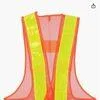
Nighttime haunted-spot exploration in ruins or on mountain roads often means parking beside a road with passing traffic or moving through dark areas — a reflective vest makes you easier for drivers and companions to spot, helping prevent accidents. The waist adjusts with hook-and-loop fastening, and roughly 7cm-wide reflective tape keeps visibility high.
Takagi Reflective Safety Vest, Orange × Yellow, Free Size
We may earn a referral fee on purchases made through these links.
1. Site of Kita-Kenbuchi Station (北剣淵駅の跡)
Kita-Kenbuchi Station was a station on the Soya Main Line, located in Fujimoto-cho in the northern part of Kenbuchi. It began on November 1, 1959, as a temporary stop. Later, in 1987, along with the privatization of the railway company, it was promoted to a regular station. The name comes from its location north of Kenbuchi, and the place name Fujimoto-cho is said to derive from the surname of the person who opened a farm here in 1908.
This station has been counted among the “hidden-away stations.” Passengers numbered two a day in fiscal 1992, and in many later years it is recorded as one a day or fewer. It is said that the petition requesting its establishment expected use in the bracken-picking season and the fishing period.
The platform was a wooden deck, and it was a tiny station without a toilet. It was closed on March 13, 2021, owing to declining use and a timetable revision. The station site and its surroundings are farmland, the workplace of local people. Please do not approach restricted areas, and be considerate of the surroundings.
2. Kenbuchi Picture Book Hall (剣淵町絵本の館)
The Picture Book Hall is a specialized library of picture books. It began in the late 1980s when a picture-book author was invited to give a talk by the youth division of the local chamber of commerce. Afterward, exhibitions of original illustrations and lectures came to be held, and in August 1989 an international exhibition of original picture-book illustrations from around the world was held. This was the beginning of the building of the “Village of Picture Books.”
When it opened on August 1, 1991, it was in a building converted from the former town hall, with about 10,000 picture books. The cost used 50 million yen from the Furusato Sosei funds that the national government distributed to municipalities. In 1999 the aging of the old building was pointed out, and there was debate in the town assembly over the plan to build a new one.
After that debate, a new hall opened in June 2004. An oval building using plenty of wood, its collection is introduced as having grown to about 45,000 books. Since its opening, a prize chosen by visitors’ votes has also continued. Opening days and special exhibitions change, so please check official guidance beforehand.
3. Kenbuchi Station (剣淵駅)
Kenbuchi Station is a JR Soya Main Line station in the center of the town. It opened on August 5, 1900, when the section between Wassamu and Shibetsu stations opened. At its opening the name was read “Kenufuchi,” but it was changed to “Kenbuchi” in 1905.
There are several theories about the station name, including one that it comes from an Ainu word meaning the mouth of a river of alder trees. When the station building was rebuilt in 1988, a tourist products hall and a bus terminal managed by the town were attached. Inside, town specialties such as tomato juice are introduced as being on display.
At the end of December 2024, the commissioned sale of tickets that a shop in front of the station had carried on also ended. A small town’s station reflects the changes of the times as they are. The station is also a place of daily life for the townspeople. Please be considerate of users when taking photographs, and check the timetable and operating status beforehand.
4. Michi-no-Eki Ehon no Sato Kenbuchi (道の駅 絵本の里けんぶち)
Michi-no-Eki “Ehon no Sato Kenbuchi” is a roadside station along National Route 40 that opened in September 2006. Its name comes from the picture-book town-building the town began with the international exhibition of original illustrations in 1989. There is a picture-book corner inside, and in 2008 an orchard plaza called “Minoru Mori” (Fruiting Forest), planted to the north with 500 trees of 30 kinds of fruit, was added.
In a reader vote by the magazine Jalan, it is introduced as having been ranked first overall in satisfaction among roadside stations in Hokkaido in 2007. On the other hand, because the facility is supported by cars stopping off the national highway, there is also a record that users dropped sharply around 2010, when the social experiment on free expressways was carried out. After the experiment ended in June 2011, users are said to have recovered.
In our view, if Kenbuchi Station and the Picture Book Hall are the town’s inner face, this roadside station is the town’s gateway for travelers passing along the national highway. The picture-book village signboard seems to play the role of first making passersby remember the town’s name. Shops and business details change, so please check official guidance before you go.
5. Site of Higashi-Rokusen Station (東六線駅の跡)
Higashi-Rokusen Station was a station on the Soya Main Line, located in Higashi-machi in the southern part of Kenbuchi. It was set up in January 1956 as a temporary stop and promoted to a regular station in 1959. The name comes from its location on the sixth line east of the baseline of this area. In Hokkaido’s pioneer lands, roads and plots were laid out like a grid, and there was a custom of calling places by number.
The platform was a wooden deck, and the waiting room was a small tin-clad building. It is introduced that for a time, as a simple commissioned station, tickets were sold at a nearby private house. It was closed on March 13, 2021, owing to declining users and a timetable revision.
This is speculation, but a small station born in a land called by numbers may have kept the memory of the plots of the opened land in its station name. The site and its surroundings are farmland, the place where people live. When looking around, please do not enter fields or private land.
6. Hayata Pass (早田峠)
Hayata Pass is a pass on the west side of Kenbuchi. To the west of the town there is also Mount Kenbuchi, and mountain ranges continue, as if surrounding the flat town spread along the Kenbuchi River. Life in the town has been carried on within the terrain made by this river and the mountains to the west.
We have not been able to confirm the pass’s history, elevation and so on. The position of this item is an approximate point estimated from the place name. Because road conditions and the seasons when it can be passed are also unknown, please check the latest information in the town’s official guidance before you visit.
In our view, people heading toward the Picture Book Hall and station in the town center may have long entered this town by crossing the pass in the western mountains. The pass lies within mountains where brown bears appear. Please do not go in carelessly, and take full care of winter closures and bad weather.
Local Specialties, Food and Drink
Kenbuchi is an agricultural town where field crops, vegetables, dairy farming and livestock thrive. At the tourist products hall attached to the station, town specialties are introduced as on display, with tomato juice among the best known.
What is sold and served changes with the season, so please check the information in official guidance beforehand.
Rare Creatures and Nature
The town spreads along the Kenbuchi River, a tributary of the Teshio River. On the west side lie mountain ranges such as Mount Kenbuchi and Hayata Pass, and the town has the terrain of being surrounded by mountains and river.
Among the town’s cultural properties, a Japanese ash tree commemorating the pioneering and fish called scarlet crucian carp, silver crucian carp and iron fish are listed as natural monuments. When entering the mountains, do not forget to be prepared for brown bears.
Other Notable Things About This Town
In 1897 the villages of Kenbuchi, Shibetsu, Taki and Kami-Nayoro were established. Kenbuchi Village started in 1906, Wassamu Village split off in 1915, and town status was adopted in 1962. Within the town, a barracks of the tondenhei (farmer-soldiers) also remains as a cultural property.
In 2006 the roadside station “Ehon no Sato Kenbuchi” opened. The town’s picture-book village building spread to the station, the library and the roadside station.
There are several theories about the town’s name, but a well-known one is that it comes from the Ainu “Kene(-pet)-puchi,” the mouth of a river of alder trees, referring to where the Kenbuchi River meets the Teshio River. If a river mouth thick with alders is the origin of the place name, the town’s name preserves as it is the scenery from before the pioneering.
The town has friendship ties with Imizu City in Toyama Prefecture and Sanuki City in Kagawa Prefecture. Friendship with Imizu began with the former town of Daimon in 1995, and in 2006 the two became sister cities anew. With Sanuki City, the ties of the former town of Shido have been carried on. Exchange with distant lands seems a bond typical of a Hokkaido town where people came from Honshu to pioneer.
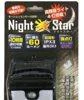
A solar-charged sensor light that needs no wiring or battery changes — it brightens when someone approaches and dims to a night-light glow otherwise. Rain-resistant (IPX3) for outdoor use.
Trade One Motion-Sensor Light 'Night Star', High-Brightness 4-Lamp, Solar-Powered
We may earn a referral fee on purchases made through these links.
The Night Side: Ghost Stories and Haunted Places of This Town
So far we have walked the daytime face of Kenbuchi: a station where almost no one got on or off, a town that turned its old town hall into a picture-book hall, and a land that made the pioneer plots into station names. All were records of a small town facing the waves of the times.
In this town there is no place we can confirm as a widely known haunted spot. In our view, the quiet that hangs over an unfrequented abandoned station stirs awe toward a place where the presence of people has vanished, and becomes an entrance to ghost stories. But it is still a place of daily life for local people.
On KARASU CHANNEL, we set out true ghost stories and haunted places not to visit them but to record them. Having learned the daytime scenery, please read the stories of the night as well.
Before You Go
Opening hours, fees, closing days and access change easily, so they are not listed in this article. Before you go, please check the latest information on the official website of each facility or local government. Some places may be restricted from entry because of weather or disasters.
Frequently Asked Questions
Q. Why is Kenbuchi called the “Village of Picture Books”?
A. Town-building using picture books began in 1989 with an international exhibition of original illustrations. In 1991 the Picture Book Hall, a specialized picture-book library, opened.
Q. Can Kita-Kenbuchi Station or Higashi-Rokusen Station still be used?
A. No. Both were closed on March 13, 2021, because of declining users and a timetable revision.
Q. What does the name Kenbuchi Station mean?
A. There is a theory that it comes from an Ainu word meaning the mouth of a river of alder trees. There are several theories and nothing is firmly settled.
Q. Where does the name Kenbuchi come from?
A. There is a theory that it comes from an Ainu word meaning the mouth of a river where alders grow. There are several theories and nothing is firmly settled.
Q. What is distinctive about Michi-no-Eki Ehon no Sato Kenbuchi?
A. It stands along National Route 40, with a picture-book corner and an orchard plaza called “Minoru Mori.” It opened in 2006. Business details change, so please check official guidance beforehand.
Sources consulted
https://ja.wikipedia.org/wiki/剣淵町
https://ja.wikipedia.org/wiki/剣淵駅
https://ja.wikipedia.org/wiki/北剣淵駅
https://ja.wikipedia.org/wiki/東六線駅
https://ja.wikipedia.org/wiki/剣淵町絵本の館
https://ja.wikipedia.org/wiki/道の駅絵本の里けんぶち

Supervised by Suzuking.
Affiliation: KARASU CHANNEL
Occult & horror reporting: 7 years (since 2020)
Followers: YouTube 5,000+ / X 25,000+
On-site investigations: 30+