Obira Sights: Herring Mansion and Sunset Sea
Supervised by Suzuking. (KARASU CHANNEL / Occult & horror reporting, 7 years)
Contents
Places to visit in this town (north to south)
Numbers follow the order in the article, from north to south. Select a pin to see its name. Positions are approximate.
- Onishika Station Ruins (鬼鹿駅跡) Site of a Haboro Line station closed in 1987. Its name comes from an Ainu word meaning the river flowing through the forest downstream.
- Former Hanada Family Fishing Lodge (旧花田家番屋) A herring mansion built around 1905. The largest surviving herring lodge, designated an Important Cultural Property of Japan.
- Lake Obirashibe and Takimi Ohashi Bridge (おびらしべ湖と滝見大橋) An artificial lake formed by Obira Dam. Takimi Ohashi Bridge across it is known as the longest bridge over a lake in Hokkaido.
- Boyodai Observatory (望洋台展望台) An observatory on a hill along National Route 232. It overlooks the Sea of Japan's horizon and the townscape of Obira.
- Mouth of the Obirashibe River (小平蘂川の河口) The mouth of the river that flows through the center of town into the Sea of Japan. Its Ainu name, a river by a cliff, gave the town its name.
Show basic information about this town (location, last checked, notes)
- Location
- Obira, Rumoi, Hokkaido, Japan
- Last checked
- 2026.10.06
- Please note
- Opening hours, prices and closing days change often, so we do not list them. Please check each facility's official site before you go.
What Kind of Town Is Obira?
Obira is a town in the southern part of Rumoi Subprefecture in Hokkaido, facing the Sea of Japan. The Obirashibe River, which flows through the center of the town, empties into the Sea of Japan, and the peaks of the Teshio Mountains rise at its upper reaches. The town has beaches crowded with swimmers in summer, while the upper river is also known as a land where Cretaceous fossils are found.
The town once prospered on herring fishing and coal mining, and in the 1950 census about 17,000 people lived in the area that is now the town. The population is now below 3,000, but that history remains in its fishing lodges and abandoned railway sites. In this article we introduce the sights in order of descending latitude, that is, from north to south.
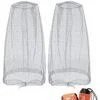
For protecting your face and neck from mosquitoes and gnats at a mountain spot.
Benvo Insect Repellent Head Net, Mosquito Net for Fishing/Outdoor Use, Face Guard, 2-Pack, Gray
We may earn a referral fee on purchases made through these links.
1. Onishika Station Ruins (鬼鹿駅跡)
Onishika Station opened in 1928 (Showa 3) as a station on the JNR Haboro Line, and became a closed station on March 30, 1987, when the whole line was abolished. It was one of the main stations where the express “Haboro” stopped, and in fiscal 1981 an average of 160 passengers a day are recorded as getting on and off.
The name Onishika is said to derive from the Ainu “O-niushi-ka-pet” (the river flowing through the forest downstream). At the end of the Edo period, the explorer Matsuura Takeshiro is said to have visited Onishika four times, and a bronze statue of him was later erected in the town. Even now that the rails are gone, it is a place that reminds us this shore was once a key point of transport in the north.
Onishika once had a townscape that flourished along with the railway. Today cars and route buses are the main means of transport. When you visit the station ruins, please be considerate of the surrounding residents and avoid disturbing local people.
2. Former Hanada Family Fishing Lodge (旧花田家番屋, Nishin Banya)
The former Hanada family fishing lodge is a two-story banya built around 1905 (Meiji 38) by the Hanada family, local net owners. At the height of herring fishing, some 200 people, including the net owner’s family, fishermen, boat builders and blacksmiths, are said to have lived under one roof. The building covers about 906 square meters and has a frontage of about 39 meters, making it the largest surviving herring lodge in Hokkaido.
It was designated an Important Cultural Property of Japan in 1971 (Showa 46). The wide wood-floored living room has three hearths, and decoration using Western-style glass is also incorporated, giving it a distinctive atmosphere that blends Japanese and Western styles. At its peak the Hanada family is said to have owned as many as 18 herring set nets and employed more than 500 fishermen. The building conveys how great the wealth of this shore was.
On the grounds there is a bronze statue of Matsuura Takeshiro and a statue of a woman carrying a mokko (a carrying basket). Every year on the last Sunday in May the Nishin Banya Festival is held, where taiko drums, the Okiage Ondo and Onishika Matsumae Kagura are performed. The Hanada family has died out, and many parts of the building’s history remain unknown.
3. Lake Obirashibe and Takimi Ohashi Bridge (おびらしべ湖と滝見大橋)
Lake Obirashibe is an artificial lake formed by Obira Dam, which blocks the Obirashibe River. It lies in the mountains to the east of the town, and Hokkaido Road 126 (Obira-Horokanai Line), which runs along the lake’s shore, is also the road leading to distant Horokanai. This quiet lake spreads along a mountain road connecting a seaside town and a mountain town.
Takimi Ohashi Bridge, which spans the lake, is introduced as the longest bridge over a lake in Hokkaido. The lake surface seen from the bridge reflects the green of the surrounding mountains and the white of snow, changing its expression with the seasons.
The upper reaches of the Obirashibe River are known as a river where Cretaceous strata spread and ammonite and dinosaur fossils are found. Collecting fossils involves rules and safety cautions, so please be sure to check the latest information from on-site guides and the local government.
4. Boyodai Observatory (望洋台展望台)
Boyodai is a viewpoint on a hill overlooking the town center of Obira. Along National Route 232, it offers a view of the Sea of Japan spreading straight ahead. Boyo means gazing far out over the sea, and the view is just as the name says.
The sun setting into the Sea of Japan is one of the views the town is proud of, and the time when the horizon turns red is said to be popular. In winter you can see the white waves of the rough Sea of Japan, and in summer a calm blue sea. From high up, the rooftops of the town center and the Obirashibe River flowing into the Sea of Japan are also easy to make out.
Around it there are leisure facilities such as a campground and a ski area, and it is loved as a place to spend time looking out over the sea. Conditions of use and seasons change easily, so please check the town’s latest guidance before you go.
5. Mouth of the Obirashibe River (小平蘂川の河口)
The Obirashibe River is a Class 2 river that rises in the Teshio Mountains, flows west through Obira and empties into the Sea of Japan. About 94 percent of its basin is forest, and the town of Obira opens up only in the lower reaches. The river’s name derives from the Ainu “O-bira-urbet” (the river with a cliff at its mouth), and it is also the origin of the present town’s name.
The town was originally called “Obirashibe Village,” but when the railway opened in 1927, the station was named “Obira,” omitting the character shibe (蘂), which has many strokes. In 1948 the name of the municipality was also changed to Obira Village. It is an interesting story of how dropping one difficult kanji came to settle as the town’s name.
As mentioned earlier, the upper river is known as a fossil site where ammonite and dinosaur fossils have been excavated. The river is something like an axis linking the town’s nature and history. The area near the mouth is also where waves of the Sea of Japan break, so please take great care of rising water and high waves.
Local Specialties, Food and Drink
One of Obira’s specialties is the rare “Ivory Melon,” which is grown only in Obira in Hokkaido. Its rice has won the grand prize at a national taste competition, and vegetables such as potatoes, green peppers and corn are also grown.
From the sea, seed scallops raised in scallop aquaculture are shipped to producing areas across the country, and giant Pacific octopus is also landed; in 2017 the “octopus-trap fishing owner” program was revived for the first time in about ten years. In the short summer season there are sea urchin and sea cucumber, and in the cold season, ginnansou (seaweed) and sculpin.
True to a herring town, herring soba and herring sanpei-jiru are introduced as local specialties. Onishika’s famous sweet “beko mochi” is also well known. Availability changes easily, so please check the latest information before you go.
Rare Creatures and Nature
The mountains in the town include Mt. Obirashibe (961 m), Mt. Kamashiri (913 m), Mt. Obirashibe-yama (877 m) and Mt. Poroshiri (731 m), all part of the Teshio Mountains. Mt. Poroshiri straddles the border with Rumoi City.
Although it faces the Sea of Japan, summer temperatures can rise because of the foehn phenomenon, and on August 7, 2021 a temperature of 38.7 degrees was recorded, the highest ever observed in Hokkaido in August. In winter, by contrast, it is severely cold, and temperatures around minus 25 degrees are not unusual. Snowfall is also heavy, and the town is designated a special heavy-snow area.
Usutani and Onishika are known as swimming beaches, and the sandy shores are crowded with people in summer. The town’s appeal as a fossil site is as described earlier.
Other Notable Things About This Town
The history of this shore is old: in 1782 (Tenmei 2), the Matsumae domain ran herring and salmon fishing at Usutani and Hirotomi. In 1880 (Meiji 13) a village headman’s office was set up in the fishing lodge of Tentogan Village, and in 1887, in response to a sudden population increase in Onishika Village, the office was moved to the town area.
The town was also a coal-mining town. It occupied a corner of the Rumoi coalfield, reaching its peak around 1947 with the bustle of the Haboro Line, the Teshio Coal Mine Railway and the Tappu Forest Railway. By the 1960s and 70s the mines closed one after another and all the railways were abolished. It is said that even after the 2000s, one open-pit mine remained in operation.
In culture, the Onishika Matsumae Kagura and the Usutani Benzaiten monument are designated cultural properties of the town. The town system was adopted in 1966, and coastal fishing and agriculture are now the main industries.
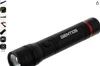
Essential for recording a place like this: gear that lights your footing properly. Here's the high-brightness LED light we use in our own reporting.
GENTOS LED Light 600lm, IP66 Compliant RX-022DS
We may earn a referral fee on purchases made through these links.
The Night Side: Ghost Stories and Haunted Spots of This Town
So far we have followed the daytime face of Obira from north to south: a fishing lodge that tells of herring’s glory, a station of an abandoned railway, a sunset over the Sea of Japan, a lake in the mountains. At every place the time of a shore that prospered on fishing and coal and then grew quiet is layered.
As for the night side, we have not confirmed any story that can be identified as a ghost story or haunted spot. In our view, the stillness of a shore after the bustle has left is somehow like a story in itself. Abandoned railway sites and former coal-mining areas are dangerous due to age and decay, so please avoid searching them out at night.
On KARASU CHANNEL, we set out true ghost stories and haunted places not to visit them but to record them. Having learned the daytime scenery, please read the stories of the night as well.
Before You Go
Opening hours, fees, closing days and access change easily, so they are not listed in this article. Before you go, please check the latest information on the official website of each facility or local government. Some places may be restricted from entry because of weather or disasters.
Frequently Asked Questions
Q. What is the most famous sightseeing spot in Obira?
A. The former Hanada family fishing lodge, an Important Cultural Property of Japan. It is said to be the largest surviving herring lodge in Hokkaido, and the Roadside Station Obira Nishin Banya stands next to it.
Q. What are Obira’s specialties?
A. Besides the Ivory Melon, which is grown only in Obira in Hokkaido, herring soba, giant Pacific octopus and scallops are well known. What is served changes easily, so please check beforehand.
Q. Can I collect fossils?
A. The Obirashibe River basin is known as a fossil site, but there are collection rules and dangers. Please be sure to check the latest guidance from the local government or on site.
Sources consulted
https://ja.wikipedia.org/wiki/小平町
https://ja.wikipedia.org/wiki/道の駅おびら鰊番屋
https://ja.wikipedia.org/wiki/鬼鹿駅
https://ja.wikipedia.org/wiki/小平蘂川
https://tabi-mag.jp/ho1062/
https://www.hkd.mlit.go.jp/rm/tiiki_sinkou/c2dl9l0000000po1-att/c2dl9l00000010g7.pdf
https://www.visit-hokkaido.jp/spot/detail_10529.html

Supervised by Suzuking.
Affiliation: KARASU CHANNEL
Occult & horror reporting: 7 years (since 2020)
Followers: YouTube 5,000+ / X 25,000+
On-site investigations: 30+