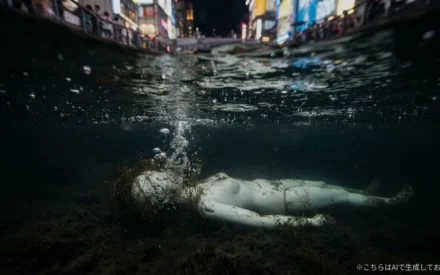
Sightseeing in Chuo Ward, Osaka: Castle, Palace and Merchant Town, Walked North to South
Supervised by Suzuking. (KARASU CHANNEL / Occult & horror reporting, 7 years)
Contents
Places to visit in this town (north to south)
Numbers follow the order in the article, from north to south. Select a pin to see its name. Positions are approximate.
- Tekijuku (Former Residence of Ogata Koan) (適塾・緒方洪庵旧宅) The building of the private school opened by Ogata Koan, where young men such as Fukuzawa Yukichi, who would move the Bakumatsu and Meiji eras, studied.
- Osaka Exchange and the Statue of Godai Tomoatsu (大阪取引所と五代友厚像) An exchange in the Kitahama financial district that incorporates the design of the 1935 old building and stands beside a statue of Godai Tomoatsu, founder of Osaka's modern economy.
- Osaka Castle and Toyokuni Shrine (大阪城と豊國神社) A castle built by Toyotomi Hideyoshi and rebuilt by the Tokugawa, whose huge stone walls and surviving gates and turrets show two eras layered together.
- Sukunahikona Shrine (Shinno-san) (少彦名神社・神農さん) A shrine in the medicine town of Doshomachi dedicated to the gods of medicine, affectionately called Shinno-san and known for its paper-mache tiger charm.
- Imasu Shrine (Zama-san) (坐摩神社・ざまさん) An old shrine beloved as Semba's tutelary shrine, quiet within the city and linked to the origin of the place name and surname Watanabe.
- Osaka Museum of History (大阪歴史博物館) A museum built directly above the remains of Naniwa Palace, with an ancient floor on the 10th level and exhibits tracing Osaka's history as you descend through the eras.
- Naniwa Palace Ruins Park (難波宮跡公園) The site of a palace from the Asuka to Nara periods, where the base of the Daigokuden has been restored so you can feel an ancient Japanese capital underfoot.
- Ginkgo Avenue on Midosuji (御堂筋のイチョウ並木) The boulevard linking Umeda and Namba, whose ginkgo avenue, golden in autumn about 90 years after the road's widening, forms the backbone of the city.
- Dotonbori and Ebisubashi Bridge (道頓堀と戎橋) A theater district on both banks of a canal dug in the Edo period, still a representative entertainment area of Osaka's Minami.
Show basic information about this town (location, last checked, notes)
- Location
- Chuo Ward, Osaka, Osaka Prefecture, Japan
- Last checked
- 2026.10.05
- Please note
- Opening hours, prices and closing days change often, so we do not list them. Please check each facility's official site before you go.
What Kind of Place Is Chuo Ward, Osaka?
Chuo Ward, Osaka, is the heart of Osaka, home to the Osaka Prefectural Government and spanning everything from Osaka Castle to Dotonbori. It was born in February 1989 when the former Higashi and Minami wards merged, which makes it the youngest of Osaka’s administrative wards. Yet the ground beneath your feet is astonishingly old: the remains of a palace from the Asuka period, the castle of Toyotomi Hideyoshi and the merchant quarters of Edo all overlap within the same ward.
Because so many people come to work here during the day, it is also known as the ward with the highest daytime-to-nighttime population ratio in Osaka. This article introduces the sights in order of latitude, from north to south. We start at a place of learning in Kitahama, pass through the castle and palace ruins, the town of medicine and a tree-lined boulevard, and head south to the theater district along the canal.
A tool for cutting through overgrown branches and brush at a ruin or mountain spot.
Silky (UM Kogyo) Pocketboy Folding Saw, All-Purpose Blade, No Case, 340-18, 170mm, Outdoor/Pruning/Camping
We may earn a referral fee on purchases made through these links.
1. Tekijuku (Former Residence of Ogata Koan) (適塾・緒方洪庵旧宅)
Tekijuku was a private school opened by Ogata Koan, a physician and scholar of Dutch learning. It was opened in 1838, first in what is now Kawaramachi in Chuo Ward, and in 1845 it moved to Kahocho, the present Kitahama 3-chome. The school lasted until 1868, the first year of Meiji, and its years at this site coincide exactly with Japan’s transition from Edo to the modern age.
The names of those who studied here read like a Japanese history textbook. Among its pupils were Fukuzawa Yukichi, who founded Keio Gijuku; Omura Masujiro, who laid the foundations of the modern army; Sano Tsunetami, first president of the Japanese Red Cross Society; and Takamine Jokichi, known for the discovery of adrenaline. The register of entrants is said to list more than 600 names over the roughly 18 years from 1844 to 1862. Students came from all over the country, which tells you that Osaka was also a town where learning gathered.
The building became a National Historic Site in 1941 and was designated an Important Cultural Property in 1964. It was dismantled and repaired by the Agency for Cultural Affairs between 1976 and 1980, and has been open to the public since 1980. Inside this building, which retains the look of a townhouse (machiya), if you picture the fervor of the students who ate and slept here and studied almost fighting over dictionaries, the quiet rooms should start to feel a little noisier.
2. Osaka Exchange and the Statue of Godai Tomoatsu (大阪取引所と五代友厚像)
Kitahama has been the center of Osaka’s finance and commerce since the Edo period. The present Osaka Exchange building was completed in 2004 and incorporates the exterior design of the market building of the former Osaka Securities Exchange, built in 1935. The sight of an old stone facade joined to a new high-rise section is a view that shows a city’s effort to carry history forward without destroying it.
In front of the building stands a bronze statue of the businessman Godai Tomoatsu, erected in 2004. Godai was active from the final years of the shogunate through the Meiji era and played a major role in modernizing Osaka’s economy, and in 1878 (Meiji 11) he was involved in the founding of the Osaka Stock Exchange. His name is engraved at the turning point when Osaka was reborn from the Edo-period merchant city called the “Kitchen of the Realm” into a modern economic city.
The history of trading in Osaka goes back to the rice market of Dojima in the Edo period. The Dojima rice exchange is spoken of as one of the beginnings of organized futures trading. When you consider that the idea of buying and selling invisible promises grew up in this city, it feels as though several centuries of merchants’ wisdom lie beneath Kitahama’s quiet office towers. In this site’s view, the name “city of commerce” for Osaka is not a matter of warm-hearted people but a name for the record of those who kept refining such mechanisms.
3. Osaka Castle and Toyokuni Shrine (大阪城と豊國神社)
Osaka Castle was built in 1583 by Toyotomi Hideyoshi as the base from which he would unify the country. The site was where Ishiyama Hongan-ji temple had once stood. Hideyoshi’s castle burned in the Siege of Osaka in 1615 and the Toyotomi family fell. The Tokugawa shogunate then began rebuilding in 1620 and built a castle larger than that of the Toyotomi era. Its keep, however, burned in 1665 after a lightning strike.
The present keep is the third, restored in 1931. It was built on a proposal by the then mayor of Osaka, Seki Hajime, and with donations from citizens. That it stands on the Tokugawa-era keep base but in the form of Hideyoshi’s keep is what makes this castle anything but simple. Huge stones are used in the walls, and the Octopus Stone (Tako-ishi) is about 5.5 meters high and 11.7 meters wide, with an estimated weight of about 108 tons. Thirteen gates and turrets built in the Tokugawa era survive and are Important Cultural Properties.
South of the castle, in the Ninomaru, stands Toyokuni Shrine, which enshrines Toyotomi Hideyoshi as the chief deity together with Hideyori and Hidenaga. The shrine buildings were completed in 1879 and in 1961 were moved to the present location from Nakanoshima. When you visit, please be mindful that this is a place of worship and offer your prayers quietly. Knowing that two eras, Toyotomi and Tokugawa, overlap on the same stone walls changes the way you look up at the castle.
4. Sukunahikona Shrine (Shinno-san) (少彦名神社・神農さん)
Doshomachi has prospered since the Edo period on the medicine trade. Wholesalers that handled drug ingredients imported from China and the Netherlands set up shop here and formed a shogunate-approved trade guild (kabunakama). In 1721 the Wayakushu Aratame Kaisho was established to check the quality of domestic drugs, and a system for protecting the quality of medicine was developed in this town. About 150 pharmaceutical companies still have their head offices here, and its character as a medicine town continues.
Sukunahikona Shrine is the shrine that the drug wholesalers of Doshomachi have long honored. In 1780 they welcomed Sukunahikona no Mikoto, the god of medicine. Because the town had already been enshrining Shennong (Shinno), the Chinese god of medicine, the two deities are worshipped together. Locally it is known as “Shinno-san,” and the Shinno Festival held every November is known as an autumn event of Osaka.
The paper-mache tiger charm given out here is the shrine’s emblem. It is said to come from handing out medicine and charms when an epidemic spread in the late Edo period. This is our conjecture, but perhaps merchants who dealt in medicine honored their god because their awe of a trade that touched human lives ran deep. When you visit, please be mindful that this is a place cherished as a shrine.
5. Imasu Shrine (Zama-san) (坐摩神社・ざまさん)
Imasu Shrine (“Zama-san,” as it is affectionately called) is the tutelary shrine of Semba. Its deity, the Imasu no Okami, has been worshipped as a god who protects homes. Its origins are ancient: tradition says that when Empress Jingu returned from Silla, she enshrined the deity on Tamishima, on the south bank of the Yodo River. It has the standing of the only major shrine in Nishinari District of Settsu Province, as listed in the Engishiki of the Heian period.
When construction of Osaka Castle began in 1582, the shrine was ordered to move, and later, in the Kanei era, it moved to its present location in Kyutaromachi 4-chome. The reason this place is called “Watanabe” is that the name of the original location was carried over, and it is also known as the birthplace of the surname Watanabe. A history in which a shrine was moved for the convenience of urban development below a castle tells how power rewrote the shape of the city.
The shrine buildings burned in the wartime destruction of 1945, but the present reinforced-concrete buildings have been restored to their prewar appearance. Standing among the buildings, it is quiet, but people’s prayers for safety of home and travel have continued here for a long time. When you visit, please be mindful that this is a place of prayer and spend your time quietly.
6. Osaka Museum of History (大阪歴史博物館)
The Osaka Museum of History is a municipal museum that opened in 2001 and stands next to Naniwa Palace Ruins Park. It is a large building of 13 floors above ground and three below, designed jointly by several architecture firms. The permanent exhibition runs in chronological order from the 10th floor to the 7th: the 10th-floor ancient floor deals with Naniwa Palace, the 9th covers the medieval period to the Edo period, and the 7th covers Osaka from the Taisho era to the early Showa years.
What makes this museum interesting is that remains of Naniwa Palace are preserved on the building’s first basement level and can be viewed on a guided tour. Building the museum directly above the remains, without destroying them, is its greatest feature. The 8th-floor “Floor for Digging History” recreates an excavation site and lets you feel what it is like to read history from beneath the ground.
An ancient palace, a castle of the Azuchi-Momoyama era and a modern city: these three times sit side by side in this ward. In this site’s view, if you stop here first as a preparation in history and then walk the palace ruins and the castle, the same scenery will look different.
7. Naniwa Palace Ruins Park (難波宮跡公園)
Naniwa Palace was the palace to which Emperor Kotoku moved the capital after the Isshi Incident of 645, and it is said to have been completed in 652. Known as one of the first full-scale palaces in Japan, it is called the “Early Naniwa Palace.” Records say this palace burned in the first month of 686. It was later rebuilt in the reign of Emperor Shomu and became the “Late Naniwa Palace.” In 726 Fujiwara no Umakai was appointed to take charge of its construction, and in 744 an edict to move the capital was issued, but the next year the capital was moved to Shigaraki Palace.
The palace’s existence was confirmed through excavation in the Showa era. The researcher Yamane Tokutaro, who had found roof tiles in 1913, waited a long time for a chance to investigate; after the war, a shibi (roof-ridge ornament) was found in 1953, and full-scale excavation began in 1954. In 1961 the site of the Daigokuden (state hall) was found, confirming the central facility of the capital. It is now preserved as a National Historic Site and maintained as a park.
The park’s wide lawn, precisely because nothing stands on it, makes it easy to imagine the size of the former palace. This is our conjecture, but perhaps Emperor Kotoku chose this land, near the sea and rivers, with the idea of a diplomatic gateway looking toward exchange with the continent. Osaka’s character as a “port city” may in fact reach back to ancient times.
8. Ginkgo Avenue on Midosuji (御堂筋のイチョウ並木)
Midosuji is a boulevard running north to south, linking Umeda and Namba in Osaka. It is about 4 kilometers long and about 43.6 meters wide. The street’s name is said to come from the two temples along it, Kita-Mido and Minami-Mido.
It was originally a narrow road, but in 1919 the then mayor, Ikegami Shiro, announced a plan to widen it to about 44 meters. Work proceeded from 1926 together with subway construction, and the section south of Yodoyabashi was finished in 1937. From January 1970 it became one-way southbound, leading to the scene we see today.
About 970 ginkgo trees are planted along the street. In 2018 a typhoon damaged 81 of them, but replanting followed. In autumn, the avenue turning golden looks like a river flowing slowly between buildings. This is our conjecture, but perhaps this street became a point of civic pride and not just a road because the will of the era that decided on the widening and the efforts of people who keep protecting the trees come together.
9. Dotonbori and Ebisubashi Bridge (道頓堀と戎橋)
The Dotonbori River is a canal whose excavation began in 1612. Yasui Doton (Naritada Doton), the merchant who undertook the project, died during the Siege of Osaka, and completion was taken over by his cousin Yasui Kyuubei and others. After completion in 1615, the lord of Osaka Castle, Matsudaira Tadaaki, praised his achievement by naming it “Dotonbori.” That a person’s name remains as a town’s name is proof of exceptional accomplishment.
Theaters were later gathered along this canal’s south bank. In 1653, the licenses to stage performances were fixed at five, and theaters known as the “Dotonbori Goza” (Five Theaters of Dotonbori) lined up: Naniwaza, Nakaza, Kadoza, Asahiza and Bentenza. The fervor for theater that Edo commoners felt along this river is the source of the character of today’s entertainment district.
The river is about 2.7 kilometers long, flowing west from the Higashi-Yokobori River and joining the Kizu River. From 2004 to 2013 a promenade of about 2 kilometers, the “Tombori River Walk,” was developed, making it possible to walk close to the water. Looking at the river from around Ebisubashi, the Edo-period theater town and the light of modern signs are reflected on the same water. If you think of the time of the people who dug the canal as lying beneath the bustle of the night view, the scenery seems to gain depth.
Local Specialties: Food and Drink
An indispensable name in Osaka food is takoyaki. It is said to have been born in early Showa Osaka when the filling of “radio-yaki” and similar items was changed to octopus. Its strength lies in a flour batter seasoned with dashi, finished crisp outside and creamy inside, a flavor that symbolizes Osaka as a city of flour-based foods.
Semba-jiru, eaten in the merchant houses of Semba, is a simple soup of fish scraps and daikon, said to be a flavor born of the merchants’ life that prized “shimatsu” (thrift and avoiding waste). The wisdom of using everything up overlaps with the temperament of a city of commerce.
Osaka sushi (hako-zushi, box sushi), descended from pressed sushi, is another representative flavor of the city. The method of packing it into a mold and pressing it is, this is our conjecture, probably an ingenuity of a merchants’ town that valued appearance and ease of carrying. Offerings vary by shop, so please check the latest information before you go.
Rare Wildlife and Nature
It is a ward in the city center, but you can still enjoy natural scenery through the seasons. Osaka Castle Park has floral spots such as the plum grove in the Ninomaru and the cherry trees of the Nishinomaru Garden, and wild birds gather at the waterside of the outer moat. The castle reflected in the water and stone walls makes you forget you are in the middle of a city.
The ginkgo avenue of Midosuji, about 970 trees turning golden in autumn, is the ward’s representative street-tree landscape. Along the Dotonbori River, development of the promenade has progressed, so you can now view the water close up from the riverside. It is not a town where rare creatures are the stars, but nature raised and protected by human hands forms the skeleton of the town.
Other Notable Things About This Town
Chuo Ward was born in February 1989 when the former Higashi and Minami wards were merged. The histories of two wards that had continued for about 110 years were joined into one. Within the ward are the Osaka Prefectural Government and the Osaka International Peace Center (Peace Osaka), among others, making it a center of administration and learning.
In terms of commerce, merchant towns dating from the Edo period such as Semba, Kitahama and Honmachi are lined up, and pharmaceutical companies gather in Doshomachi. The former Fourth Division headquarters of the Imperial Japanese Army within Osaka Castle Park has been reborn as a facility and conveys a part of modern history. In addition, central Osaka suffered great damage in the air raids of 1945. We would like to quietly keep in mind that such memories lie beneath the tourist scenery as well.
That the faces of each era (an ancient palace, a Toyotomi castle, an Edo merchant town and a modern financial district) are contained in one ward is a density rare even in Japan. Just by changing where you walk, you can taste the feeling of standing in a completely different era.
A guide that reads Japan's classic ghost stories as culture, from the Nihon Shoki to Lafcadio Hearn — a reference for our analysis pieces.
Classic Ghost Stories as Culture: From the Nihon Shoki to Lafcadio Hearn (Yuki Yoshida / One Publishing)
We may earn a referral fee on purchases made through these links.
The Night Side: Ghost Stories and Haunted Spots of This Town
So far we have walked through the daytime face of Chuo Ward, Osaka: a castle, palace ruins, a town of medicine and an entertainment district along a canal. Every one of these places carries layers of time in which people lived, traded and at times were swept up in conflict.
That depth connects to the town’s night side as well. In central Osaka there are also places spoken of as settings for ghost stories and urban legends, but many of them have uncertain locations and uncertain truth, and we do not recommend going to search for them. In this site’s view, a ghost story is a kind of shadow that a place’s history casts on people’s hearts. The more you learn about the burning of the castle in the Siege of Osaka and the burning of the city in the air raids, the deeper your respect for quiet places grows.
At KARASU CHANNEL we record true ghost stories and haunted spots not so that people will go there, but so that they are remembered. Having come to know the daytime scenery, we hope you will also read the stories of the night.
Before You Go
Opening hours, fees, closing days and access change often, so they are not listed in this article. Before you set out, please check the latest information on each facility’s or local government’s official site. Some places may be restricted because of weather or disaster.
Frequently Asked Questions
Q. In what order should I visit the sights in Chuo Ward, Osaka?
A. This article introduces them from north to south. It is easiest to divide them into the area around Osaka Castle and Naniwa Palace, the merchant towns of Kitahama and Semba, and the Minami side with Midosuji and Dotonbori. All are within walking range, but please check each facility’s public opening status on its official site.
Q. What is Chuo Ward, Osaka, known for?
A. Takoyaki, Semba-jiru and Osaka sushi (hako-zushi) are well known. Offerings vary by shop, so please check the latest information before you go.
Q. Is there anything I should keep in mind when visiting a shrine?
A. Imasu Shrine, Sukunahikona Shrine and Toyokuni Shrine are all active places of faith. Please spend your time quietly in the grounds, and follow signs and official guidance on whether photography and entry are permitted.
Official sites and references consulted
https://ja.wikipedia.org/wiki/中央区_(大阪市)
https://ja.wikipedia.org/wiki/難波宮
https://ja.wikipedia.org/wiki/道頓堀
https://ja.wikipedia.org/wiki/適塾
https://ja.wikipedia.org/wiki/大阪歴史博物館
https://ja.wikipedia.org/wiki/御堂筋
https://ja.wikipedia.org/wiki/道修町
https://ja.wikipedia.org/wiki/豊國神社_(大阪市)
https://ja.wikipedia.org/wiki/大阪城公園
https://ja.wikipedia.org/wiki/たこ焼き
https://www.nippon.com/ja/guide-to-japan/castle00127054/
https://osaka-info.jp/spot/ikasurijinja/
https://www.jpx.co.jp/corporate/learning/tour/ose/01.html

Supervised by Suzuking.
Affiliation: KARASU CHANNEL
Occult & horror reporting: 7 years (since 2020)
Followers: YouTube 5,000+ / X 25,000+
On-site investigations: 30+
Ghost stories from this land
Besides its daytime face, this land has a night side too. Read it as a record if you are curious. Some of these places are not safe or permitted to enter.