Takaoka Sights: A Copper Castle Town, North to South
Supervised by Suzuking. (KARASU CHANNEL / Occult & horror reporting, 7 years)
Contents
Places to visit in this town (north to south)
Numbers follow the order in the article, from north to south. Select a pin to see its name. Positions are approximate.
- Amaharashi Coast (雨晴海岸) A scenic spot where the Tateyama Range can be seen across Toyama Bay. Trains run right beside the sea, and kearashi can be seen in winter.
- Takaoka City Manyo Historical Museum (高岡市万葉歴史館) A museum introducing the Manyoshu poet Otomo no Yakamochi and the poems of Etchu. It stands near Mt. Futagami, which spreads across the north of the town.
- Shokoji Temple (勝興寺) An old Jodo Shinshu temple on the high ground of Fushiki. Its main hall and its Ohiroma and Shikidai were designated National Treasures in 2022.
- Kanaya-machi (金屋町) A town of casters, to which Maeda Toshinaga invited metal casters. A row of houses with thousand-bar lattices and stone paving scattered with copper line the street.
- Takaoka Kojo Park (高岡古城公園) The site of Takaoka Castle, built by Maeda Toshinaga. A park designated a National Historic Site, with a wide water moat and about 1,800 cherry trees.
- Yamamachi-suji (山町筋) A street lined with merchant houses of black plaster and earthen-storehouse style. The old neighborhoods that own the floats of the Takaoka Mikuruma-yama Festival, selected as a national preservation district.
- Takaoka Daibutsu (高岡大仏) A seated bronze statue of Amida Nyorai, counted with Nara and Kamakura as one of the Three Great Buddhas of Japan. The crowning achievement of Takaoka copperware skills.
- Zuiryuji Temple (瑞龍寺) The family temple of Maeda Toshinaga. A National Treasure temple representing early modern Zen architecture, with the Sanmon, Butsuden and Hatto lined up in a straight line.
Show basic information about this town (location, last checked, notes)
- Location
- Takaoka, Toyama, Japan
- Last checked
- 2026.10.05
- Please note
- Opening hours, prices and closing days change often, so we do not list them. Please check each facility's official site before you go.
What Kind of Town Is Takaoka?
Takaoka is the second-largest city in Toyama Prefecture, set on the Takaoka Plain facing Toyama Bay in the west of the prefecture. It became a city in April 1889 (Meiji 22), one of the first 31 cities created in Japan. In November 2005 it merged with Fukuoka Town in Nishitonami District, giving it its present area.
The town began in 1609 (Keicho 14), when Maeda Toshinaga, the second head of the Kaga Maeda family, completed Takaoka Castle and laid out a castle town. The name is said to be taken from a passage in the “Shijing” (Classic of Poetry), an old Chinese anthology, and has an auspicious ring. Traditional industries such as copperware, lacquerware and Buddhist altars later took root, and copper products in particular are said to account for more than 90 percent of the domestic market. This article introduces the sights of the city in order of latitude, from north to south. The route begins with a seaside view, then heads south through two temples with National Treasures, a castle ruin, a merchant quarter and finally the town of casters.

A mite-repellent spray with no synthetic insecticide, for spraying directly onto tatami, carpet, or bedding — use it to prevent mite-related skin trouble when you sit down to set up gear or explore a dusty tatami room inside a ruin.
Earth Chemical Pyrepara Earth Mite Repellent Spray 300mL
We may earn a referral fee on purchases made through these links.
1. Amaharashi Coast (雨晴海岸)
Amaharashi Coast is a scenic spot at the northern edge of Takaoka, facing Toyama Bay. On clear days you can see the Tateyama Range, with peaks of more than 3,000 meters, across the sea. It is rare in Japan to find a place where sea and mountains fit into a single view, and it is known as the view this town is proudest of.
Between Etchu-Kokubu and Amaharashi stations, the JR Himi Line runs almost right beside the shoreline, so the view from the train window is also well regarded. It is popular with railway fans and is said to have been used on a Seishun 18 Kippu poster. In 2014, Toyama Bay, including Amaharashi Coast, joined the Most Beautiful Bays in the World Club.
In winter you can see “kearashi,” water vapor from the sea rising into the cold air, and many people come to watch the first sunrise on New Year’s Day. In our view, the scenery of Amaharashi draws people because the rugged mountains and the calm bay balance each other within the same field of vision. The seashore changes its expression greatly with the weather and the waves, so please take great care with your footing and the weather.
2. Takaoka City Manyo Historical Museum (高岡市万葉歴史館)
The Takaoka City Manyo Historical Museum opened on October 28, 1990, to commemorate the 100th anniversary of the city. It introduces the world of the Manyoshu, in connection with Otomo no Yakamochi, said to be one of its compilers, who lived in Takaoka as governor of Etchu Province and composed poems here.
Mt. Futagami, which stretches along the north of Takaoka, is known as a mountain Yakamochi wrote about in his poems. A bronze statue of Yakamochi also stands near the mountain, telling us today that this was the setting of his poems. In the temple-and-shrine forest of Hiyoshi Shrine on Mt. Futagami, beech trees grow naturally at an altitude of only about 270 meters, which is considered a rare example of a lowland beech forest.
This is our inference, but for Yakamochi, posted to Etchu far from the capital, the mountains and sea before his eyes may have stirred both a freshness unlike the scenery of the capital and a loneliness at being so far away. That those feelings became poems that still reach us more than a thousand years later is the best reason to visit this museum.
3. Shokoji Temple (勝興寺)
Shokoji is a temple of the Jodo Shinshu Hongan-ji school, said to have been founded in Etchu by Rennyo in 1471. In the Sengoku period it was one of the central forces of the Etchu Ikko-ikki uprisings. After several relocations, it moved to its present site in 1584, when Sassa Narimasa donated the land of Furukokufu Castle. In the Edo period it enjoyed the protection of the Maeda family of the Kaga Domain.
The main hall was built in 1795 (Kansei 7) and is a large Buddhist hall measuring 39.3 meters across the front and 37.4 meters deep. Among main halls that are National Treasures or Important Cultural Properties, it is said to be the ninth largest in Japan. The Ohiroma (great hall) and Shikidai (entrance hall) built in 1692 are the oldest surviving buildings with a raised room for receiving court nobles. These two were designated National Treasures in December 2022.
The great Heisei restoration, which ran from 1998 to March 2021, brought back the look of the Edo period. In our view, the path of a temple that was once a base of the Ikko-ikki and later came to have buildings of a rank fit to entertain court nobles seems to carry the wisdom of a temple that survived by measuring its distance from power in each age. It is still a place of worship, so please stay quiet when you visit.
4. Kanaya-machi (金屋町)
Kanaya-machi is a town of casters that began in 1611, when Maeda Toshinaga invited seven casters, including Kanamori Yaemon, to settle here. At first it made everyday goods such as pots and kettles, but it later moved to producing copperware, and by the middle of the Edo period it is said to have had the most casters in Japan.
In December 2012 it became the first caster’s town to be selected as a Preservation District for Groups of Traditional Buildings, a national designation. The district covers about 6.4 hectares, and the symbol of the town is the row of houses with fine “thousand-bar” lattices, called “samanoko” locally. Copper is scattered through the stone paving of the street, telling you from underfoot that this is a town of casting.
Each plot is long and narrow, combining home and workplace, with the main house, courtyard, earthen storehouse and workshop at the back lined up in that order. Because the work involved fire, ways of keeping a fire from spreading were built into the very structure of the town. In our view, the beauty of the streetscape can be said to be the wisdom of craftsmen who lived with fire, given form. People still live here, so please keep your visit quiet.
5. Takaoka Kojo Park (高岡古城公園)
Takaoka Kojo Park is a park laid out on the site of Takaoka Castle. The castle was completed when Maeda Toshinaga entered it on September 13, 1609 (Keicho 14), but it was abandoned after only about six years under the one-castle-per-province order of 1615 (Genna 1). In March 2015 the site was designated a National Historic Site as the Takaoka Castle Ruins.
The castle consisted of five enclosures: the Honmaru, Ninomaru, Sannomaru, Akemaru and Kajimaru. Of its area of about 210,000 square meters, about 30 percent is said to have been artificial moat, made wider to prevent the spread of fire. The water moat remains today, and on some stretches sightseeing boats operate. Traces of stone walls and wells also remain.
The grounds are planted with about 1,800 cherry trees of 18 varieties, and the park has been chosen as one of Japan’s 100 Famous Cherry Blossom Spots. In 2006 it was also selected as one of the Top 100 Japanese Castles. In our view, the sight of a short-lived castle living on for so long as a place of rest for citizens seems proof that this town has kept using its castle ruins not for war but for daily life.
6. Yamamachi-suji (山町筋)
Yamamachi-suji is a street where merchant houses once lined the old Hokurikudo road, and in December 2000 it was selected as a national Preservation District for Groups of Traditional Buildings. The district covers about 5.5 hectares, and its earthen-walled storehouse-style houses catch the eye.
The buildings are two-storied with gabled roofs, black plaster walls and black tiled roofs, giving them a weighty appearance. You can also see a mixture of Japanese tradition and Western ideas, such as cast-iron pillars and red brick used for fire walls. The great fire of 1900 damaged about 60 percent of the town, which is thought to be the background to the spread of fire-resistant storehouse-style construction.
The ten neighborhoods of Yamamachi own seven floats called Mikuruma-yama. They are said to be descended from the court carriage of Toyotomi Hideyoshi, which Maeda Toshinaga gave to the townspeople and each neighborhood has since reworked and handed down, and they are pulled every year at the Takaoka Mikuruma-yama Festival on May 1. The Sugano Residence in Kofune-machi is an Important Cultural Property and is open to the public. As you walk the streets, please remember that they are still places of daily life and trade, and visit quietly.
7. Takaoka Daibutsu (高岡大仏)
The Takaoka Daibutsu is a seated bronze statue of Amida Nyorai, counted with the Great Buddhas of Nara and Kamakura as one of the Three Great Buddhas of Japan. It was made by bringing together the skills of Takaoka copperware craftsmen, and it is also a symbol of Takaoka as a copper town.
The Great Buddha of this town had a wooden age. In 1745 (Enkyo 2), in the Edo period, there is said to have been a wooden Great Buddha about 9.7 meters tall, but it burned down in the Takaoka fire of 1900. Construction of a bronze Great Buddha then began in 1907, and it was completed in May 1933 (Showa 8), when the eye-opening ceremony was held.
The story of a wooden Buddha lost to fire being raised again in bronze by the town’s own skills speaks of the faith of the people of Takaoka and the pride of its craftsmen. This is our inference, but the memory of losing so much of the town in the great fire may have cast a shadow over the choice of a material that would never burn again. As you look up at the Great Buddha, please also quietly think of the hopes that went into rebuilding the town.
8. Zuiryuji Temple (瑞龍寺)
Zuiryuji is the family temple of Maeda Toshinaga. It is said that Hoenji Temple in Kanazawa was moved to Takaoka in 1613 and, in 1614, the year after Toshinaga died, was renamed “Zuiryuji” by Maeda Toshitsune. It is a Soto Zen temple that preserves well the look of early Edo-period Zen architecture.
In 1997 three buildings, the Butsuden (Buddha hall), Hatto (lecture hall) and Sanmon (main gate), were designated National Treasures as representative examples of early modern Zen-style architecture. The Somon, Sodo, Daisado, Takarouka, corridors and others are Important Cultural Properties. The compound is modeled on Jingshan Wanshou Temple in China: from the front, the Sanmon, Butsuden and Hatto stand on a single axis, with corridors enclosing them on both sides and the halls placed symmetrically. The construction is said to have been carried out by Yamagami Zen’emon Yoshihiro, chief carpenter of the Kaga Domain.
Deep in the southwest corridor stand stone mausoleums enshrining five people, including Maeda Toshinaga, Toshiie and Oda Nobunaga. In our view, the house that built the million-koku Kaga domain may have raised such a grand compound here to give the town of Takaoka, which had lost its castle, a spiritual center. It is still a place of worship, so please stay quiet when you visit and follow the rules of the grounds.
Local Specialties: Food and Drink
A well-known local dish of Takaoka is kobujime. It was originally a way of preserving fish, and it spread to households because the umami of the kelp makes the fish delicious. The background is said to be that kelp culture arrived through Fushiki Port, a port of call for the Kitamae-bune trading ships. Today it is used not only for fish but also for meat, vegetables, mushrooms and more.
Facing Toyama Bay, Takaoka also has seafood at the center of its table. Fresh fish and shellfish are enjoyed in forms such as kobujime. What each restaurant offers changes, so please check before you go.
Rare Wildlife and Nature
The nature that represents Takaoka is the view of Toyama Bay and the Tateyama Range from Amaharashi Coast. On clear days you can see in one sweep from the sea surface to a range of mountains over 3,000 meters. In winter, kearashi rises and white vapor drifts over the sea.
In the temple-and-shrine forest of Hiyoshi Shrine on Mt. Futagami, beech trees grow naturally even though the altitude is only about 270 meters. Beech normally grows at higher elevations, and a lowland beech forest is rare. Together with Amaharashi Coast and other places, the area is protected as part of the Noto Hanto Quasi-National Park.
Takaoka Kojo Park also has about 1,800 cherry trees of 18 varieties, and its spring scenery reflected in the water moat is much loved. Having water and greenery right next to the urban area is also part of what makes this town pleasant to live in.
Other Notable Things About This Town
The industry of Takaoka most worth noting is copperware. Copper products are said to hold more than 90 percent of the domestic share, and the Takaoka Daibutsu is a symbol of that skill. The making of sugegasa (sedge hats) in the Fukuoka area is also said to hold more than 90 percent of the domestic share, showing the richness of the town’s traditional industries.
The town values events of history and culture throughout the year, such as the Takaoka Mikuruma-yama Festival on May 1 each year and the Takaoka Manyo Festival in October. The Mikuruma-yama of Yamamachi-suji are known as floats that inherit the lineage of Hideyoshi’s court carriage.
The castle town opened by Maeda Toshinaga in 1609 has continued as a town of commerce and industry even though the castle was abandoned after about six years. In our view, the strength of Takaoka lies not in the castle itself but in the founding idea of drawing in casters and merchants to build the life of the town.

A neck-worn light for exploring a ruin or mountain haunted spot, freeing both hands from holding a flashlight so you can watch your footing or handle notes and a camera.
SANWA SUPPLY Neck Light, LED, Rechargeable, Hands-Free Neck-Worn LED Light, IPX4 Waterproof, Black, Up to 180 Lumens 800-LED075
We may earn a referral fee on purchases made through these links.
The Night Side: Ghost Stories and Haunted Spots of This Town
So far we have walked the daytime face of Takaoka: a seaside view, temples with National Treasures, a castle ruin, a merchant quarter and a town of casters. In every one of these places, time overlaps in which people lived, prayed and built the town while fighting fire.
That depth connects to the night side as well. Takaoka has ghost stories and rumors that are often told, but their locations have not been identified, and we do not recommend searching for them. In our view, a ghost story is like a shadow that a place’s history and terrain have cast on people’s hearts. The more you know of the great fire and the memories of the Sengoku period, the deeper your respect for quiet places becomes.
At Karasu Channel, we publish true ghost stories and haunted spots not so that you can go, but so that they are recorded. Once you know the daytime scenery, please read the night stories as well.
Before You Go
Opening hours, fees, closing days and access change easily, so they are not listed in this article. Before you go, please check the latest information on the official website of each facility or local government. Some places may be restricted from entry because of weather or disasters.
Frequently Asked Questions
Q. In what order should I see the sights of Takaoka?
A. This article introduces them from north to south. Amaharashi Coast, Shokoji and the Manyo Historical Museum are on the northern coast, the castle ruins, Yamamachi-suji, the Great Buddha and Kanaya-machi are in the center, and Zuiryuji is to the south. The distances are considerable, so please check how you will travel beforehand.
Q. What is Takaoka’s specialty?
A. Kobujime is a well-known local dish. Seafood from Toyama Bay and crafts such as copperware and lacquerware are also products that represent Takaoka. What each restaurant offers changes, so please check the latest information before you go.
Q. Is there anything to keep in mind when visiting temples and streetscapes?
A. Shokoji and Zuiryuji are still places of worship. Yamamachi-suji and Kanaya-machi are also places where people live. Please walk quietly, do not enter private property, and take care not to bother residents when taking photographs.
Official sites and references consulted
https://ja.wikipedia.org/wiki/高岡市
https://ja.wikipedia.org/wiki/瑞龍寺_(高岡市)
https://ja.wikipedia.org/wiki/高岡大仏
https://ja.wikipedia.org/wiki/勝興寺
https://ja.wikipedia.org/wiki/高岡城
https://ja.wikipedia.org/wiki/金屋町_(高岡市)
https://ja.wikipedia.org/wiki/山町筋
https://ja.wikipedia.org/wiki/雨晴海岸
https://ja.wikipedia.org/wiki/高岡市万葉歴史館
https://ja.wikipedia.org/wiki/二上山_(富山県)
https://discoverjapan-web.com/article/105603

Supervised by Suzuking.
Affiliation: KARASU CHANNEL
Occult & horror reporting: 7 years (since 2020)
Followers: YouTube 5,000+ / X 25,000+
On-site investigations: 30+
Haunted locations near this town
Besides its daytime face, this land has a night side too. Read it as a record if you are curious. Some of these places are not safe or permitted to enter.
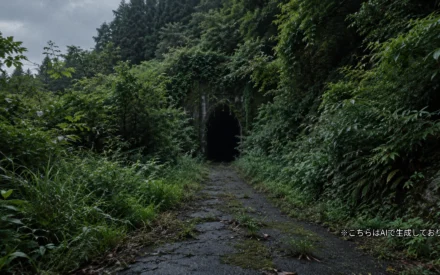
Zuzukawa Tunnel (Former Tsutsura Tunnel; Himi / Takaoka City Border)
Old-road tunnel on the Himi-Takaoka border. Rumors of a woman's suicide, flat tires and sleep paralysis lack records; listings differ on its location.
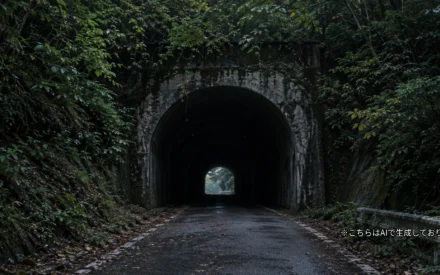
Ushikubi Tunnel (Miyajima Tunnel)
Ushikubi Tunnel is known for stalled engines and an old woman's ghost. No public records back the tales. We cover its active-road status and cautions.