Nakagawa Sights: Fossil Seas and the Teshio River in a Long, Narrow Town of Northern Hokkaido
Supervised by Suzuking. (KARASU CHANNEL / Occult & horror reporting, 7 years)
Contents
Places to visit in this town (north to south)
Numbers follow the order in the article, from north to south. Select a pin to see its name. Positions are approximate.
- Teshio-Nakagawa Station (天塩中川駅) A station on the Soya Main Line. Its old name was "Pombira" (誉平), from the Ainu for "small cliff." The town took over the station building and renovated it.
- Michi-no-Eki Nakagawa (道の駅なかがわ) A roadside station along National Route 40. It sells local specialties and goods themed on fossils, and is the town's gateway, a place to rest beside the Teshio River.
- Pombira Onsen (ぽんぴら温泉) A hot spring whose name means "small cliff" in Ainu. Opened in 1973, it is known for strongly salty water and lies within walking distance of the station.
- Nakagawa Ecomuseum Center (中川町エコミュージアムセンター) A natural history museum in a closed junior high school. Known for a reconstructed skeleton of one of Japan's largest plesiosaurs and for rainbow-lustered ammonites.
- Saku Station (佐久駅) A small station on the Soya Main Line. Its name derives from an Ainu phrase meaning "summer village river," and the station building doubles as a local heritage hall.
- Mokichi Small Park (茂吉小公園) The site of the clinic where the poet Saito Mokichi stayed in 1932 to visit his brother. A small park displaying top works from the tanka festival.
Show basic information about this town (location, last checked, notes)
- Location
- Nakagawa, Hokkaido, Japan
- Last checked
- 2026.10.06
- Please note
- Opening hours, prices and closing days change often, so we do not list them. Please check each facility's official site before you go.
What Kind of Town Is Nakagawa?
Nakagawa is the northernmost town in the Kamikawa Subprefecture, in northern Hokkaido. The Kitami Mountains run to the east and the Teshio Mountains to the west, and between them flow the Teshio River and its tributary, the Anpushinai River. People live on the narrow strips of land along the river, so the town itself takes the shape of a long ribbon running north to south.
This article introduces the sights of the town in order of latitude, that is, from north to south: place names from the Ainu language preserved in a railway station and a hot spring, fossils dug out of a Cretaceous sea, and the traces of a poet who stayed here in the early Showa era. It is a quiet town, but very old layers of time lie piled beneath your feet.

Building-type haunted spots like ruins, abandoned schools, and aging tunnels carry a risk of injury from falling ceiling material or beams. A helmet certified by Japan's Ministry of Health, Labour and Welfare protects your head from that kind of falling debris.
TOYO SAFETY Foldable Work/Disaster-Prep Helmet MOVO No.105, White
We may earn a referral fee on purchases made through these links.
1. Teshio-Nakagawa Station (天塩中川駅)
Teshio-Nakagawa Station sits where the JR Soya Main Line passes through the center of town. It opened in 1922 (Taisho 11) under the name Pombira (誉平). The name comes from the Ainu “pon pira,” meaning “small cliff,” and is said to have referred to a cliff along the river on the west side of town.
Later, voices in the village assembly complained that “Pombira” was hard to read and inconvenient, and a rename was proposed. The station took its present name in 1951, but because a station called Nakagawa already existed on the Ou Main Line, the old province name “Teshio” was added at the front. It is interesting how a single place name entangles the history of the station with the circumstances of the railway network.
The current station building was completed in 1953, and the town took over ownership and renovated it in 2014. Limited express trains stop here, but today it is an unstaffed station. Traces of the old station name remain in a place name on the opposite bank, “Homare,” and in the name of the hot spring close by. Stepping off the train, you can quietly feel the time during which the railways of northern Hokkaido have nurtured this town.
2. Michi-no-Eki Nakagawa (道の駅なかがわ)
Michi-no-Eki Nakagawa is a roadside station along National Route 40, close to the Teshio River. It sits next to the town hall, Teshio-Nakagawa Station and the hot spring, and serves as a kind of gateway to Nakagawa. Its toilets are introduced as available 24 hours a day, which makes it a welcome rest stop on a long journey down the national route.
The town’s official website introduces its specialties as hand creams and soaps made with Japanese mint, processed wild vegetables, woodwork and dyed and woven goods by local makers, and original small items featuring ammonite designs. If you think of the shelves as a lineup of the town’s three personalities, fossils, mint and the bounty of the mountains, stopping by becomes more fun.
Business hours and the goods on sale change easily, so please check the guidance of the town or the facility for details. It is also a good idea to use this as a base and walk around to the station, the hot spring and the banks of the Teshio River.
3. Pombira Onsen (ぽんぴら温泉)
Pombira Onsen is a hot spring about a 20-minute walk from Teshio-Nakagawa Station. The name “Pombira” comes, as mentioned above, from the Ainu “pon pira,” a word meaning “small cliff.” In this way the hot spring inherits the same memory of the land as the old station name.
The spring quality is described as a strong saline (chloride) type, and the water is rich in salt. The temperature of the source is a low 9 degrees. The hot spring opened in 1973 and was completely renovated in 1993. It is a single inn visited by both day-trippers and overnight guests, and a heated pool attached to it is a feature unique to this spring.
Soaking in salty water in the cold air of the northern land is like a reward at the end of a trip through northern Hokkaido. Please check the latest guidance from the facility for availability and hours.
4. Nakagawa Ecomuseum Center (中川町エコミュージアムセンター)
The Nakagawa Ecomuseum Center makes use of the building of Saku Junior High School, which closed in 1999. The gymnasium was converted into a museum and the school building into a lodging and training facility. In keeping with the “ecomuseum” idea of regarding the whole town as one museum, it is the core facility for community building that uses fossils.
The Yezo Group, a stratum formed in the sea of the Late Cretaceous, is widely distributed in the town, and fossils appear as rivers cut into the layers. Among the exhibits, ammonites that retain a pearl-like rainbow luster stand out. This luster is made of the same material as pearl oysters and is normally lost on the way to becoming a fossil, so these are valuable specimens in which the components of the shell from the time the animal was alive remain.
The main attraction is the reconstructed full skeleton of the second plesiosaur, found in 1991. Its estimated total length of 11 meters is said to be the largest in Japan, and it is thought to be a creature that swam in the sea about 72 million years ago. The first specimen was found in 1973, and later study showed that the bones of two animals, one large and one small, had been mixed together. From this exhibit you can also read the history of the town stepping forward to carry out a large-scale excavation on its own.
5. Saku Station (佐久駅)
Saku Station is a small station on the Soya Main Line, very close to the Ecomuseum Center. It opened in 1922, and the current station building was built in 1991 as the “Saku Furusato Densho-kan” (Saku Hometown Heritage Hall). The fact that the station building doubles as a building that passes on local memory shows the feelings of the people of this land.
The station name is said to derive from the Ainu “sak-kotan-nai,” meaning “summer village river.” One interpretation handed down says that the Ainu people fished on the riverbank in summer and moved to live along tributaries in autumn and winter, so this place was called a rich land suited to summer fishing. The area of cliffs where the Teshio River and its tributary meet has probably been a gathering place for people since long ago.
The station has been talked about as one with few users and a possible closure, and since 2021 the town has taken charge of its maintenance. When you visit, it is safer to check beforehand that trains are infrequent. From the quiet platform, try imagining the valley through which the Teshio River flows.
6. Mokichi Small Park (茂吉小公園)
Mokichi Small Park is a small park in the southern part of town, on the site of the former Shibunnai clinic. The person who worked here was Moriya Tomitaro, the older brother of the poet Saito Mokichi. Mokichi visited his brother in what was then Nakagawa Village in 1932 (Showa 7), and it is said that he left 57 poems during his stay.
To commemorate this connection, the town has held the “Nakagawa Tanka Festival” since 1994. It takes place every September, and the top work is said to be displayed in this park. The quiet of the small park itself conveys how the townspeople keep telling of the visit of nearly a hundred years ago with pride.
This is our own speculation, but northern Hokkaido in the early Showa era, when Mokichi came to see his brother, must have been a land only recently reached by rail and still thick with the air of pioneering. A brother treating patients, a younger brother composing poems. If you imagine the quiet time of the two brothers in a valley surrounded by mountains and river, the words of the tanka displayed in the park may look a little different.
Local Specialties, Food and Drink
What the town promotes as its specialty is Japanese mint (wa-hakka). The town’s official website introduces products such as hand creams and soaps made with Japanese mint, and also announces an event called the Hakka Distillation Gathering in October. It shows that a fragrant herb grown in the cool northern climate represents the town as an item of daily life rather than as food.
Processed wild vegetables are also listed among the town’s products. The core industries are dairy farming and forestry, and it is a town with wide pastures. What is offered changes easily, so please check the latest information before you go.
Rare Creatures and Nature
The Teshio River that runs through the town is 256 kilometers long, the second longest river in Hokkaido. There are no weirs across the river up to about 158 kilometers from the mouth, and there is little concrete embankment, so many natural banks remain. Every spring, the “kaihyo,” when the ice breaks up and flows away, is the town’s herald of spring, and the town’s tourism association runs a quiz in which people guess its date and time.
Pay attention to the strata underfoot as well. From the Yezo Group, formed in the sea of the Late Cretaceous, fossils have been found including ammonites, as well as the Nakagawa herring (Nakagawa-nishin), registered as a new species, and the Ezo giant squid. It is introduced that more than 500 ammonite species are known in Hokkaido and more than 100 from Nakagawa alone, making this one of Japan’s leading fossil sites.
The mountains surrounding the town include Panke-yama, Penke-yama and Kuttonbetsu-yama. Winters bring heavy snow, and the town is designated a special heavy-snowfall area. The Teshio River and the mountain ranges change their expression with each season, so you can meet a different landscape every time you visit.
Other Notable Things About This Town
The history of this land is old: people have lived here since the Paleolithic and Jomon periods, and along the Teshio River basin was the life of the Ainu people. In 1857 the explorer Matsuura Takeshiro went up the Teshio River and explored the whole Nakagawa district. Settlement by Wajin (ethnic Japanese) is said to have begun around 1896, and in 1897 a broad stretch of land along the Teshio River became a goryochi (imperial household land), after which pioneering progressed.
The town was established in 1964. Dairy farming and forestry have supported the town’s pioneering and industry, and the “ecomuseum” initiative that makes fossils the core of community building is also a major feature of the town. In 1974, the first large-scale fossil excavation survey in Hokkaido organized by a local government was carried out, which later led to the reconstruction of one of Japan’s largest plesiosaurs.
There are also many seasonal events, and festivals fitting a forestry town follow one another, such as the Nakagawa Akiaji Festival and the log-pushing sumo tournament in September, and the Kikori (Lumberjack) Festival in February. It is a quiet town, but knowing that residents gather with every season may change how your trip looks.
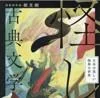
A book that reads through the strange phenomena and vengeful spirits appearing in classics like the Kojiki and the Konjaku Monogatarishu — a reference for our legend and kaidan articles.
Strange Classical Literature: Japan's Beautiful World of the Uncanny (Itsuki Asazato / Asahi Shimbun Publications)
We may earn a referral fee on purchases made through these links.
The Night Side: Ghost Stories and Haunted Places of This Town
So far we have followed the daytime face of Nakagawa from north to south: the valley where fossils sleep, the ice breakup of the Teshio River, Ainu place names left in an old station name, and the clinic Mokichi visited. Every one of these tells of the time of people who walked together with the harsh northern nature.
As for the night side, we have not been able to confirm any story in this town that can be identified as a ghost tale or haunted spot. Official statistics note that the town has settlements whose population has fallen to zero (the districts of Kamuiji, Itaya and Tomiwa). In our view, the stillness of land that people have left and the tens of millions of years carved into fossils somehow resonate with each other. Rather than searching for it at night, keeping the daytime scenery in your heart is the way to savor this town.
On Karasu Channel, we set out true ghost stories and haunted places not to visit them but to record them. Having learned the daytime scenery, please read the stories of the night as well.
Before You Go
Opening hours, fees, closing days and access change easily, so they are not listed in this article. Before you go, please check the latest information on the official website of each facility or local government. Some places may be restricted from entry because of weather or disasters.
Frequently Asked Questions
Q. What are the main sights of Nakagawa?
A. They include the Ecomuseum Center, a fossil museum; Teshio-Nakagawa Station and Pombira Onsen, which preserve Ainu place names; and Mokichi Small Park, linked to the poet Saito Mokichi. The scenery of the Teshio River is also part of the town’s charm.
Q. Can I dig for fossils myself?
A. The fossils in the town are contained in the strata of the Yezo Group, but there are rules about collecting and safety precautions to observe. First look at the specimens at the Ecomuseum Center, then check the on-site guidance and the latest information from the local government.
Q. Can I get there by train?
A. Yes. Teshio-Nakagawa Station is on the Soya Main Line, and limited express trains stop there. Trains are not frequent, so please check the timetable beforehand.
Official sites and references consulted
https://ja.wikipedia.org/wiki/%E4%B8%AD%E5%B7%9D%E7%94%BA_(%E5%8C%97%E6%B5%B7%E9%81%93)
https://ja.wikipedia.org/wiki/%E4%B8%AD%E5%B7%9D%E7%94%BA%E3%82%A8%E3%82%B3%E3%83%9F%E3%83%A5%E3%83%BC%E3%82%B8%E3%82%A2%E3%83%A0%E3%82%BB%E3%83%B3%E3%82%BF%E3%83%BC
https://ja.wikipedia.org/wiki/%E3%81%BD%E3%82%93%E3%81%B4%E3%82%89%E6%B8%A9%E6%B3%89
https://ja.wikipedia.org/wiki/%E5%A4%A9%E5%A1%A9%E4%B8%AD%E5%B7%9D%E9%A7%85
https://ja.wikipedia.org/wiki/%E4%BD%90%E4%B9%85%E9%A7%85
https://ja.wikipedia.org/wiki/%E5%A4%A9%E5%A1%A9%E5%B7%9D
https://ja.wikipedia.org/wiki/%E9%81%93%E3%81%AE%E9%A7%85%E3%81%AA%E3%81%8B%E3%81%8C%E3%82%8F
https://www.town.nakagawa.hokkaido.jp/

Supervised by Suzuking.
Affiliation: KARASU CHANNEL
Occult & horror reporting: 7 years (since 2020)
Followers: YouTube 5,000+ / X 25,000+
On-site investigations: 30+