Esashi Sights: Hairy Crab, Drift Ice and the Ancient Okhotsk Culture of the North
Supervised by Suzuking. (KARASU CHANNEL / Occult & horror reporting, 7 years)
Contents
Places to visit in this town (north to south)
Numbers follow the order in the article, from north to south. Select a pin to see its name. Positions are approximate.
- Kitami Kamuimisaki Cape (Kitami Kamuimisaki Park) (北見神威岬(北見神威岬公園)) A cape on the border of Esashi and Hamatonbetsu. Designated a Place of Scenic Beauty of Japan, it is known for its cliffside lighthouse and winter drift ice.
- Usutaibe Senjojiki Rocks (ウスタイベ千畳岩) A shore where flat rock like laid tatami mats spreads to the water's edge. In summer it is also a popular campground.
- Okhotsk Museum Esashi (オホーツクミュージアムえさし) A museum holding finds from the Epi-Jomon, Satsumon and Okhotsk cultures. The finds from the Menashidomari site are Important Cultural Properties of Japan.
- Mikasayama Observatory (三笠山展望閣) A lookout on high ground with a view over Esashi's streets and the Sea of Okhotsk. A 360-degree panorama opens from the roof.
- Roadside Station Marine Island Okajima (道の駅 マリーンアイランド岡島) A roadside station along National Route 238, shaped like a ship floating on the Sea of Okhotsk. It carries seafood such as hairy crab.
Show basic information about this town (location, last checked, notes)
- Location
- Esashi, Hokkaido, Japan
- Last checked
- 2026.10.06
- Please note
- Opening hours, prices and closing days change often, so we do not list them. Please check each facility's official site before you go.
What Kind of Town Is Esashi?
Esashi is a town in the southern part of Hokkaido’s Soya Subprefecture, facing the Sea of Okhotsk to the east. Squeezed between sea and mountains, its flat land is limited to the coast and the river valleys. The mountainous west corresponds to the former town of Utanobori, which merged with Esashi in 2006, and about 80 percent of the town’s area is forest. The name is thought to derive from the Ainu word “Esaushi,” meaning a cape.
The town is said to have Japan’s largest catch of crab taken in pot traps, and in winter drift ice fills the sea. This article introduces the town’s sights in order of latitude, that is, from north to south. We begin at a cape and head south through strange rocks on the shore, a lookout, a museum holding relics of ancient peoples, and finally a roadside station.
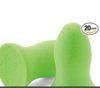
Sleeping in the car near a haunted spot the night before or while on standby, road noise, insects, or other explorers' voices can keep you awake. These American-made earplugs, rated NRR33 for high noise reduction, block out most surrounding sound and improve the quality of a nap in the car.
Moldex Meteor 6870 Earplugs, 10 Pairs, NRR33 High-Performance Noise Reduction
We may earn a referral fee on purchases made through these links.
1. Kitami Kamuimisaki Cape (Kitami Kamuimisaki Park) (北見神威岬(北見神威岬公園))
Kitami Kamuimisaki is a cape that straddles Esashi and Hamatonbetsu and juts out into the Sea of Okhotsk. Its name comes from the Ainu “Kamuietu” (cape of the gods), and the old province name “Kitami” was added to tell it apart from Cape Kamui on the Shakotan Peninsula. In 2010 it was designated a Place of Scenic Beauty of Japan, as one of the “Pirikanoka,” an Ainu word meaning “beautiful form.”
A striped lighthouse stands partway up the cliff. Completed in 1962, it is said to have been the first lighthouse built on the coast between Notoro Cape in Abashiri and Cape Soya in Wakkanai. Kitami Kamuimisaki Park lies a little south of the cape on the Esashi side and gives a view of the whole headland. In winter drift ice comes ashore, and dozens of alpine plant species grow in clusters around it.
The Kohoku Line railway, which once ran along the mountain road at the cape, was abolished in 1985. The step left by the old track bed can still be seen one level above the road along the sea. The area near the tip of the cape is cliff, and strong winds and falling rocks call for caution, so please view it by following the guidance posted on site.
2. Usutaibe Senjojiki Rocks (ウスタイベ千畳岩)
Usutaibe Senjojiki is a strange rock formation on the shore of a small cape jutting out north of Esashi Port. Glassy andesite rose from underground and hardened, and the rock split into flat slabs like laid tatami mats, spreading all the way to the water’s edge. The name “Senjojiki” (a thousand tatami mats) comes from that expanse.
Heart-shaped pools sometimes form among the rocks and are said to be a sign of good luck. There is a wide lawn, and in summer it is used as a campground. It is also a place where you can watch the sunrise climb from the horizon of the Sea of Okhotsk.
The place name Usutaibe is said to come from the Ainu language. The rocks become slippery when wet with waves and are dangerous on days of high surf. Please check the tide and weather and watch your footing as you walk.
3. Okhotsk Museum Esashi (オホーツクミュージアムえさし)
Okhotsk Museum Esashi stands on high ground in Esashi and displays materials from Hokkaido’s Epi-Jomon, Satsumon and Okhotsk cultures. The town holds many remains left by the people of the Okhotsk culture, a maritime people who lived along the Okhotsk coast in ancient times.
The highlight is the group of finds from the Menashidomari site, designated an Important Cultural Property of Japan. The “gilt-bronze-mounted straight sword” excavated in 2018 is dated to around the 9th century. A digital restoration by the museum showed that it had been decorated at a level comparable to treasures of the Shosoin, with tin-powder maki-e, gold plating and floral patterns carved in metal.
Inside are also a reconstructed pit dwelling, a fossil of Desmostylus, and a killer whale skeleton over 7 meters long. The town is also proud of another story: books that a foreign astronomer couple, who came in the Meiji era to observe a solar eclipse, gave to the townspeople who had helped them became the starting point of Hokkaido’s first public library. Opening days can change, so please check beforehand.
4. Mikasayama Observatory (三笠山展望閣)
Mikasayama Observatory is a lookout facility on high ground behind Esashi’s town center. It gives a sweeping view of the Sea of Okhotsk and the streets of Esashi, with a 360-degree panorama from the roof. About 40 years have passed since it opened, and local people have long been fond of it. A cafe lounge is also said to be on the second floor.
When conditions are right, a sea of clouds is said to be visible as well. With the town and the sea spread below, you can feel that this town lives alongside the sea. On a clear day the blue of the horizon is striking.
The facility is generally open only in the summer season. In winter, snow and ice make it hard to approach, so please check the latest information before you go.
5. Roadside Station Marine Island Okajima (道の駅 マリーンアイランド岡島)
Roadside Station Marine Island Okajima stands along National Route 238, and its building is distinctive for being shaped like a ship floating on the Sea of Okhotsk. The bow points northwest, and you can climb to the bridge by the stairs outside the entrance. The restrooms are said to be available 24 hours a day, making it a rest stop for travelers on the national route.
Here you can reportedly find products of Esashi’s specialties from the sea, such as hairy crab, scallops and salmon. The hairy crab, whose catch by pot traps is said to be Japan’s largest, feeds on plankton carried by drift ice in winter, and is said to have plump meat and rich crab miso. Scallops are also introduced in forms such as fry and curry.
On the first Sunday of every October, the “Yokubari Festa” is held beside the station, with events such as a scallop speed-shucking contest and a salmon-grabbing event. Business hours and closing days change easily, so please check the latest information before you go.
Local Specialties, Food and Drink
Esashi’s signature food is first of all the hairy crab. Its catch by pot traps is Japan’s largest, and crabs raised on marine plankton carried by the drift ice that drifts south through the Sea of Okhotsk in winter have plump meat and are known for rich crab miso. The Esashi Crab Festival is held on the first Sunday of July every year.
Salmon is also a point of pride for the town. Its landings are said to rank within the top ten in the country, and fatty medaka salmon and the rare “kejike” salmon are also landed. For scallops, the practice of seeding young shellfish has taken root, and because the sea is cold even in summer there is little shellfish toxin and the adductor muscles are large. Dried sea cucumber is known as “Hokkai Kinko,” and its production is the largest in Japan. Flounder, Rishiri kelp, northern sea urchin and octopus are also landed. Whether dishes are served and when changes easily, so please check the latest information before you go.
Rare Creatures and Nature
The town faces the Sea of Okhotsk to the east, and Kitami Kamuimisaki is part of the Kita-Okhotsk Prefectural Natural Park. In winter drift ice comes ashore, and in spring spring ephemerals (flowers that bloom only for a short time in spring) open along National Route 238. The sea off Kitami-Esashi is known for “Okhotsk blue,” which changes its expression with the seasons.
The mountains include Mt. Hakodake (1,129 meters), Mt. Yanemuneyama (1,039 meters) and Mt. Poronupuri (841 meters), and about 80 percent of the town’s area is forest. A wetland lies near the mouth of the Kitami Horobetsu River, and the habitat of the Ezo salamander there is designated a cultural property of the town.
The whole area is a special heavy-snowfall region, so winter road conditions need attention. Please stay away from rocky shores and cliffs on days of high waves or strong wind.
Other Notable Things About This Town
The town has a long history. In 1878 four villages, Esashi, Tonbetsu, Utanobori and Rebun, were established in Esashi District. In 1909 they merged to form Esashi Village, which became a town in 1947. In 2006 it merged on equal terms with the town of Utanobori to become today’s Esashi.
In the mid-Meiji era, gold deposits were found in the town, and there was a time when it bustled with gold panning. In 1896 observation teams for a total solar eclipse came to Esashi from Japan and abroad. The party of the American astronomer Dr. David Todd is said to have been moved by the helpfulness of the townspeople, even though clouds on the day ruined their observation, and later donated more than a thousand books.
As a result, Hokkaido’s first public library was born in Esashi in 1903. A document written in calligraphy by the couple still remains in the museum. The town also has a lively culture, including the activities of the local yosakoi team “Musou Sazanami Esashi.”

A guide that reads Japan's classic ghost stories as culture, from the Nihon Shoki to Lafcadio Hearn — a reference for our analysis pieces.
Classic Ghost Stories as Culture: From the Nihon Shoki to Lafcadio Hearn (Yuki Yoshida / One Publishing)
We may earn a referral fee on purchases made through these links.
The Night Side: Ghost Stories and Haunted Places of This Town
So far we have followed the daytime face of Esashi from north to south: a cape where drift ice arrives, rocks like tatami mats, the gleam of an ancient sword, and a roadside station shaped like a ship. Every one of these places carries layers of time lived by people together with the Sea of Okhotsk.
As for the night side, we have not been able to identify any story that stands as a ghost tale or haunted spot. In our view, the graves and relics left by the people of the ancient Okhotsk culture may be the greatest tale of the night of this seaside town. Archaeological sites and shores are dark at night and the footing is poor, so please do not go searching for them.
On Karasu Channel, we set out true ghost stories and haunted places not to visit them but to record them. Having learned the daytime scenery, please read the stories of the night as well.
Before You Go
Opening hours, fees, closing days and access change easily, so they are not listed in this article. Before you go, please check the latest information on the official website of each facility or local government. Some places may be restricted from entry because of weather or disasters.
Frequently Asked Questions
Q. What is Esashi famous for?
A. It is known for hairy crab, whose catch by pot traps is said to be Japan’s largest, as well as scallops, salmon and the dried sea cucumber “Hokkai Kinko.”
Q. Can I see drift ice?
A. From winter to early spring, drift ice sometimes comes ashore along the Okhotsk coast. The timing and amount vary from year to year, so please check the latest information.
Q. What can I see at Okhotsk Museum Esashi?
A. You can see materials from the Epi-Jomon, Satsumon and Okhotsk cultures, finds from the Menashidomari site (an Important Cultural Property of Japan), and a reconstructed pit dwelling.
Official sites and references consulted
https://ja.wikipedia.org/wiki/枝幸町
https://ja.wikipedia.org/wiki/北見神威岬
https://ja.wikipedia.org/wiki/道の駅マリーンアイランド岡島
https://www.gutabi.jp/spot/detail/3481
https://www.hokkaido-np.co.jp/article/1180675/
https://tabi-mag.jp/ho0675/
https://www.arukikata.co.jp/tokuhain/298629/
https://www.hokkaido-np.co.jp/article/1157798/

Supervised by Suzuking.
Affiliation: KARASU CHANNEL
Occult & horror reporting: 7 years (since 2020)
Followers: YouTube 5,000+ / X 25,000+
On-site investigations: 30+