Otoineppu Sights: Where Hokkaido Got Its Name, the Black Soba Station and a Village of Forest and Craftsmen
Supervised by Suzuking. (KARASU CHANNEL / Occult & horror reporting, 7 years)
Contents
Places to visit in this town (north to south)
Numbers follow the order in the article, from north to south. Select a pin to see its name. Positions are approximate.
- Osagoshima and the Birthplace of the Name Hokkaido (筬島と北海道命名の地) The Osagoshima district along the Teshio River. It is said to be where Matsuura Takeshiro hit upon the name Hokkaido, and a sculptor's atelier stands here.
- Mt. Otoifuji (音威富士) The village's symbolic mountain, about 3 km east of Otoineppu Station. In the Ainu language it is called Chisenesiri.
- Otoineppu Station (音威子府駅) Once the junction where the Tenpoku Line branched off, a key transport hub. Even limited express trains stop at this representative station, which was rebuilt as a village-run station building.
- Sakkuru District (咲来地区) A flat district in the south of the village, on the lower reaches of its rivers, where dairy and crop farming continue amid quiet rural scenery.
- Mt. Hakodake (函岳) A 1,129-meter mountain spanning Bifuka, Otoineppu and Esashi. It is known as one of the high peaks of northern Hokkaido.
Show basic information about this town (location, last checked, notes)
- Location
- Otoineppu, Hokkaido, Japan
- Last checked
- 2026.10.06
- Please note
- Opening hours, prices and closing days change often, so we do not list them. Please check each facility's official site before you go.
What Kind of Village Is Otoineppu?
Otoineppu is a village in the northern part of the Kamikawa region of Hokkaido, in hill country roughly halfway between the cities of Asahikawa and Wakkanai. As of 2025 it is said to be the municipality with the smallest population in Hokkaido. Calling itself the “Village of Forest and Craftsmen,” it has worked to revitalize the community through crafts that make use of its rich forests.
The village center sits where the Otoineppu River meets the Teshio River, and it is also where National Route 40 and National Route 275 part ways. It was once a transport hub linking the Sea of Japan and the Sea of Okhotsk. This article introduces the sights in order of latitude, that is, from north to south. Within this small village, the history of Hokkaido is packed tightly together.

Working inside a ruin or investigating as a group, a single hand-held flashlight often can't light both your feet and your task while leaving your hands free. This one comes from GENTOS, a Japanese lighting maker known for reliable quality.
GENTOS SGWL-03R LED Work Light, Dimmable & Color-Adjustable, with Carabiner
We may earn a referral fee on purchases made through these links.
1. Osagoshima and the Birthplace of the Name Hokkaido (筬島と北海道命名の地)
Osagoshima is a district in the western part of Otoineppu, running along the Teshio River. Down a small road off National Route 40, on the riverbank, stands a spot regarded as the “birthplace of the name Hokkaido.” It is said that the explorer Matsuura Takeshiro asked an Ainu elder here what the Ainu word “kai” meant. Kai, he was told, meant something born in this land.
Takeshiro is said to have proposed the name “Hokkaido” (北加伊道) on the basis of this word, and this is thought to have led to the name Hokkaido we use today. This quiet riverside in a small village is one of the origins of the name of Hokkaido.
In the district there is also a museum that makes use of the atelier where the sculptor Bikki Sunazawa lived and kept working in his later years. It is introduced as exhibiting his works and materials. The position of this item is an approximate point near Osagoshima Station. Please check the official information in advance for the museum’s opening periods.
2. Mt. Otoifuji (音威富士)
Mt. Otoifuji is a mountain in Otoineppu, rising about 3 kilometers east of Otoineppu Station. In the Ainu language it is called Chisenesiri. Mountains named Fuji exist all over Japan, and locals gave them the name out of affection for their own hometown mountain.
The figures given for its height differ depending on the source. At its southwestern foot there is a ski area developed in the 1970s. This is our own speculation, but skiing was probably a familiar pleasure for villagers, a way of enjoying the heavy-snow winters. The village is designated a special heavy-snowfall area, and it is said that a single season’s snowfall can exceed 10 meters.
In our view, the feeling behind giving a local mountain the name Fuji is a mix of pride in living in a harsh land and attachment to home. On the mountain, please do not forget to prepare for brown bears and to watch for sudden changes in the weather. Please check official information for the ski area’s operating season.
3. Otoineppu Station (音威子府駅)
Otoineppu Station is a station on the JR Soya Main Line and the village’s representative station. All trains stop here, including limited express trains. It is introduced as the station, among those where limited expresses stop, that lies in the municipality with the smallest population. It opened on November 5, 1912 (Taisho 1) as the terminus of the railway extended from Onnenai Station.
The Tenpoku Line once branched north from here. Extended in 1914, the Tenpoku Line connected towns on the Okhotsk Sea side, and the station flourished as a transport hub linking the Sea of Japan side and the Okhotsk side. When the Tenpoku Line was abolished on May 1, 1989, the station was rebuilt with village funds into the present transport-terminal station building, and a Tenpoku Line exhibition room was also set up.
On the station platform there used to be a standing soba shop known for its black noodles, but it closed in February 2021. The station is still a hub for transferring to buses. The station and its surroundings are where villagers live their daily lives. Please be considerate when taking photographs, and check timetables and operating conditions beforehand.
4. Sakkuru District (咲来地区)
Sakkuru (read “Sakkuru” in Japanese) is a district in the south of Otoineppu. The Kutonbetsu-sawa River, the Penke Sakkuru River, the Panke Sakkuru River and others, which flow out from around Mt. Hakodake at the village’s southeastern edge, run west and join the Teshio River. Sakkuru, on the lower reaches of those rivers, has flat land and gently rolling hills.
Most of the village is gently sloping mountain country, but dairy and crop farming are carried out in this district. In a village of severe cold and heavy snow, the places where farming is possible are limited, and Sakkuru is one of those precious places. The climate has a large temperature range, with summers of about 30 degrees and winters that can reach minus 30 degrees.
Please note that the position of this item is an approximate point in the district. We have not been able to confirm its present condition. This is where residents live and work. When you visit, please take great care not to enter farmland or private property.
5. Mt. Hakodake (函岳)
Mt. Hakodake is a mountain of about 1,129 meters that spans three municipalities: Bifuka, Otoineppu and Esashi. A peak of the Kitami Mountains, it is among the high mountains of northern Hokkaido, and it is introduced as having no higher mountain to its north except Mt. Rishiri. For this reason the views are fine, and it has been chosen as one of Hokkaido’s hundred famous mountains.
An Ainu legend is told about the mountain. Long ago, when a great tsunami struck, people fled in boats. Only the summit of Mt. Hakodake showed slightly above the water, and the people who took refuge there were saved. The story goes that the box (hako) of treasures they had carried on their boats turned into rock just as it was.
A forest road runs close to the summit, and it is introduced as possible to approach by car, but the surface is gravel throughout and the road is closed in winter. The mountain lies at the southeastern edge of the village and spans three municipalities, so this item focuses mainly on the scenery on the village side. Forest road conditions change, so please be sure to check beforehand. Please also remember to prepare for brown bears.
Local Specialties, Food and Drink
The village’s specialty is soba, widely known as “Otoineppu soba.” Because the flour is ground with the husks left on, the noodles are jet black and strongly aromatic. The noodle maker that produced it for many years ended production in August 2022, but it is introduced that from 2023 a distinctive black soba made with ingredients grown in the village has been newly produced.
A village organization also makes yokan and miso from Hokkaido-grown ingredients. The miso is said to be the northernmost miso-making in Japan. Sales and meal offerings change with the season, so please check beforehand.
Rare Creatures and Nature
In the village, the Teshio River flows in from the south, joins the Otoineppu River, then turns west and cuts across the village. Most of the village’s area is gently sloping mountain country.
The village is one of Japan’s heaviest-snowfall areas and is designated a special heavy-snowfall area. When you go into the mountains or rivers, please do not forget to prepare for brown bears and to watch for changes in the weather.
Other Notable Things About This Village
The village’s high school is Hokkaido Otoineppu Fine Arts and Crafts High School, a place of learning that suits a village of forest and craftsmen. The elementary and junior high schools have been co-located since 2014.
The village also has the northern management office of Hokkaido University’s Nakagawa Research Forest, where forest research is carried out. Though small in population, the village has built ties with the rest of the country through forest and craft.
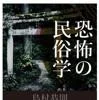
Folklorist Yasunori Shimamura unpacks what makes something "scary" — a reference for our yokai and strange-phenomena analysis pieces.
The Folklore of Fear (Yasunori Shimamura / SB Creative)
We may earn a referral fee on purchases made through these links.
The Night Side: Ghost Stories and Haunted Places of This Village
So far we have walked the daytime face of Otoineppu: the riverbank where the name Hokkaido was born, the station that was once a transport hub, the aroma of black soba, and the mountains that endure heavy snow. Within this small village are packed the history of the northern land and the pride of its people.
We have not been able to identify any place in this village that is widely known as a haunted spot. In our view, the stillness that settles over a sparsely peopled winter station or a snow-bound mountain stirs a sense of awe in people, and that becomes the soil from which ghost stories grow.
On Karasu Channel, we set out true ghost stories and haunted places not to visit them but to record them. Having learned the daytime scenery, please read the stories of the night as well.
Before You Go
Opening hours, fees, closing days and access change easily, so they are not listed in this article. Before you go, please check the latest information on the official website of each facility or local government. Some places may be restricted from entry because of weather or disasters.
Frequently Asked Questions
Q. How do you read the name Otoineppu?
A. It is read “Otoineppu-mura.” It is known as the municipality with the smallest population in Hokkaido and calls itself the “Village of Forest and Craftsmen.”
Q. Where was the name Hokkaido born?
A. It is said to be at the “birthplace of the name Hokkaido” in Osagoshima, Otoineppu, where Matsuura Takeshiro asked an Ainu elder the meaning of a word and proposed the name Hokkaido (北加伊道).
Q. What kind of soba is Otoineppu soba?
A. Because the flour is ground with the husks on, the noodles are jet black and strongly aromatic. The noodle maker that produced it for many years ended production in 2022, and it is now made in a new form.
Official sites and references consulted
https://ja.wikipedia.org/wiki/音威子府村
https://ja.wikipedia.org/wiki/音威子府駅
https://ja.wikipedia.org/wiki/筬島駅
https://ja.wikipedia.org/wiki/音威富士
https://ja.wikipedia.org/wiki/函岳

Supervised by Suzuking.
Affiliation: KARASU CHANNEL
Occult & horror reporting: 7 years (since 2020)
Followers: YouTube 5,000+ / X 25,000+
On-site investigations: 30+