Sightseeing in Omiya Ward, Saitama: Hikawa Forest, Minuma’s Memory and a Railway Post Town
Supervised by Suzuking. (KARASU CHANNEL / Occult & horror reporting, 7 years)
Contents
Places to visit in this town (north to south)
Numbers follow the order in the article, from north to south. Select a pin to see its name. Positions are approximate.
- Suno Castle Ruins (寿能城跡) The ruins of a branch castle across Lake Minuma from Iwatsuki Castle. The lord and his son died in battle in the 1590 Odawara Campaign, and the site is now a park around their grave monument.
- Saitama Museum of History and Folklore (埼玉県立歴史と民俗の博物館) A prefectural general museum inside Omiya Park that traces history from the Paleolithic to the present in 10 exhibition rooms. The architecture is also highly regarded.
- The Railway Museum (鉄道博物館) A museum symbolizing Omiya as a railway town, with many real rail vehicles including ones designated Important Cultural Properties.
- Omiya Park (大宮公園) A prefectural park opened in 1885 on the former grounds of Hikawa Shrine. One of Japan's 100 Best Cherry Blossom Spots, it keeps a pond that is a remnant of Lake Minuma.
- Hikawa Shrine (氷川神社, Omiya Hikawa Shrine) An ancient shrine of Musashi Province that gave Omiya its name. It stands beside Lake Minuma and is the head shrine of about 280 Hikawa shrines.
- Traces of Omiya-juku (大宮宿の面影, around Kokoji Temple) Omiya-juku, the fourth station on the Nakasendo from Edo. It had many honjin and waki-honjin, and traces such as the Salt Jizo and the site of Namida-bashi remain.
Show basic information about this town (location, last checked, notes)
- Location
- Omiya Ward, Saitama, Saitama Prefecture, Japan
- Last checked
- 2026.10.06
- Please note
- Opening hours, prices and closing days change often, so we do not list them. Please check each facility's official site before you go.
What Kind of Town Is Omiya Ward, Saitama?
Omiya Ward is one of the central districts of Saitama City, a commercial and transport hub spreading out from Omiya Station. The name “Omiya” is said to come from a phrase praising Hikawa Shrine as the “great shrine precinct” (o-miya), so the place name itself is rooted in ancient faith. A shrine was set beside what was once Lake Minuma, the district later thrived as a post town on the Nakasendo road in the Edo period, and from the modern era it grew as a railway town.
This article introduces the sights of the ward in order of latitude, from north to south. We begin with the ruins of a Sengoku-period castle, then move through a museum, the Railway Museum, a park, an ancient shrine and, finally, traces of the post town. Beneath the bustle in front of the station, we hope you will sense the long history of water, faith and highways.

Steel-toe safety shoes protecting your feet while exploring a ruin scattered with rubble, nails, and broken glass. JSAA Class A certified, a roomy 4E width, and reflective tape for nighttime exploration.
Midori Anzen 'Desafio' Safety Work Shoes, Pro Sneaker DSF-35, Black
We may earn a referral fee on purchases made through these links.
1. Suno Castle Ruins (寿能城跡)
Suno Castle stood in Suno-cho, Omiya Ward, in the Sengoku period, almost at the center of the Omiya Plateau and across from Lake Minuma. It is said to have been built around 1560 as a branch castle of Iwatsuki Castle (岩付城), held by the Ota clan, and its first lord was Ushio Sukitada (潮田資忠), regarded as the fourth or fifth son of Ota Sukemasa, the lord of Iwatsuki.
In 1590, during Toyotomi Hideyoshi’s Odawara Campaign, the lord Sukitada and his son Sukekatsu followed the Hojo clan and shut themselves up in Odawara Castle, where both died in battle on April 18. Iwatsuki Castle and Suno Castle were also attacked by Toyotomi forces and fell in May. Afterward, under Tokugawa Ieyasu’s rule, development of the area was ordered and almost nothing of the castle was left.
Today the area around the grave monument, once the heart of the castle, has been laid out as Suno Park, about 0.39 hectares, in 1958. It was designated a historic site in 1926 but reclassified as a former site in 1962. In this small park, a quiet sense of mourning for those who fell in war remains. When you visit, please put your hands together at the monument and spend your time quietly.
2. Saitama Museum of History and Folklore (埼玉県立歴史と民俗の博物館)
The Saitama Museum of History and Folklore stands inside Omiya Park in Takahana-cho, Omiya Ward. Its predecessor, the Saitama Prefectural Museum, saw its building completed in 1970 and opened on November 1, 1971. In April 2006 it was merged with the functions of the Folk Culture Center in Iwatsuki and took its present name.
The building was designed by the architect Kunio Maekawa (前川國男) and received the Japan Institute of Architects’ 25-Year Award in 2002. At its opening, it was groundbreaking in scale and content for a general museum of the humanities run by a prefecture, and is said to have had a great influence on other museums that followed.
The permanent exhibition is arranged chronologically in 10 rooms, tracing history from the Paleolithic to the present. Room 1 covers the shift from hunting to rice farming, Room 3 the Musashi samurai, and Room 9 the age of upheaval, with the character of each era neatly laid out. If you walk the town after viewing the exhibits, Suno Castle and the Nakasendo remains will feel more three-dimensional. Exhibits and viewing arrangements change, so please check the latest guidance.
3. The Railway Museum (鉄道博物館)
The Railway Museum is in Onari-cho, Omiya Ward, and opened on October 14, 2007, Railway Day. It was created as a commemorative project for the 20th anniversary of JR East’s founding and took over the exhibits of the Transportation Museum in Tokyo, which closed in May 2006. Its South Building opened on July 5, 2018.
Inside, many real rail vehicles are on display, from steam locomotives to Shinkansen. Among the best known, Steam Locomotive No. 150 was the first rail vehicle to be designated a national Important Cultural Property. Electric car Nade 6141 was designated on September 15, 2017, and DC electric locomotive No. 10 of the ED40 class on October 31, 2018.
The tracks on the grounds are said to connect with those of a nearby rail yard, so that you can watch vehicles in active service that have finished inspection being test-run up close. Behind this facility lies the history of Omiya’s prosperity as a railway town. Rules for visiting and the museum’s opening status change, so please check the latest official guidance.
4. Omiya Park (大宮公園)
Omiya Park is a prefectural park of about 67.8 hectares spanning Omiya Ward and Minuma Ward. It was originally part of the grounds of Hikawa Shrine, but became state land in the Meiji-era reorganization of shrines. At the petition of local people, it was decided in 1884 to make it a park, and it opened on September 22, 1885.
Its calm, cool setting, surrounded by pine woods, is said to have been loved by literary figures such as Masaoka Shiki and Natsume Soseki. In 1990 it was chosen as one of Japan’s 100 Best Cherry Blossom Spots, and in spring it fills with crowds of blossom viewers. Within the park are a pond and a Japanese garden that preserve a trace of Lake Minuma, and a plum festival is also held.
A small zoo opened in 1953, a baseball stadium, a keirin cycle racing track and more are in the same park, loved by local people as a place of rest and of entertainment. The park’s charm lies in the way the shrine forest and the everyday life of citizens overlap within a single space.
5. Hikawa Shrine (氷川神社, Omiya Hikawa Shrine)
Hikawa Shrine is in Takahana-cho, Omiya Ward, and is the head shrine of roughly 280 Hikawa shrines in the Tokyo and Saitama area. The name “Omiya” is said to derive from the words praising this shrine as the great shrine precinct. According to the shrine’s own tradition it was founded in the 3rd year of Emperor Kosho’s reign, and it is an ancient shrine that styles itself the Ichinomiya (first shrine) of Musashi Province.
Its grounds lie beside Lake Minuma, a vast marsh that existed until the middle of the Edo period, and the shrine is thought to have originally enshrined the water deity of Minuma. The Sacred Pond (Shinchi) spreading south of the shrine is groundwater that welled up from the west side and collected, and it was once part of Minuma. Omiya’s Hikawa Shrine, Nakayama Shrine in Minuma Ward and Hikawa Womina Shrine in Midori Ward all stand beside Minuma and are said to line up in a single straight line.
In the Heian period it was repeatedly granted court ranks, and in 1180 Minamoto no Yoritomo is said to have ordered the rebuilding of its halls. In recent years more than two million people are said to visit for the first shrine visit of the New Year, a place of faith deeply rooted in the community. It is an active shrine, so please conduct yourself quietly when you pay your respects.
6. Traces of Omiya-juku (大宮宿の面影, around Kokoji Temple)
Omiya-juku was the fourth post station on the Nakasendo’s sixty-nine stations, counting from Nihonbashi in Edo. The station’s name is said to derive from Omiya, another name of Hikawa Shrine. In the Sengoku period it served as a midpoint on the road laid out by the later Hojo clan, and it played the role of changing horses between Urawa-juku and Ageo-juku. Its full-scale development as a post town is said to have begun around 1591.
A survey in 1843 recorded one honjin (main inn) and nine waki-honjin (auxiliary inns), the largest number of any station on the Nakasendo. This is explained by its position at the limit of a day’s walk from Edo. The Nakasendo originally ran through the approach to Hikawa Shrine from its first torii gate, but in 1628 a new road was opened across the wilds to the west and the station was moved, separating the shrine from the highway. The townscape stretched about one kilometer, with a population of 1,508 in 319 houses.
Even now, Edo-period heritage is preserved here and there, including Kokoji Temple (東光寺), Hikawa Shrine, the Ando Bridge monument, the Salt Jizo (塩地蔵) and the site of Namida-bashi (Tears Bridge). Noticing that the memory of the road travelers once walked remains quietly in the gaps between the high-rise buildings in front of the station adds to the pleasure of a town walk. Around temples, shrines and historic sites, please walk with consideration for the daily life of local residents.
Local Specialties, Food and Drink
Omiya Ward is Saitama Prefecture’s leading commercial center, so lively that the land price along the street in front of Omiya Station’s west exit is recorded as the highest for commercial land in the prefecture every year. A wide variety of restaurants cluster around the station, so you can come across many different tastes.
As a local dish of Saitama Prefecture, udon noodles are widely loved. There are shops in the ward that serve dishes made with local ingredients, but what is offered changes easily, so please check the latest information before you go.
Around the approach to Hikawa Shrine and the park there are places scattered along the way where you can stop during a stroll. We do not name specific shops, but the New Year shrine visit and cherry blossom season are especially crowded, so you may also choose to visit at another time.
Rare Creatures and Nature
Omiya Ward sits on the Omiya Plateau, and to the east a vast marsh, Minuma, once spread out. The Sacred Pond of Hikawa Shrine is said to be a remnant of it, a body of water fed by groundwater welling up from the west.
Omiya Park is said to preserve well the topographical feature of a small hill once surrounded by an inlet of Minuma. It has pine woods, a pond and a Japanese garden, and in 1990 it was chosen as one of Japan’s 100 Best Cherry Blossom Spots. You can enjoy seasonal flowers such as cherry blossoms in spring and plums in early spring.
Though in the center of a city, this is a ward where the shrine forest and the park’s greenery spread out. It is a precious place where you can feel the presence of water and greenery amid the bustle of the urban area.
Other Notable Things About This Town
The railway cannot be left out when telling the history of Omiya Ward. Since the days of Japanese National Railways, Omiya has prospered as a railway town, and many railway workers have lived here, centered on the Omiya General Rolling Stock Center. The Railway Museum is a facility that symbolizes this history.
Omiya-juku on the Nakasendo flourished as a post station in the Edo period. Its scale of one honjin and nine waki-honjin was the largest among Nakasendo stations, and the reason is said to be its position at the limit of a day’s walk from Edo.
The ward has several museums, including the Saitama Museum of History and Folklore, the Saitama City Museum and the Mint Museum Saitama (造幣さいたま博物館). It is a ward where you can learn about the town’s history and industry from many angles.
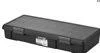
A slim, sturdy storage box for keeping your whole exploration kit — flashlight, EMF meter, camera, spare batteries — together in the trunk. Its lid keeps out dust and impacts, and it stacks, making good use of cargo space.
IRIS OHYAMA Storage Box/Case 31L 'RVBOX', Outdoor Storage Container RV900F, Charcoal Gray
We may earn a referral fee on purchases made through these links.
The Night Side: Ghost Stories and Haunted Spots of This Town
So far we have walked through the daytime face of Omiya Ward, Saitama: an ancient shrine beside Lake Minuma, Sengoku castle ruins, a railway town and the traces of a post station. Every one of these places carries layers of time in which people lived, prayed and sometimes lost their lives.
That depth connects to the night side as well. Stories handed down about old shrines, castle ruins and highways are sometimes told in the ward, but we do not recommend walking the night streets in search of things whose location or truth is uncertain. In this site’s view, a ghost story is a kind of shadow cast on people’s hearts by a place’s history and terrain. The more we think of the castle lord and his son who died in battle at Odawara, and of the travelers who came and went along the highway, the deeper our respect for quiet places grows.
At KARASU CHANNEL we record true ghost stories and haunted spots not so that people will go there, but so that they are remembered. Having come to know the daytime scenery, we hope you will also read the stories of the night.
Before You Go
Opening hours, fees, closing days and access change often, so they are not listed in this article. Before you set out, please check the latest information on each facility’s or local government’s official site. Some places may be restricted because of weather or disaster.
Frequently Asked Questions
Q. In what order is it easiest to see the sights of Omiya Ward?
A. This article introduces them from north to south. It is easiest to group them by area: around Omiya-koen Station (Suno Castle ruins, the museum, Omiya Park and Hikawa Shrine), around the Railway Museum, and the Omiya-juku site near Omiya Station. Please check your means of transport in advance.
Q. What should I be careful about when visiting Hikawa Shrine?
A. It is an active shrine, so please walk quietly along the approach and take care not to disturb rituals or other worshippers. It is especially crowded around the New Year.
Q. Can I visit the Railway Museum?
A. The opening status, rules and whether reservations are needed change, so please check the latest official information before your visit.
Official sites and references consulted
https://ja.wikipedia.org/wiki/大宮区
https://ja.wikipedia.org/wiki/氷川神社
https://ja.wikipedia.org/wiki/大宮公園
https://ja.wikipedia.org/wiki/埼玉県立歴史と民俗の博物館
https://ja.wikipedia.org/wiki/寿能城
https://ja.wikipedia.org/wiki/大宮宿
https://ja.wikipedia.org/wiki/鉄道博物館_(さいたま市)

Supervised by Suzuking.
Affiliation: KARASU CHANNEL
Occult & horror reporting: 7 years (since 2020)
Followers: YouTube 5,000+ / X 25,000+
On-site investigations: 30+
Haunted locations near this town
Besides its daytime face, this land has a night side too. Read it as a record if you are curious. Some of these places are not safe or permitted to enter.
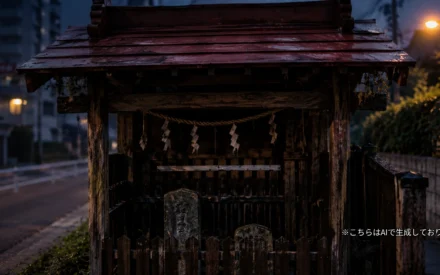
Daimon Park (Omiya Ward, Saitama City)
A park in Omiya, Saitama, tied by rumor to an Edo-era execution ground. Fireball and Chidori ghost tales persist; sources do not confirm them.
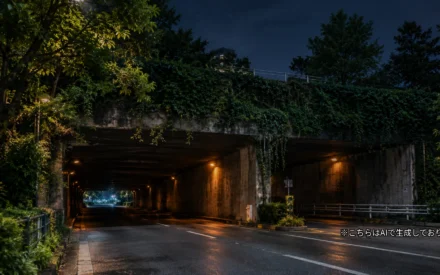
Sendagaya Tunnel (Shibuya Ward, Tokyo)
Sendagaya Tunnel in Shibuya runs under Senjuin cemetery and is still an active road. Night figures are told, but no official records exist.