Daimon Park (Omiya Ward, Saitama City)
Supervised by Suzuking. (KARASU CHANNEL / Occult & horror reporting, 7 years)
Contents
View basic details of this location (address, history, status, etc.)
- Location
- Omiya Ward, Saitama City, Saitama Prefecture
- Built
- Unknown (the park was developed in the Showa era; the execution ground is said to date to the Edo period)
- Closed / Decommissioned
- Not applicable (currently managed as a park used by local residents)
- First Rumored
- Unknown
- Current State
- Extant (maintained and used as a park)
- Access
- Open (an ordinary public park)
- Last Verified
- 2026.09.11
Daimon Park in Omiya Ward, Saitama City, is a park of playground equipment and benches, used every day by people in the neighborhood. At the same time, it has been talked about together with a rumor that it is the site of an execution ground in Omiya-juku, a post town on the Nakasendo in the Edo period, along with tales such as “fireballs fly after dark” and “the ghost of a woman named Chidori appears.” However, some accounts say that the execution ground stood somewhere other than the park’s grounds, so there is no small gap between the rumor and the history.
History — A Nakasendo Post Town and the “Shimohara Execution Ground”
Omiya-juku was the fourth post town on the Nakasendo counting from Edo (Nihonbashi). It had long been the temple-gate town of Hikawa Shrine, the Ichinomiya of Musashi Province, and was a lively town where worshippers, travelers, and merchants mingled. A survey of 1843 records 319 households and a population of about 1,500 within the post town.
On the outskirts of that post town stood an execution ground said to have been called the “Shimohara Execution Ground.” According to publicly available explanations, it lay south of Omiya-juku, in the area of present-day Yoshiki-cho, which was then open wasteland. It corresponds to the east side of today’s Saitama-Shintoshin Station. Criminals of Musashi Province were mainly executed there, and there is a record that in 1789 the leader of a band of robbers and his accomplices were put to death.
In 1868, when Emperor Meiji was to make an imperial visit to Hikawa Shrine, a petition from locals asked for the abolition of the execution ground, and it was abolished. The site was later used as a silk-reeling factory, and after the factory closed, redevelopment proceeded, and commercial facilities and the like now stand there. The only thing said to retain a trace of those days is the memorial tower called “Hinotama Fudo.”
The post town also had places for seeing off the condemned. The bridge where criminals being sent to the execution ground are said to have exchanged a last farewell with the family they left behind is Omiya-juku’s “Namida-bashi (Bridge of Tears, also called Nakanohashi),” and a marker is said to stand at the bridge’s site. Similar bridges are said to have existed near the execution grounds at Senju and Shinagawa. The memory of the execution ground was thus left divided among small places in the town, such as bridges, jizo statues, and Fudo shrines.
One point to note here is that the position of the Shimohara Execution Ground reads as separate from today’s Daimon Park. Some accounts say it overlapped the park’s grounds and others that it was a little way off, and the exact location has not been settled.
Why It’s Called a “Haunted Spot”
What is told about Daimon Park is that fireballs fly after dark and that the ghost of a woman named “Chidori” appears. “Chidori” is said to be the name of an executed woman, or to have a different origin altogether, and the lines of the story have not come together into one. No primary source has been found that gives a specific date or witness for the fireballs or the ghost.
The post town also has another tradition about a woman named “Chidori,” a meshimori onna (a woman who attended to travelers at an inn). As the story is told, Chidori was one of a pair of sisters renowned for their beauty; she pledged herself to a young man, but she was relentlessly pursued by a man who wielded power, and in despair threw herself from Takadai Bridge. The townspeople are said to have pitied her and set up a jizo statue, and the many fireballs seen around the bridge were rumored to be Chidori’s soul, or the doing of the Fudo Myoo statue beside it. This is a tradition of the post town and cannot be confirmed as historical fact.
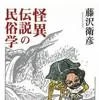
A folklore-minded survey of strange legends — a reference for our legend articles.
The Folklore of Strange Legends (Morihiko Fujisawa / Kawade Shobo Shinsha)
We may earn a referral fee on purchases made through these links.
Current Conditions — A Park Used by the Neighborhood
It is located in Omiya Ward, Saitama City. Today Daimon Park is managed as an entirely ordinary park used daily by local residents. During the day there are people using the playground equipment and benches, it is open to the public, and there are no restrictions on entry.
As something that conveys the memory of the execution ground, the memorial tower “Hinotama Fudo” can be named. On the other hand, in this investigation we were unable to confirm whether the park itself has any prominent marker or explanation indicating the execution ground.
Please note that the coordinates shown on the map are an approximate location based on publicly available information and may differ from the exact site.
Reflection — How the Name “Chidori” May Have Come About
What follows is only our own speculation. What is interesting about the Daimon Park rumor is that even though the name of the woman’s ghost, “Chidori,” has been handed down, its origin is split between the theory that it is “the name of an executed woman” and the theory of “a different origin,” and the story has not come together as one. This is an inference, but perhaps the memory of the Shimohara Execution Ground, a real execution ground, had various anecdotes added to it in later years and branched off into several stories.
The fact that the position of the execution ground has not been settled is also a clue to reading the rumor. Read plainly, the sources place the Shimohara Execution Ground to the east of today’s Shintoshin Station, that is, in a place apart from the park. As long as even its position is not fixed, the “Chidori” anecdote cannot be asserted as historical fact. In our view, it seems more natural to think that the phrase “site of an execution ground” has been drawn toward a familiar place like the park and told that way.
Furthermore, the execution ground of a post town had a distinctive position as “just outside people’s everyday life.” This is an inference, but the fact that a bustling temple-gate town lay next to a place where those judged for their crimes met their end may have stirred later people’s imagination of the “other side of the bustle.” Were there families to see them off, or did no one come? After such details were lost, a single name, “Chidori,” and an easily grasped phenomenon, fireballs, seem to have begun to be told as if filling the gap.
Layering on the sad tale of the meshimori onna “Chidori” that is handed down in the post town changes the view. This is an inference, but behind the appearance of the name “Chidori” in the park’s rumor may lie the memory of the execution ground having been overlaid with a woman’s tragic tale and fireball stories that already existed in the area. If we think the two memories became mixed, the fact that the story is split in two also makes sense.
One more thing we would like to add is the “voicelessness” shared by these two memories. For those executed at the ground, only the content of their crimes was recorded; their own words and the feelings of the families who saw them off have hardly survived. The sad tale of Chidori, too, is handed down as the story of a woman pursued by a man wielding power who in the end silently throws herself away. In our view, both are memories of “people who never had the chance to speak,” and that is why later people may have tried to give voice to that blank in the form of fireballs and a woman’s ghost. This is only an inference, but the true nature of the rumor’s fear seems to lie less in the figure of a ghost than in an unconscious concern for the people who were not left in the record.
In our view, what makes this park’s rumor interesting is not the strength of its fear but the “ambiguity” of the telling. The position is not fixed, the origin of the name is split in two, and there are no sources to back it up. Even so, the rumor continues. It is an ordinary park where children play now, but we would like to put on record that beneath that quiet everyday life lies the time of nameless people.
For staying warm during winter ruin or outdoor haunted-spot exploration.
IRIS OHYAMA Disposable Body Warmers, Mini, Stick-On, 30-Pack, Made in Japan, 'Pokapoka Kazoku' PKN-30HM
We may earn a referral fee on purchases made through these links.
Nearby Recommendation — Musashi Ichinomiya Hikawa Shrine
Heading from Daimon Park toward central Omiya brings you to Hikawa Shrine, known as the Ichinomiya of Musashi Province. Its approach, which runs about two kilometers, is also called “Japan’s longest approach,” and beyond it spread a vast precinct and Omiya Park. It is beloved as a shrine representing Saitama Prefecture, drawing one of the largest numbers of New Year’s worshippers in the country.
Notes
Daimon Park is a park open to the public, with no restrictions on entry. However, that an execution ground stood in a Nakasendo post town is a historical fact recorded even in local gazetteers, and in light of the fact that people were actually executed, it should not be treated out of mere curiosity. Please avoid night visits made to check the truth of the rumors and any behavior that troubles residents, and when taking photos, remember to be considerate of the residents using the park and the neighborhood. This article is published not as an invitation to visit but as a record. *KARASU CHANNEL does not encourage trespassing into haunted spots or any dangerous acts.
This article touches on topics related to death, such as executions. If you are carrying painful feelings right now, please do not bear them alone; consider using a support service such as the Yorisoi Hotline (Japan, 0120-279-338, available 24 hours a day).
Frequently Asked Questions
Q. Can you still use Daimon Park today?
A. It is managed as an ordinary public park used daily by local residents, and you can use it like any park. Please be considerate of nearby residents and other users.
Q. Is Daimon Park really a former execution ground?
A. That the “Shimohara Execution Ground” existed in Omiya-juku on the Nakasendo is described in local gazetteers and elsewhere. However, according to publicly available explanations, its location corresponds to present-day Yoshiki-cho (east of Saitama-Shintoshin Station), and although some say it overlapped the grounds of Daimon Park, the exact position has not been settled.
Q. Did the woman’s spirit named “Chidori” really exist?
A. Tales of the ghost of a woman named Chidori appearing have been handed down, but she is said to be either an executed woman’s name or of a different origin, and no primary source supporting it has been found.
Q. Has KARASU CHANNEL researched or filmed on location at Daimon Park?
A. No. We are not currently researching Daimon Park, though we are considering doing so. Videos of our research into other haunted spots and ghost stories can be viewed on KARASU CHANNEL (YouTube).

Supervised by Suzuking.
Affiliation: KARASU CHANNEL
Occult & horror reporting: 7 years (since 2020)
Followers: YouTube 5,000+ / X 25,000+
On-site investigations: 30+
If this appeared in your dream
What it means to dream of something from this story, read through psychology and folklore in our Dream Dictionary.
- Dreaming of a ParkA symbol of rest and gentle social contact.
Kaidan Tales from This Area
Which haunted location do you find the scariest?
If you think this location is the scariest, press the button below. One vote site-wide — you can change your vote for a different location anytime.
Was this article helpful?
Add this to your favorites to find it again anytime from your My Page.

Comments