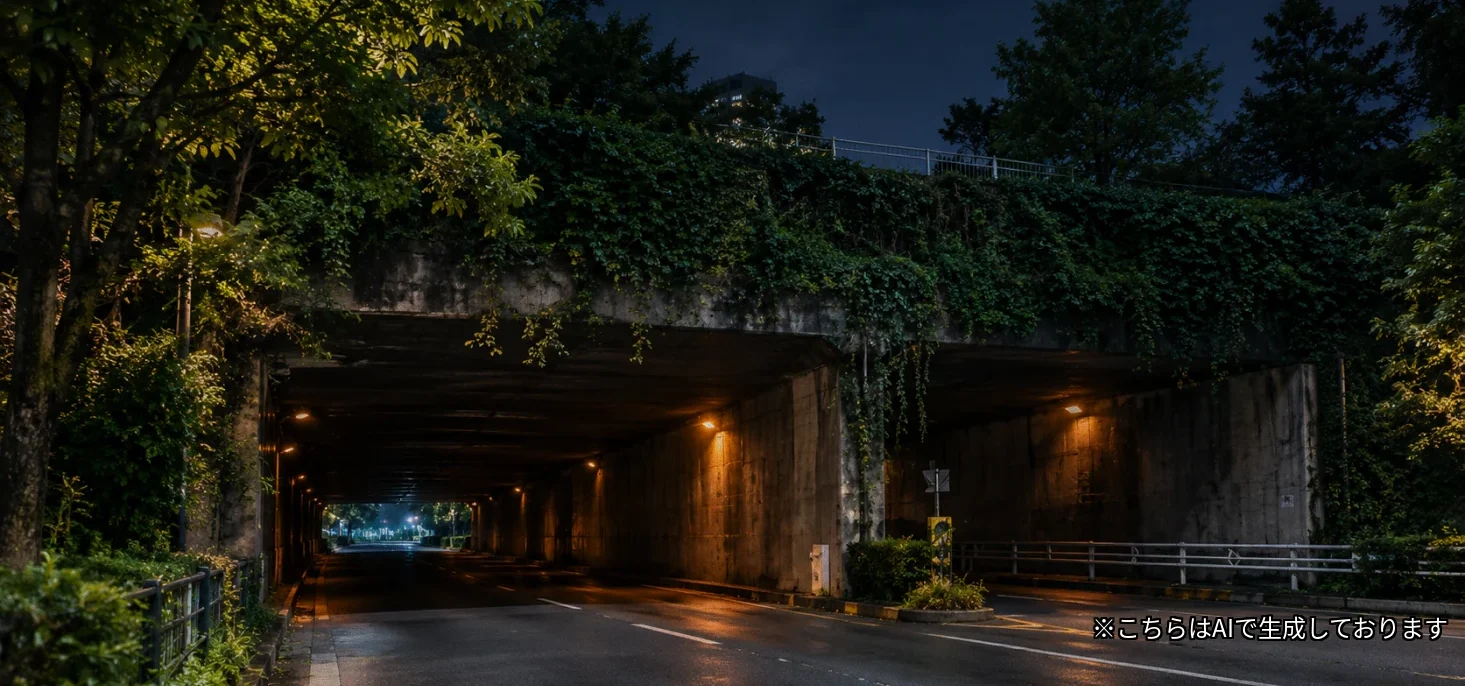
Sendagaya Tunnel (Shibuya Ward, Tokyo)
Supervised by Suzuking. (KARASU CHANNEL / Occult & horror reporting, 7 years)
Contents
View basic details of this location (address, history, status, etc.)
- Location
- Sendagaya, Shibuya Ward, Tokyo (passing beneath the Senjuin cemetery)
- Built
- 1964 (built to coincide with the Tokyo Olympics)
- Closed / Decommissioned
- Not applicable (an active road tunnel; built to coincide with the 1964 Tokyo Olympics)
- First Rumored
- Cannot be identified from materials (one of the long-told standard spots even within Tokyo)
- Current State
- In service as an active road tunnel
- Access
- Passable (has a sidewalk; but as it is a vehicle lane, take care walking alone at night)
- Last Verified
- 2026.09.11 (desk research based on public materials; no on-site reporting conducted)
What’s Said
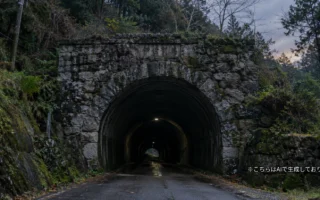
This tunnel passes directly beneath the Senjuin cemetery (its length is given as somewhere in the 40 to 60 meter range depending on the source, so it is very short), and it is one of the most widely known haunted spots even within Tokyo. Accounts are told in various places on the internet such as: “I saw a human figure late at night,” “I heard a strange voice,” “the temperature suddenly dropped,” and “a mysterious shadow appeared in a photo.”
What the Records Show
However, no official record of an incident or accident backing these accounts has been confirmed at this time. The very structure of passing directly beneath a cemetery gives a strong impression that “something might appear,” and the peculiarity of its location is thought to have greatly influenced how the rumors spread.
The circumstances of its construction to coincide with the 1964 Tokyo Olympics, and the exact time the rumors first appeared, are told on several introduction sites and blog articles, but this investigation could not identify primary materials.
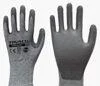
Cut-resistant gloves knit from high-performance polyethylene fiber at 15 gauge — they hold up better against cuts and punctures than ordinary work gloves when you're handling broken glass, rusty nails, or the sharp edge of corrugated sheet metal inside a ruin.
TRUSCO Antibacterial Cut-Resistant Gloves, Size M TCB-HGBKM
We may earn a referral fee on purchases made through these links.
Let us fill in how the tunnel came to be, as far as public materials allow. Sendagaya Tunnel sits on an urban planning road (Supplementary Route No. 24, the Gaien-nishi-dori) that links the Senjuin intersection and the Jingumae intersection. The road was decided on in 1946, soon after the war, as part of the postwar reconstruction plan, and its development was pushed forward to match the 1964 Tokyo Olympics. The tunnel is said to have been completed in March 1964, and it is built so that a wide road with two lanes in each direction passes under the cemetery through a short tunnel.
What matters here is how the cemetery was treated. According to the materials, Senjuin is said to be the family temple of the Kii Tokugawa clan, and instead of moving the graves elsewhere, the method chosen was to run the road through as a tunnel. During construction, the cemetery was reportedly dug down once so the road could be built, and after the tunnel was completed it was prepared again as a cemetery. In the city center, where acquiring land is difficult, roads passing beneath school and temple grounds have been built elsewhere too, and Sendagaya Tunnel is one such piece of urban ingenuity.
From this we can see that the place is not somewhere a road “happened to” end up under a cemetery, but the result of a deliberate choice, made within the limits of available land, to run a road through while protecting the graves. The fact that the cemetery was once dug up is a heavy one, and we imagine that those involved at the time approached the work with respect and caution. However, we found no materials on the specific course of the construction, the procedure for reburial, or how people of the day received it, so the details are unknown.
Our Analysis — A Strange Location Where the Tokyo Olympics and a Cemetery Overlap
Sendagaya Tunnel is a structure built in 1964, the year of the national festival of the Tokyo Olympics, and so to speak a symbol of development. We think the very structure in which the Senjuin cemetery, a quiet place of mourning, is pierced directly beneath it may be what creates the distinctive tension unique to this place.
This is speculation, but perhaps behind the fact that it has been so widely passed down even though no official record of a major incident or accident has been confirmed lies the rarity of the structure itself: an everyday place, a tunnel in the city center, physically overlapping with an extraordinary place, a cemetery.
Senjuin cemetery is an active cemetery where many people still rest. Precisely because this is a spot with one of the highest profiles in Tokyo, this site wishes to avoid sliding into curiosity-driven description and to keep introducing it with respect for the cemetery.
What follows is this site’s own way of reading the place.
The strength of the rumors here probably comes from an overlap of times. This is speculation, but the family graves of a temple that has stood since the Edo period, the reconstruction after wartime destruction, and a Showa-era Tokyo about to welcome the Olympics: three layers of time are stacked above and below a tunnel only tens of meters long. Above the tunnel lies a quiet burial ground where people connected to the Tokugawa rest, and below it modern cars run by without pause. It is a place where those who sleep and those who travel, stopped time and flowing time, pass each other. It is a natural impulse of the heart to want to feel that “something appears” there.
Also, before this is a place where “ghosts are,” it is a place where “the cemetery was once dug up.” In this site’s view, such a memory leaves in people’s minds an uneasy sense that a sleep that should have been peaceful was disturbed. In reality, the reburial should have been carried out according to proper procedure, and it is reasonable to think that careful memorial rites were held. Even so, the ring of the act of digging up can become the soil in which rumors grow.
Another thing worth noting is that the tunnel is in fact extremely short. A length of a few dozen meters lets you sense the darkness and the presence of the cemetery above in the few seconds it takes to pass through. Precisely because it is short, accounts of “seeing something in an instant” are easy to come by and hard to verify. Pass by car and it is over in a moment; even if you feel something, you are gone before you can check what it was. The conditions for a rumor that does not fade are all here.
Still, this cemetery is an active burial ground where many people rest, and the tunnel is an active road. We would like to look at it quietly as a piece of history, in a way that does not disturb bereaved families visiting graves or the daily lives of people passing through.
Please note that the position on the map is an approximate coordinate based on public information and may differ from the exact spot.
Nearby Spot — Shinjuku Gyoen
Near Sendagaya Tunnel is Shinjuku Gyoen, known for its vast garden. Its unusual composition, in which a Japanese garden, a French formal garden and an English landscape garden are combined, draws tourists from Japan and abroad as a spot for cherry blossoms and autumn leaves. In a green space that hardly seems to be in central Tokyo, you can enjoy a stroll in every season.
Reporter’s Notes
This article is a draft based not on on-site reporting but on desk research comparing multiple published articles and blogs. It is an active road tunnel, and although sidewalks are maintained, vehicles pass through, so when you visit, caution against traffic accidents comes first. We recommend on-site confirmation and photography before publication.

AAA alkaline batteries for gear that takes this size, such as some headlamps, IC recorders, and small EMF-meter-type devices. They keep for 10 years, so they double as disaster-prep stock — swap in a fresh set before heading out to explore.
Panasonic Evolta Alkaline Batteries AAA (20-Pack) LR03EJ/20SW
We may earn a referral fee on purchases made through these links.
Frequently Asked Questions
Q. Can you still pass through Sendagaya Tunnel?
A. It is an active road tunnel, and sidewalks are also maintained. However, because vehicles pass through, caution against traffic accidents comes first when you visit.
Q. Is there any record of an incident or accident backing the rumors?
A. No official record of an incident or accident backing the accounts has been confirmed at this time. The structure of passing directly beneath a cemetery gives a strong impression and is thought to be one factor in the spread of the rumors.
Q. Is it true that it was built to coincide with the 1964 Tokyo Olympics?
A. It is told that way on several introduction sites and blogs, but primary materials could not be identified in this investigation. The time the rumors first appeared is likewise unknown.
Q. Has KARASU CHANNEL filmed on location at Sendagaya Tunnel?
A. No, we have not filmed there yet; a visit is currently under consideration. Location footage for other haunted spots and kaidan stories can be viewed on KARASU CHANNEL (YouTube).

Supervised by Suzuking.
Affiliation: KARASU CHANNEL
Occult & horror reporting: 7 years (since 2020)
Followers: YouTube 5,000+ / X 25,000+
On-site investigations: 30+
If this appeared in your dream
What it means to dream of something from this story, read through psychology and folklore in our Dream Dictionary.
- Dreaming of a TunnelA symbol of transition or trial. Seeing light at the end means a hard time is nearly over.
Kaidan Tales from This Area
Which haunted location do you find the scariest?
If you think this location is the scariest, press the button below. One vote site-wide — you can change your vote for a different location anytime.
Was this article helpful?
Add this to your favorites to find it again anytime from your My Page.

Comments