Shosenkyo Gorge (Kofu City)
Supervised by Suzuking. (KARASU CHANNEL / Occult & horror reporting, 7 years)
Contents
View basic details of this location (address, history, status, etc.)
- Location
- Presumed to be within Kofu City, Yamanashi Prefecture (identified from the article title and the prefecture taxonomy; the detailed location is unknown, so the map position is an approximate city-level coordinate)
- Built
- Not applicable (a natural gorge, not an artificial structure; developed as a tourist site from the Meiji era onward)
- Closed / Decommissioned
- Not applicable (open to the public as an active tourist site)
- First Rumored
- Said to begin with a 1977 (Showa 52) tour-bus crash (reportedly 11 dead). The time of the first specific sighting account could not be confirmed
- Current State
- An active tourist site. Walking paths, shops, a ropeway and more are maintained, and it bustles with visitors by day
- Access
- Permitted (open to the public; however, parts of the walking path have poor footing, and visiting at night or going beyond the fences is dangerous)
- Last Verified
- 2026.09.23
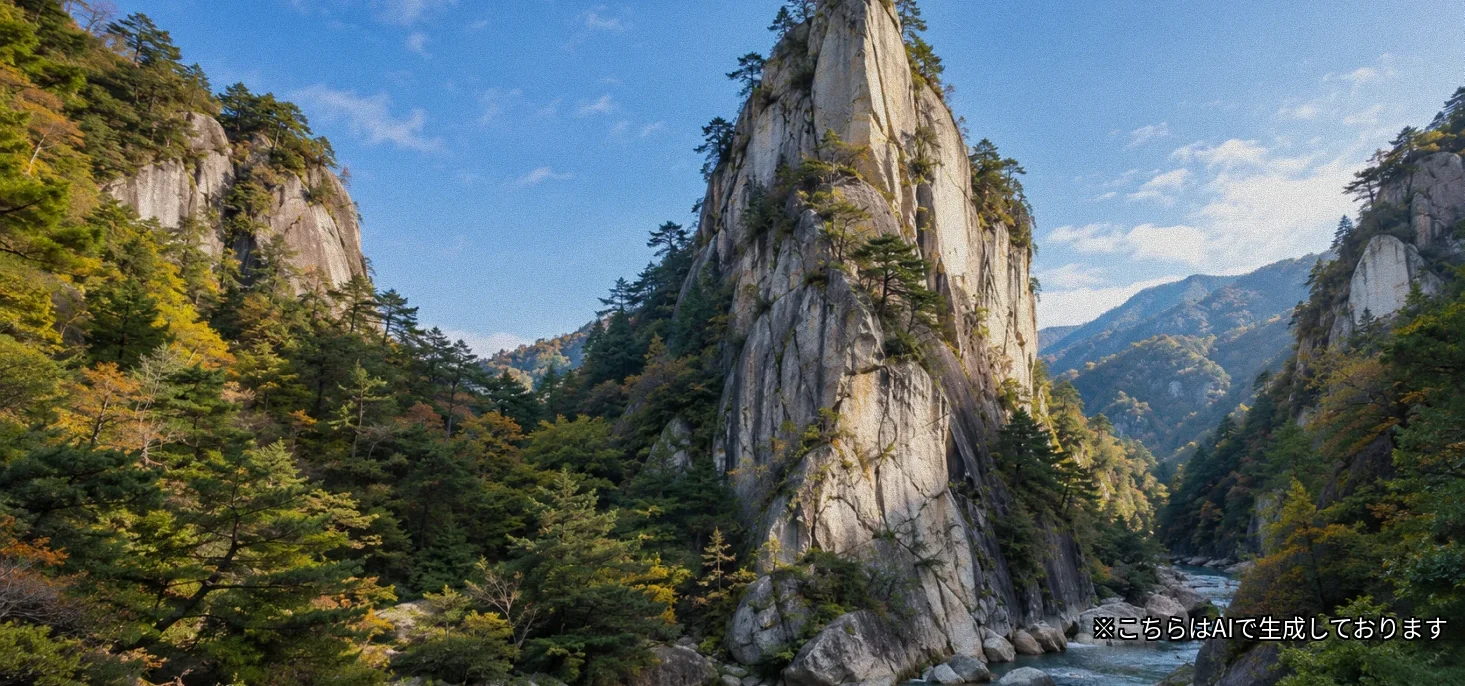
Shosenkyo is a gorge spreading across northern Kofu City, said to have grown out of a pilgrimage route that dates back to the Heian period, and it is one of Yamanashi Prefecture’s signature scenic spots. Its landscape of strange rocks and mountain streams is called “Japan’s finest gorge beauty,” and with walking paths and a ropeway in place it still draws crowds as a tourist site. It is open to visitors, and there are no off-limits zones.
Origins: From Pilgrimage Route to Tourist Site
Shosenkyo is said to have been, originally, a path that local people walked to worship the gods and buddhas of the mountains. After the Meiji era it was developed as a tourist destination, and the walking path along the gorge and clusters of strange rocks such as Kakuenpo became its well-known sights. Today it counts among Yamanashi’s leading tourist spots and is also famed for its autumn leaves.
Shosenkyo lies within Chichibu-Tama-Kai National Park, and it is a gorge characterized by cliffs and strange rock formations carved from granite by the flow of the river. Designated a Special Place of Scenic Beauty by the state and once ranked first in the gorge category of the “100 Best Tourist Destinations in Japan,” it is highly rated for its scenery. Being only about 30 minutes by car from central Kofu is probably another reason so many people visit.
Along the gorge, named sights line up one after another, such as the huge rock peak called Kakuenpo and Sengataki Falls, which drops 30 meters. The rocks and waterfalls given names are also traces of people who once sensed the presence of gods and buddhas in natural forms and revered them. The sensibility of looking up at the mountains and pressing one’s palms together before the rocks still lives on in the place names and the landscape.

Granular repellent for scattering around grass or the grounds of a ruin, aimed at snakes, lizards, and centipedes — a preventive measure against ground-crawling reptiles and pests in general.
Rainbow Yakuhin Snake Repellent 'Hebi-Less' Granules, Value Pack 900g
We may earn a referral fee on purchases made through these links.
Why It Is Called a Haunted Spot
The supposed basis for the haunted-spot rumor is a tour-bus crash that occurred at Shosenkyo in 1977 (Showa 52). It is said that 11 people died in the crash, and this appears to be the starting point of rumors such as “I saw a ghost at Shosenkyo.” However, this survey could not confirm the content of any specific sighting accounts or when they first appeared. Because this is a place connected with a real fatal accident, this article focuses on the facts and avoids sensational wording.
A tour-bus accident is an event etched deeply into a community’s memory, because so many lives are lost at once. As years pass and fewer people remain who knew that time, the memory of the event gradually changes form into a “tale.” Mourning for the dead is, before anyone notices, replaced by the rumor that “ghosts appear.” Such a change is something often seen at places where a disaster occurred.
Current Condition and Access
Shosenkyo is still open to the public as one of Yamanashi’s signature tourist sites, and it can be entered freely. Walking paths, shops, and a ropeway are in place, and it bustles with visitors during the day. Please note that it is not an abandoned ruin or a closed-off area of the kind the term “haunted spot” might suggest, but a tourist site in active operation.
Reflection: A Gorge Where Beauty and Sorrow Coexist
What follows is our own view. A tragedy that occurs in an overwhelmingly beautiful place stays in people’s memory with unusual vividness. The greater the beauty, the greater the drop felt in the lives lost. That people who set out for a sightseeing trip lost their lives in the midst of a happy journey must have been a pain that took a long time to heal, for the bereaved families and for the local community alike.
This is only our speculation, but in the face of such pain, people may have kept wavering between the feeling that “we must not forget” and the feeling that “it is painful to talk about.” Handing down a story is itself a form of mourning. Yet when the telling warps into a ghost story, it seems to secretly carry with it a wish to avoid looking squarely at the sorrow. Turn it into a scary tale, and the sorrow becomes, for a moment, a little more distant.
The terrain of a gorge itself also holds elements that stir unease: sheer cliffs, roaring water, shade that is dim even by day. The sound of water in particular can be heard as human voices or footsteps, and on a quiet dusk it creates the illusion that someone is there. That Shosenkyo as a tourist site shows an entirely different face by day and by night is, as a matter of natural conditions, perfectly ordinary.
In our view, what is worth cherishing here is not whether anything uncanny exists, but a quiet imagination for those who died in the accident. While enjoying the scenery of the gorge, we can gently turn our thoughts to the lives of those who are also engraved here. Is that not the gentlest courtesy a visitor to a tourist site can offer?
One more thing, again our speculation: the history of Shosenkyo as a “route of faith” should not be overlooked either. In a land that has revered mountains and rocks as sacred, a sense of perceiving unseen presences in nature is originally deeply rooted. When that sense later joined with the memory of the accident, it may have provided the ground for the tale that “something is there.” Faith, mourning, and tourism overlap in the same gorge. We want to take care not to simplify that overlap into any one of them.
Its Everyday Face: A Tourist Site of Gorge Beauty
Shosenkyo is one of Yamanashi’s finest scenic spots, also called Japan’s most beautiful gorge. Strange rocks and boulders formed by the erosion of granite line the stream, and among them Sengataki Falls, 30 meters high, is known as the sight that symbolizes Shosenkyo. A walking path runs along the gorge, and in the season of spring greenery and autumn leaves it is one of Yamanashi’s leading excursion spots, drawing many tourists from inside and outside the prefecture. Contrary to the rumors told here, by day it is also a bright tourist site full of families and hikers.
Notes and Cautions
There are no restrictions on entering Shosenkyo itself, but parts of the walking path along the gorge have poor footing, so visiting at night or stepping beyond the fences can lead to accidents. The 1977 accident mentioned in this article was an event in which real lives were lost, so please refrain from mentioning it out of idle curiosity. This article is published not so that people will go, but to record.
This article deals with deaths caused by an accident. If you are carrying the grief of losing someone dear or feeling heavy-hearted, please do not bear it alone; consider also reaching out to a support service such as the Yorisoi Hotline (0120-279-338, available 24 hours; Japanese-language).

A measuring tape that locks from the front, side, or underside. Since we cover haunted spots to record them rather than to encourage visits, this is for measuring room size, corridor width, ceiling height, or the extent of a collapsed section accurately for our reporting notes.
TAKAGI Triple Stop Measuring Tape 19mm x 5.5m
We may earn a referral fee on purchases made through these links.
Frequently Asked Questions
Q. Can you enter Shosenkyo?
A. It is a tourist site open to the public and can be entered. However, parts of the walking path have poor footing, and visiting at night or going beyond the fences can lead to accidents.
Q. Why is it called a haunted spot?
A. The starting point of the rumor appears to be a tour-bus crash in 1977 (said to have killed 11 people). However, the content of specific sighting accounts and when they first appeared have not been confirmed.
Q. What are the highlights of Shosenkyo?
A. Strange rocks formed by the erosion of granite and Sengataki Falls, 30 meters high, are well known. In the season of spring greenery and autumn leaves, many tourists visit from inside and outside the prefecture.
Q. Has KARASU CHANNEL filmed on location at Shosenkyo?
A. No, we are not currently reporting there; a visit is under consideration. Our other reporting videos on haunted spots and ghost stories can be watched on KARASU CHANNEL (YouTube).

Supervised by Suzuking.
Affiliation: KARASU CHANNEL
Occult & horror reporting: 7 years (since 2020)
Followers: YouTube 5,000+ / X 25,000+
On-site investigations: 30+
Kaidan Tales from This Area
Which haunted location do you find the scariest?
If you think this location is the scariest, press the button below. One vote site-wide — you can change your vote for a different location anytime.
Was this article helpful?
Add this to your favorites to find it again anytime from your My Page.

Comments