Where do we go while we sleep? An Egyptian scribe listed dreams as good or bad on a papyrus roll, the sick in Greece lay on a temple floor waiting for a god, and a Chinese thinker woke unsure whether he was a man or a butterfly. Why did people so far apart both fear their dreams and lean on them? This column walks through dream beliefs around the world and quietly asks why.
Where Do Dreams Come From?
Today we usually explain dreams as something the sleeping brain produces while it sorts memories and feelings. Long before that explanation existed, though, people treated dreams as something that arrived from outside. The dead appeared at the bedside, sleepers walked through lands they had never seen, and some dreams seemed to foretell the next day. Faced with that, it would have been harder to believe dreams were merely inside one's own head.
World dream beliefs can be seen along two broad lines. In one, the soul slips out of the sleeping body and travels somewhere. In the other, gods, spirits or ancestors send words and images to the sleeper. In the first, the person goes over to the other side; in the second, the other side comes to the person. The direction differs, but both rest on the sense that sleep is a time when this world touches another.
In Primitive Culture (1871), the British anthropologist E. B. Tylor argued that experiences of dreaming and death may have led people to the idea of a soul separate from the body. His theory drew plenty of criticism later, yet his point that dreams and the idea of the soul are closely bound together remains a useful doorway into the subject.
The Dream Book of an Egyptian Scribe
One of the oldest surviving dream manuals is Papyrus Chester Beatty III, now in the British Museum. It dates to around the 1200s BCE, in Egypt's Nineteenth Dynasty, and came from Deir el-Medina, the village of the craftsmen who built the royal tombs. Written in hieratic, a cursive form of Egyptian script, it lists dream after dream, each marked as good or bad.
Its entries follow a simple pattern: if a man sees himself doing such-and-such in a dream, it is good or bad, and here is what it means. Some readings reverse the surface meaning; seeing yourself dead, for example, could be read as a sign of long life. Behind the list seems to lie the belief that dreams were signals from the gods, and that reading them correctly could help a person avoid misfortune.
We also know the papyrus passed through several owners over time. As we see it, there is something urgent, beyond mere superstition, in the image of people whose work lay so close to death checking the meaning of each night's dream line by line. It may have been a small handbook for protecting tomorrow's self.

A power source for long shoots or phone charging during haunted-spot exploration.
IRIS OHYAMA Portable Power Station IBT-A60100-W, Large Capacity 60000mAh/222Wh, 200W Rated Output, Pure Sine Wave, PSE Compliant, AC/DC/USB Output, White
We may earn a referral fee on purchases made through these links.
Waiting for a God on the Temple Floor
In ancient Greece, sanctuaries of Asclepius, the god of healing, stood in many places, and Epidaurus in the Peloponnese was among the most famous. The sick purified themselves, made offerings, and slept a night in a sacred building called the abaton, hoping the god would appear in a dream to heal them or reveal a cure. Scholars call this practice of sleeping in a holy place to receive a dream incubation.
Stone tablets at Epidaurus record the experiences of those who were healed. Many tell of being touched by the god in a dream and waking up cured, and some clearly carry exaggeration or promotion. Even so, the fragile hope of a sick traveler lying on a cold floor, listening for the god's steps, still comes through the carved words.
Later, around the second century CE, Artemidorus of Daldis in Asia Minor compiled the Oneirocritica, a five-book work on interpreting dreams. He traveled to collect dream accounts and is known for holding that the same dream could mean different things depending on the dreamer's job, status and circumstances. His habit of reading dreams against the dreamer's life, not only as divine messages, influenced later study of dreams.
The Dream Reader: Joseph in the Bible
Joseph, in the Book of Genesis, is a figure bound up with dreams. As a young man he dreamed that his brothers' sheaves of grain bowed to his, and that the sun, moon and eleven stars bowed to him. Telling these dreams stirred his brothers' jealousy, and they sold him into Egypt. Dreams were the start of his downfall.
In prison, Joseph interpreted the dreams of the king's cupbearer and baker, and events turned out as he said. Later, when Pharaoh dreamed of seven fat cows swallowed by seven thin ones, and seven full ears of grain swallowed by seven withered ones, Joseph read them as seven years of plenty followed by seven years of famine, and advised Egypt to prepare.
Notably, Joseph says that interpretation belongs not to his own talent but to God. The dream is a vessel for divine intent, to be received humbly. As we see it, the story can also be read as showing both sides of dreams: the danger of telling them carelessly, and the power of reading them well to save a whole community.
The Butterfly and the Baku: Dreams in East Asia
In the Zhuangzi, the book named after the Chinese thinker Zhuang Zhou, the chapter often called the Discussion on Making All Things Equal holds the well-known butterfly dream. Zhuang Zhou dreams he is a butterfly, fluttering happily. On waking, he is Zhuang Zhou again, yet he cannot tell whether he was a man dreaming of being a butterfly, or is now a butterfly dreaming of being a man.
This story neither reads the dream as a divine message nor fears it as the soul's journey. It shakes the boundary between dreaming and waking, and even the boundary of the self. Zhuangzi closes it with the idea of the transformation of things, and it can be read as using a dream to loosen our whole way of seeing the world.
In Japan, the creature known for eating bad dreams is the baku. It began as an imaginary beast in China; the Tang poet Bai Juyi wrote that sleeping on its hide warded off disease and painting its image drove away evil. The Chinese creature did not eat dreams, but by around the Muromachi period in Japan it had come to be thought of as a devourer of nightmares, and people placed its picture or name under their pillows, or on the treasure-ship pictures used for the first dream of the New Year.
The Spider's Web: The Dreamcatcher
The dreamcatcher, a hoop strung with a web and often hung with feathers, is traced to the Ojibwe, or Anishinaabe, peoples of North America. According to sources such as the ethnographer Frances Densmore's 1929 study, it was a protective charm for infants, hung over the cradleboard. Made from a bent wooden hoop netted with plant fiber, it was meant to catch harm drifting through the air, much as a spider's web catches whatever touches it.
In Ojibwe tradition, the charm is tied to Asibikaashi, the Spider Woman who watches over children. A widely known explanation says bad dreams are caught in the web while good dreams slip through the center or down the feathers to the sleeper, but details vary among families and communities. It is worth taking care not to reduce it to a single fixed meaning.
In the 1960s and 1970s the dreamcatcher was taken up as a symbol of unity among many Native nations, and later spread worldwide as a souvenir and decoration. At the same time, many Native voices have raised concern about mass-produced versions far removed from tradition. We would like to present it not as a mere trendy ornament but as a charm born from the prayers of people watching over their children.
Our View: Why People Feared and Trusted Dreams
As we see it, the reason distant cultures both feared and relied on dreams may lie in a shared unease about sleep as a defenseless time. Asleep, a person cannot resist beast or enemy. In an age of scarce light, nights were far deeper and longer than now. Dreams seen in that darkness were likely inseparable from the fear that something might enter while one could not guard oneself, or that one's own soul might wander off.
Yet people placed as much hope in dreams as fear. When no one knew how to cure an illness, or when famine would come, they carried questions the waking mind could not answer into sleep. The Egyptian scribe's list, the floor at Epidaurus and Joseph's interpretations differ in form, but all express a wish to glimpse an unseen tomorrow a little early. This is our speculation, but dreams may once have been almost the only window humanity had onto an uncertain future.
Another point is that many dream beliefs take the form of protection. A person in Japan tucking a picture of the baku under a pillow and an Ojibwe mother hanging a web over a cradleboard knew nothing of each other. Still, the gesture of guarding a loved one from harm during sleep is strikingly similar. We suspect the heart of dream belief lay less in whether prophecies came true than in caring for someone sleeping in the dark.
Zhuangzi's butterfly offers a third path, different from both fear and hope: neither decoding the dream nor driving it away, but accepting that the line between dream and waking is blurred. Fearing, relying, protecting and accepting: the world's dream beliefs can be read as a record of how humans have lived alongside sleep, a time none of us can avoid.
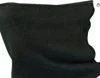
Nighttime exploration in winter loses body heat fast through the neck, and this tube also doubles as a face cover that keeps dust and cobwebs out of your mouth and nose. It's a simple pull-on tube, and since it's built as motorcycle gear, it's also quite durable.
KOMINE AK-084 Fleece Neck Tube 'Neo'
We may earn a referral fee on purchases made through these links.
What You Can Do Tonight and Tomorrow Morning
The ways people around the world have faced dreams can still serve us. Start by keeping a small notebook by your pillow and, as soon as you wake, jotting down the scenes, colors and feelings you remember. Like the Egyptian scribe and Artemidorus, recording and comparing dreams gradually shows you what your mind tends to dream in which moods.
On a morning after a frightening dream, you might recall the old Japanese custom of yumechigae, wishing for a bad dream to turn toward good. Open a window, let in the morning light, and quietly wish that the bad dream stays only a dream. Dreams can frighten us, but they are also one of humanity's oldest clues to knowing ourselves.
Dreams mentioned in this essay
FAQ
Q. What is the oldest dream interpretation book in the world?
A. One of the oldest known is Papyrus Chester Beatty III in the British Museum, an Egyptian papyrus from around the 1200s BCE that lists dreams one by one as good or bad, with their meanings.
Q. Why is the baku said to eat bad dreams?
A. The baku began as an imaginary Chinese beast believed to ward off evil and disease. In Japan, by around the Muromachi period, it came to be seen as a devourer of nightmares, and people placed its image or name under their pillows.
Q. What is the original meaning of the dreamcatcher?
A. It is traced to the Ojibwe people of North America as a charm to protect infants, hung over the cradleboard to catch harm like a spider's web. Tellings vary by community and family, so it deserves cultural respect.
Look up your own dream in the Dream Dictionary →
More dream essays
- True Dreams and Reverse Dreams: Why We Read Dreams Backwards
- Buying Dreams, Turning Dreams: A Japanese History of Dream Trading and Dream Charms
- Standing at the Pillow: Why Do the Dead Visit Our Dreams?
- First Dreams and the Treasure Ship: Entrusting a Year's Luck to a Single Night
- When Dreams Were Letters from the Gods: Dream Oracles in Classical Japan
- Sleep Paralysis and Lucid Dreams: What Happens at the Edge of Sleep
- The Science of Nightmares: Why We Dream of Fear
Other categories
- Spirits & the spiritual
- Japanese yokai
- Urban legends & online lore
- Monsters & myths abroad
- The uncanny
- Local lore & folktales
- Gods & buddhas
- World mythology
- Lucky dreams
- Love & desire
- Money & luck
- Feelings & moods
- People & love
- School & youth
- Life events
- Body & health
- Actions & events
- Animals
- Nature & weather
- Places & buildings
- Objects
- Appliances & everyday things
- Gems & crystals
- Numbers & weekdays
- Seasons & solar terms
- Occupations
- Sounds & voices
- Vehicles
- Food
※ Dream interpretation here is entertainment drawing on psychology and folklore — it is not scientifically proven. "This site's view" is our own interpretation. If bad dreams or poor sleep continue, please consult a medical professional.
