Dreams of seasons and annual rites are like turning a calendar page inside the mind: they show where your inner time is. Snow in midsummer, New Year rice cakes in autumn: such mismatches reflect both the seasons your body remembers and the kind of turning point your heart is asking for. This page gathers how to read dreams of solar terms, seasonal festivals and holidays.
What season dreams reflect: the inner calendar
Psychology often describes dreams as continuous with waking concerns and moods. Season dreams fit that idea: cold, day length and holiday preparations easily become the backdrop of a dream. When the dream's season differs from the real one, though, it may be that the mind wants to return to a particular time, such as a childhood summer or the last winter spent with someone.
Seasonal change also affects the body clock. It is widely known that mood tends to dip when daylight grows short, so heaviness in winter dreams is natural. In Jungian thought, the cycle of seasons also overlaps with archetypal images of life, death and rebirth. The season in your dream can be read as a signal, arriving before words, of which stage of life you feel you are in.
Folklore of the calendar and its turning points
The 24 solar terms were born in ancient China and came to Japan as a guide for farming. Extra seasonal markers such as Doyo and Higan were added to suit Japan's climate. Setsubun originally meant the eve of each of the four season starts; because boundaries were thought to let evil slip in, the custom of scattering beans to drive out demons arose. The fear of thresholds, and the urge to purify before moving on, is written into the calendar itself.
Dreams and the calendar meet most famously in the first dream of the New Year, but the year had other thresholds too. The five seasonal festivals, the Gosekku, fall on the seventh of the first month, the third of the third, the fifth of the fifth, the seventh of the seventh and the ninth of the ninth. Rooted in ideas from China, they were treated almost as official holidays in the Edo period. Tanabata, for instance, is said to have formed when the Chinese legend of the Weaver and the Herdsman, and a festival for improving one's crafts, merged with older Japanese customs. Each was a day to purify oneself at a seasonal border and pray for safety.
Obon is the period for welcoming and sending off ancestral spirits. Bon dances are said to have meant comforting the returning spirits, dancing with them and seeing them off again. Many seasonal rites were entertainment for the living and at the same time a promise kept with unseen beings. Abroad, Halloween traces back to an ancient Celtic festival, when the border with the world of the dead was said to grow thin at summer's end.

For personal safety and emergency alerts during solo nighttime exploration.
Lilima Buzzer Personal Safety Alarm, 135dB Loud Sound, Strong Light, USB-C Rechargeable, Large Battery, for Adults/Children, Emergency Light/Disaster & Crime Prevention
We may earn a referral fee on purchases made through these links.
Our view: a season is a memory of who was there
In our view, what truly matters in a season dream is not the temperature or scenery but who was there in that season. New Year at a grandmother's house, fireworks with a friend you can no longer meet. Because rites return in the same form every year, they make the absence of those people all the sharper. If a season dream carries an unexplained loneliness, the mind may be searching not for the scenery but for someone who once stood in it.
We can surmise that people had weighty reasons to fear these thresholds. In an age with little medicine or heating, surviving winter was a matter of life and death, and the harshest season surely claimed many lives. Setsubun demons, year-end purification and the yuzu bath at the winter solstice likely carried a desperate prayer: please let us cross this border safely. The faint unease in season dreams may be a trace of that memory.
Yet the calendar is also a promise that the next season will surely come. Just as the lengthening of days after the winter solstice is called the return of the light, the darkest day is also the day light begins to come back. We suggest reading dreams of dark, cold seasons not as a sentence of ending but as news that you have reached the turning point.
Reading the details
First, see whether the season is a beginning, a peak or an ending. Dreams of the start of spring, the insects waking or the first spring gale signal something dormant starting to move; midsummer and the solstice show strength at its height; autumn leaves, the cold wind and New Year's Eve speak of closure and letting go. Next, notice whether the season felt pleasant. In the same winter dream, finding the first snow beautiful suggests a clean restart, while shivering reflects exhaustion.
In dreams of festivals, the condition of decorations and food gives clues. A fine mirror rice cake or pine gate shows readiness, while a cracked cake or fallen gate asks you to tend your home and daily life. Did you blow out the birthday candles? Did you miss the year-end noodles? Were the carp streamers catching the wind? Recalling whether you completed the ritual makes the dream's meaning clearer.
On the morning after
On the morning after a season dream, open the window and notice today's air. Then simply eating one food of the season you dreamed of, or checking the calendar for the date of the next solar term, helps align your inner clock with the real one. If a festival dream was tied to someone you miss, try quietly saying that person's name to yourself.
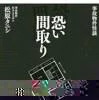
The first entry in the "Scary Floor Plans" series — a firsthand report by Tanishi Matsubara, the comedian famous for living in stigmatized properties, and a reference for our stigmatized-property articles.
Stigmatized Property Ghost Stories: Scary Floor Plans (Tanishi Matsubara / Futami Shobo)
We may earn a referral fee on purchases made through these links.
Key dreams in this category
- The Winter Solstice: The longest night of the year: a symbol of light returning after the lowest point, suggesting a hard time is ending.
- New Year: Linked to the first-dream custom, a dream of reset and new beginnings. Who you spent it with reveals your wish.
- Setsubun: A rite for driving out evil at the seasonal border. Whether the demon left shows if you can break a bad streak.
- Tanabata: A dream of wishes and distant bonds. If you recall the words on your wish strip, they are your true feelings now.
- The Bon Dance: A rite of welcoming and sending off the dead. Whether you joined the circle shows how you relate to others.
- A Change of Season: A dream of transition. Long seen as a time when evil slips in, it is a signal to rest body and mind.
- Keichitsu: The time when insects wake in the soil: a sign that plans or drive you had shelved are stirring again.
- The First Sunrise of the Year: Greeting the year's first light. Rising through clouds means luck climbing; if unseen, simply wait calmly.
Every dream of Seasons & solar terms in the dictionary
◎ Lucky dream
- Dawn
- Autumn Leaves
- New Year
- Tanabata
- Autumn
- The Winter Solstice
- Keichitsu
- Moon Viewing
- The First Sunrise of the Year
- The Boys' Festival
- Carp Streamers
- The First Spring Gale
◇ Depends on the scene
○ A mirror of the mind
- Christmas
- Halloween
- Setsubun
- Spring
- The Rainy Season
- The Start of Spring
- The Equinox
- The Summer Solstice
- The Great Cold
- The Calendar
- New Year's Eve
- Cherry Blossom Viewing
- The Bon Dance
- The Cold Winter Wind
- The First Snow
- The Doyo Season
▲ Leans unlucky (a warning)
FAQ
Q. Is a winter solstice dream good or bad?
A. It is generally considered a good dream. The solstice has the longest night, but days lengthen afterward, so it symbolizes bad luck bottoming out and recovery beginning. If you were freezing badly in the dream, though, put rest first.
Q. Why do I dream of a season different from the real one?
A. The dream's season often reflects a particular time in memory or a state you now long for. Dreaming of summer in winter may mean you want energy and freedom; dreaming of winter in summer, rest and quiet. Also recall who was there in that season.
Q. Which night's dream counts as the first dream of the year?
A. Views differ by region and era. Today it is usually the dream on the night of January 1 or the night of January 2, while older customs counted the night of Setsubun or New Year's Eve. Whichever night it is, use a scene that stayed with you as a hint for the year's goals.
Look up your own dream in the Dream Dictionary →
Dream essays
- True Dreams and Reverse Dreams: Why We Read Dreams Backwards
- Buying Dreams, Turning Dreams: A Japanese History of Dream Trading and Dream Charms
- Standing at the Pillow: Why Do the Dead Visit Our Dreams?
- First Dreams and the Treasure Ship: Entrusting a Year's Luck to a Single Night
- When Dreams Were Letters from the Gods: Dream Oracles in Classical Japan
- Sleep Paralysis and Lucid Dreams: What Happens at the Edge of Sleep
- Dream Beliefs of the World: A Journey of the Soul, or the Voice of a God?
- The Science of Nightmares: Why We Dream of Fear
Other categories
- Spirits & the spiritual
- Japanese yokai
- Urban legends & online lore
- Monsters & myths abroad
- The uncanny
- Local lore & folktales
- Gods & buddhas
- World mythology
- Lucky dreams
- Love & desire
- Money & luck
- Feelings & moods
- People & love
- School & youth
- Life events
- Body & health
- Actions & events
- Animals
- Nature & weather
- Places & buildings
- Objects
- Appliances & everyday things
- Gems & crystals
- Numbers & weekdays
- Occupations
- Sounds & voices
- Vehicles
- Food
※ Dream interpretation here is entertainment drawing on psychology and folklore — it is not scientifically proven. "This site's view" is our own interpretation. If bad dreams or poor sleep continue, please consult a medical professional.
