Sightseeing in Katori: Tone River Water Country and the Little Edo Townscape, Walked from the North
Supervised by Suzuking. (KARASU CHANNEL / Occult & horror reporting, 7 years)
Contents
Places to visit in this town (north to south)
Numbers follow the order in the article, from north to south. Select a pin to see its name. Positions are approximate.
- Suigo Sawara Ayame Park (水郷佐原あやめパーク) A municipal aquatic botanical garden at the gateway to the water country, where in iris season you can enjoy the rare pleasure of viewing the flowers from a boat.
- Katosu Juni-bashi, the Twelve Bridges (加藤洲十二橋) A row of small bridges in the Katosu district, where waterways run like a net. Boats pass under the bridges, giving a taste of the water-country atmosphere.
- Sawara Townscape and the Ono River (佐原の町並みと小野川) A streetscape of merchant houses and storehouses from the late Edo to early Showa periods along the Ono River, the first in the Kanto region to be selected as a Preservation District for Groups of Traditional Buildings.
- Sawara Mitsubishi-kan (佐原三菱館) A Taisho-era bank building whose red brick is banded with white stone, known as the leading Western-style building in the Sawara townscape.
- Ino Tadataka's Former Residence and Memorial Museum (伊能忠敬旧宅と記念館) The house where Ino Tadataka, the father of Japanese mapmaking, lived until he left for Edo at 50. The museum opposite holds National Treasure map materials.
- Katori Jingu and Tsunomiya Torii Riverside Landing (香取神宮と津宮鳥居河岸) The Ichinomiya of Shimosa Province and an ancient shrine counted among the Three Shrines of the Eastern Provinces with Kashima Jingu and Iisu Shrine, known also for its National Treasure mirror and the Kaname-ishi.
- Noma-gome Remains of the Shimosa-Sakura Abura-da Pasture (下総佐倉油田牧の野馬込跡) Remains of the Abura-da Pasture, part of the Edo shogunate's Sakura pastures. An enclosure site for catching wild horses, designated a National Historic Site in 2019.
- Yamakura Ogami (山倉大神) An ancient shrine known for the "Yamakura Salmon Festival" in December, a prefectural intangible folk cultural property with a distinctive ritual involving offered salmon.
Show basic information about this town (location, last checked, notes)
- Location
- Katori, Chiba Prefecture, Japan
- Last checked
- 2026.10.06
- Please note
- Opening hours, prices and closing days change often, so we do not list them. Please check each facility's official site before you go.
What Kind of Town Is Katori?
Katori is a city in the northeast of Chiba Prefecture, spreading along the lower right bank of the Tone River. It was formed in 2006 when the former city of Sawara merged with surrounding towns, and its water-country lowlands lie within Suigo-Tsukuba Quasi-National Park. After the course of the Tone River was redirected in the Edo period and river transport flourished, Sawara grew into a prosperous merchant town where goods gathered, and became known as the “Little Edo of Hokuso.”
This article introduces the city’s sights in order of latitude, from north to south. We begin with scenes of flowers and water, then move on to the ancient shrine of Katori Jingu (香取神宮), the townscape along the Ono River (小野川), and finally the remains of a shogunate pasture on the southern plateau. It is a town where water, faith and commerce lie layered one over another, with plenty to see.

A folklore-minded analysis of the internet ghost stories and urban legends spreading in the smartphone era — for our analysis of net-kaidan articles.
The Folklore of Internet Ghost Stories (Ryuhei Hirota / Hayakawa Shobo)
We may earn a referral fee on purchases made through these links.
1. Suigo Sawara Ayame Park (水郷佐原あやめパーク)
Suigo Sawara Ayame Park is a botanical garden run by Katori City, and it is a well-loved front door to Suigo-Tsukuba Quasi-National Park. It began in 1969 as an aquatic plant garden opened by the former city of Sawara, and over time, through municipal mergers and a change of name, it came to carry its present name. Across about 8 hectares, islands, bridges and open water are arranged to form a small replica of the water-country landscape.
From late May to late June, irises and Japanese water irises bloom together on a scale said to reach some 400 varieties and 1.5 million plants, and the Suigo Sawara Ayame Festival is held. It is said to be the only iris garden in Japan where you can admire the flowers from a boat, a luxury that only a town of water can offer.
Seasonal waterside plants such as lotus and wisteria are also worth seeing. The park can be crowded during the flower season, so it is reassuring to check flowering conditions and events on the official guide before you visit.
2. Katosu Juni-bashi, the Twelve Bridges (加藤洲十二橋)
Katosu Juni-bashi is a cluster of bridges in the Katosu district, a lowland along the Tone River laced with waterways. As the name says, twelve bridges stand in a row, and the place is known as a representative scene of the water country. The nearest station is, fittingly, Juni-bashi Station on the JR Kashima Line. It is said that, before the Twelve Bridges of Itako on the Ibaraki side, only this Chiba side was called “Juni-bashi.”
Life in the water country has always gone together with boats. Waterways linked rice fields and houses, and passing under bridges to get around was everyday life before roads were built. Today sightseeing boat rides are offered, and you can watch the town slowly drift by from the water.
The waterside is close to homes and farmland. When taking photographs, please enjoy the place quietly so as not to disturb local residents’ daily lives.
3. The Sawara Townscape and the Ono River (佐原の町並みと小野川)
In the Edo period the Tone River was redirected eastward and river transport flourished, and Sawara grew into a great commercial town where goods gathered. Along the Ono River, several riverside landings called “dashi,” used to bring cargo ashore, were built, and a distinctive scene took shape with merchant houses lined up facing the river. Prosperity continued after the Meiji era, and the town’s trading area is said to have covered a wide range from Narita to Kashima.
The townscape is made up of wooden townhouses, storehouse-style shops and Western-style buildings dating from the late Edo period to the early Showa era. In 1996 it became the first area in the Kanto region to be selected as a Preservation District for Groups of Traditional Buildings. Walking along the Ono River and the east-west Katori Kaido road, you will find buildings of different eras standing side by side.
The Great Festival of Sawara (佐原の大祭), which combines the summer Honjuku Gion Festival and the autumn Shinjuku Autumn Festival, features floats touring the town. It is designated an Important Intangible Folk Cultural Property and was inscribed on UNESCO’s Intangible Cultural Heritage list in 2016. The pride of a town once sung of in the line “If you want to see Edo, come to Sawara” lives on in the heat of the festival.
4. Sawara Mitsubishi-kan (佐原三菱館)
Sawara Mitsubishi-kan is a two-story red-brick building standing on Katori Kaido, designated a tangible cultural property of Chiba Prefecture. It was built in 1914 as the Sawara branch of the Kawasaki Bank and later served as a branch building of the Mitsubishi Bank. It was donated to the then city of Sawara in 1989, and after being used for tourist information and other purposes, conservation repairs were completed in 2022, bringing it closer to its appearance when first built.
Its exterior, red brick walls banded with white granite, is a Western design called Renaissance style or Queen Anne style, and it stands out strikingly in a townscape that keeps the atmosphere of Edo. The interior is an open atrium, and on the second floor only a gallery runs around the edge. Details typical of bank architecture, such as the spiral staircase and the fireplace decoration, are the highlights.
A merchant town like Sawara needed a financial base as well. The Western-style building among the old streets shows how a trading town that had flourished since Edo came to accept modern banking and industry.
5. Ino Tadataka’s Former Residence and Memorial Museum (伊能忠敬旧宅と記念館)
Ino Tadataka’s Former Residence is the house on the bank of the Ono River where Ino Tadataka lived during his years in Sawara, and it is designated a National Historic Site. At 17 Tadataka entered the Ino family, a leading family of Sawara, as an adopted son-in-law, and built up the family business through sake brewing and the rice trade. At 50 he went to Edo to study astronomy and took on the surveying of the whole country. The study (shoin) of the main house is said to have been designed by Tadataka himself.
In the river in front of the residence stands the Toyohashi (樋橋). It began in the Edo period as a large flume built to carry irrigation water to rice fields on the opposite bank, and because of the sound of falling water it is called the “Jah-Jah Bridge.” It was selected among the Ministry of the Environment’s “100 Soundscapes of Japan.” The sound of the town itself has been recognized as culture worth protecting.
Across the river is the Ino Tadataka Museum, which holds Tadataka’s maps and surveying instruments, the National Treasure collection “Materials Related to Ino Tadataka.” The residence and the museum were also certified as constituent cultural properties of a Japan Heritage story in 2016. That a Sawara merchant became the man who later drew the shape of Japan speaks to the intellectual depth of this town.
6. Katori Jingu and the Tsunomiya Torii Riverside Landing (香取神宮と津宮鳥居河岸)
Katori Jingu is the Ichinomiya, the foremost shrine, of Shimosa Province, enshrined on a hill called Kameyama on the right bank of the Tone River. Its deity is Futsunushi no Okami, who played an active part in the “transfer of the land” in Japanese mythology, and as a god of martial arts he has long been revered by the imperial court and the warrior class. Even now the shrine enjoys deep devotion among practitioners of martial arts such as kendo and judo. Together with Kashima Jingu in Ibaraki Prefecture and Iisu Shrine in Kamisu City, it is counted among the “Three Shrines of the Eastern Provinces” (Tokoku Sansha).
Its cultural properties are rich as well: a sea-beast and grapevine mirror (海獣葡萄鏡) from China’s Tang dynasty is designated a National Treasure. The main hall and tower gate, built in the Edo period, are Important Cultural Properties. It is said that only three shrines were written with the title “Jingu” in the shrine register of the Engishiki: the Grand Shrine of Ise, Kashima and Katori, which hints at its high rank.
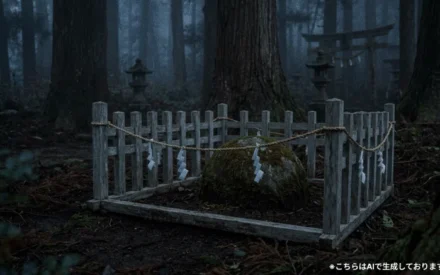
Within the grounds lies the Kaname-ishi (要石), the “keystone,” a sacred stone said to pacify earthquakes. Most of it is said to be buried underground, and Kashima Jingu also preserves a very similar stone. Meanwhile, at the Tsunomiya Torii Riverside Landing (津宮鳥居河岸) facing the Tone River stands the first torii of Katori Jingu, recalling the age when worshippers came by boat and stepped ashore from the river. It is an active shrine, so please follow the rules of worship and the requests posted in the precincts.
7. Remains of the Noma-gome, Abura-da Pasture of Shimosa-Sakura (下総佐倉油田牧の野馬込跡)
The Noma-gome remains on the plateau of Kumigami in the south of the city are what is left of the Abura-da Pasture, one of the Sakura pastures established by the shogunate in the Edo period. The Sakura pastures spread across Shimosa and Kazusa, and at their peak are said to have covered more than 17,000 hectares and grazed about 3,000 horses. Within them, the Abura-da Pasture covered about 1,170 hectares in what is now Kumigami, Katori City.
A noma-gome was an enclosure for gathering and catching half-wild horses, and earthen embankments remain. Built by the people who handled horses on the pasture, it is a valuable relic conveying life on the ranch. In October 2019 the site was designated a National Historic Site as the “Remains of the Shimosa-Sakura Abura-da Pasture.”
The surroundings are quiet, with farmland and woods spreading out. Standing on the embankment, you can just faintly imagine the scene of horses running across a vast open field. It is a spot that shows that Katori, so strongly associated with its water country and townscape, has another face as a plateau pasture. When visiting, please take care not to enter surrounding private land or farmland.
8. Yamakura Ogami (山倉大神)
Yamakura Ogami is a shrine in Yamakura in the south of the city, known for its annual festival, the “Yamakura Salmon Festival.” The festival was designated an intangible folk cultural property of Chiba Prefecture in 2005. It was once held on the first Day of the Hare in the eleventh lunar month and was also called the “Hatsu-u Festival,” but it is now held on the first Sunday of December.
At the festival, salmon offered to the shrine are salted and then cut into small pieces in a ritual knife ceremony of the school called Shirakawa-ryu. The slices are blackened over a fire and distributed, and eating them is said to bring a healthy year. It is interesting that faith in a fish that swims up rivers has taken root in an inland place far from the sea.
This is our own speculation, but perhaps the salmon, as a fish that brings the bounty of the river, came to be linked with rich harvests. It is an active shrine, so during the festival please respect the rites of the parishioners and watch quietly.
Local Specialties, Food and Drink
Katori is rice country, known as a producer of early-season rice whose harvest begins after the Obon holidays in August. Field crops such as sweet potatoes, Chinese chives, green onions and burdock are also thriving, and grape production is said to be the highest in the prefecture. Pears and lilies such as Casablanca are cultivated widely too.
Famous local products include the Sawara sweet “Sawara Bayashi,” grass dumplings (kusa-dango) sold along the approach to Katori Jingu, grilled eel (kabayaki), the thick-rolled festival sushi (futomaki matsuri-zushi) that is indispensable on festival days, and tsukudani (food simmered in soy sauce). The city also has breweries making sake and soy sauce, and a culture of fermentation has taken root in this land of abundant water.
Rare Creatures and Nature
The water-country area of Katori was designated Suigo-Tsukuba Quasi-National Park in 1959. The lowland woven from the water of the Tone River and a network of waterways was also chosen among the “100 Selected Waters of Japan” (Mizu no Sato Hyakusen). The sky reflected on the water and boats gliding quietly are scenes unique to this region.
A plateau spreads across the south of the city, dotted with valley rice fields (yatsuda) and mixed woodland. Three kinds of terrain, the water-country lowland, the hills along the Tone River and the southern plateau, create different landscapes within a single city.
Other Notable Things About This Town
Katori has many seasonal events that live on: the Rice Planting Festival at Katori Jingu on the first Saturday and Sunday of April, the Great Festival of Sawara in summer and autumn, the Gion Festival of Omigawa, and others. The Hige-nade Festival of Sotaka Shrine is known as a curious festival in which anyone whose beard is stroked must share a drink of sake.
The area including the Sawara townscape and Katori Jingu is a constituent cultural property of the Japan Heritage story “Edo Travelogue of the Four Hokuso Cities.” What defines Katori is that the merchant culture nurtured by river transport to Edo and faith dating from ancient times overlap within a single city.

An ultralight, compact folding table for setting down a lantern, a snack, or a notebook while waiting or resting during car-camping. It rolls up for storage and tucks easily into gaps in the car, and doubles as a workbench for checking gear before or after exploration.
CAPTAIN STAG Aluminum Roll Table (Compact) M-3713
We may earn a referral fee on purchases made through these links.
The Night Side: Ghost Stories and Haunted Places of This Town
Myth and earthquakes suit the nights of Katori. The Kaname-ishi of Katori Jingu is said to pacify earthquakes, and it has long been told of as a pair with the stone at Kashima Jingu. The tradition that it is buried deep underground may be a sign that people feared, and prayed against, unseen forces beneath the ground.
On this site we have set out the sights first as a daytime record. The tales of the night will be told at length in a separate article.
Before You Go
Opening hours, fees, closing days and access change easily, so they are not listed in this article. Before you go, please check the latest information on the official website of each facility or local government. Some places may be restricted from entry because of weather or disasters.
Frequently Asked Questions
Q. What is Katori City famous for?
A. It is known for the water country of the Tone River, the townscape of Sawara called the “Little Edo,” Katori Jingu, one of the Three Shrines of the Eastern Provinces, and the former residence of Ino Tadataka.
Q. When is the Great Festival of Sawara held?
A. It is held twice a year: the Honjuku Gion Festival in summer (July) and the Shinjuku Autumn Festival in autumn (October). Dates differ each year, so please check the city’s official guide.
Q. What is the Kaname-ishi at Katori Jingu?
A. It is a sacred stone said to pacify earthquakes, most of which is believed to be buried underground. A similar stone is preserved at Kashima Jingu as well.
Official sites and references consulted
https://ja.wikipedia.org/wiki/香取市
https://ja.wikipedia.org/wiki/香取神宮
https://ja.wikipedia.org/wiki/佐原の町並み
https://ja.wikipedia.org/wiki/伊能忠敬旧宅
https://ja.wikipedia.org/wiki/伊能忠敬記念館
https://ja.wikipedia.org/wiki/樋橋
https://ja.wikipedia.org/wiki/佐原三菱館
https://ja.wikipedia.org/wiki/水郷佐原あやめパーク
https://ja.wikipedia.org/wiki/佐倉牧
https://ja.wikipedia.org/wiki/山倉大神

Supervised by Suzuking.
Affiliation: KARASU CHANNEL
Occult & horror reporting: 7 years (since 2020)
Followers: YouTube 5,000+ / X 25,000+
On-site investigations: 30+
Ghost stories from this land
Besides its daytime face, this land has a night side too. Read it as a record if you are curious. Some of these places are not safe or permitted to enter.