Sightseeing in Shinjuku: Post-Town Gardens, Hillside Lanes and Skyscrapers in Tokyo’s Sub-Center
Supervised by Suzuking. (KARASU CHANNEL / Occult & horror reporting, 7 years)
Contents
Places to visit in this town (north to south)
Numbers follow the order in the article, from north to south. Select a pin to see its name. Positions are approximate.
- Toyama Park, Hakone-yama (戸山公園(箱根山)) A park built on the site of the Owari domain's Toyama-so stroll garden, with a 44.6 m artificial hill, the highest point inside the Yamanote Line loop.
- Akagi Shrine (赤城神社) A shrine long revered as the guardian of Ushigome; rebuilt after wartime destruction, it joins new design with a deep wooded precinct.
- Soseki Museum in Tokyo (新宿区立漱石山房記念館) A museum recreating the study "Soseki Sanbo," where Shinjuku-born novelist Natsume Soseki spent his final years, with many of his materials.
- Hanazono Shrine (花園神社) The chief guardian shrine of Shinjuku since the days of Naito-Shinjuku, where an old faith lives on in the middle of the entertainment district.
- Tokyo Metropolitan Government Building (東京都庁舎) The giant government complex designed by Kenzo Tange and symbol of Shinjuku; it moved here from Marunouchi in 1991 and became the heart of the metropolis.
- Suga Shrine (須賀神社) A shrine known as "Tenno-sama," guardian of the eighteen towns of Yotsuya, with a history of relocation tied to the construction of Edo Castle's outer moat.
- Shinjuku Gyoen National Garden (新宿御苑) A 58-hectare garden with its roots in the Naito family's secondary residence, where Japanese, English and French gardens lie together as an oasis in central Tokyo.
Show basic information about this town (location, last checked, notes)
- Location
- Shinjuku, Tokyo, Japan
- Last checked
- 2026.10.06
- Please note
- Opening hours, prices and closing days change often, so we do not list them. Please check each facility's official site before you go.
What Kind of Place Is Shinjuku?
Shinjuku is a special ward in western Tokyo and the seat of the Tokyo Metropolitan Government. It was created in 1947 by merging the wards of Ushigome, Yotsuya and Yodobashi, so districts of very different character sit side by side within it: the skyscraper forest of Nishi-Shinjuku, one of Japan’s largest entertainment districts, the student town of Takadanobaba, and Kagurazaka with its old streetscapes. It is hard to believe they all belong to a single ward.
This article introduces the sights in order of latitude, from north to south. We begin with the remains of a garden of the Owari domain, then move through a shrine in Kagurazaka, a great novelist’s study, the guardian shrine of a post town, a giant government building and finally a garden that grew out of a feudal lord’s residence. Please walk it as if gathering up the Edo and modern layers of time lying beneath the busy streets.

A 135g lightweight drone for aerial shots of a ruin or a sprawling haunted spot from angles you can't reach on foot. Built-in propeller guards make it relatively safe to fly indoors, and its subject-tracking feature can follow the exploration automatically, giving more range to the visuals in a YouTube verification video.
DJI Neo Drone with Camera, 4K UHD Camera, Compact Drone, Aircraft Only
We may earn a referral fee on purchases made through these links.
1. Toyama Park, Hakone-yama (戸山公園(箱根山))
Toyama Park is a Tokyo metropolitan park in Shinjuku, divided into the Okubo and Hakone-yama areas by Meiji-dori Avenue. In the Edo period this whole area was the secondary residence of the Tokugawa family of the Owari domain, and under the second lord, Tokugawa Mitsutomo, it was developed into a stroll garden called Toyama-so. A grand garden with twenty-five scenes, including a streetscape modeled on Odawara Post Town on the Tokaido, it is said to have been visited by a shogun.
At its center stood an artificial hill, Gyokuenpo, made to represent Mount Hakone, which corresponds to today’s Hakone-yama. It stands 44.6 m high and is considered the highest point inside the Yamanote Line loop. The garden fell into ruin through fires at the end of the Edo period and other causes, and in the Meiji era military facilities, beginning with the Army Toyama School, were placed here. After the war the military facilities were abolished, and the site opened as a park in 1954.
Cherry trees grow thickly around Hakone-yama, making it a popular spot for blossom viewing. In autumn, yabusame (horseback archery), a traditional event of the nearby Ana-Hachiman Shrine (穴八幡宮), is held, and a procession parades as far as the park. Climb it knowing how the land changed from garden to military ground to park, and even this small hill reveals deep layers of time.
2. Akagi Shrine (赤城神社)
Akagi Shrine stands in Akagi-motomachi, on the north side of Kagurazaka. According to tradition, it was founded in 1300 (Shoan 2, Kamakura period) by the Ogo clan, who moved to Ushigome from the foot of Mount Akagi in Kozuke Province and invited the deity of their homeland to be enshrined here. It is said to have been moved to Ushigome-dai by Ota Dokan in 1460 and to its present site in 1555. In the Edo period it drew people’s faith as the guardian shrine of Ushigome.
The shrine buildings burned in a fire in 1842 and were destroyed again in the air raid of April 1945. After the war the main sanctuary and then the worship hall were rebuilt in turn, and a “Regeneration Project” to rebuild the precincts ran until 2010, with a locally resident architect supervising the design. The project also won a Good Design Award for fiscal 2011.
Kagurazaka lies in the Ushigome area, which suffered relatively little war damage, and is known for its surviving old streetscapes and alleys. When you stop at Akagi Shrine, please remember that it is a working shrine and visit quietly. Savoring the atmosphere of the precincts and thinking about the daily life of this hilly town will bring the shape of your walk into focus.
3. Soseki Museum in Tokyo (新宿区立漱石山房記念館)
The Soseki Museum is a facility of Shinjuku Ward that opened on September 24, 2017, to commemorate the 150th anniversary of Natsume Soseki’s birth. Soseki was born and raised in Shinjuku, and spent the roughly nine years until his death in 1916 at his home, the “Soseki Sanbo,” in what is now Waseda-minamicho. It also served as a kind of salon where writers from his circle gathered, but it was destroyed in the air raid of 1945.
After the war, half of the site became “Soseki Park” and the rest was used for housing. When the opportunity to rebuild arose in 2011, the ward decided to build a museum recreating the Sanbo together with the park site, giving it its present form. It holds valuable materials such as draft manuscripts of Michikusa (Grass on the Wayside) and Meian (Light and Darkness), postcards addressed to his disciples, and first editions.
The area around the museum is still a quiet town where slopes and houses interlock. Walking while imagining the paths Soseki strolled, you realize that the stage of literature is tied not to a story on a desk but to a real town. This is our own conjecture, but perhaps this very quiet, set slightly apart from the crowded streets of Shinjuku, gave the late Soseki the time to sit down and write.
4. Hanazono Shrine (花園神社)
Hanazono Shrine stands in the center of Shinjuku and has been honored as the town’s chief guardian shrine ever since Naito-Shinjuku was opened in the Edo period. The origin of its founding is unclear, but it is said to have existed already in 1590, when Tokugawa Ieyasu entered Edo, and to have been invited from Mount Yoshino in Yamato Province. It once stood south of its present site, but during the Kansei era (1789-1801) it moved, for reasons of land, to its present location, which had been part of the garden of the Owari domain’s secondary residence.
The name “Hanazono” (Flower Garden) is said to come from the fact that the place it moved to was originally full of flowers. After mergers of shrines and rebuilding from the Meiji era onward, it reached its present name and form. The precincts hold a shrine dedicated to the deity of the performing arts, and a close tie with entertainment is a feature, with theater companies holding performances here. Every November, on the days of the Rooster, the Tori-no-Ichi fair is held.
The surroundings form one of Japan’s foremost entertainment districts, with crowds that never thin, but the air changes once you pass through the torii gate. One feels that the shrine has silently watched over the history of Shinjuku as it grew up as a post town. It is a working shrine, so please be mindful of the manners of worship and spend your time here calmly.
5. Tokyo Metropolitan Government Building (東京都庁舎)
The Tokyo Metropolitan Government Building in Nishi-Shinjuku houses the metropolitan government and consists of three structures: Building No. 1, Building No. 2 and the Metropolitan Assembly Building. Completed in December 1990, it began operating in 1991 after moving from Marunouchi. The move was debated at length, and the Tokyo International Forum was later built on the old site. After a designated competition, the design by architect Kenzo Tange was chosen.
Building No. 1 is about 240 m tall and has a twin-tower form with its upper part split in two, recognizable from far away. This shape is a device to soften the oppressiveness of such a huge building, and it is also said to have been conceived with proportions close to those of European cathedrals. Postwar Shinjuku is a sub-center developed around the site of the Yodobashi Water Purification Plant, and this building is its symbolic presence.
It began as a post town in the Edo period, held a water purification plant in the modern era, and now has skyscrapers lined up. Shinjuku is land whose role has changed with each age. The building looking up from the plaza at its foot can be called one of the destinations of that transformation.
6. Suga Shrine (須賀神社)
Suga Shrine stands in Suga-cho, Yotsuya, and in the Edo period drew faith as “Tenno-sama, the chief guardian shrine of Yotsuya.” Its beginning is said to date to 1634, when an Inari shrine in Akasaka Hitotsugi Village was moved to Yotsuya to make way for the construction of Edo Castle’s outer moat. In 1637 it enshrined together with it Gozu Tenno, who had been worshiped as the guardian deity of Nihonbashi Odenma-cho.
With the separation of Shinto and Buddhism in 1868 (Meiji 1), Hozoin, the temple that had managed the shrine within its grounds, was abolished, and the shrine’s title was changed. Traces of the faith of those days can still be seen in neighboring place names such as Tenno-zaka (Tenno Slope) and Tenno-yokocho. The shrine holds the “Thirty-six Immortals of Poetry” paintings (三十六歌仙絵), a set of pictures and calligraphy dedicated in 1836, which are designated a tangible cultural property of Shinjuku Ward.
It is interesting that construction of Edo Castle’s outer moat led to the relocation of one shrine, and that this lives on in the names of a town and its slopes. As you walk the alleys of Yotsuya, look for the traces of faith left in the slopes and town names. It is a working shrine, so please worship quietly.
7. Shinjuku Gyoen National Garden (新宿御苑)
Shinjuku Gyoen is a national garden under the Ministry of the Environment, straddling Shinjuku and Shibuya wards, with an area of about 58 hectares. It was originally the secondary residence of the Naito family of the Takato domain in Shinano, became an agricultural experiment station in 1872, an imperial botanical garden in 1879, and opened as “Shinjuku Gyoen” in 1906. Its facilities were almost entirely burned in the air raid of May 1945, but it was opened to the public as a national garden in 1949, after the war.
The Japanese garden centered on the “Tamamo Pond” is said to be a remnant of the Naito family’s garden “Tamagawa-en,” completed in 1772. Beside the pond stand the former Imperial Pavilion (旧洋館御休所), built in 1896 and an Important Cultural Property, and the former Gokyotei (旧御凉亭), a Taiwanese-style building from the early Showa period. In November, a chrysanthemum exhibition hosted by the Minister of the Environment decorates the Japanese garden with blooms.
The history of the Great Greenhouse goes back to the Meiji era, and this is said to be the first place in Japan where a glass-walled greenhouse was built. The present greenhouse focuses on tropical and subtropical plants and the conservation of endangered species. Surrounded by tall buildings, the expanse of lawn and trees makes you forget you are in the middle of the city. Knowing that this is the site of the feudal lord’s residence that gave Naito-Shinjuku its name makes the scenery look even more three-dimensional.
Local Specialties, Food and Drink
Shinjuku’s signature food topic is the Edo vegetable Naito togarashi (内藤とうがらし, Naito chili pepper). It is said to have begun to be cultivated in the vegetable garden of the secondary residence of the Naito family of the Takato domain in Shinano during the Edo period, and once Naito-Shinjuku was opened, chili peppers and pumpkins became popular at the greengrocers’ market that sold the residence’s produce. The seeds then spread to the farmers nearby and it became a local specialty.
After the Meiji era the fields were lost to urbanization and the chili pepper disappeared, but in 2009 it was revived through an initiative of “Slow Food Edo-Tokyo,” and cultivation and promotion continue within Shinjuku Ward. Events are held in autumn, and it is used as a condiment and seasoning. The memory of the post town has returned to the modern table as a single chili pepper.
Rare Creatures and Nature
Although Shinjuku has a strong image as an entertainment district, it also has places rich in greenery. At Shinjuku Gyoen there is a variety of settings, with a Japanese garden, lawns and a greenhouse, and you can enjoy the changing seasons of wild birds and flowers. During the bird nesting season, areas are closed to entry, a sign of consideration for living things.
Hakone-yama in Toyama Park, at 44.6 m, is regarded as the highest point inside the Yamanote Line loop. Many cherry trees are planted there, and blossom viewers come in spring. Small as a number, it is a real “mountain” within the flat topography of central Tokyo, a place where you can feel the interest of the terrain.
Other Notable Things About This Town
Shinjuku is known as the ward with the most foreign residents in Tokyo, with foreigners said to make up about one tenth of the population. Around Okubo, Asian restaurants and shops gather, giving it a multinational atmosphere. That old streetscapes like Kagurazaka and new culture like Koreatown coexist in the same ward is a major characteristic of Shinjuku.
Shinjuku Station is a terminal that boasts one of the world’s largest passenger counts. In the Edo period, Naito-Shinjuku was established as the first post town on the Koshu Kaido road and counted as one of the Four Post Towns of Edo. At the eastern entrance of the post town stood Yotsuya Okido, where the Tamagawa Aqueduct’s water-watch station was located. The role of being a gateway for people and goods has continued even after 300 years.
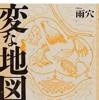
Uketsu's horror mystery that reads dread out of small oddities hidden in a map — a reference for our analysis pieces.
The Strange Map (Uketsu / Futabasha)
We may earn a referral fee on purchases made through these links.
Night Side: Ghost Stories and Haunted Spots of This Town
Night in Shinjuku is a town that never sleeps, lit by the lights of its entertainment districts, Kabukicho foremost among them. Yet in Yotsuya, shrines and temples connected with the kabuki play Tokaido Yotsuya Kaidan (The Ghost Story of Yotsuya on the Tokaido) remain quietly, giving the ward a face as a stage of ghost stories too. In other articles, this site records ghost stories and rumors connected with Shinjuku.
This is our own conjecture, but perhaps the history of the land’s role being swapped over and over, as a post town, military ground, war-damaged city and then rapid redevelopment, makes this town apt to give rise to tales of “places with a past.” Most of the stories told, however, have vague sources. Please do not approach places where entry is not permitted, and read them as records, after coming to know the daytime face.
Before You Go
Opening hours, fees, closing days and access change often, so they are not listed in this article. Before you set out, please check the latest information on each facility’s or local government’s official site. Some places may be restricted because of weather or disaster.
Frequently Asked Questions
Q. How should I plan a sightseeing route in Shinjuku?
A. It is easiest to split it into three areas: Kagurazaka and the Soseki Museum in the north, Hanazono Shrine and the Metropolitan Government Building in the center, and Shinjuku Gyoen and Suga Shrine in the south. Some places are far from stations, so we recommend not trying to cover everything in one day but dividing the visit by area.
Q. What is Naito togarashi?
A. It is a chili pepper grown in the Edo period at the Naito family’s residence, the site of today’s Shinjuku Gyoen, and by farmers nearby, and it is one of the Edo vegetables. It once disappeared, but was revived in 2009, and promotion activities continue within Shinjuku Ward.
Q. What should I keep in mind when visiting shrines?
A. Hanazono Shrine, Akagi Shrine and Suga Shrine are all working shrines. Please observe the manners of worship and stay quiet within the precincts. For whether photography is allowed and for late-night visits, please follow each shrine’s guidance.
Official sites and references consulted
https://ja.wikipedia.org/wiki/新宿区
https://ja.wikipedia.org/wiki/新宿御苑
https://www.env.go.jp/garden/shinjukugyoen/
https://ja.wikipedia.org/wiki/戸山公園
https://ja.wikipedia.org/wiki/新宿区立漱石山房記念館
https://ja.wikipedia.org/wiki/花園神社
https://ja.wikipedia.org/wiki/東京都庁舎
https://ja.wikipedia.org/wiki/赤城神社_(新宿区)
https://www.akagi-jinja.jp/
https://ja.wikipedia.org/wiki/須賀神社_(新宿区)
https://ja.wikipedia.org/wiki/内藤新宿
https://ja.wikipedia.org/wiki/内藤とうがらし

Supervised by Suzuking.
Affiliation: KARASU CHANNEL
Occult & horror reporting: 7 years (since 2020)
Followers: YouTube 5,000+ / X 25,000+
On-site investigations: 30+
Haunted locations near this town
Besides its daytime face, this land has a night side too. Read it as a record if you are curious. Some of these places are not safe or permitted to enter.
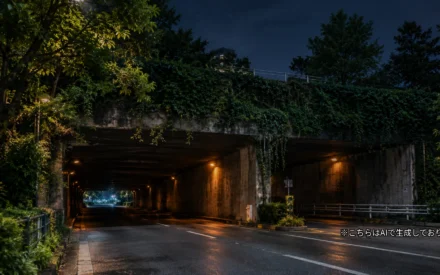
Sendagaya Tunnel (Shibuya Ward, Tokyo)
Sendagaya Tunnel in Shibuya runs under Senjuin cemetery and is still an active road. Night figures are told, but no official records exist.
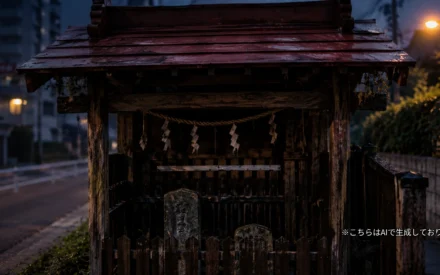
Daimon Park (Omiya Ward, Saitama City)
A park in Omiya, Saitama, tied by rumor to an Edo-era execution ground. Fireball and Chidori ghost tales persist; sources do not confirm them.