The Keystone of Katori Jingu — Why a Convex Stone and a Concave Stone Support Each Other Across the Tone River
Supervised by Suzuking. (KARASU CHANNEL / Occult & horror reporting, 7 years)

Contents
View sources and last-checked date
- Source
- Katori Jingu Shrine official website
- Source 2
- note, "On the Keystone — Kashima Jingu and Katori Jingu"
- Source 3
- TRiP EDiTOR, "What Is the Keystone That Holds Down the Giant Catfish?"
- Last verified
- 2026-09-16
Katori, Chiba Prefecture. Within the grounds of Katori Jingu, the leading shrine of former Shimōsa Province and an object of worship for more than a thousand years, a stone barely pokes its head above the ground in a secluded corner of the approach path. This is the “yōseki,” or keystone, said to pin down the head of a giant catfish sleeping underground. Across the Tone River, in Ibaraki Prefecture, Kashima Jingu has a stone with the very same role — but curiously, the two stones are not the same shape at all. We record here the traditions surrounding Katori Jingu’s keystone, and its little-known relationship with Kashima Jingu, still supporting each other across the river to this day.
Origins — Futsunushi-no-Ōkami, the God of “Persuasion”
The deity enshrined at Katori Jingu is Futsunushi-no-Ōkami. In the Nihon Shoki, he descends from heaven together with Takemikazuchi-no-Ōkami, the deity of Kashima Jingu, and the two are depicted as pacifying the land. The two gods are said to have different characters, though: one interpretation holds that Takemikazuchi is the god of direct subjugation by force, while Futsunushi is the god of “kotomuke” — persuading an opponent through words. That these two gods each pin down the giant catfish as a keystone in their own sacred precinct is the shared skeleton of the Katori and Kashima traditions.
A Convex Stone and a Concave Stone — Two Shrines Pinning a Single Catfish
Katori Jingu’s keystone is said to be convex, and Kashima Jingu’s concave. What pokes above ground at both shrines is no more than fist-sized. But according to tradition, beneath it lies a catfish of unimaginable size, and Katori’s convex stone still pins its head while Kashima’s concave stone pins its tail, deep underground, to this day. Two shrines 13 kilometers apart across the great Tone River, jointly containing a single enormous creature beneath ground invisible to the eye — once you picture that, the darkness underfoot in this quiet shrine precinct suddenly gains a new weight. It is a tradition that shows just how urgent, and how impossible to fully suppress, the threat of earthquakes was for the people of this region.
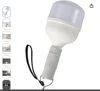
Somewhere between a flashlight and a headlamp in shape, with a roughly 300° beam angle suited to lighting up a whole wide space inside a ruin at once. It also has a hook, so you can hang it from a ceiling or pillar as an improvised standing light.
Takagi EARTH MAN Rechargeable LED Multi Hand Light HLT-10LiA
We may earn a referral fee on purchases made through these links.
Today — An Object of Faith Standing Near the Inner Shrine
Today, Katori Jingu’s keystone is quietly enshrined a little apart from the main hall, near the inner shrine, in a corner surrounded by trees where sunlight barely reaches. Fewer visitors come here than to Kashima’s keystone, and the surroundings are remarkably quiet, but it has a devoted following among visitors interested in seismology and folklore. Locally, some worshippers make a “two-shrine pilgrimage,” visiting both the Kashima and Katori keystones in a single day, walking as if to confirm that the two distant stones are still connected underground. The information boards introduce the traditions of both Futsunushi and Takemikazuchi together, and quite a few visitors come having already learned about the relationship between the two shrines.
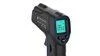
A verification gadget for recording the "cold air" or temperature changes reported at a haunted spot as actual numbers.
ERICKHILL Industrial Infrared Thermometer, -50C to +600C (Not for Human Use), Non-Contact Digital Thermometer, Adjustable Emissivity, for Cooking/Frying/Baking
We may earn a referral fee on purchases made through these links.
Our Take — Why Couldn’t the Two Stones Be the Same Shape?
In our view, the fact that Kashima’s and Katori’s keystones have been deliberately passed down as complementary shapes — convex and concave — carries more meaning than mere coincidence. If the two stones were the same shape, the story would simply be that each shrine independently restrains the giant catfish. But by being told as concave and convex, shapes that lose their meaning the moment either one is missing, Kashima and Katori are positioned as “a paired seal that cannot stand alone.” Put the other way, this also means the seal itself could collapse the instant either stone is damaged or moved. We read this as a sign that people of the time understood earthquakes, and whatever slept beneath them, as a threat too great for a single shrine’s power to fully control.
This is speculation, but if we take seriously the interpretation of Takemikazuchi as symbolizing “force” and Futsunushi as symbolizing “persuasion,” this keystone faith may encode a very real sense, felt by people of the past, that neither force alone nor words alone could stand against the threats of nature. The power to subjugate, and the power to persuade — two gods of opposing natures reaching toward each other from 13 kilometers apart to pin a single threat between them. Picturing that structure makes Katori Jingu’s quiet precinct look a little different. What if this small stone, wearing such an unremarkable face above ground, is at this very moment still holding down something invisible with its own hands? We think this reflects both a way people of the time understood the world — that calming a disaster requires not a single solution but a combination of different powers — and, in reverse, an anxiety that no one could guarantee how long that seal would hold.
A Note on Visiting
Katori Jingu is an active shrine, and its keystone is enshrined as an important object of faith. The approach path toward the inner shrine is surrounded by trees and stays dim and hushed even in daytime, so comfortable walking shoes are recommended. Please do not damage or try to move the stone; visit it quietly, as a historical site carrying ancient faith and tradition.
Frequently Asked Questions
Q. Which is bigger, the keystone at Katori Jingu or the one at Kashima Jingu?
A. Comparing only the parts visible above ground, they are roughly the same size, but both are said to have most of their mass buried underground, so their exact size is unknown.
Q. Why do both Katori Jingu and Kashima Jingu have a keystone?
A. It is said to be because of a tradition in which the two gods, Futsunushi (Katori) and Takemikazuchi (Kashima), each restrain the underground catfish in their own sacred precinct, pinning it by the head and tail respectively.
Q. Can anyone view Katori Jingu’s keystone?
A. Yes. It is located near the inner shrine and can be viewed during visiting hours.
KARASU CHANNEL also publishes field-report videos on traditions like this one, and on haunted spots across Japan, on YouTube. Please check those out as well.

Supervised by Suzuking.
Affiliation: KARASU CHANNEL
Occult & horror reporting: 7 years (since 2020)
Followers: YouTube 5,000+ / X 25,000+
On-site investigations: 30+
Which story do you find the scariest?
If you think this story is the scariest, press the button below. One vote site-wide — you can change your vote for a different story anytime.
Was this article helpful?
Add this to your favorites to find it again anytime from your My Page.

Comments