Tsuruga Sights: Harbor, Pine Grove and the Memory of Humanity at a Gateway to Hokuriku
Supervised by Suzuking. (KARASU CHANNEL / Occult & horror reporting, 7 years)
Contents
Places to visit in this town (north to south)
Numbers follow the order in the article, from north to south. Select a pin to see its name. Positions are approximate.
- Tateishi Cape (立石岬) A cape on the northern tip of the Tsuruga Peninsula, jutting into Wakasa Bay. The first Western-style lighthouse designed by Japanese engineers stands on a small hill.
- Jogu Shrine (常宮神社) An old shrine in an inlet of the Tsuruga Peninsula, regarded as the inner shrine of Kehi Jingu. It has a name tied to the oracle of Empress Jingu and a legend of a sericulture deity.
- Kanegasaki Castle Ruins and Kanegasaki Shrine (金ヶ崎城跡と金崎宮) Ruins of a mountain castle built on a hill jutting into Tsuruga Bay. It was the stage of battles in two eras, the Nanboku-cho and the Sengoku, and is a National Historic Site.
- Tsuruga Red Brick Warehouses and Former Tsuruga Port Station (敦賀赤レンガ倉庫と旧敦賀港駅舎) Red-brick buildings erected in 1905 as petroleum warehouses. They tell of the heyday of Tsuruga Port, when international trains came and went.
- Mt. Tezutsu (天筒山) A small mountain 171 meters high connected to Kanegasaki Castle. The park at the summit overlooks Tsuruga's port and townscape.
- Tsuruga Port and the Port of Humanity (敦賀港と人道の港) A natural harbor surrounded by mountains on three sides. Polish orphans landed here in 1920 and Jewish refugees in 1940.
- Kehi no Matsubara (気比の松原) A scenic pine grove of white sand and green pines, about 17,000 trees stretching 1.5 kilometers. One of the Three Great Pine Groves of Japan and a nationally designated Place of Scenic Beauty.
- Kehi Jingu Shrine (氣比神宮) The Ichinomiya of Echizen Province and an old shrine once called the chief guardian of the Hokuriku Road. Its vermilion Grand Torii Gate, which escaped the air raids, is an Important Cultural Property.
Show basic information about this town (location, last checked, notes)
- Location
- Tsuruga, Fukui, Japan
- Last checked
- 2026.10.05
- Please note
- Opening hours, prices and closing days change often, so we do not list them. Please check each facility's official site before you go.
What Kind of Town Is Tsuruga?
Tsuruga is a port town in the Reinan region of southwestern Fukui Prefecture. It opens out at the head of Tsuruga Bay on the Sea of Japan and flourished as a transport hub linking the capital region (Kinai) with Hokuriku. On April 1, 1937 (Showa 12), the town of Tsuruga and the village of Matsubara merged and the city was founded. The seat of government was here only briefly, and there were no powerful temples or shrines, so the town is often described as a merchant city that grew through the strength of ordinary people.
This article introduces the city’s sights in order of latitude, that is, from north to south. The route begins at a cape on the northern tip of the Tsuruga Peninsula, then heads south through an old shrine, the ruins of a Sengoku-period castle, the harbor heritage of the Meiji era onward, and finally the pine grove and Kehi Jingu Shrine. Please take in not only the beauty of the scenery but also the history of the people, goods and lives that passed through this port.
Summer exploration of a ruin or mountain haunted spot often means a long walk in blazing sun, with a high risk of heatstroke and dehydration. Individually wrapped salt tablets are easy to keep in a backpack for quick salt intake alongside water, and easy to have on hand while waiting in the car too.
Kabaya Foods Salt Charge Tablets, Sports Drink Flavor, 81g x 6 Bags
We may earn a referral fee on purchases made through these links.
1. Tateishi Cape (立石岬)
Tateishi Cape lies on the northern tip of the Tsuruga Peninsula, on the western side of the entrance to Wakasa Bay. It is part of Wakasa Wan Quasi-National Park, and about 250 meters inland, at an elevation of 121 meters, stands the Tateishi-misaki Lighthouse. This lighthouse is regarded as the first Western-style lighthouse designed by Japanese engineers.
The Tsuruga Peninsula is made of granite and stretches out as if guarding the west side of Tsuruga Bay. Its highest peak is Mt. Nishigatake at 764 meters. Near the cape lies Mizushima, an uninhabited island that some people visit in summer for swimming and marine sports. On the peninsula’s east coast is Irohama, where the poet Matsuo Basho is said to have visited in August 1689 (Genroku 2) on his journey for “Oku no Hosomichi” (The Narrow Road to the Deep North), so the land has deep ties to travel literature as well.
Bus service on the peninsula is limited. In exchange, quiet seaside scenery remains here, quite unlike the urban area. In our view, this cape adds a different perspective to a trip to Tsuruga, which tends to focus on the bustle of the port: a lighthouse that keeps watch over the sea. When you visit, please watch the road conditions and your footing, and plan within your means.
2. Jogu Shrine (常宮神社)
Jogu Shrine stands on the east coast of the Tsuruga Peninsula and was long regarded as the inner shrine and affiliated shrine (Okumiya and Sessha) of Kehi Jingu Shrine. Its name, “Jogu,” is said to come from the oracle of Empress Jingu, which spoke of dwelling here “always, with the waves and wind calm, how delightful.” It was once read in the native Japanese way as “Tsune no Miya,” but from the medieval to the early modern period the Sino-Japanese reading “Jogu” came into use, and the present name and reading were fixed in 1868 (Meiji 1).
The shrine enshrines seven deities, and the main hall honors Amanoyaoyorozuhime-no-mikoto, Empress Jingu and Emperor Chuai. According to the shrine’s own tradition, Amanoyaoyorozuhime-no-mikoto is a local deity of sericulture who has been enshrined here since ancient times. The other deities are said to have been added in 703, based on the legend of Empress Jingu’s military expedition. That its principal deity differs from that of Kehi Jingu is what gives this shrine its character.
The annual festival Sosansai, in which the shrine receives worship from Kehi Jingu, is said by one account to be a rite in which the deity of Kehi Jingu visits the deity of Jogu. The relationship between the main shrine and the inner shrine is told as a story of gods visiting one another. This is a shrine where people still pray today, so please observe proper etiquette and visit quietly so as not to disturb any festivals.
3. Kanegasaki Castle Ruins and Kanegasaki Shrine (金ヶ崎城跡と金崎宮)
Kanegasaki Castle was a mountain castle built on a small hill (Mt. Kanegasaki), 86 meters above sea level, jutting out into Tsuruga Bay. It is said to have first been built around the time of the Genpei War by Taira no Michimori to prepare for his fight against Kiso Yoshinaka. Even now the site of the Tsukimi Goten, which corresponds to the main enclosure, as well as the remains of a gate, bailey terraces and moat cuts survive, and in 1934 it was designated a National Historic Site.
This castle came onto the stage of history twice. In 1336 and 1337, Nitta Yoshisada, who had headed for Hokuriku after Ashikaga Takauji entered Kyoto, took the castle while escorting Prince Tsuneyoshi and Prince Takayoshi, but it fell after being surrounded by the Ashikaga side. Kanegasaki Shrine at the foot of the castle honors these two princes and is an active shrine. Please observe proper etiquette and visit quietly.
The other event is the “Kanegasaki no Nokiguchi” (the Retreat from Kanegasaki) of 1570 (Genki 1). Oda Nobunaga, who was attacking the Asakura clan of Echizen, learned that the Azai clan of Omi, his ally, had turned against him, and found himself in danger of being caught in a pincer. Kinoshita Tokichiro (later Toyotomi Hideyoshi) and others served as the rear guard, and Nobunaga turned back to Kyoto. In our view, it is precisely because Tsuruga was a key point linking the capital region and Hokuriku that the fates of the leading warlords of the age crossed on this small hill.
4. Tsuruga Red Brick Warehouses and Former Tsuruga Port Station (敦賀赤レンガ倉庫と旧敦賀港駅舎)
The Tsuruga Red Brick Warehouses are two warehouses built in 1905 (Meiji 38) by the Standard Oil Company of New York to store petroleum. Because they were designed by a foreign engineer, their dimensions were made in feet. Dutch-made bricks were used, and another feature is that no pillars can be seen inside. In January 2009 (Heisei 21), the north building, the south building and the brick wall were designated Registered Tangible Cultural Properties of Japan.
When the warehouses were built, Tsuruga Port Station was the point of departure and arrival for the Europe-Asia international connecting trains that ran to Russia and Europe via the Trans-Siberian Railway. Tsuruga flourished as the gateway for people traveling from Tokyo to Europe. An anecdote is also told that on foreign-made globes, Tsuruga appeared as a Japanese city alongside Tokyo and others. It was redeveloped in October 2015 (Heisei 27) and is now used as a base for sightseeing.
Nearby stands the Former Tsuruga Port Station building, a re-creation of the station building of that time, which serves as a museum telling the history of Tsuruga’s railways. It was built as one of the symbols of the 1999 (Heisei 11) exposition and opened as a museum in 2009. In our view, the charm of this area lies in how the footsteps of people departing for foreign lands seem to have soaked into the red brick walls.
5. Mt. Tezutsu (天筒山)
Mt. Tezutsu is a small mountain, 171.3 meters high, right next to the urban area of Tsuruga. It is the mountain where Tezutsu Castle, a branch castle of Kanegasaki Castle, once stood, and it is connected to Kanegasaki Castle by a ridge. At the summit is Kanegasaki Park, with an observation deck that offers a view over Tsuruga Bay and the city. Since it is only about 3 kilometers from the station, it is an easy mountain where you can walk from the town to the trailhead.
On April 25, 1570 (Genki 1) in the Sengoku period, the Oda army attacked Tezutsu Castle, and it fell after a battle that left several thousand dead on both sides. Asakura Kagetsune, who had been defending the castle, withdrew to Kanegasaki Castle. The mountain is now a quiet park, with only the remains of bailey terraces and a turret base left.
Every spring, the Hanakae Festival is held at Kanegasaki Shrine. There are two trails, and the course via Kanegasaki Shrine has stairs and is relatively gentle. On the east side of the mountain spreads the Nakaikemi Wetland, where sightings of Japanese serow and bears are said to occur several times a year. When hiking, please plan within your means and stay alert for wild animals.
6. Tsuruga Port and the “Port of Humanity” (敦賀港と人道の港)
Tsuruga Port is a natural harbor surrounded by mountains on three sides. It has prospered since ancient times, and in the Heian period the Matsubara Kyakkan guesthouse was set up for envoys from Balhae. In the Edo period, Kitamaebune trading ships called here, and the port became a hub from which Hokkaido herring and kelp were carried to the Kansai region and the Ryukyus. The opening of the railway in 1882 (Meiji 15) brought further growth to the port, and on August 4, 1899 (Meiji 32), it was designated an open port.
This port is called the “Port of Humanity.” From 1920 to 1921, the Japanese Red Cross Society rescued Polish orphans who had lost their homeland and been left behind in Siberia, and landed them in Japan at the port of Tsuruga. Then, from 1940 to 1941, Jewish refugees fleeing Nazi persecution, saved by the “Visas for Life” issued by Sugihara Chiune, acting consul of Lithuania, came ashore at Tsuruga by way of the Trans-Siberian Railway and Vladivostok. Their number is said to be about 6,000.
In December 2013 (Heisei 25), a plaque recording the fact of their landing was set into the ground at the spot where the pier once stood. Nearby there is also a museum that tells this history. This is a sightseeing spot, and at the same time a place where the lives and futures of many people were at stake. Please face the monument and the exhibits quietly.
7. Kehi no Matsubara (気比の松原)
Kehi no Matsubara is a pine grove spreading at the head of Tsuruga Bay, counted among the “Three Great Pine Groves of Japan” together with Niji no Matsubara and Miho no Matsubara. It was designated a Place of Scenic Beauty by the state in 1934 (Showa 9) and is also part of Wakasa Wan Quasi-National Park. It is about 1.5 kilometers long and covers about 340,000 square meters, lined with about 17,000 pines whose average age is around 200 years. While black pines are common along Japan’s coasts, red pines make up 85 percent of the trees here, which is a distinctive feature.
It is an old scenic spot that appears in the “Man’yoshu” and the “Nihon Shoki,” and in the 9th century the Matsubara Kyakkan, a facility for Balhae envoys, was placed here. In earlier times it was the sacred garden of Kehi Jingu Shrine, and its shrine attendants managed the use of the grove by neighboring residents. During the Sengoku period, it was once confiscated during Oda Nobunaga’s conquest of Echizen, and in the Edo period it was managed as official timber of the Obama domain. It is said that the local residents’ custom of gathering pine needles for fuel ended up becoming a force that preserved the grove.
In summer it bustles as a swimming beach, and on August 16 a lantern floating ceremony and a large fireworks display are held. In winter, the snow-covered pines and the rough waves of the Sea of Japan create a magnificent view. Two or three times a year, entry is prohibited on days when medicine is sprayed to prevent pine diseases. Knowing that the effort to protect the grove continues even now makes a stroll feel a little more careful and considerate.
8. Kehi Jingu Shrine (氣比神宮)
Kehi Jingu Shrine is an old shrine in the urban area of Tsuruga, the Ichinomiya (chief shrine) of Echizen Province. Because Tsuruga was the entrance from Hokuriku to the capital region and also a gateway to the Korean Peninsula, it was held in high regard by the imperial court and was called the “Sochinju of the Hokurikudo” (chief guardian shrine of the Hokuriku Road). It appears early in both the “Kojiki” and the “Nihon Shoki,” and has deep ties to Emperor Chuai, Empress Jingu and Emperor Ojin.
Most of the shrine buildings were lost to air raids during World War II, and the present main buildings were rebuilt after the war. The vermilion-lacquered Grand Torii Gate, which escaped the air raids, is counted as one of the Three Great Wooden Torii of Japan and is designated an Important Cultural Property. Tsunoga Shrine within the grounds is said to be the origin of the place name “Tsuruga.” Matsuo Basho also wrote in “Oku no Hosomichi” that he “made a night visit to the deity of Kei,” and the grounds are included in the nationally designated Place of Scenic Beauty “Scenic Sites of Oku no Hosomichi.”
The “Ke-hi” in the shrine’s name is said in the “Kojiki” to derive from “Mikeutsu,” and one theory holds that it means the spiritual power of food. Perhaps gratitude for the food and goods that the port carried has taken up residence in the god’s name. This is our speculation, but it may be precisely because Tsuruga was a port town where goods gathered across the rough Sea of Japan that prayers to the deity of food became the core of the town’s faith. This is an active shrine, so please observe proper etiquette and worship quietly so as not to disturb any festivals.
Local Specialties: Food and Drink
Tsuruga is known as a center for processing kelp. In the Edo period, kelp and herring carried from Hokkaido passed through Tsuruga Port on their way to the Kansai region and the Ryukyus. This is our speculation, but the port’s role as a relay point on the sea route may have nurtured the town’s face as a kelp town.
“Heshiko,” mackerel or sardines pickled in rice bran, is well known as a preserved food of this region. Sasazuke of small sea bream (renkodai) and Suisen manju made with kudzu starch are also counted among Tsuruga’s specialties. They also bring to mind the history of one of the Saba Kaido (Mackerel Roads) linking Wakasa and the capital region passing through this town.
All of these are flavors born from a history in which products of the mountains and the sea passed back and forth in a town of ports and highways. Taste and methods differ from shop to shop, so please try them for yourself when you visit.
Rare Wildlife and Nature
Kehi no Matsubara is an unusual pine grove in which red pines make up 85 percent of the trees, with about 17,000 of them continuing over 1.5 kilometers. Its present scenery is preserved thanks to continuing care that protects the pines from disease.
The Tsuruga Peninsula is made of granite, and beyond Tateishi Cape floats the uninhabited island of Mizushima. On the east side of Mt. Tezutsu spreads the Nakaikemi Wetland, where sightings of Japanese serow and bears are said to be reported several times a year. That wild nature breathes right next to the urban area gives depth to Tsuruga’s scenery.
Tsuruga Bay is a natural harbor surrounded by mountains on three sides. Even in winter, the climate is said to be relatively mild for the Sea of Japan coast. Being a calm harbor is perhaps one of the reasons the town has been a gateway since ancient times.
Other Notable Things About This Town
Tsuruga Station opened in 1882 (Meiji 15). It is said to have opened five years before Nagoya Station and fourteen years before Fukui Station. The town, which prospered on the axis of port and railway, was known as the gateway to Europe, and in 1918 the Russian composer Prokofiev landed in Japan at Tsuruga Port on his way into exile.
Every January, the “Tsuruga Nishimachi Tug of War” is held in Aioicho. Fishermen’s and farmers’ sides pull against each other, praying for a good catch and a good harvest in the coming year. The event is said to have continued for over 400 years and is a nationally designated Important Intangible Folk Cultural Property. The annual festival of Kehi Jingu Shrine and the Tsuruga Festival in early September are also major events in the town.
In 1945 there was an air raid on Tsuruga, and the urban area suffered great damage. Because of postwar land readjustment, only parts of the city still retain a prewar townscape. Tsuruga is also known for having accepted nuclear power plants and related facilities from the 1960s onward, giving it another face apart from its history as a port town.
A collection of true ghost stories — a reference for our reading-feature articles.
Obsessed with Ghost Stories (Sakura Fukatsu / Futami Shobo)
We may earn a referral fee on purchases made through these links.
The Night Side: Ghost Stories and Haunted Places of This Town
So far we have walked the daytime face of Tsuruga: the port, the pine grove, the castle ruins of the Sengoku period, and the memory of humanity. Every one of these places carries layers of time in which people came and went, prayed, and sometimes faced great trials.
That depth connects to the night side as well. On KARASU CHANNEL there is a ghost story article tracing the origin of the place name “Tsuruga” and the legend of a foreigner with a horn on his forehead. Tsunoga Shrine in the grounds of Kehi Jingu Shrine is also a place tied to that legend. In our view, a ghost story is something like a shadow that a land’s history and faith cast upon the human heart. The more you learn, the deeper your respect for the place grows.
On KARASU CHANNEL, we set out true ghost stories and haunted places not to visit them but to record them. Having learned the daytime scenery, please read the stories of the night as well.
Before You Go
Opening hours, fees, closing days and access change easily, so they are not listed in this article. Before you go, please check the latest information on the official website of each facility or local government. Some places may be restricted from entry because of weather or disasters.
Frequently Asked Questions
Q. In what order should I visit the sights of Tsuruga to be efficient?
A. This article introduces them from north to south. The cape and shrine on the Tsuruga Peninsula are far from the urban area, so it is easier to group them by area: the peninsula, the Kanegasaki and port area, and the area around the pine grove and Kehi Jingu Shrine. Bus service is limited in some places, so please check the official guidance on transportation before you go.
Q. What is the “Port of Humanity”?
A. Tsuruga Port is called that because of its history: Polish orphans landed there in 1920 to 1921, and Jewish refugees in 1940 to 1941. The related monument and museum introduce the history of that time. Please visit with a quiet mind.
Q. What are Tsuruga’s specialties?
A. Processed kelp products, heshiko (mackerel and other fish pickled in rice bran), and sasazuke of small sea bream are well known. The offerings change from shop to shop, so please check the latest information before you go.
Sources consulted
https://ja.wikipedia.org/wiki/敦賀市
https://ja.wikipedia.org/wiki/氣比神宮
https://ja.wikipedia.org/wiki/気比の松原
https://ja.wikipedia.org/wiki/金ヶ崎城
https://ja.wikipedia.org/wiki/金ヶ崎の戦い
https://ja.wikipedia.org/wiki/敦賀港
https://ja.wikipedia.org/wiki/敦賀赤レンガ倉庫
https://ja.wikipedia.org/wiki/敦賀鉄道資料館
https://ja.wikipedia.org/wiki/敦賀半島
https://ja.wikipedia.org/wiki/天筒山
https://ja.wikipedia.org/wiki/立石岬
https://ja.wikipedia.org/wiki/常宮神社

Supervised by Suzuking.
Affiliation: KARASU CHANNEL
Occult & horror reporting: 7 years (since 2020)
Followers: YouTube 5,000+ / X 25,000+
On-site investigations: 30+
Haunted locations near this town
Besides its daytime face, this land has a night side too. Read it as a record if you are curious. Some of these places are not safe or permitted to enter.
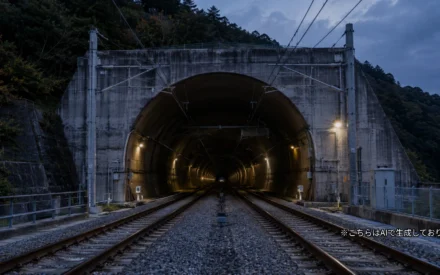
Ghost stories from this land
Besides its daytime face, this land has a night side too. Read it as a record if you are curious. Some of these places are not safe or permitted to enter.
