Sightseeing in Ashikaga: Samurai Homeland, Old School and Textile Town, North to South
Supervised by Suzuking. (KARASU CHANNEL / Occult & horror reporting, 7 years)
Contents
Places to visit in this town (north to south)
Numbers follow the order in the article, from north to south. Select a pin to see its name. Positions are approximate.
- Nagusa Giant Rocks (名草巨石群) A cluster of boulders lying in the mountains of northern Ashikaga, a national natural monument known for Benkei's Split Rock and the Tainai-kuguri passage.
- Mt. Ryogaiyama and the Site of Ashikaga Castle (両崖山と足利城跡) The ruins of a mountain castle on the roughly 250-meter Mt. Ryogaiyama, where legends of the Ashikaga clan's origins overlap with memories of the Sengoku-era Nagao family.
- Orihime Shrine (織姫神社) A vermilion shrine on Mt. Orihime enshrining the guardian of Ashikaga's weaving trade, also known for its views over the city.
- Banna-ji Temple (鑁阿寺) A Shingon temple on the site of the Ashikaga clan's mansion, with a Kamakura-period National Treasure main hall inside grounds enclosed by ramparts and a moat.
- Ashikaga School Historic Site (史跡足利学校) A national historic site once praised as the "Academy of Bando" in the medieval period, with its Confucian shrine, school gate and restored abbot's quarters.
- Soun Museum of Art (草雲美術館) A municipal museum preserving the works of the late-Edo painter Tasaki Soun, standing inside the gate of his former studio, Hakuseki Sanbo.
- Watarase Bridge (渡良瀬橋) An early-Showa truss bridge over the Watarase River, known for its sunsets and song monument and a quiet witness to Ashikaga's daily life.
Show basic information about this town (location, last checked, notes)
- Location
- Ashikaga, Tochigi Prefecture, Japan
- Last checked
- 2026.10.05
- Please note
- Opening hours, prices and closing days change often, so we do not list them. Please check each facility's official site before you go.
What Is Ashikaga Like?
Ashikaga is a city in southwestern Tochigi Prefecture, with the Watarase River flowing through its center. The Ashio Mountains rise to the north and the Kanto Plain opens to the south, so this is land on the border between mountains and plain. It adopted city status on January 1, 1921, becoming the second city in the prefecture, and celebrated the 100th anniversary of its founding in 2021.
Ashikaga is known as the birthplace of the Ashikaga clan, descended from the Seiwa Genji. It was the home of the family that would later found the Muromachi shogunate, and in the medieval period it was the site of the Ashikaga School, one of Japan’s centers of learning. It has also long prospered as a textile-producing area, and from the Taisho era to the early Showa era (1912 to the 1930s) it was nationally famous as a producer of meisen silk.
This article introduces the city’s sights from north to south, in descending order of latitude. The route begins with giant boulders in the mountains and heads south through the remains of a mountain castle, a shrine, a school, a temple and finally a bridge over the Watarase River. Take in Ashikaga’s three faces: the samurai, scholarship and textiles.

A horn-shaped deterrent called the "Wan Wan Horn" that plays a large dog's bark at up to 110dB to scare off bears, boar, and suspicious people. It runs off a USB-connected power bank (sold separately), giving you a loud, sound-based alternative to a bear bell or spray.
EIGER TOOL Animal & Crime Deterrent Buzzer, Bear Bell Horn EDBL-HO
We may earn a referral fee on purchases made through these links.
1. Nagusa Giant Rocks (名草巨石群)
The Nagusa Giant Rocks are a line of rounded boulders amid a stand of cedars in the Nagusa district at the northern edge of Ashikaga. Designated a national natural monument, it is one of Ashikaga’s signature scenic spots. The prefecture’s nature park guide also introduces it as the starting point of a hiking course of about 14 kilometers.
The best-known rock is the huge one split in two, “Benkei’s Split Rock” (Benkei no Wariiwa). Its name, recalling the warrior-monk Benkei, is bound up with a legend handed down locally. There is also the “Tainai-kuguri” (womb passage), a path that threads between the rocks and has long been valued as a place to pray for safe childbirth. Some boulders exceed 11 meters in height, and looking up at them you are overwhelmed by the great sculpture left behind by the workings of the earth.
Right beside the rocks stands Nagusa Itsukushima Shrine, which enshrines the goddess Benzaiten. It is a place where the history of people’s prayers, who found gods and buddhas in giant natural rocks, still quietly breathes. When you visit, remember that this is a place of faith for local people, and walk quietly. The mountain paths include damp rocky stretches, so take great care where you step.
2. Mt. Ryogaiyama and the Site of Ashikaga Castle
Mt. Ryogaiyama rises about 250 meters north of Ashikaga’s city center, and the ruins of Ashikaga Castle remain at its summit. It is preserved as part of a prefectural nature park, together with Ashikaga Orihime Park and other areas. The castle is said to have been built in 1054 by Ashikaga Nariyuki, the first of the Fujiwara-line Ashikaga, but the structure seen today dates from around the 16th century and is thought to have been substantially put in order by Nagao Kagenaga after 1512.
Ashikaga Castle is said to have been the stage for four battles. In 1455 came the fighting between Ashikaga Shigeuji and the Nagao clan, retainers of the Uesugi. In 1564 Uesugi Kenshin fought Sano Masatsuna, and in 1584 Hojo Ujikatsu fought Nagao Akinaga and Sano Munetsuna; the castle was abandoned during Toyotomi Hideyoshi’s Odawara campaign of around 1590. The history suggests how a small mountain castle was tossed about again and again in the struggle for supremacy in the Kanto region.
Remains are now preserved near the summit and managed by the city as cultural property. Walking the mountain path, you will come upon the traces of enclosures and views well suited to keeping watch. In this site’s view, the most affecting part of this place is the fact that the homeland of the Ashikaga, a symbol of samurai glory, was in truth supported by a small mountain castle buffeted by war. Parts of the trail are steep, so watch the weather and your footing.
3. Orihime Shrine
Orihime Shrine stands partway up Mt. Orihime, overlooking central Ashikaga. Founded by local people in 1705 (Hoei 2), it has been worshipped as a guardian of weaving. Ashikaga textiles are said to have a tradition of more than 1,200 years. Gratitude for the thread and cloth that sustained the town’s life is invested in this shrine.
The current shrine buildings were completed in 1937 and are distinguished by a vermilion look modeled on the Phoenix Hall of Byodo-in. In 2004 the main hall, the kagura hall, the shrine office and the purification fountain became nationally Registered Tangible Cultural Properties. Together with the park on Mt. Orihime, the shrine is also known as a scenic viewpoint over central Ashikaga and the Watarase River, and in 2014 it was certified as a Japan Night View Heritage site.
It is said to bring blessings for matchmaking, and in 2014 it was also chosen as a “Sanctuary of Lovers.” For the people of Ashikaga it is both a guardian of the town’s industry and a familiar shrine visited at the milestones of life. It is a working shrine, so when you visit, be mindful that it is a place of prayer for local people and come with a quiet heart.
4. Banna-ji Temple
Banna-ji is the head temple of the Dainichi branch of Shingon Buddhism, standing on the site of the Ashikaga clan’s mansion, and its principal image is Dainichi Nyorai. Its beginning is traced to 1196 (Kenkyu 7), when Ashikaga Yoshikane built a private Buddhist hall, the “Horinai Mido,” within his residence. Earthen ramparts and a moat still surround the grounds, preserving the look of a samurai mansion of around the Kamakura period. As the “Site of the Ashikaga Clan Residence,” it was designated a national historic site on March 8, 1922.
The main hall was built in 1299 (Shoan 1) and is said to have been extensively remodeled between 1407 and 1432. It was designated a National Treasure on August 7, 2013. An esoteric Buddhist hall in a Zen-influenced style, it is valued as an early example of that style in the Kanto region. The multi-tiered pagoda (tahoto) is a Tochigi Prefecture Designated Tangible Cultural Property.
Banna-ji is a temple that has tended the Ashikaga family’s ancestral memorials, and it is also the starting point of the clan that would later move the whole country. Walking the quiet grounds enclosed by moat and ramparts, you feel the weight of a samurai mansion becoming a temple and of prayers continuing for more than eight hundred years. It is a working temple, so when visiting, observe the manners of the grounds and walk quietly.
5. Ashikaga School Historic Site
The Ashikaga School is the site of an educational institution that flourished in the medieval period as a center of learning in Japan, and is also said to be Japan’s oldest school. There are various theories about its founding: one says Ono no Takamura founded it in the Heian period, another that Ashikaga Yoshikane founded it in the Kamakura period, and another that Uesugi Norizane revived it in the 15th century. What is actually known is that Uesugi Norizane worked to revive it in 1432 and in 1447 laid down the “Three Articles of School Rules.”
Buddhist monks served as teachers here, but the center of the teaching was Confucianism, and a distinguishing feature was that it set aside Buddhist coloring. Divination, military science and medicine were also taught, and tuition is said to have been free. In the first half of the 16th century a renowned monk named Kyuka revived it, and the student body is said to have reached 3,000. The missionary Francis Xavier wrote of the Ashikaga School as the largest and most famous place of learning in the Bando region of Japan, and Luis Frois described it as the only university in the country open to the public.
It lost its patrons in the 1590 Odawara campaign, declined, and closed in 1872. It was designated a national historic site in 1921, and in 1990 the abbot’s quarters and gardens were restored and opened to the public. The Confucian shrine and the school gate also remain, and in 2015 it was certified as a Japan Heritage site as part of the “Educational Heritage of Early Modern Japan.” Each year on November 23, the “Gakko-sama Festival,” tied to the Sekiten ceremony honoring Confucius, is held. It is a place where you can quietly feel the aspirations of forebears who valued learning.
6. Soun Museum of Art
The Soun Museum of Art is a municipal art museum in Ashikaga Park that collects and exhibits works, personal effects and books of Tasaki Soun, a painter of the late Edo period. Soun is known for works such as “View of Mt. Fuji” and “Mt. Horai.” The museum stands inside the gate of “Hakuseki Sanbo,” which Soun used as his studio, and conveys the very atmosphere of the place where the painter lived.
The museum was built at private expense by Suzuki Eitaro in February 1968 and donated to the city of Ashikaga in April of the same year. Its origin, a public art museum born of one person’s resolve, recalls the people who sought to protect local culture. On the grounds are also his thatched former residence and a tea room, from which you can glimpse the traces of the painter’s daily life.
Ashikaga has a tradition of learning represented by the Ashikaga School, and it is also a place where an aesthetic of color and pattern grew through textiles. This is our own speculation, but perhaps that environment nurtured a painter like Soun in the late Edo period. Exhibits change with the season, so please check the city’s information before you visit.
7. Watarase Bridge
Watarase Bridge spans the Watarase River as it flows south of central Ashikaga. The first bridge was a wooden one built on July 20, 1891 (Meiji 24), reflecting the energy of the era when Ashikaga prospered as a textile town. The present bridge is a six-span Warren truss bridge completed in November 1934 (Showa 9), about 243 meters long and 5.5 meters wide.
Behind the need for a new bridge was the strength required to carry heavy military vehicles for training. The present bridge is closed to pedestrians and bicycles, and a pedestrian bridge runs alongside just upstream. The view of the setting sun overlapping the bridge is cherished as one of the town’s scenes.
The bridge became known nationwide when the singer Chisato Moritaka sang “Watarase Bridge,” a song modeled on it. A song monument was erected in 2007 at a spot from which you can see the bridge and the sunset together. Yakumo Shrine, which appears in the lyrics, is nearby, so you can savor the world of the song as you walk the town. The river has sustained Ashikaga’s life, but it is worth remembering too that it flooded and caused great damage in Typhoon Kathleen in 1947.
Local Specialties, Food and Drink
The first Ashikaga specialty to mention is potato yakisoba. After the war, at street stalls, fried potatoes seasoned with soy sauce were sold as snacks for children, sauce was added to them, and then they were combined with noodles; so the story goes. Its hallmark is diced potato steamed with cabbage and pork in chicken stock rather than water, and more than 20 shops in the city make it, each with its own sauce.
Ashikaga has a modest culture of flour-based foods beyond that. Ashikaga shumai, made with onion and potato starch, is known for its distinctive texture. Imo-furai (fried potato) is enjoyed as a local dish of Ashikaga and Sano, and Izuru soba of the Izuru district is the taste of a place long busy with pilgrims. A food company that makes yakisoba sauce is also based in the city, a sign of a place that enjoys flour-based foods.
Flavors differ from shop to shop. Business days and offerings change easily, so please check the latest information before you go.
Rare Wildlife and Nature
Ashikaga’s nature is characterized by the combination of mountains and river. The Ashio Mountains spread north of the city, and Mt. Ryogaiyama and Mt. Orihime are enjoyed as part of the Ashikaga Prefectural Nature Park. Mt. Orihime stands about 118 meters high and looks out over the city and the Watarase River.
The Nagusa Giant Rocks are a cluster of boulders designated a national natural monument, striking as they rise among the cedars. On Mt. Gyodo, reddish-purple Tohgoku mitsuba tsutsuji (Rhododendron dilatatum var. decandrum) is introduced as blooming among the rocks from early spring into spring.
The great wisteria at Ashikaga Flower Park in the east of the city is a Tochigi Prefecture natural monument. In February 1996 it was transplanted from a site about 20 kilometers away by Tsukamoto Konami, said to be Japan’s first woman tree doctor. Its age was about 160 years as of 2021, and its wisteria trellis covers about 2,000 square meters. That the unprecedented challenge of moving such a large tree succeeded makes one think about the relationship between people and trees.
Other Notable Things About This Town
Ashikaga is known as a textile town. Long known as a textile-producing area, it is said to be mentioned even in Tsurezuregusa. From the Taisho to early Showa eras it became a leading producer of meisen, a plain-weave silk, popular for its brilliant colors and patterns evoking Taisho romanticism. Together with Kiryu in Gunma Prefecture, it was a center of Kanto textile production.
Every year a spring fireworks festival is held on April 29, and a summer fireworks festival on the first Saturday of August, on the Watarase River bank. The Ashikaga Festival also takes place around the city during Golden Week. Dates and content vary from year to year, so check the latest information if you plan to attend.
In April 2015 the Ashikaga School site was certified as Japan Heritage as one of the “Educational Heritage of Early Modern Japan.” The many faces of Ashikaga, as homeland of the samurai, center of learning and textile producer, give the city its depth.

Getting to a haunted spot often means unpaved mountain roads or gravel, where low tire pressure easily leads to a flat or worse fuel economy. Checking your tires with a gauge before you set out reduces the risk on rough roads.
amon Air Gauge, Standard Grade Tire Gauge 8821
We may earn a referral fee on purchases made through these links.
The Night Side: Ghost Stories and Haunted Spots of This Town
So far we have walked Ashikaga’s daytime face: the site of the Ashikaga clan mansion, people who sought learning, a mountain castle buffeted by war and the sound of looms. In every place, time overlaps the time when people lived, studied and were at times swept up in war.
That depth leads on to the night side as well. Among the mountains, castle ruins and riverbanks there are often-told rumors, but their locations have not been identified and we do not recommend searching for them. In this site’s view, a ghost story is like a shadow that a place’s history and terrain cast on the human heart. The more you learn of the mountain castle’s battles and the memory of the river’s floods, the deeper your respect for these quiet places grows.
At KARASU CHANNEL, we present true ghost stories and haunted spots not so that you can visit them but so that they are recorded. Having learned the daytime scenery, please read the night-time tales as well.
Before You Go
Business hours, fees, closing days and access change easily, so they are not listed in this article. Before heading out, please check the latest information on the official website of each facility or local government. Some places may have restricted entry because of weather or disasters.
Frequently Asked Questions
Q. In what order should I tour Ashikaga to be efficient?
A. This article introduces places from north to south. In the city center, the Ashikaga School, Banna-ji, Orihime Shrine and Watarase Bridge are close together and can even be covered on foot. The Nagusa Giant Rocks lie at the northern edge of the city, so check transportation and seasonal road conditions in advance.
Q. What are Ashikaga’s local specialties?
A. Flour-based foods such as potato yakisoba, Ashikaga shumai, imo-furai and Izuru soba are best known. Offerings differ from shop to shop, so check the latest information before you go.
Q. Is there anything to keep in mind when visiting temples and shrines?
A. Banna-ji, Orihime Shrine and Nagusa Itsukushima Shrine are all places of faith. Observe the proper worship manners and stay quiet within the grounds. Follow each site’s guidance on whether photography and entry are allowed.
Official sites and references consulted
https://ja.wikipedia.org/wiki/足利市
https://ja.wikipedia.org/wiki/足利学校
https://ja.wikipedia.org/wiki/鑁阿寺
https://ja.wikipedia.org/wiki/織姫神社_(足利市)
https://ja.wikipedia.org/wiki/あしかがフラワーパーク
https://ja.wikipedia.org/wiki/足利城
https://ja.wikipedia.org/wiki/草雲美術館
https://www.pref.tochigi.lg.jp/d04/eco/shizenkankyou/shizen/ashikaga.html
https://www.tochinavi.net/spot/home/?id=16474
https://tabi-mag.jp/tg0322
https://www.gltjp.com/ja/directory/item/11494/
https://kotobank.jp/word/足利
https://www.athome.co.jp/vox/series/life/32734/
https://www.agrinet.pref.tochigi.lg.jp/tochigi_event/data/road/6_road_guide.pdf

Supervised by Suzuking.
Affiliation: KARASU CHANNEL
Occult & horror reporting: 7 years (since 2020)
Followers: YouTube 5,000+ / X 25,000+
On-site investigations: 30+
Haunted locations near this town
Besides its daytime face, this land has a night side too. Read it as a record if you are curious. Some of these places are not safe or permitted to enter.
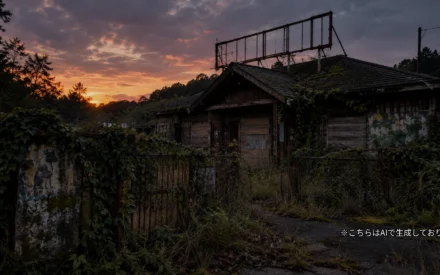
Ruins of Africa Kennel (Kumagaya City)
Africa Kennel ruins in Kumagaya, tied by rumor to a real serial murder case, though no primary source confirms it. Possibly private land; avoid.
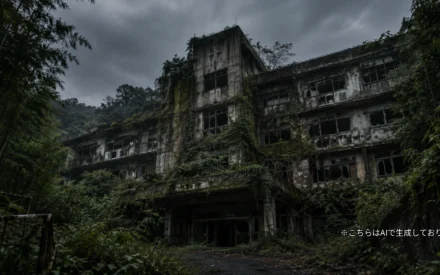
Former Nogi Hospital (Nogi Town, Shimotsuga District)
An abandoned building in Nogi, often called a former psychiatric hospital, but no record shows its use. Rumors of white-robed groups; private land.