Sightseeing in Nogi: A Red-Brick Kiln and a Great Ginkgo at the Southern Gate of Tochigi
Supervised by Suzuking. (KARASU CHANNEL / Occult & horror reporting, 7 years)
Contents
Places to visit in this town (north to south)
Numbers follow the order in the article, from north to south. Select a pin to see its name. Positions are approximate.
- Nogi Station (野木駅) The southernmost station in Tochigi on the JR Utsunomiya Line, an elevated station that opened in 1963 as the gateway to the town.
- Nogi Shrine (野木神社) An old shrine with legends of Sakanoue no Tamuramaro, whose great ginkgo, said to be planted by him and about 1,200 years old, is a Natural Monument of the town.
- Former Shimotsuke Rengasha Brick Kiln (旧下野煉化製造会社煉瓦窯) A Hoffmann ring kiln surviving at a Meiji red-brick factory, designated an Important Cultural Property in 1979 and the symbol of Nogi.
- Manpukuji Temple (満福寺) A Soto school temple said to date from 1492 and tied to the Koga Kubo, with the grave of the renga poet Inawashiro Kensai and a stone marker considered the oldest in the prefecture.
- Nowatari Shell Mound (野渡貝塚) An Early Jomon shell mound on a terrace on the left bank of the Omoi River, a town-designated historic site showing that the sea once reached inland Nogi.
Show basic information about this town (location, last checked, notes)
- Location
- Nogi, Tochigi Prefecture, Japan
- Last checked
- 2026.10.06
- Please note
- Opening hours, prices and closing days change often, so we do not list them. Please check each facility's official site before you go.
What Kind of Town Is Nogi?
Nogi is a town in Shimotsuga District, at the southern tip of Tochigi Prefecture. It borders the city of Oyama (小山市) to the north and the city of Koga (古河市) in Ibaraki Prefecture to the south, and the Omoi River (思川) flows along its western edge. It is the smallest municipality in the prefecture by area, and it has a rather unusual record: since it was born as Nogi Village under the 1889 town-and-village system, it is the only municipality in Tochigi that has never merged with another.
This article introduces the town’s sights in order of latitude, from north to south. We start at the southernmost station in Tochigi, then move south through a Jomon shell mound, a temple tied to the Koga Kubo (古河公方), an old shrine, and finally a Meiji-era red-brick kiln. You will find that this small town holds time from the Jomon period to the Meiji era.
A window net that fits over the car window, letting air in while keeping insects and prying eyes out. It lets you leave the window open without bugs getting in during a late-night car stay or stakeout, and also makes the interior harder to see from outside — good for security and privacy while parked or napping near a haunted spot for a long time.
meltec Car Window Net for Front Door, W1200 x H800mm (1-Piece) WP-30
We may earn a referral fee on purchases made through these links.
1. Nogi Station (野木駅)
Nogi Station is a JR East station in Marubayashi, Nogi, known as the southernmost station in Tochigi Prefecture. On the track register it belongs to the Tohoku Main Line, but passengers know the line as the Utsunomiya Line. It opened in February 1963 (Showa 38) as a Japanese National Railways station.
It is an above-ground station with one island platform serving two tracks, an elevated station building, and a free passage linking the west and east exits. Shonan-Shinjuku Line trains have run here since 2001 and Ueno-Tokyo Line trains since 2015, so the station is directly connected to the Tokyo area.
Nogi lies about 60 kilometers from Tokyo and has increasingly become a commuter town for the capital. Walk around the station and you see two faces of the town: an old farming community and a town of commuters. It makes a good starting point for visiting the historic sites around town.
2. Nogi Shrine (野木神社)
Nogi Shrine is a shrine in Nogi whose former shrine rank was gosha (village shrine). Its main deity is Uji no Wakiiratsuko no Mikoto (莵道稚郎子命), with Emperor Ojin and others enshrined alongside. According to tradition, it began in the reign of Emperor Nintoku, when Nara-wake no Miko (奈良別王), sent as the governor of Shimotsuke Province (下毛野国造), enshrined the remains of Uji no Wakiiratsuko no Mikoto here.
Later, in the Enryaku era of the Heian period, Sakanoue no Tamuramaro (坂上田村麻呂) is said to have built a shrine building on the present site in thanks, on his way back from subduing the Emishi, and moved the deity there. Locally it was regarded as the chief guardian shrine of the seven surrounding villages, and in the Edo period the Doi family, rulers of Koga, revered it deeply and made it the domain’s guardian shrine and a place of prayer. A story also remains that General Nogi Maresuke (乃木希典) visited often and presented items such as a jinbaori (battle surcoat), perhaps feeling a bond in the shared reading of the name, “Nogi.” It is said, however, to have no direct connection with Nogi Shrine (乃木神社).
The great ginkgo in the precinct is said to have been planted by Tamuramaro himself. Its age is estimated at 1,200 years, and it was designated a Natural Monument of the town in 1977. The shrine is also a breeding site for owls, and it is reported that the chicks usually fledge around the end of the Golden Week holidays in May. It is an active shrine, so please observe proper etiquette when visiting, keep away from the owl nest, and visit quietly.
3. Former Shimotsuke Rengasha Brick Kiln (旧下野煉化製造会社煉瓦窯)
The Former Shimotsuke Rengasha Brick Kiln, also called the Nogi Town Brick Kiln, is the remains of a red-brick manufacturing facility in Nogi. It is an Important Cultural Property of Japan and is also designated a Modernization Industrial Heritage site. In 1888 (Meiji 21) the Shimotsuke Rengasha company was founded to make red bricks, and production began in 1889.
In 1890 the east kiln, a Hoffmann kiln that was the most advanced type of its day, was completed, and in 1892 a west kiln of the same type was added, starting full-scale production. A Hoffmann kiln is a continuous firing kiln made of 16 chambers arranged in a ring; by moving the fire from chamber to chamber in turn, it can in principle run almost indefinitely. The west kiln collapsed in the 1923 Great Kanto Earthquake, and only the east kiln survives. It was designated an Important Cultural Property in 1979.
Walking around the kiln, the way the red bricks are laid and the huge ring shape convey the vigor of Meiji industry. It is a valuable structure that tells how, amid modernization, a small Tochigi village became a brick-making center. The areas open to visitors and the ways to see them can change, so please check the town’s official information before you go.
4. Manpukuji Temple (満福寺)
Manpukuji is a Soto school Zen temple in Nowatari, Nogi, known as a temple connected with the Koga Kubo. According to temple tradition, it was founded in 1492 (Meio 1) in the Sengoku period, with Ashikaga Shigeuji (足利成氏), the Koga Kubo, as its founding patron. It was originally a Rinzai school temple, and its principal image had been moved from Engakuji (円覚寺) in Kamakura, but it is said to have been converted to the Soto school in 1504.
The grounds hold the grave of Inawashiro Kensai (猪苗代兼載), a renga poet. Kensai was a renga master active in Kyoto after the Onin-Bunmei War and is said to have compiled the Shinsen Tsukubashu (新撰菟玖波集) together with Socho (宗祇). He is said to have died in 1510 in the castle town of Koga. The temple is also said to hold the grave of Ashikaga Shigeuji, which is a designated cultural property of Nogi Town.
There is also an itabi (stone slab marker) of a single Amida figure bearing an inscription dated the first year of Shogen (1259), considered the oldest of its kind in Tochigi Prefecture. It too is a designated cultural property of the town. The footprints of the Kubo who shook Sengoku-era Kanto and evidence of Kamakura-period faith survive in the same temple grounds. It is a place of worship, so please visit quietly.
5. Nowatari Shell Mound (野渡貝塚)
The Nowatari Shell Mound is a Jomon-period shell midden in Nowatari, Nogi, on a river terrace on the left bank of the Omoi River, east of the Watarase Retarding Basin (渡良瀬遊水地). It stands at about 20 to 21 meters above sea level and is designated a historic site of the town. It is reported to have been excavated in 1939 by the archaeologist Terauchi Takeo (寺内武夫) and presented to the Tokyo Archaeological Society the following year.
A shell mound far from the sea, in the inland interior, may seem strange. During the Jomon period, sea levels rose in a phenomenon called the Jomon transgression, and the ancient Tokyo Bay is thought to have reached as far as the area around present-day Koga. At high tide, seawater is estimated to have come right up to the front of the mound.
The mound consists of seven sites, with shell layers about 20 to 30 centimeters thick. The shells found are mainly freshwater species such as Japanese basket clams (Yamato-shijimi), with a few marine shells such as oysters and ark shells (Haigai). The pottery is of the Early Jomon Kurohama type. Today the area is mostly farmland, with an explanatory sign set up by the town. It is a quiet historic site where the seaside life of ancient people lies under the soil.
Local Specialties, Food and Drink
Nogi has long been a farming town, and fields and paddies still spread across it. For this article we could not find any local specialty we could confirm with reliable sources, so we chose not to introduce one without grounds. For the town’s farm produce and local products, please check the latest official information from the town or the tourism association.
If you want to enjoy local food, one idea is to look at the tourist information for neighboring Koga and Oyama as well. Nogi belongs to the Kanto metropolitan area and is only about 60 kilometers from Tokyo, which makes it an easy day trip.
Rare Creatures and Nature
The town’s best-known natural treasure is the great ginkgo at Nogi Shrine. It is said to have been planted by Tamuramaro, and its age is estimated at 1,200 years. A folk belief is also reported: women who have given birth, hoping for a good supply of milk, make breast shapes out of white cloth filled with rice bran and offer them to this tree.
Along the Omoi River on the town’s west side, shell mounds remain as traces of the sea that pressed in during the Jomon era. In the southwest of the town lies the Watarase Retarding Basin, whose broad wetlands are known as a treasure house of wild birds and plants. Owls are also confirmed breeding at the shrine, so satoyama-style nature is still close at hand.
Other Notable Things About This Town
Though it is the smallest town in the prefecture by area, Nogi holds sites from every era: a Jomon shell mound, a Kamakura-period stone marker, the Sengoku-era Koga Kubo, the Edo-period Koga Domain, and a Meiji brick factory. It is a place of great density, a small town with a large history.
There is also a small anecdote: the singer Mori Masako (森昌子) has sung the town songs “Nogi-machi Sanka: Fureai no Machi” (野木町賛歌 ふれあいの町) and “Nogi-machi Ondo” (野木町音頭). It shows how well-loved songs live in the everyday life of the town.
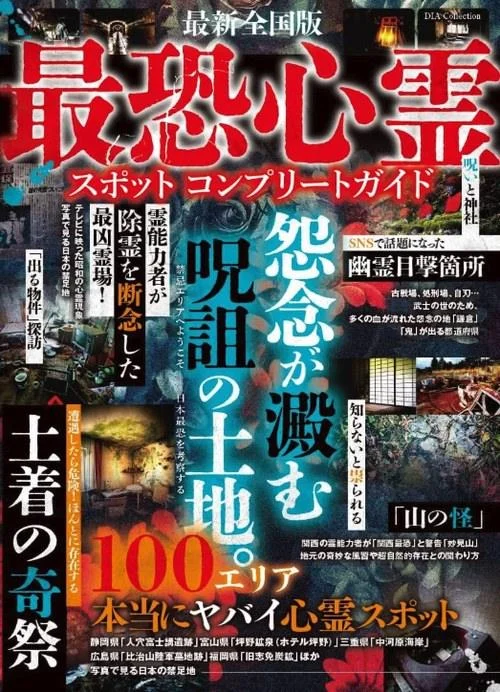
If our approach here — documenting haunted locations rather than encouraging visits — interests you, this Japanese-language guide rounds up rumors and records from across the country.
The Ultimate Guide to Japan's Most Haunted Locations (DIA Collection)
We may earn a referral fee on purchases made through these links.
The Night Side: Ghost Stories and Haunted Spots of This Town
Nights here are a place where the lights of residential areas sit next to the darkness of the fields. At present, this site does not cover any specific haunted spot in Nogi.
That said, and this is our own speculation, things that have survived a long time, such as graves from the era of the Koga Kubo, old stone markers and a great ginkgo, have a power to draw the human imagination. All of them are in temple or shrine grounds or at historic sites, where you should refrain from entering at night. It is better to learn their origins by day and then quietly imagine the stories of the dark.
Before You Go
Opening hours, fees, closing days and access change often, so they are not listed in this article. Before you go, please check the latest information on the official website of each facility or local government. Some places may have restricted access because of weather or disasters.
Frequently Asked Questions
Q. What are the main sights in Nogi?
A. The main ones are the Former Shimotsuke Rengasha Brick Kiln, an Important Cultural Property; Nogi Shrine with its great ginkgo; Manpukuji, tied to the Koga Kubo; and the Jomon-era Nowatari Shell Mound.
Q. Where is Nogi in Tochigi Prefecture?
A. It is at the southern tip of Tochigi, bordering the city of Oyama to the north and the city of Koga in Ibaraki Prefecture to the south. Nogi Station is the southernmost station in the prefecture.
Q. Is it true that Nogi has never merged with another municipality?
A. Yes. Since it was born as Nogi Village in 1889, it is known as the only municipality in Tochigi Prefecture that has never experienced a merger.
Official sites and sources consulted
https://ja.wikipedia.org/wiki/野木町
https://ja.wikipedia.org/wiki/野木駅
https://ja.wikipedia.org/wiki/野渡貝塚
https://ja.wikipedia.org/wiki/満福寺_(栃木県野木町)
https://ja.wikipedia.org/wiki/野木神社
https://ja.wikipedia.org/wiki/旧下野煉化製造会社煉瓦窯

Supervised by Suzuking.
Affiliation: KARASU CHANNEL
Occult & horror reporting: 7 years (since 2020)
Followers: YouTube 5,000+ / X 25,000+
On-site investigations: 30+
Haunted locations near this town
Besides its daytime face, this land has a night side too. Read it as a record if you are curious. Some of these places are not safe or permitted to enter.