Mount Sanage: The Other Ending of Prince Ousu
Supervised by Suzuking. (KARASU CHANNEL / Occult & horror reporting, 7 years)

Contents
View sources and last-checked date
- Source
- Kojiki and Nihon Shoki (original sources)
- Source 2
- Wikipedia (Japanese), "Mount Sanage" https://ja.wikipedia.org/wiki/猿投山
- Source 3
- Origin traditions of Sanage Shrine (our own summary, referring to introductory articles such as Sumirekishi's note post on the enshrined deity Ousu no Mikoto and the left sickle; Japanese) https://note.com/light_loris469/n/n63d517474654
- Last verified
- 2026-09-16
Mount Sanage straddles the cities of Toyota and Seto in Aichi Prefecture, rising to a modest 629 meters. On this mountain, legend holds that Prince Ousu — twin older brother of Yamato Takeru, one of ancient Japan’s most celebrated heroes — lost his life. Yet the story of his death here does not appear anywhere in Japan’s official national histories.
Origins — The “Other Ending” Told by Official History
According to the Kojiki and Nihon Shoki, Prince Ousu was a son of Emperor Keiko, the 12th emperor, and the twin brother of Prince Wousu, who would later become known as Yamato Takeru. At one point, their father ordered Ousu to bring two beautiful sisters from Mino Province (in what is now southern Gifu Prefecture) to the imperial court. Ousu instead took the sisters for himself, defying his father’s order. Fearing the emperor’s anger, he stopped appearing at court altogether and was banished to Mino Province, where he is recorded as having become the ancestor of the clan that ruled that land. In other words, official history portrays Ousu simply as “a prince exiled to the provinces after defying his father’s order,” and what happened to him afterward — where or how he died — is never recorded.
Why Mount Sanage? — A Tragic Ending Told Locally
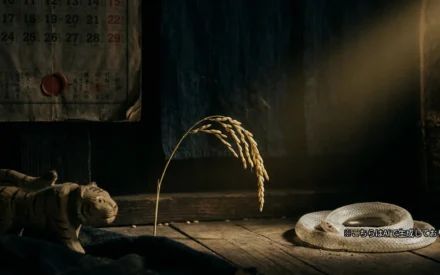
Yet according to a story told locally in Owari (western Aichi Prefecture today), Prince Ousu died on Mount Sanage after being bitten by a venomous snake, and a site said to be his mausoleum still exists near the summit. In effect, local tradition independently filled in the “afterward” that official history never told. The mountain’s name, Sanage, also carries its own legend: it’s said to come from an incident during a boat journey by Ousu’s father, Emperor Keiko, on his way to Ise, when a beloved pet monkey behaved in an ominous way and was thrown into the sea — only for the monkey to make its way to this very mountain and settle there.

Spray it on a handkerchief or towel and the mist instantly turns icy, ready to cool overheated skin — a highly portable, on-the-spot cooling item for when your body temperature rises walking around a ruin or haunted spot in midsummer heat.
Icenon (Hakugen Earth) Instant Ice Spray 230mL
We may earn a referral fee on purchases made through these links.
Current Conditions — Sanage Shrine and Its Left-Handed Sickles
At the foot of the mountain stands Sanage Shrine, which enshrines Prince Ousu as its principal deity. The shrine is home to a distinctive practice known as “hidarigama,” or the left-handed sickle. According to tradition, Ousu was left-handed and used a left-handed sickle to clear the trees as he opened up this land, and in honor of that story, worshippers don’t offer a real sickle but instead dedicate small wooden boards or ema (votive plaques) shaped like one. Because a sickle cuts down grass, the practice has come to be associated with prayers for recovery from illness and warding off misfortune, and, since it was also a tool of land development, with prayers for business prosperity and workplace safety — a tradition still cherished by the local community today.
Reflection — A Mountain That Took In a Prince History Forgot
What makes Prince Ousu’s story interesting is that it isn’t really a case of “official record versus local legend in conflict.” It’s a case of local tradition filling a silence that the center never addressed. Unlike Ryomen Sukuna, Ousu was never branded a villain by the imperial court; he simply faded quietly from the official record. Into that silence, the people of Owari placed a tragic but deeply human ending: death from snakebite, alone on a mountain. As we see it, this looks less like a tradition pushing back against the official record, and more like an act of a community taking in a prince the record had abandoned, and giving him a proper mourning of their own. A man exiled to the provinces for defying his father, in the end mourned and enshrined as a god by that very province — there’s something in this structure that hints at the quiet grief of nameless local people, a grief the victors’ histories never wrote down. We suspect the strange, gentle form the hidarigama tradition takes may be exactly what people create when they refuse to let a tragic prince’s story end simply with him as “the loser.”
This, too, is nothing more than our own imagining, but if Prince Ousu really was bitten by a venomous snake and breathed his last alone on the mountain, with no one to watch over him, then his death must have been an unbearably quiet one — quiet enough that official history never recorded it at all. Picture the time he must have spent alone, deep in the mountains where no cry for help could reach anyone, enduring the sensation of poison spreading through his body. There must have been a solitude there, harrowing and utterly unbefitting his status as a prince. The fact that offerings of the hidarigama continue at Sanage Shrine to this day may be both a prayer that no one else should ever suffer from the same venomous snake, and, at the same time, a sign of a lingering unease — a sense that the presence of the snake that took his life may still remain somewhere on this mountain.
Looking at this from a religious angle, we suspect the hidarigama offering tradition at Sanage Shrine carries more meaning than simple gratitude. In Japanese folk belief, dedicating a blade has long been thought to ward off evil and misfortune. If Prince Ousu really did die a violent death from snakebite, the offering of a left-handed sickle may have served a double purpose: mourning that death, while also quietly praying that the threat represented by the snake itself would never again be invited back to this place.
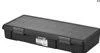
A slim, sturdy storage box for keeping your whole exploration kit — flashlight, EMF meter, camera, spare batteries — together in the trunk. Its lid keeps out dust and impacts, and it stacks, making good use of cargo space.
IRIS OHYAMA Storage Box/Case 31L 'RVBOX', Outdoor Storage Container RV900F, Charcoal Gray
We may earn a referral fee on purchases made through these links.
Everyday Face — Sanage Shrine, Autumn Leaves and Safe Childbirth
Sanage Shrine is not only the setting for the venomous-snake legend but also one of the Tokai region’s leading spots for autumn foliage. In late autumn, blazing red maple leaves line the approach all the way to the main hall, drawing crowds of worshippers and photographers. The shrine has also long been worshipped as a guardian of safe childbirth and protection from misfortune, and it’s considered one of the birthplaces of the traditional performing art “Bo-no-te.” The trailhead for Mount Sanage lies nearby, and a walk through the shrine grounds followed by a hike up the mountain path offers a quiet, peaceful contrast to the weight of the legend.
A Note of Respect for This Place of Worship
Sanage Shrine is an active shrine today, and Prince Ousu remains a deity carefully enshrined and worshipped there. Please check the shrine’s visiting hours and etiquette in advance, and visit with a manner befitting a place of worship. This article is published to record the history and faith passed down in this region, and it carries no intention of mocking the faith itself.
Frequently Asked Questions
Q. Did Prince Ousu really die on Mount Sanage?
A. It can’t be confirmed. The Kojiki and Nihon Shoki only record that he was exiled to Mino Province, with nothing written about what happened afterward. His death on Mount Sanage is a distinct tradition local to Owari.
Q. Where can I see the “hidarigama” left-handed sickles?
A. They can be seen on the grounds of Sanage Shrine, in the Sanage-cho area of Toyota City. We recommend checking with the shrine directly for visiting hours and event details before your visit.
Q. Has KARASU CHANNEL filmed on location at Sanage Shrine?
A. No, we have not filmed there yet; a visit is currently under consideration. Location footage for other haunted spots and kaidan stories can be viewed on KARASU CHANNEL (YouTube).

Supervised by Suzuking.
Affiliation: KARASU CHANNEL
Occult & horror reporting: 7 years (since 2020)
Followers: YouTube 5,000+ / X 25,000+
On-site investigations: 30+
If this appeared in your dream
What it means to dream of something from this story, read through psychology and folklore in our Dream Dictionary.
- Dreaming of twinsA symbol of two feelings inside you; cooperating twins mean you can manage both paths.
- Dreaming of a ShrineA symbol of protection, cleansing and wishes. Praying at a shrine hints your wish will be heard.
Which story do you find the scariest?
If you think this story is the scariest, press the button below. One vote site-wide — you can change your vote for a different story anytime.
Was this article helpful?
Add this to your favorites to find it again anytime from your My Page.


Comments