Nyunai-suzume: Why Sanekata Returned as a Sparrow
Supervised by Suzuking. (KARASU CHANNEL / Occult & horror reporting, 7 years)
Contents
View sources and last-checked date
When we think of vengeful spirits, we tend to picture terrifying figures who shook the whole realm, like Sugawara no Michizane, who hurled thunderbolts, or Emperor Sutoku, who became a great demon. Yet in the Heian period there is said to have been a vengeful spirit that came back to the capital in a far smaller form: a single sparrow. Almost every morning it flew into the imperial palace and pecked at the rice in the kitchen where the emperor’s meals were prepared. People whispered that the bird was the reincarnation of a nobleman who had died in distant Mutsu.
His name was Fujiwara no Sanekata. Known as the author of poem no. 51 in the Hyakunin Isshu, “Kaku to dani / eya wa ibuki no / sashimogusa / sashimo shiraji na / moyuru omoi o,” he was the most dashing man and poet of the mid-Heian court. Why did a man at the glittering center of the court meet his end in Mutsu, and why was he said to have returned as a sparrow? This article follows the legend of “Nyunai-suzume” (the sparrow that enters the palace), separating history from tradition as it goes.
Origins: The Man Who Threw a Cap and the Journey to Mutsu
Let us begin with what can be confirmed about Sanekata as a historical figure. He came from a distinguished family, a great-grandson of Fujiwara no Tadahira, who served as regent and chancellor. Under Emperor Ichijo he served at court as a Lieutenant General of the Left Imperial Guards and was known as a master of waka poetry. He was later counted among the “Thirty-Six Poets of the Middle Ages,” and as an amorous man who exchanged poems with many women, he is even said to have been close to Sei Shonagon.
In 995, Sanekata was appointed Governor of Mutsu and left the capital. Mutsu was a vast province on the Pacific side of today’s Tohoku region, and from the capital’s point of view it lay at the ends of the earth. At the end of 998, Sanekata died in Mutsu, his post. He never returned to the capital.
A famous anecdote is attached to this journey to Mutsu. According to the early Kamakura-period collection of tales Kojidan and other sources, one day at court Sanekata and Fujiwara no Yukinari got into an argument. Yukinari, later counted among the “Three Brushes” of calligraphy, was a capable and upright official. In a fit of anger, Sanekata snatched Yukinari’s cap and threw it into the garden. For a nobleman of the time, having his cap taken off in public was as humiliating as being stripped naked. Yukinari, however, was not at all flustered. He quietly had the cap picked up, put it back on, and responded calmly. Emperor Ichijo had watched the whole scene. He praised Yukinari’s composure and came to rely on him, while he sent Sanekata off to Mutsu with the words, “Go and see the famous poetic places (utamakura).”
How far this story is true, however, is doubtful. Yukinari’s own diary, the Gonki, records that Sanekata received generous parting gifts from the emperor when he went down to Mutsu, and some see this as evidence that the posting was not a punitive demotion. Although a distant province, Mutsu was rich, producing gold and horses, and being its governor was by no means a dishonorable post. It is more reasonable to think that the cap anecdote was born, or grew, after Sanekata’s death to answer the question, “Why did such a glamorous man have to die in Mutsu?”
There is also a legend about Sanekata’s death. While traveling through Mutsu, Sanekata passed in front of a roadside deity (dosojin) at Kasajima (in today’s Natori City, Miyagi Prefecture). Locals urged him to dismount and pay his respects, saying the god was powerfully efficacious. Sanekata refused to listen and tried to ride on past. His horse fell, and he was crushed beneath it and died. A mound said to be Sanekata’s grave stands in Aijima, Natori City. The poet Saigyo is said to have visited it and composed a poem, and Matsuo Basho, on his journey recorded in Oku no Hosomichi, came close but could not stop by because of long rains, and left a verse about it.
Why Is He Said to Have Become a “Sparrow”?
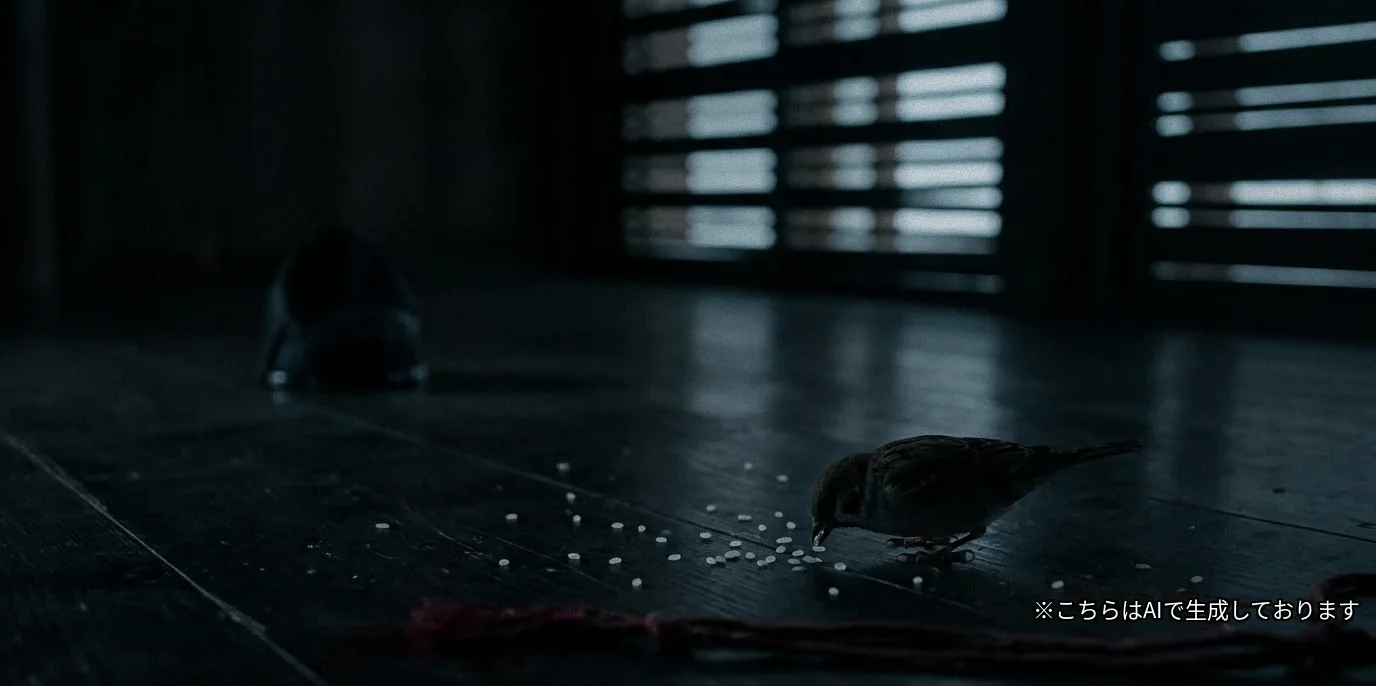
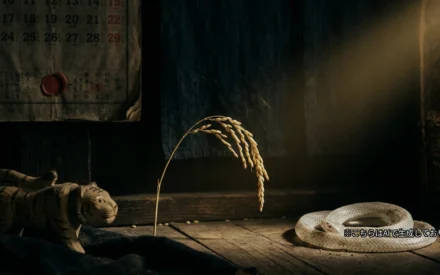
The legend of Nyunai-suzume begins to be told in the capital after Sanekata’s death. Soon after he died, a single sparrow began flying into the Seiryoden of the imperial palace every day and eating the rice set out in the daibandokoro, the place where the emperor’s meals were prepared. People whispered that Sanekata’s obsession with returning to the capital had taken the form of a sparrow. A “sparrow entering the palace” is said to be the origin of the name Nyunai-suzume.
A tale about a temple memorializing the sparrow is also tied to this legend. According to Edo-period gazetteers such as the Sanshu Meisekishi, a sparrow appeared in the dream of a monk at a temple built on the site of the Kangakuin, the dormitory where Fujiwara clan youths studied, and announced itself: “I am Lieutenant General Sanekata, a retainer of Emperor Ichijo.” The next morning the body of a sparrow was found in the temple grove, and the monk buried it with care and raised a mound. Because of the sparrow, the temple came to be called Kojakuji, popularly known as “Suzumedera” (Sparrow Temple), and memorial services at the sparrow mound are said to continue today.
Why a sparrow? One clue lies in the ecology of an actual bird. In Japan there is a species very similar to the common sparrow, the Russet Sparrow (nyunai-suzume). It breeds in places like the Tohoku region in summer, then moves in flocks to various regions in autumn and sometimes damages the ripening rice by pecking at it. A small bird that comes in flocks from Tohoku and ravages the rice is almost too perfect a trait to link with Sanekata, who died in Mutsu. There are several theories about the origin of the bird’s Japanese name, but it is often told in connection with Sanekata’s legend.
The choice of the Kangakuin as a place is also interesting. The Kangakuin was a facility where the sons of the Fujiwara clan lived and studied, and it even gave rise to the proverb, “The sparrows of the Kangakuin chirp the Mogyu.” It means that even the sparrows under the eaves learn by heart the lines of the textbook that the students recite every day. In other words, the sparrows of the Kangakuin were familiar birds that had long lived alongside the young men of the Fujiwara clan. For the makers of the legend, it was probably a natural landing point that the spirit of Sanekata, born into the great Fujiwara family, should meet its end as a sparrow in the grove of the clan’s own school.
The sparrow has also long been imagined as a form the human soul can take. A small bird that lives under the eaves and picks up grains of rice right beside people’s daily lives may have been just the right size for a dead person to take when returning to the world of the living.
Kunio Yanagita's study of taboo customs and prohibitions — backup material for our folklore-based analysis pieces.
Encyclopedia of Forbidden Customs: A Folklore Notebook of Taboos (Kunio Yanagita / Kawade Bunko)
We may earn a referral fee on purchases made through these links.
Present Day: The Sparrow Mound and Sanekata’s Grave, Memory Left in Two Places
The legend of Nyunai-suzume still leaves traces in two distant places, Kyoto and Miyagi. In Kyoto, the sparrow mound at Kojakuji is handed down as a place that consoles Sanekata’s spirit. The temple has moved over the centuries, but the sparrow mound and Sanekata’s name have been passed on.
In Natori, Miyagi Prefecture, on the other hand, there is a mound said to be Sanekata’s grave, and its surroundings have been arranged as a place of poetic association (utamakura) that Saigyo and Basho once held dear. A clump of pampas grass known as the “Katami no Susuki” (keepsake pampas grass) has also been handed down, after the poem Saigyo is said to have composed on seeing withered pampas grass at the grave. A glittering nobleman of the capital sleeping in the fields of Mutsu: that contrast has surely moved many travelers.
Sanekata’s legend from the Edo period on has also been material for yokai paintings and popular reading. Even today, Nyunai-suzume appears in yokai encyclopedias and games as a “yokai born when a grudge became a sparrow,” and many people know the name alone. Few, however, know that behind it lies the sad end of a single poet.
KARASU CHANNEL’s Take: The Meaning of Being a Sparrow, Not Thunder
What draws us most in this legend is that Sanekata’s spirit is said to have chosen the form of a “sparrow,” something so small and powerless. The spirit of Sugawara no Michizane, who likewise was driven from the capital and died in a distant province, was feared as a thunder god who struck the palace and took the lives of courtiers. By comparison, all Sanekata’s sparrow did was peck at the rice in the kitchen. This is only our conjecture, but the difference may reflect the different feelings the storytellers held toward the two dead men. Michizane was banished on a clear false charge, and the people of the capital felt deep guilt and fear. Sanekata’s journey to Mutsu, on the other hand, was on the surface a formal appointment, and no one had overtly framed him. What people felt toward Sanekata was probably closer to pity, a sense of “how unfortunate,” than to fear.
Even so, it is symbolic that the place where the sparrow ate rice was the daibandokoro. It is a place that prepares the emperor’s table, close to the center of court life. In our view, what the sparrow longed for was not the rice itself but the “seat at court” where Sanekata had once sat as a matter of course: the glittering banquets, the exchange of poems with the court ladies, the days spent attending close to the emperor. In the snows of Mutsu, Sanekata must have remembered all of it. If that lingering attachment was entrusted to the sight of a small beak picking up grains of rice one by one, there could hardly be a more poignant vengeful spirit.
Let us look at the cap anecdote from a slightly different angle. Though both were Fujiwara, Sanekata and Yukinari were opposite types: the passionate Sanekata who lived for poetry, and the composed Yukinari who excelled at calligraphy and practical affairs. This is only conjecture, but perhaps the cap story was handed down because it symbolized a “turning point of the era.” In Emperor Ichijo’s time, the court under Fujiwara no Michinaga was moving toward valuing practical ability. Old-style nobles who lived by poetic talent and glamour were gradually losing their place. Sanekata’s journey to Mutsu may have been received less as a personal failure than as the story of someone left behind by the changing times.
Let us read the Hyakunin Isshu poem “Kaku to dani” once more. “Even this much, I cannot tell you of my feelings. Like the sashimogusa burning on Mount Ibuki, you do not know my burning love.” It was originally a love poem, but here we would like to see in it the essence of Sanekata as a man. He was someone who kept his feelings hidden within and yet kept them burning. When the object of that feeling shifted from a lover to the capital itself, the burning feeling passed beyond death and sent a single sparrow flying into the palace. This is only one way of reading the legend, but there seems to be a non-accidental consistency in the fact that the author of a love poem came to be told of as a vengeful spirit homesick for the capital.
Finally, let us recall that the sparrow was a bird that came in flocks from the direction of Mutsu. In reality, flocks of birds ravaging the rice were a genuine threat to farmers. This is only conjecture, but perhaps Sanekata’s legend also served to give a “reason” to such unexplained damage. The soul of a nobleman who died in resentment in the distant north returns in the form of a bird. Seen that way, even the flocks of small birds ravaging the fields could be accepted as somehow pitiable creatures.
A collection of true ghost stories passed down among police officers — a reference for our reading-feature articles.
Police Ghost Stories: Scary Tales Left Out of the Report (Jun Aimine / KADOKAWA)
We may earn a referral fee on purchases made through these links.
Engaging With This Legend
Fujiwara no Sanekata was a real poet, and it is historical fact that he died at his post as Governor of Mutsu. By contrast, the anecdote of throwing the cap, the fall from his horse before the roadside deity, and the story that he became a sparrow after death are all later tales and traditions, and must be treated separately from history. This article has tried to keep that line in mind.
The mound said to be Sanekata’s grave and the temple that preserves the sparrow mound are still carefully tended by local people. If you visit, please behave quietly, in a manner fitting a burial ground and a temple, and take care not to disturb the place of memorial service or to take photographs without permission.
Also, the Russet Sparrow is a real wild bird, and it is not an ill-omened bird simply because it appears in the legend. Please do not drive the birds away or harm them.
Frequently Asked Questions
Q. What kind of legend is Nyunai-suzume?
A. It is a legend that the obsession of Fujiwara no Sanekata, who died in Mutsu, to return to the capital became a sparrow that flew into the palace every day and ate the rice in the daibandokoro, where the emperor’s meals were prepared. The name is said to come from “a sparrow entering the palace.”
Q. Was Sanekata’s going to Mutsu a demotion?
A. The story that he threw Fujiwara no Yukinari’s cap at court and was ordered by Emperor Ichijo to “go and see the utamakura” is famous, but it is a later tale. Yukinari’s diary, the Gonki, records that Sanekata received generous parting gifts from the emperor, and some hold that it was not a punitive demotion.
Q. Is the Russet Sparrow a real bird?
A. Yes. It is a separate wild species very similar to the common sparrow. It breeds in places like the Tohoku region in summer, and in autumn it moves in flocks and can damage rice. It is thought that this ecology became linked with the legend of Sanekata, who died in Mutsu.
Q. Where is Sanekata’s grave?
A. There is a mound said to be Sanekata’s grave in Aijima, Natori City, Miyagi Prefecture. It is known as a place Saigyo visited and wrote a poem about, and Matsuo Basho passed near it on his Oku no Hosomichi journey.
Q. What is the sparrow mound?
A. It is a mound said to have been built to bury the sparrow identified as Sanekata’s spirit. The tale goes that a sparrow appeared in a temple monk’s dream and named itself Sanekata, and its body was found the next morning; the temple came to be called Kojakuji (Suzumedera).
Sanekata’s “Kaku to dani” poem can also be drawn in KARASU CHANNEL’s Hyakunin Isshu fortune.
Q. Has KARASU CHANNEL researched or filmed the Nyunai-suzume legend?
A. No, we are not currently researching the Nyunai-suzume legend, and carrying out such work is under consideration. Location footage for other haunted spots and kaidan stories can be viewed on KARASU CHANNEL (YouTube).

Supervised by Suzuking.
Affiliation: KARASU CHANNEL
Occult & horror reporting: 7 years (since 2020)
Followers: YouTube 5,000+ / X 25,000+
On-site investigations: 30+
Which story do you find the scariest?
If you think this story is the scariest, press the button below. One vote site-wide — you can change your vote for a different story anytime.
Was this article helpful?
Add this to your favorites to find it again anytime from your My Page.






Comments