What Is Omikuji? Why People Have Heard the Voice of the Gods and Buddhas in Lots, from Great Blessing to Bad Luck

Supervised by Ms.M
Affiliation: KARASU CHANNEL
Traditions studied: 12+ (Western astrology, Four Pillars of Destiny, Nine Star Ki, tarot, runes, palmistry & physiognomy, name numerology, numerology, feng shui, Vedic astrology / Zi Wei, Onmyodo, spiritual reading, and more)
Personal readings: by request via Contact,
currently booked years out

Contents
At New Year or on a trip to a shrine, you clutch a 100-yen coin and draw an “omikuji.” Those few seconds before you unfold the thin folded paper can still make your heart beat a little faster, even as an adult. If it says great blessing you break into a smile, and if it says bad luck you freeze and think “what now?” Few forms of fortune-telling stir people so much with such a small slip of paper.
Omikuji is one of the most familiar kinds of fortune-telling in Japan. But if someone asks “who started it, and when?”, or “is the next one after great blessing middle blessing, or just blessing?”, or “if I draw bad luck, do I tie it or take it home?”, surprisingly many people find themselves at a loss.
This article unpacks the origins and workings of omikuji as gently as possible, with analogies and concrete examples. Whenever a difficult term appears, I rephrase it in a quote box labeled “Put simply.” The history of omikuji has many points on which sources differ (theories). Where they diverge, I say so honestly, with phrases like “there are various theories” and “it differs by source.”
In the second half I have also added our own reflections, which go beyond a summary of the history. The manners and customs at temples and shrines are precious things rooted in each faith. Here I treat them with respect and limit myself to introducing “this is one way of thinking.”
Key Points (a 3-Minute Summary)
- Omikuji is a traditional Japanese custom of drawing lots to ask the will (the thinking) of the gods and Buddhas and obtain guidance on your fortune and frame of mind. It is generally written with a ranking of fortune and item-by-item words on wishes, a person awaited, travel and so on.
- The prototype of the present form is said to have been started by Ryogen (Ganzan Daishi), a monk of the Tendai sect in the Heian period. However, sources differ on the account: the numbered “Ganzan Daishi Hyakusen” is said to have taken shape only in the time of Tenkai in the early Edo period, and some points remain unclear.
- China also has similar lots called “reisen,” and a book such as the Southern Song “Tenjiku Reisen,” made of 100 lots and Chinese poems, is known. How it connects to Japan’s omikuji is told differently depending on the source.
- The ranking and proportions of fortunes differ by shrine and temple. “Great blessing is at the top” is common, but what comes next, middle blessing or blessing, is not fixed. Some temples have a higher share of bad luck.
- On whether to tie a drawn omikuji or take it home, the Association of Shinto Shrines advises that there is a custom of tying it at a tying place before going home, but that taking it home is also fine. Following the guidance of each shrine or temple is the basic rule.
- Our site’s “Omikuji” is an entertainment omikuji that randomly draws from seven ranks (great blessing, middle blessing, small blessing, blessing, future blessing, bad luck, great bad luck), showing one of 35 slips, five per rank. The poems and words on the slips are original to our site. Please enjoy it lightly, as something separate from the omikuji of actual shrines and temples.
What Is Omikuji? A Custom of Asking the Will of the Gods and Buddhas by Lots
Omikuji is written with characters meaning “honorable sacred lot,” or “divine lot.” It is “mikuji” with the polite prefix “o” added, and “kuji” means “lot,” a way of deciding things or divining fortune by drawing sticks or paper.
What matters here is that omikuji is not just “trying your luck” or a “game of win or lose.” It was originally a way of asking the thinking of the gods and Buddhas on things people could not decide by their own power alone. The homepage of the Association of Shinto Shrines also explains divination as “one expression of faith in which, at the start of something, one first looks up to the divine will of the gods and, on that basis, sets out to carry the matter through earnestly.”
When you draw an omikuji, you are unconsciously asking in your heart, “What kind of year will this be?” or “Will this wish come true?” Receiving the words that come back from the gods and Buddhas in answer to that question is the essence of omikuji.
Put simply, omikuji is “a custom of getting an answer, in the form of drawing lots, to a question put to the gods and the Buddhas.” It is said that what matters more than whether it hits or misses is how you take the words that come back and use them in your conduct from now on.
What Is Written on an Omikuji Slip?
An omikuji slip (mikuji-sen) usually carries the following kinds of content.
- Number: a figure showing which lot it is.
- Fortune rank: a level of overall fortune, such as great blessing, blessing or bad luck.
- Explanation of fortune: a sentence summing up the overall luck in a phrase. A waka (a short poem of five, seven, five, seven and seven syllables) is often added.
- Item-by-item words: advice for each area of life, such as wishes, health, a person awaited, lost items, travel, business, study and marriage proposals. The number and kinds of items vary by shrine or temple.
This structure is very practical. First it shows “how your luck is right now” broadly by rank, and then it answers item by item, “so what about the thing you care about most right now?” It is arranged so that the result of the fortune connects easily to action in your daily life.
Put simply, an omikuji slip is like a “weather forecast.” First comes the overall impression (“sunny, cloudy or rainy” today), which is the fortune rank, and then specific advice such as “do I need an umbrella?” and “what about the laundry?”, which is the item-by-item words.
The Origins of Omikuji: From Ancient Lots, to Ganzan Daishi, to the Edo Hyakusen
Lots Were Originally “a Way of Deciding Great Matters of State”
In Japan, lots and divination are said to have been used since ancient times, in important scenes of politics and festivals, to ask the divine will (the thinking of the gods). When a decision by human discussion would cause friction, or someone would have to bear responsibility for the decision, it was a way of showing “it is the will of the gods.”
A frequently cited symbolic example is Ashikaga Yoshinori, the sixth shogun of the Muromachi shogunate. In 1428, just before the previous shogun Yoshimochi died, he was about to leave the world without naming his successor himself. So the powerful daimyo consulted together, and the method used was to draw lots bearing the names of four candidates before the deity at Iwashimizu Hachimangu, and to open the result after Yoshimochi’s death. The candidates included monks who had entered temples, younger brothers of Yoshimochi, and the lots chose Gien, who had been abbot of Shorenin Monzeki. He later returned to lay life (giving up the priesthood to become an ordinary person), took the name Yoshinori, and became shogun. For this reason Yoshinori has come to be called the “lottery shogun” by later generations. It is also said that at the Meiji era’s change of era name in 1868 (Keio 4), the Emperor chose from among the candidates by lot.
Entrusting so weighty a decision as a succession to lots. Here the sense of that age shows through: “matters that cannot be decided by human will alone are accepted by turning them into the judgment of the gods and Buddhas.”
Put simply, lots in the old days were not quite like “deciding by rock-paper-scissors,” but were also the wisdom of “having the gods decide” so that everyone could accept the outcome.
Ryogen (Ganzan Daishi): The Monk of Mount Hiei Said to Be the “Founder of Omikuji”
The person said to have made the prototype of today’s omikuji is Ryogen, a monk of the Tendai sect in the Heian period. He was born in 912 and died on January 3, 985. In 966 he took the post of the 18th Tendai Zasu (the highest position at Mount Hiei’s Enryaku-ji, the head temple of the Tendai sect) and pushed forward the rebuilding of Enryaku-ji, which had fallen into ruin after a fire, and he is called its “chuko no so” (the restorer who rebuilt a declining temple). Because his death day was January 3, he is known by the name “Ganzan Daishi” (Great Teacher of the Third of the First Month). He also has another name, “Jie Daishi.”
Ryogen is widely known as the founder of omikuji, but in fact this is a matter of “that is how it has been handed down,” and it is not the kind of fact that can be clearly confirmed in contemporary primary sources (records of the time). The Ganzan Daishi Hall in Yokawa on Mount Hiei is known as “the birthplace of omikuji,” and it is said that the old form is still handed down there, in which a person seeking advice writes out their worries and a priest draws the lot on their behalf and explains it.
According to tradition, Ryogen prayed to Kannon Bosatsu and received 100 slips of gemon (verses). Depending on people’s worries, he had them draw one of these and taught the way to go. It is said that the “number” and “Chinese poem” written on an omikuji slip come from these 100 verse slips.
Put simply, Ryogen’s omikuji was closer to “a system in which a monk chooses one from a hundred sayings and answers the worries of a consultant” than to today’s “paper for telling fortunes.”
Tenkai and the “Ganzan Daishi Hyakusen”: Were Numbers and Fortunes Set in the Edo Period?
So when were the “Ganzan Daishi Hyakusen” put in order, with 100 verses given the numbers “No. 1,” “No. 2,” and so on, and fortunes assigned to them? The tale often told is that of Tenkai (Jigen Daishi), a Tendai monk who served Tokugawa Ieyasu in the early Edo period. It says that Tenkai received a revelation from Ganzan Daishi in a dream, found 100 verse slips hidden at Togakushi Shrine in Shinshu (present-day Nagano Prefecture), and arranged them into the “hyakusen.”
This hyakusen spread in a form that tied serial numbers to fortunes, with No. 1 as great blessing and No. 100 as bad luck. It is explained that in the Edo period it was taken up by temples and shrines other than Tendai and settled as an “omikuji” that ordinary people could draw casually. However, Tenkai’s dream tale, like Ryogen’s, has a strong color of tradition passed down in later ages.
Here I sort out the points on which sources differ.
- The account that Ryogen was the founder is shared by many temples, shrines and books. But it cannot be directly confirmed in contemporary records, and its position is “that is how it is handed down.”
- Whether the 100 verses are “from Ryogen’s time” or “arranged in later ages” is told differently depending on the source.
- Many accounts place the time when numbers and fortunes were set in Tenkai’s time in the early Edo period.
- On the relationship with Chinese lots, as described in the next section, views differ on which parts are uniquely Japanese and which come from Chinese influence.
Rather than deciding that “one is right and another is wrong,” this site considers it honest to take it as “the form was put in order little by little over a long time.”
The Relationship with Chinese Lots (Reisen): Another Root, with Various Theories
In the temples and shrines (byo) of China, Taiwan and Hong Kong too, there are “lots” very similar to Japanese omikuji. You shake a tube containing dozens of thin bamboo sticks, and receive the lot paper matching the number on the one stick that falls out. There is also a custom of then throwing two crescent-shaped tools called “poe” (bwa bue) and, by how they land face up or down, checking “whether that lot truly fits the divine will.” In Japan you can see this kind of practice at places such as the Kuan Ti Temple in Yokohama Chinatown.
The history of Chinese lots is old, and a book called “Tenjiku Reisen,” published in the Southern Song period (12th-13th centuries), which adds 100 pictures and 100 Chinese poems to 100 lots, is known. In Japan, works such as “Kannon-sen Chukai” (Genroku 8 = 1695), said to have inherited it, remain. The view that the Chinese-poem format of Japanese omikuji (numbered hyakusen) is deeply connected to the lineage of Chinese lots is also supported by such books.
However, as for when Chinese lots came into Japan, there are explanations such as “from the Heian period to the early Muromachi period” and “around the 14th century,” and because the existing hyakusen books date from the 17th century onward, sources clearly disagree. In this article I limit myself to the arrangement that “the Japanese stream beginning with Ryogen and the Chinese reisen stream met somewhere and overlapped,” which seems closer to reality.
Put simply, many explanations say Japanese omikuji “melted together over a long time” from “a system devised by Japanese monks” and “a system of lots that came from China.” How much is uniquely Japanese is a point on which even specialists differ.
Meiji and Taisho: Waka Omikuji and the Start of the Vending Machine
When the Meiji era began, in the course of the separation of Shinto and Buddhism (a policy of separating Shinto from Buddhism), it is sometimes explained that the Chinese-poem-based hyakusen became hard to use as it was at shrines. So waka omikuji, which explain fortune in waka poems, were made for shrines.
The center of this was Miyamoto Shigetane, chief priest of Nishoyamada Shrine in Shunan, Yamaguchi Prefecture, and the “Joshido-sha” (Joshi Do Sha) he founded. Miyamoto created the “Dai Nihon Keishin Fujinkai” in 1905 (Meiji 38), established Joshido-sha the next year, 1906, and published the magazine “Joshido.” Making and distributing omikuji began as funds to keep this magazine going. It is also said that Joshido-sha was one of the earliest groups in Japan calling for women’s independence, born earlier than the “Seitosha” that appears in textbooks.
In the Taisho era, this Joshido-sha also devised an automatic omikuji dispenser (vending machine). Today, it is said that 60 to 70 percent of omikuji nationwide are made by this Joshido-sha (with differences in wording by source, such as “nearly 70 percent”). Many of the omikuji we pick up are, in fact, an extension of a system that began as funds for an activity hoping to raise the status of women.
Reading Omikuji, Basics 1: Kinds of Fortune and “How They Are Ranked”
The fortunes of omikuji differ considerably in kind and order by shrine or temple. A very common ranking is something like “great blessing, middle blessing, small blessing, blessing, future blessing, bad luck,” but that is only “one common ranking.”
- Basic form: many explanations take an order such as great blessing, blessing, middle blessing, small blessing, bad luck as the basis.
- What follows great blessing differs: some shrines put middle blessing next after great blessing, and others put blessing, so the order is not fixed.
- Shrines that divide finely: some divide into great blessing, blessing, middle blessing, small blessing, half blessing, future blessing, future small blessing, level, bad luck, small bad luck, half bad luck, future bad luck and great bad luck.
- Special ones: besides “great-great blessing” and “great-great bad luck,” there are ones with hints built into the name, such as “mukai daikichi” (great blessing ahead) and “kyo-go daikichi” (great blessing after bad luck).
- “Kikkyo mibun”: some shrines set up a slightly mysterious rank meaning “cannot be decided as either blessing or bad luck.”
In other words, the fortunes of omikuji are not a “nationwide common yardstick.” It is safer to think that the “blessing” of Shrine A and the “blessing” of Shrine B cannot be compared at the same weight. Explanations repeat that what matters is the content of the words that follow, more than the name of the rank.
Put simply, omikuji’s “great blessing,” “blessing” and “bad luck” are not a nationwide common score like “5, 4, 3” on a school report. It is best to think of them as ranks within that omikuji alone, set by each shrine.
Is Bad Luck Actually Bad?
When you draw bad luck, everyone is disappointed. But in the world of omikuji, bad luck is not necessarily a declaration that “something bad will happen.”
For example, at temples that follow the lineage of Ryogen’s hyakusen, the gemon (Chinese poems) contained many words of warning and encouragement, so the share of bad luck is said to have been high from the start. The omikuji of Sensoji are known for keeping the allocation of the Edo-period Kannon hyakusen as it was, with bad luck at about 30 percent (roughly 30 out of every 100 draws). According to one commentary the allocation is: great blessing 17 percent, blessing 35 percent, half blessing 5 percent, small blessing 4 percent, small future blessing 3 percent, future blessing 6 percent, bad luck 30 percent.
On the other hand, in recent years some shrines and temples have reduced the share of bad luck or even done away with it altogether. This is also an expression of the consideration that “we want visitors to go home with a bright heart.” It is not a matter of which is right.
There are also positive ways of taking bad luck that are widely told, such as “when bad luck comes up, it cannot get worse than that” and “after bad luck, fortune turns upward.” There is also a saying that if you tie a bad-luck omikuji with your non-dominant hand, you have made that difficult act a discipline and the bad luck turns into blessing. Such sayings are perhaps the wisdom of Japanese people, taking bad luck not as “a declaration of the end” but as “a signal to put things in order from here.”
Put simply, bad luck is like “a note of caution from the gods and the Buddhas, telling you not to overdo it for now and to check your footing.” It does not mean “something bad has been decided.”
Reading Omikuji, Basics 2: How to Draw, and the Item-by-Item Words
There Are Three Main Ways to Draw
- Mikuji-tsutsu (tube) method: shake a tube holding thin sticks and let one stick come out of a small hole. You receive the omikuji with the same number as the number written on the stick. The Ganzan Daishi hyakusen has serial numbers, from No. 1 great blessing to No. 100 bad luck.
- Direct selection method: omikuji already folded are laid out on a box or stand, and the worshiper chooses one. It is said that in recent years, since the spread of the coronavirus, more shrines have stopped sharing tubes and switched to this method.
- Vending machine method: a machine that dispenses omikuji when you put in money. It is known that Joshido-sha registered a utility model for it in the Taisho era.
In every method, what is common is “not choosing by your own will but leaving it to chance.” Draw with your eyes closed, holding your wish or question in mind. This series of actions turns omikuji from “just a lottery” into “a dialogue with the gods and Buddhas.”
Put simply, the trick when drawing omikuji is to deliberately let go of the feeling of hesitating over “which one shall I pick?” What you cannot choose yourself, you let the gods choose. That is the meaning of drawing lots.
Item-by-Item Words: What Are “Machibito” and “Usemono”?
On an omikuji slip lie somewhat old-fashioned items such as “machibito” (a person awaited), “usemono” (lost items), “ganbo” (wishes) and “tabidachi” (setting out on a journey). Knowing their meanings brings the written words much closer.
- Ganbo (wishes): whether the wish you hold in your heart will come true, and if so, in what season and with what frame of mind you should approach it.
- Machibito (a person awaited): whether the person you are waiting for will come, or whether news will arrive. It is sometimes read to include not only a romantic partner but also important news and encounters in general.
- Usemono (lost items): whether a lost object will be found. Words such as “will be found,” “will turn up late” and “hard to find” line up.
- Tabidachi (travel): the good or bad of a trip or an event involving movement.
- Shobai (business): how to go about work and trade.
- Gakumon (study): studying and exams.
- Endan (marriage proposals): marriage and forming ties.
- Byoki (health): the outlook for your physical condition and what to be careful about.
- Tenkyo (moving house): whether moving your home is good or bad.
These are some of the items often seen in the omikuji of actual temples and shrines. The number and order of items differ by shrine or temple. On our site’s “Omikuji,” we add “arasoigoto” (disputes) and “renai” (romance) to the items listed here and show 11 items (details later).
Put simply, “machibito” is the answer to the question “is there anyone or any news approaching your life right now?”, and “usemono” is the answer to “will the thing you lost turn up?”
Waka and Chinese Poems: Differences in Style of Words
The words of omikuji come in two broad styles. One is the Chinese-poem style (the lineage of the Ganzan Daishi hyakusen), and the other is the waka style.
The Chinese-poem style inherits the stream of Ryogen’s hyakusen, and is characterized by somewhat stiff, dignified wording. The waka style, on the other hand, was created for shrines from the Meiji era on, and many add a waka to the explanation of fortune. The authors of the waka vary: figures connected to a shrine’s enshrined deity, or, as at Meiji Jingu, poems composed by Emperor Meiji (gyosei, poems composed by the Emperor) and by Empress Dowager Shoken.
An omikuji with a waka is best read not as “advice that is useful right away,” but as “words to read, savor slowly, and apply to your own situation.” That the meaning is not immediately clear is natural.
Tie It, or Take It Home?
After drawing an omikuji, you have probably seen a scene in which trees in the grounds or dedicated racks have rows of tied paper. Should you tie it, or take it home? This question comes up very often.
The Association of Shinto Shrines gives guidance to the following effect on omikuji. One point is that there is a custom of tying it at the tying place in the grounds before going home, but that taking it home is also fine. The other is that the aim is not to judge good or bad fortune itself, that what matters is making the content a guide for your life from here on, and that after drawing it you should read it over thoroughly and check it against your own conduct. In other words, there is no absolute “right answer” between tying and taking home; the basic idea is that both are respected.
The following explanations are often seen about the origin of the custom of tying.
- It is said to have been done since around the Edo period, because the word “tying” connects with “tying a bond” in love and human relationships.
- After that the meaning widened, and it is also explained that it came to be tied to trees and tying places in the sense of forming a bond with the gods and Buddhas.
- In the case of bad luck, some people tie it with the feeling of “tying down the bad luck and leaving it behind.” As in the previous section, the saying that tying it with your non-dominant hand turns it to blessing is also known.
Today, because many people tying to trees affects the trees’ growth, more shrines and temples are setting up dedicated “mikuji-kake” (racks made by stretching sticks or ropes between two posts). Some temples, such as Nigatsudo in Nara, have people pierce the omikuji onto something like an awl.
What matters is to follow the guidance of that place. If there is a tying place, go there; if a signboard says “please take it home,” take it home. Handle it politely so as not to damage tree branches or the facilities of the grounds. Even if you take it home, do not treat it carelessly; reread it from time to time and keep it with care. Such small acts of consideration lead to respect for the faith.
Put simply, neither tying nor taking home is bad manners. But rules differ by shrine or temple, so if in doubt, it is safest to ask the guidance in the grounds or the people at the shamusho (shrine office) or jimusho (temple office).
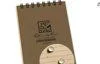
A waterproof notebook you can write on even when the page is wet, for a rainy or humid ruin or cave-type haunted spot. Good for reporting notes, recording witness accounts, or sketching a floor plan during exploration.
Rite in the Rain 3x5in Notebook, Tan 935TL
We may earn a referral fee on purchases made through these links.
A Worked Example: Reading One Slip and How to Read the Result
Here, using the slips prepared in our site’s “Omikuji” tool as examples, I look at how to read them. I have transcribed, just as they are, one “blessing” slip and one “great bad luck” slip from the same data as the tool (they are not a result drawn by any particular person).
The example is “blessing,” No. 14. The words shown are as follows (an excerpt of some of the 11 items).
- Waka: In the autumn wind, the acorn beneath the fallen leaves, waiting for spring, keeps stretching its roots.
- Meaning of the poem: Beneath the leaves scattered by the autumn wind, an acorn quietly stretches its roots while waiting for spring. A poem of the strength that grows where it cannot be seen.
- Overall: A time when there are still few visible results, but the roots are surely growing. Now, work hard on building the foundation. Preparing for yourself, more than effort shown to others, will bear fruit.
- Romance: Do not rush; take time to nurture your feelings
- Business: Great profit lies in preparation with an eye to the future
- Person awaited: Will visit when the seasons change
Hearing “blessing,” some people may feel a little underwhelmed, thinking “well, so-so.” But reading through from the waka to the items, you see it is a very consistent message. “For now, do not hurry for visible results; it is a time to stretch your roots.” Overall, romance and business all say “you don’t need to rush” and “preparing is meaningful.”
What deserves attention is the line “Person awaited: Will visit when the seasons change.” It can be read as “not right away,” but the phrasing “when the seasons change” presupposes that they will “come someday.” It can also be taken as encouragement that you do not need to hurry to contact them or make a move.
Now what if the result were “great bad luck”? The words of one of the great bad luck slips prepared in the tool, No. 4, are as follows (an excerpt).
- Waka: On the rough sea, not putting the boat out, in the harbor, mending the nets: that time is treasure.
- Overall: A time when going out will bring great loss. But this bad luck is also a chance to prepare. Put your tools in order, learn, and store up strength. You will surely be rewarded on the day the sea is calm.
- Romance: Do not rush; for now, polish yourself
- Business: New ventures are unlucky; for now, devote yourself to maintaining your tools
- Person awaited: Will not come for a while; wait with the heart of waiting in the harbor
Even when the words are harsh, they add concrete things to do, such as “mend the nets” and “devote yourself to maintaining your tools.” In the omikuji of actual shrines and temples too, it is not unusual for bad luck and great bad luck to carry warning and encouragement as a set. The bad luck in omikuji is not words to push you away, but words to lay a hand on your back and say “take care.”
Put simply, the trick to reading a result is to “pick up one action you can take from today from the words that follow, rather than being swayed by the rank (blessing or bad luck).” For blessing, that is “work on the foundation”; for great bad luck, “maintain your tools.” That alone is enough to make use of it.
How to Read Our Site’s “Omikuji,” and How It Works
I connect what we have covered to our site’s free tool “Omikuji.” This fortune tool is a simplified drawing that reproduces the omikuji of shrines and temples.
There Are Seven Ranks of Result
When you press the “Draw omikuji” button, one of the following seven ranks is shown. In parentheses is the designed probability of drawing it, followed by a rough character for each rank.
- Great blessing (10%): everything goes smoothly, the year’s highest fortune. But do not be complacent.
- Middle blessing (15%): a steady fortune in which things move surely in a good direction.
- Small blessing (15%): a time when small pieces of good luck pile up. Take it one at a time, without rushing.
- Blessing (20%): a calm, not-bad fortune. Living as usual is best.
- Future blessing (15%): a fortune that may not stand out now but works later on.
- Bad luck (20%): do not rush. A time to hold back from overreaching and strengthen your defense.
- Great bad luck (5%): a time when the most caution is needed in the year. But it is also said that “fortune turns upward after great bad luck.”
The order is “great blessing, middle blessing, small blessing, blessing, future blessing, bad luck, great bad luck.” As seen in the earlier section, the order varies among shrines, but our site adopts one of the commonly seen orders.
The Items on the Result Screen: A Waka for Each Slip and 11 Items
The result screen shows the name of the rank (great blessing, and so on), the slip number, that slip’s waka (five, seven, five, seven and seven syllables) with the meaning of the poem, and the overall fortune. It is followed by words for 11 items (wishes, person awaited, lost items, travel, business, study, disputes, moving house, marriage proposals, romance and health), along with a lucky direction, color and item.
There are five slips for each of the seven ranks, 35 in all (No. 1 to No. 35). Even within the same “blessing,” the waka and words differ from slip to slip, so even if the same rank comes up in a row, what you read changes. All the waka are original poems composed by our site, and the wording of the slips is not copied from the omikuji of actual shrines or temples. Also, unlike the Ganzan Daishi hyakusen, where “No. 1 is great blessing,” the numbers of the slips are not tied to the order of the ranks.
Put simply, our site’s omikuji is a “seven-rank fortune lot” with “the words of 35 slips” laid over it. The rank is decided by lot, and which slip within that rank you meet is also left to chance.
How the Random Numbers Work, and How to See the Probabilities
The drawing is done inside your computer or smartphone using random numbers (numbers without pattern). Weights (great blessing 10, middle blessing 15, small blessing 15, blessing 20, future blessing 15, bad luck 20, great bad luck 5, totaling 100) are assigned to the seven ranks, and the rank is decided by where the random number lands. After the rank is decided, one slip is chosen by random number from the five slips of that rank.
- The chance of drawing a blessed rank (great blessing, middle blessing, small blessing, blessing, future blessing) is 75 percent in total, and that of a bad-luck rank (bad luck, great bad luck) is 25 percent in total.
- Each time a new random number is used for the drawing, so the previous result, the date and time, and your date of birth do not affect the result. No matter how many times you draw, the probability is the same each time.
- For example, if you draw 10 times, the chance of getting great blessing at least once is about 65 percent, and the chance of getting great bad luck at least once is about 40 percent. Even after 20 draws, there is about a 36 percent chance that great bad luck never comes up.
- Our site does not save or record the results of the drawing.
One thing to note here. These probabilities are design values that our site decided on its own, and they differ from the ratios at actual shrines and temples. For example, there are temples such as Sensoji, introduced above, where bad luck is about 30 percent, and shrines that include almost no bad luck. This tool is designed so that you can lightly enjoy the feel of “not all great blessing, with a certain number of bad luck as well.”
Also, the tool’s omikuji is fundamentally different in nature from the omikuji you draw in front of the deity with a calm heart. Drawing omikuji at a shrine includes the process of “worshiping and holding your wish or question in mind.” The tool cannot substitute for that. The right distance is to use it as “a light game before drawing a real omikuji,” or “a chance to change your mood for the day.”
Omikuji Quick Glossary
Here are the terms from the article, each in a phrase.
- Omikuji (honorable sacred lot, divine lot): a custom of telling fortune by drawing lots and asking the thinking of the gods and Buddhas, or the paper itself.
- Kuji (lot): sticks or paper that are drawn to decide things or tell fortune.
- Ganzan Daishi: the name of Ryogen, a Tendai monk of the Heian period, from the fact that his death day was January 3. Said to be the founder of omikuji.
- Jie Daishi: another name for Ryogen.
- Tendai Zasu: the highest position at Mount Hiei’s Enryaku-ji, the head temple of the Tendai sect.
- Gemon (verse): a teaching of the Buddha, or a frame of mind, stated in the form of a short poem.
- Gogon-shiku (five-character, four-line verse): the form of a short Chinese poem with four lines of five characters each.
- Ganzan Daishi Hyakusen: a format in which 100 gemon are given numbers and fortunes, said to be the prototype of omikuji. Also called “Kannon-kuji.”
- Reisen: lots used in China to ask the will of gods and Buddhas. Said to be closely related to Japanese omikuji.
- Poe (bwa bue): crescent-shaped tools thrown at Chinese temples to check the validity of a lot.
- Tenkai: a Tendai monk of the early Edo period. Known through the tradition that he served Tokugawa Ieyasu and put the hyakusen in order.
- Waka style / Chinese-poem style: the two styles of omikuji words. Since Meiji, those for shrines mostly have waka, while the hyakusen stream has Chinese poems.
- Machibito (a person awaited): an item that tells whether the person you are waiting for will come, or news will arrive.
- Usemono (lost items): an item that tells whether a lost object will be found.
- Mikuji-kake (tying place): a dedicated place set up in the grounds for tying a drawn omikuji.
- Kyo (bad luck): a rank of fortune that urges caution. It does not mean “something bad has been decided.”
How Omikuji Is Used Today
Omikuji is still very familiar today. It is of course a staple of the first shrine visit of the year, and many people draw one as a keepsake when visiting shrines and temples on a trip, when wishing to calm their hearts, or as a marker before starting something new.
The forms have become varied too. Shrines and temples around the country devise many things: ones narrowed to romance or money luck, ones sold as a set with ornaments or charms, and ones written in foreign languages such as English. Joshido-sha is said to supply English-language omikuji not only to shrines and temples for foreign tourists but also to places outside Japan, such as Hawaii.
Furthermore, on the internet there are many free digital omikuji. Our site’s “Omikuji” is one of them. Being able to draw casually on screen and redraw as many times as you like is a strength unique to the digital. But it is worth keeping in mind that its nature differs from the omikuji received in front of the deity with a calm heart (I touch on this again in the “tips for enjoying it” below).
Also, as far as I could find in the sources I consulted, there is no established research showing statistically or scientifically that omikuji “hits.” Omikuji is not something that scientifically predicts fortune; it has continued as a cultural habit for looking again at your days and settling your heart.
Five Tips for Enjoying Omikuji
- Decide on a question in your heart before drawing: If you hold a question such as “what kind of year will this be?” or “how should I think about my current worry?” before drawing, the words that come back become much more your own.
- Do not close the result right away; read it twice: On the first reading you tend to look only at the rank of fortune. On the second, read slowly, paying attention to the words that follow. The Association of Shinto Shrines also recommends reading it over thoroughly after drawing.
- Do not panic if you draw bad luck: Bad luck is not “something bad has been decided” but a signal to “take care and check your footing.” Try picking up just one action you can take now from those words.
- Do not be complacent even with a good result: As one of the great blessing slips of our tool (No. 5) says, “do not be proud” and “look at your feet especially when you are pleased,” there is a way of thinking that good fortune works better when you do not let your guard down.
- Keep redrawing modest: The tool can be drawn any number of times, but as a suggestion from our site, deciding “the question I truly want to know gets one draw only” makes it easier to take in the words that come back.
Reflection: Why Have People Sought Words in “Lots” for Over a Thousand Years?
From here, rather than summarizing history and mechanisms, I look at omikuji in our own way. I should say in advance that what follows is our own speculation and hypothesis, not established theory.
A Device That Takes On the “Cannot Decide”
Recall once more the story of the lottery shogun Ashikaga Yoshinori. What I want to draw attention to here is not so much that the decision was made by lot, but that the lot produced “a decision that was nobody’s responsibility.” This is speculation, but among the daimyo of the time there may have been a tension: whomever you backed, you would be resented by the side not chosen. So if they drew lots before the deity, in the form that “the gods chose,” then it is not anyone’s will but the will of heaven, and everyone finds it easier to accept.
This structure seems to have been passed down just as it is to the omikuji of today. Whether to change jobs, whether to confess, whether to move. You have to decide it yourself, yet cannot bring yourself to. At such times people wish “I want someone to give me a push.” Omikuji becomes a device that quietly entrusts that role to a third party (the gods and Buddhas) who bears no blame.
In our view, what makes omikuji excellent is that the result becomes not “an answer” but “an occasion to think.” Even if it says “the person awaited will not come,” few people give up on love because of it. Rather, more often the heart begins to move, thinking “if they won’t come, shall I make a move myself?” More than whether the fortune is right, the role of omikuji may lie in a heart that could not decide finding a chance to take a step.
From “Consultation” to “Fortune”: How a One-to-One Dialogue Became a Single Sheet of Paper
Recall that Ryogen’s omikuji was a one-to-one dialogue in which a monk who had heard someone’s worries chose one of the 100 sayings and explained it to the consultant. This form is said to be still kept today at the Ganzan Daishi Hall on Mount Hiei.
Here there is time for “interpretation”: the priest listens carefully to the consultant, and reads the chosen verse to fit the consultant’s situation. Omikuji is only the entrance to the dialogue, and the answer is given by the two of them, the consultant and the priest.
By contrast, in many of today’s omikuji the dialogue has dropped out, and only “a paper printed with words” remains. This is speculation, but for that very reason, might the short words written on the paper deliberately leave much room for the reader to fill in by overlaying their own situation? A short line like “the person awaited will come” can be read as a lover, as a message from work, or as news of an old friend. The view that fortune-telling words are made “to fit anyone” is often pointed out in psychology too. But that is not necessarily a flaw. It is when readers lay their own story over the words that they first become a sheet that belongs to that person alone.
The role of “interpretation” once carried by the priest is, today, taken on by the reader. Rereading an omikuji two or three times may be, so to speak, time in which you become your own counselor.
Why Bad Luck Has Been Kept: In a World of Only Blessings, No One Watches Their Footing
There is something to think about in the fact that omikuji like those at Sensoji, with about 30 percent bad luck, are still carried on. If 100 people draw, 30 receive “bad luck.” Even so, people line up every year at New Year to draw omikuji.
This is speculation, but had omikuji been all great blessing, it probably would not have been loved for so long. A fortune that is “always great blessing” is not only trusted by no one, but there is nothing to learn from it. Because there is bad luck, blessing becomes something “to be grateful for,” and those who draw bad luck look again at their own footing and ask “then what should I do?”
The custom of tying bad luck at the tying place and going home can also be read as a kind of ritual of tidying the heart: “not taking the bad luck home, but leaving it in that place.” In our view, this is a very practical technique of the heart: “turning anxiety into a visible form and letting it go.” Anxiety you were vaguely carrying in your head is projected onto a single sheet of paper and tied to a tree. That action brings a feeling of “well, that’s a break.” Bad luck may not have been only something announcing ill omens, but also a doorway to letting go of anxiety.
That in recent years more shrines are reducing bad luck or doing away with it should be respected as an expression of consideration for visitors. On the other hand, that some shrines and temples keep bad luck should also be respected as their own form of faith. It is not a question of which is right; there are simply differences in each place’s thinking on “how to support people’s hearts.”
The Countless White Papers at the Tying Place: A View of “Prayer Made Visible”
At New Year, the tying place of a shrine is filled with white paper. Looking at that sight, and this is speculation, you realize that each sheet of white paper is an invisible trace of prayer: “someone, that day, wished for something.”
The act of “tying” overlaps with the sound of the phrase “tying a bond.” It is said to have spread from around the Edo period in the sense of tying bonds between people and with the gods and Buddhas, but from another angle it is also an act of “entrusting your wish to that place and going home.” The tree and the tying place become places that quietly receive many wishes.
On the other hand, because tying to trees affects their growth, more shrines and temples are setting up dedicated tying places. This can be called an example of people’s wishes and consideration for nature seeking a good point and adjusting little by little. Faith customs also continue while changing form with the times. The tying place of omikuji is a place that quietly shows us that gradual change.
Behind Omikuji, Women’s Wish for Independence
Among the history of omikuji, what left the deepest impression on our site is the existence of Joshido-sha. In the late Meiji era, Miyamoto Shigetane, chief priest of Nishoyamada Shrine, founded a group calling for raising the status of women, and began distributing omikuji as funds to keep its magazine going.
This is speculation, but at that time the places where women could raise their voices to society, and the means of obtaining funds to put out a magazine, must have been far more limited than today. In such circumstances, a familiar, long-lasting system of “worshipers putting out a 100-yen coin and receiving a small piece of paper” became the funds supporting a magazine, a “place for words.” Thinking this way, in each sheet of omikuji were woven not only someone’s prayer but also another wish, “to deliver words to the world.”
It is said that many of the omikuji we pick up are an extension of this stream. Knowing that such a history lies behind a sheet of paper we casually draw may make our usual New Year visit look a little different. Note that the activities of Joshido-sha and Miyamoto Shigetane’s motives have been summarized here in our own words on the basis of the publicly available outline.
What Digital Omikuji Gains, and What It Loses
Finally, let me think honestly about digital omikuji like ours. Digital omikuji, where a result appears just by pressing a button on the screen, clearly loses something. The time walking to the shrine. The feel of the hand placing a 100-yen coin beside the offertory box. The rattling sound of shaking the tube. The tension in the fingertips folding the paper. We think half the charm of omikuji lies in “the time before you draw.”
On the other hand, digital has its own good points. People who cannot go to a shrine far away, people who are not feeling well, and people who want just a small change of mood can touch the feel of omikuji casually at any time. And while looking at the result, it can be a chance to think, “how would I like to spend today?”
Our site’s omikuji wishes to be not a substitute for the omikuji of actual shrines and temples, but “an entrance to get a little closer to the world of real omikuji.” After being swayed by a result drawn on screen, someday, at a shrine or temple you have a connection with, try drawing a real omikuji. I would be glad if what is written in this article is of a little help then.
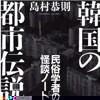
A folklorist reads through Korean urban legends in this book — a reference for our overseas urban-legend articles.
Urban Legends of Korea: A Folklorist's Ghost Story Notebook (Yasunori Shimamura / Chikuma Bunko)
We may earn a referral fee on purchases made through these links.
Cautions When Engaging with This Fortune
This article and our site’s “Omikuji” are provided as entertainment and as hints for self-understanding, and results are not guaranteed. They do not substitute for important decisions about medical care, law, investment, school, employment, marriage and the like. Please make such decisions yourself after consulting specialists or people you trust.
The tool’s result is a drawing by our site’s own random numbers, and it does not reproduce or substitute for the omikuji of any particular shrine, temple or sect. When you draw omikuji at a shrine or temple, please respect each faith, its etiquette and the guidance in the grounds.
If you are told things like “you drew bad luck, so something bad will happen” or “if you don’t believe this result you will be unhappy,” which strongly stir up anxiety, or are urged to buy expensive prayers, charms or lucky goods, do not decide on the spot; take it home and think it over calmly. If you feel strong anxiety about a result and cannot sleep or your low mood continues, please consider consulting a medical institution or a public consultation service.
The history and origin statements in this article were compiled in our own words from multiple sources. The origin of omikuji, the formation of the hyakusen and its relationship to Chinese lots are debated, and descriptions differ by source. Parts marked “our view” or “speculation” are this site’s own reflections, not established theory.
Frequently Asked Questions
Q. What is omikuji?
A. It is a traditional Japanese custom of drawing lots to ask the thinking of the gods and Buddhas and obtain guidance on your fortune and frame of mind. Generally you receive a slip of paper with a ranking of fortune and item-by-item words on wishes, a person awaited, travel and so on.
Q. Who started omikuji, and when?
A. Ryogen (Ganzan Daishi, 912-985), a monk of the Tendai sect in the Heian period, is said to be the founder. However, it is not something that can be clearly confirmed in contemporary records, and its position is “that is how it is handed down.” Many accounts hold that the numbered Ganzan Daishi Hyakusen took shape in the time of Tenkai in the early Edo period.
Q. What is the “Ganzan Daishi Hyakusen”?
A. It is a format of omikuji that ties the numbers 1 to 100 and fortunes to 100 gemon (short Chinese poems). It is said to derive from verses received by praying to Kannon Bosatsu, and is also called “Kannon-kuji.” It is said to be the prototype of Japanese omikuji.
Q. Are Chinese lots related to Japanese omikuji?
A. They are said to be closely related. A book such as the Southern Song “Tenjiku Reisen,” which adds pictures and Chinese poems to 100 lots, is known. However, the explanations of when it came to Japan and its relationship with Ryogen’s hyakusen differ by source, and some parts are not clear.
Q. What comes after great blessing: middle blessing or blessing?
A. It differs by shrine or temple. Some put it in the order “great blessing, middle blessing, small blessing, blessing, future blessing, bad luck,” and others “great blessing, blessing, middle blessing, small blessing,” and there is no nationwide rule. Our site’s tool adopts the former order.
Q. What should I do if I draw bad luck?
A. There is a widespread way of thinking that bad luck does not mean “something bad has been decided” but is a warning and encouragement to “take care and check your footing.” Reread the written words and try picking up one action you can take now. Follow the shrine or temple’s guidance on whether to tie it or take it home.
Q. Should I tie a drawn omikuji, or take it home?
A. The Association of Shinto Shrines advises that there is a custom of tying it at the tying place before going home, but that taking it home is also fine. At shrines and temples with a tying place or guidance, following their instructions is the basic rule. Handle it politely so as not to damage tree branches and the like.
Q. What does “machibito” (a person awaited) tell?
A. It is an item showing whether the person you are waiting for will come, or news will arrive. It is sometimes read to include not only a romantic partner but also important news and encounters in general. Even if it says “will not come,” it can also be read as encouragement to put your own life in order without hurrying.
Q. May I redraw many times?
A. Views differ by shrine or temple, and where rules are posted, following them is the basic rule. Generally, it is often recommended to treat the one draw made with a question in mind as something to reread and cherish. Our site’s tool can be redrawn any number of times.
Q. Can omikuji be drawn only at New Year?
A. At many shrines and temples it can be drawn throughout the year whenever you visit. However, the reception hours and operation of the amulet office differ by shrine or temple, so please check the guidance in the grounds.
Q. What is the share of bad luck?
A. It differs greatly by shrine or temple. There are places such as Sensoji that inherit the allocation of the Edo-period Kannon hyakusen, with bad luck at about 30 percent, and shrines that reduce or do away with bad luck. In our site’s tool, the design is bad luck 20 percent and great bad luck 5 percent.
Q. Are there omikuji in English?
A. Some shrines and temples prepare English omikuji for foreign tourists. Our site’s tool also supports English display.
Q. What are the probabilities in our site’s omikuji?
A. The design is great blessing 10%, middle blessing 15%, small blessing 15%, blessing 20%, future blessing 15%, bad luck 20% and great bad luck 5%. The blessed ranks total 75 percent and the bad-luck ranks total 25 percent. This is our site’s own setting and differs from the ratios at actual shrines.
Q. How many slips does our site’s omikuji have?
A. There are five slips for each of the seven ranks from great blessing to great bad luck, 35 in all (No. 1 to No. 35). Each slip carries a waka and its meaning, the overall fortune, words for 11 items such as wishes, person awaited and lost items, and a lucky direction, color and item.
Q. Are the waka in our site’s omikuji from some shrine?
A. No. The wording of the slips, waka included, is entirely original to our site and is not the text of the omikuji of any actual shrine or temple.
Q. Does the result of our site’s omikuji change with my date of birth or the date?
A. It does not. A new random number is drawn each time you press the button, so your date of birth, the date and the previous result have no effect. Results are not saved or recorded.
Q. Does omikuji hit?
A. As far as I could find in the sources I consulted, there is no established research showing statistically or scientifically that it hits. Omikuji has continued not as a way to predict fortune but as a cultural habit of looking at your own conduct and frame of mind through the written words.
Related Fortunes Worth Trying
Like omikuji, these are fortunes in which you put a question to chance and read the words that come back. Reading them side by side, you can see from another angle the human act of “reading meaning in chance.”
For Those Who Want to Read Deeper
These are articles that dig into the same theme from another angle.
Sources Consulted
This article was compiled in our own words with reference to the following sources (it is not a copy of their text). The words of the example slips (No. 14 and No. 4) and the probabilities of the seven ranks were transcribed from the actual data and drawing program of our site’s “Omikuji” tool.
- Omikuji – Wikipedia (Japanese)
- Ryogen – Wikipedia (Japanese)
- Ashikaga Yoshinori – Wikipedia (Japanese)
- Omikuji – Association of Shinto Shrines
- Drawing Ganzan Daishi’s omikuji at the Ganzan Daishi Hall, the birthplace of omikuji – Jisha Meguri
- Is it true that Sensoji’s omikuji has a lot of bad luck? – Nippon Tabi Magazine
- About Nishoyamada Shrine and Joshido-sha – Shunan City, Yamaguchi Prefecture
- An attempt to reproduce the original of the Southern Song “Tenjiku Reisen” – J-STAGE
At Karasu Channel we publish investigative videos on ghost stories and haunted places on KARASU CHANNEL (YouTube).
Supervised by Ms.M
Affiliation: KARASU CHANNEL
Traditions studied: 12+ (Western astrology, Four Pillars of Destiny, Nine Star Ki, tarot, runes, palmistry & physiognomy, name numerology, numerology, feng shui, Vedic astrology / Zi Wei, Onmyodo, spiritual reading, and more)
Personal readings: by request via Contact,
currently booked years out
Which story do you find the scariest?
If you think this story is the scariest, press the button below. One vote site-wide — you can change your vote for a different story anytime.
Was this article helpful?
Add this to your favorites to find it again anytime from your My Page.








Comments