Why Was the Kitchen’s Kojin, Guardian of the Fire, Feared as a God Who Curses?
Supervised by Suzuking. (KARASU CHANNEL / Occult & horror reporting, 7 years)

Contents
View sources and last-checked date
- Last verified
- 2026-09-30
In the kitchens of old houses, there was another place for a god apart from the household shrine. A small shelf above the hearth, a charm pasted on a sooty pillar, or a branch of pine. What was enshrined there was “Kojin-sama.” Though a familiar god who guards the fire and protects the life of the household, the character “ara” (rough, wild) is in its name.
Kojin has been told of as a blessed guardian and at the same time as a god who curses fiercely if mishandled. Setting the god most easily angered in the place where cooking is done every day: on reflection, a strange pairing. This article does not deal with the origin tale of a particular shrine or temple but with the being called “Kojin” itself, enshrined in kitchens of homes in various regions, and reads the two faces of the fire god.
Origins: How a Buddhist Guardian and the Hearth God Came to Overlap
The word “kojin” is often explained as an abbreviation of “Sanbo Kojin.” The Three Treasures (sanbo) are the Buddha, the Dharma, and the Sangha, and Sanbo Kojin is said to guard them. It is depicted with three faces and six arms, hair standing on end, eyes turned up in a wrathful aspect. It is a fearsome figure close to the myo-o (wisdom kings) of esoteric Buddhism.
This god, however, does not appear as such in Indian or Chinese scriptures. Encyclopedias explain that it is a deity formed uniquely in Japan, in which the figure of an Indian yaksha god was absorbed into the old Japanese notion of “aramitama” (rough spirit), amid a mixing of Shinto, esoteric Buddhism, and mountain worship. A legend of divine revelation is also handed down: when En no Ozunu, the founder of Shugendo, was praying in the mountains, a red cloud trailed in the northeast and Kojin appeared. What we should note here is that the historical process of formation and the legends told on the side of faith are different things.
Apart from the Buddhist Kojin, Japanese houses have had since ancient times a god who guards the kama (hearth). According to dictionaries, in eastern Japan the hearth god is often called “Okama-sama,” while in western Japan an area calling it “Kojin-sama” spreads. In the Chugoku region it was worshipped under the name Dokujin, and it is said to have been corrupted into “Dokkusan” and “Rokkusan.” The general account is that the hearth god and the Sanbo Kojin who guards the Buddhist law, originally of different lineages, were later confused and became one “kitchen Kojin-sama.”
Kojin also has a face outside the house. Mainly in the Chugoku region, and in Shikoku and northern Kyushu, “Jikojin” has been enshrined in a corner of an old family’s estate, in a large tree at the foot of a mountain, or in a small shrine. It takes on the character of a god who protects the estate, a clan god, or a village god, and is worshipped quite differently from the kitchen Kojin. Under the single name “Kojin,” several faiths overlap: fire god, guardian of the Buddhist law, and land god.
Why Is It Called a God Who “Curses Easily”?
Dictionaries uniformly explain Kojin as a god of “violent character who curses easily.” Then why was the kitchen god feared so much? The clue lies in what the god was said to dislike, “impurity.”
Sanbo Kojin has been positioned as a god who repels impurity. The kitchen and hearth were regarded as the place that should be purest in the house, and that is also said to be why it became the seat of the fire god. Conversely, fouling the area around the hearth, treating fire carelessly, or carelessly placing blades or dirty things on the hearth was regarded as an act of defiling the god’s seat. That sayings warning against bad manners around the hearth have been told in various regions can be read as an expression of this feeling.
Another reason is the nature of fire itself. Fire brings cooking and warmth, but once it rages it burns down house and family. Dictionaries record that the indoor Kojin was worshipped monthly as a god of “hibuse” (fire prevention). The greater the power that protects, the greater the damage when it is angered. Kojin’s wildness can be said to be the wildness of fire itself, transferred as-is onto the personality of a god.
Let us also look at the character “ara” of Kojin. In the Japanese conception of gods, there is a way of distinguishing a god’s gentle workings as “nigimitama” (gentle spirit) and its rough and fierce workings as “aramitama” (rough spirit). The aramitama is a fearsome power and at the same time a strong power to drive away calamity. That the notion of “raging spirit” is said to be involved in the formation of Sanbo Kojin is presumably because this god was expected to repel impurity and misfortune with the power of wrath. The power to curse and the power to protect are, from the start, two sides of the same power.
That there were specialist religious figures who purified Kojin also tells how hard to handle this god was. In the past, onmyoji, yamabushi, and blind biwa-playing monks called jijin mosō went from house to house performing “Kojin harai” (Kojin purification), cleansing the hearth god and the land god. One can also think that because it was a god beyond the amateur’s hands, they had to call in specialists regularly to put its mood right.

A horn-shaped deterrent called the "Wan Wan Horn" that plays a large dog's bark at up to 110dB to scare off bears, boar, and suspicious people. It runs off a USB-connected power bank (sold separately), giving you a loud, sound-based alternative to a bear bell or spray.
EIGER TOOL Animal & Crime Deterrent Buzzer, Bear Bell Horn EDBL-HO
We may earn a referral fee on purchases made through these links.
Present Day: Does Kojin Remain in Kitchens Without Hearths?
The most visible way Kojin faith is conveyed is the “kamado-gami no men” (hearth god masks, or Kama-gami) of the Tohoku region. According to a cultural property description in Miyagi Prefecture, from Miyagi to southern Iwate a custom was widespread of hanging large clay or wooden masks on the kitchen pillar or above the hearth. When building a new house or renewing the hearth, carpenters and plasterers are said to have made them from some of the house’s building materials. The masks were hung to glare at the entrance and the outside, and were meant to ward off fire, ward off evil, and bring prosperity to the household.
Many of these masks are blackened and glossy from soot, with raised eyebrows and twisted mouths. They are faces that plainly intimidate the viewer, rather than cute good-luck charms. Dictionaries introduce a tradition that the origin of the hearth mask is that a fire-tending man called Hyotoku or Hyottoko became the hearth god, and there is also a theory that “hyottoko” derives from “hiotoko” (fire man), representing a mouth shaped to blow fire. It is interesting that behind the comical face of the mask there may lurk the figure of the one who tends the fire.
The same description, however, notes that this custom has already died out and remains only slightly in old farmhouses. When hearths became gas stoves, earthen floors vanished, and kitchens became “kitchens,” the hearth god lost its place. Today many masks are kept as folk materials within museums and cultural property frameworks.
Still, Kojin faith has not vanished completely. There are still houses that paste fire-prevention charms in the kitchen, houses that replace the Kojin pine at year’s end, and houses that enshrine a Kojin talisman received at a temple or shrine near the stove. The custom of “Kojin sumi” (putting pot soot on a baby’s forehead as protection), the agricultural rituals of offering rice seedlings and first fruits to Kojin, and Kojin as protector of cattle and horses are also recorded in various places. Even if the form has shrunk, the feeling that “there is a god beside the fire” is passed down thinly and long.
KARASU CHANNEL’s Take: Whom Was the Kitchen God Glaring At?
When thinking about Kojin’s two-sidedness, what first comes to mind is how dangerous the kitchen of old was. A wood fire spread if left unwatched, and once fire took hold of a thatched or plank house there was no saving it. On a winter night, merely forgetting to put out the fire in the hearth could turn a household and its goods to ash. This is our own inference, but in the hearts of people handling fire there must always have been, with equal weight to gratitude, a dread that “this fire might someday betray us.” What gave that dread a face may have been Kojin with his wrathful aspect.
In our view, Kojin’s “curse” was also a device supporting discipline within the household. Don’t dirty the hearth, don’t treat the fire carelessly, don’t quarrel in the kitchen. Even if parents to children or mothers-in-law to daughters-in-law explain such admonitions by reason, they are hard to keep. But say “Kojin-sama will be angry” and the words suddenly gain weight. To prevent the irretrievable calamity of fire, people probably borrowed the god’s anger to accumulate small daily cautions. The god who curses was a fearsome god and at the same time a “scolder” for protecting the family.
Let us also note that the hearth masks of Miyagi were made by the carpenters and plasterers who built the house, from that house’s own materials. This is our own inference, but the mask may not have been merely an ornament against evil but the house’s own “face.” A face carved from a part of the house’s framework keeps glaring from the kitchen pillar toward the doorway. It is the feeling that the house itself is keeping watch against calamities and evil things from outside. Its gaze is turned outward, but the household members who cooked beneath it every day must also have been conscious of always being watched. Being protected and being watched become one here.
Chinese hearth-god belief has a tale in which the hearth god ascends to heaven at year’s end and reports the household’s conduct over the year to the Celestial Emperor. It is of a different lineage from Japanese Kojin, but the point that the kitchen god is “one who watches the family’s conduct” is very similar. In our view, the kitchen was where a family’s true feelings showed most fully. Hunger, complaints, conflict between wife and mother-in-law, irritation at poverty. Placing in a place swirling with such emotions a god who sees everything and punishes if displeased was probably also wisdom for keeping order in the small society called the household.
The same tension can be read in Jikojin, worshipped outdoors. Kojin enshrined in an old tree at a corner of an estate or a small shrine at the foot of a mountain is tied to the memory of the ancestors and clan who opened the land, and was feared to curse anyone who carelessly cut the tree or moved the shrine. This is our own inference, but sealed in this may be the pioneer’s guilt and awe that “this land belongs to something that was here before us.” As the kitchen Kojin took on the awe of fire, the outdoor Kojin took on the awe of land. We consider Kojin a vessel for giving a name and a place to the “dangerous powers” that cannot be avoided in living one’s life.
And where has Kojin gone now that the hearth is gone? Before a stove that lights at the flick of a switch and turns off automatically, we no longer fear fire. That is undoubtedly a happy thing. But in ceasing to fear fire, perhaps we have also come to revere it less. Looking at the angry face of the hearth mask that still remains on the sooty pillar of an old farmhouse, what it reflects seems to us not the god’s anger but the taut daily life itself of people who lived with fire and kept fearing it.
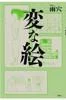
Uketsu's newest horror mystery, unraveling the unease hidden in a single picture — a reference for our analysis pieces.
Strange Pictures (Uketsu / Futabasha)
We may earn a referral fee on purchases made through these links.
Engaging With This Legend
Kojin is an object of faith still carefully enshrined at temples, shrines, and homes across Japan. This article introduces Kojin faith as folklore and does not explain or evaluate the teachings or history of any particular temple or shrine. For visiting and handling talismans, please follow each temple or shrine’s guidance.
The saying that “Kojin-sama curses” has been handed down as household wisdom warning against careless use of fire. There is no need to blame yourself or your family by concluding that a household misfortune or illness is “Kojin’s curse,” or to swallow claims that push expensive prayers. If something troubles you, checking the fire source and the safety of your dwelling first would be in keeping with the original intent of this tradition.
Also, folk materials such as hearth masks have been carefully kept by households and regions. When visiting old farmhouses or museums, please take care not to photograph or touch them without the permission of the owners or managers.
Frequently Asked Questions
Q. Are Kojin-sama and Sanbo Kojin the same god?
A. In general “Kojin” is regarded as an abbreviation of “Sanbo Kojin,” but it is explained that Sanbo Kojin, guardian of the Buddhist law, and the hearth god of each household were originally separate and were later confused into one. In addition, in the Chugoku region and elsewhere there is the outdoor “Jikojin,” so the character varies even under the same name.
Q. Why is Kojin enshrined in the kitchen?
A. It is explained that Kojin is a god who dislikes impurity, and the kitchen and hearth where fire is used were regarded as the place in the house that should be purest. There was also the meaning of having it protect the home from fire as a god of fire prevention.
Q. Where can hearth god masks (Kama-gami) be seen?
A. It was a custom widely seen from Miyagi to southern Iwate, and in Miyagi some have been designated Prefectural Tangible Folk Cultural Properties. Today the custom itself has died out, and they can be seen only slightly in old farmhouses and museums.
Q. What concrete forms did Kojin’s curse take?
A. How it is told differs by region, but it has been said that fouling the hearth or kitchen or treating fire carelessly would bring calamities such as fire or illness. We think it has largely been wisdom of daily life for warning against carelessness with fire.
Q. Is the “hyottoko” mask related to the hearth god?
A. It is not certain, but there is a theory that “hiotoko” (fire man), a face blowing fire, was corrupted into “hyottoko,” and in the Tohoku region a tradition is also recorded that a fire-tending man called Hyotoku or Hyottoko became the hearth god. The figure of the one who tends fire may overlap with the comical face’s origin.
Sayings about the kitchen and fire can also be looked up in KARASU CHANNEL’s Superstition and Omen Dictionary.
Q. Has KARASU CHANNEL researched or filmed Kojin on location?
A. No. We are not currently researching Kojin, though we are considering doing so. Videos of our research into other haunted spots and ghost stories can be viewed on KARASU CHANNEL (YouTube).

Supervised by Suzuking.
Affiliation: KARASU CHANNEL
Occult & horror reporting: 7 years (since 2020)
Followers: YouTube 5,000+ / X 25,000+
On-site investigations: 30+
If this appeared in your dream
What it means to dream of something from this story, read through psychology and folklore in our Dream Dictionary.
- Dreaming of a KitchenA symbol of home life and nourishment.
Which story do you find the scariest?
If you think this story is the scariest, press the button below. One vote site-wide — you can change your vote for a different story anytime.
Was this article helpful?
Add this to your favorites to find it again anytime from your My Page.





Comments