What Are Lucky Days (Kaiun-bi)? Who Decided That Tenshanichi, Ichiryumanbai, Tora Days and Mi Days Are Good Days, and When?

Supervised by Ms.M
Affiliation: KARASU CHANNEL
Traditions studied: 12+ (Western astrology, Four Pillars of Destiny, Nine Star Ki, tarot, runes, palmistry & physiognomy, name numerology, numerology, feng shui, Vedic astrology / Zi Wei, Onmyodo, spiritual reading, and more)
Personal readings: by request via Contact,
currently booked years out
Contents
“A new wallet is best started on an Ichiryumanbai day.” “I want to buy lottery tickets on a Tenshanichi.” “For moving house or opening a business, I’d like to pick a Tora day or a Mi day.” Have you ever found your eyes drifting to the small word “auspicious day” printed in the corner of a calendar?
These “good days on the calendar” are called rekichu (calendar notes), notes on good and bad luck that accompany a calendar. Today they sit quietly at the edge of calendars and phone apps, but behind them lies a history of well over a thousand years: from the diaries of Nara and Heian nobles, to the calendar reform of the Edo shogunate, the ban by the Meiji government, and the revival after the war.
Our free fortune-telling tool, “Lucky Day Fortune (What Kind of Day Is Today?),” judges whether today’s date is a Tenshanichi, an Ichiryumanbai day, a Tora (Tiger) day or a Mi (Snake) day. Unfamiliar words line up, but in this article we unpick them one at a time, restating each term in a “Put simply” box as it appears. If it feels hard, it is fine to read only those quote boxes. Later on we also add our own reflections that go beyond summarizing history.
Key points (a 3-minute summary)
- Lucky days (kaiun-bi) are auspicious days among the rekichu, mostly “sentaku” (selected days) determined by the day’s stem-branch or zodiac sign. Our tool handles four: Tenshanichi, Ichiryumanbai, Tora days and Mi days.
- Tenshanichi is said to be “the day when heaven forgives the sins of all things,” the supreme auspicious day, and there are only a few a year (about 5 to 7). Ichiryumanbai is a day said to suit “starting something,” such as sowing seeds or opening a shop, and comes around five times a month.
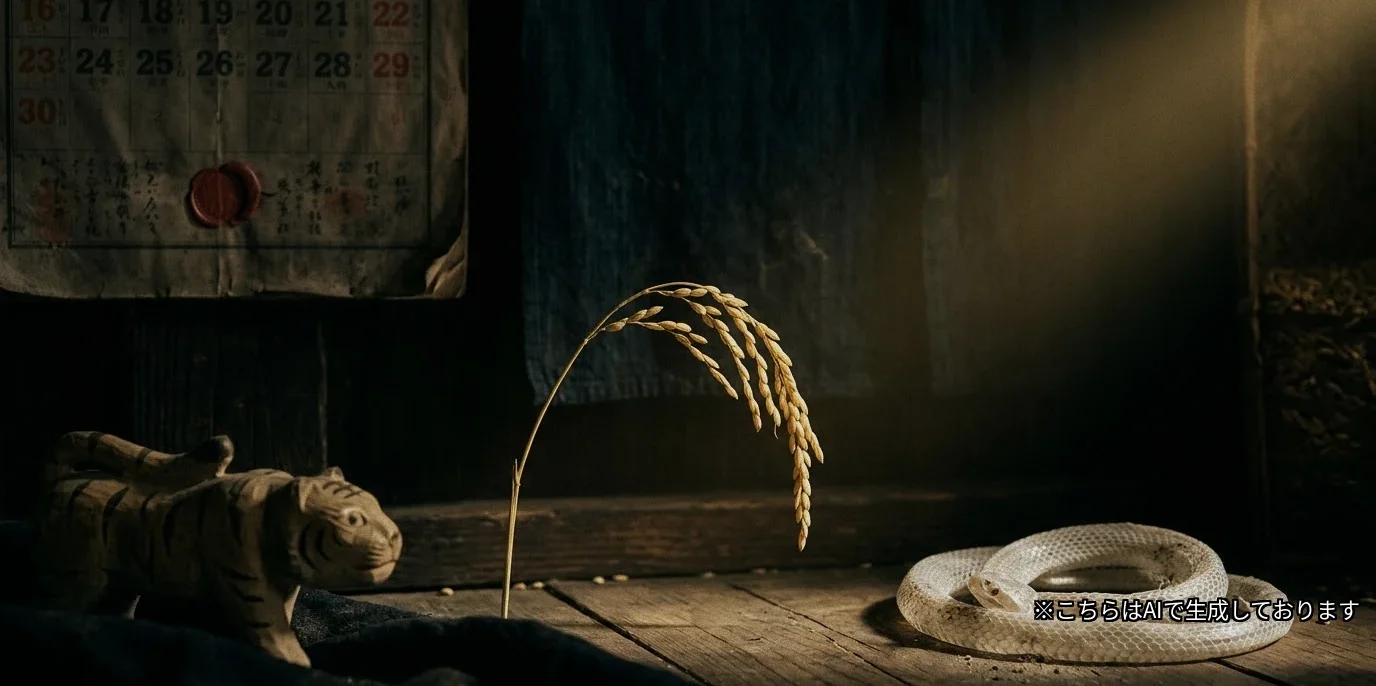
- Tora days are linked to money luck through the saying “a tiger goes a thousand ri and returns a thousand ri,” and Mi days through the snake being the messenger of Benzaiten (Benten). Both come around once every 12 days.
- Rekichu were handed down while changing form, as guchu-reki, kana-goyomi and the Edo-period distributed calendars. The Meiji government banned them as superstition, but private calendars revived them, and they became widely established after the war. Explanations of their origins differ by source in places.
- By our calculation, in 2026 there were 120 days out of 365 (about one day in three) that matched one of the four. Auspicious days are surprisingly numerous, so the trick is to watch for “overlaps.”
- No scientific research has confirmed that lucky days raise your fortune. We recommend enjoying them lightly, as a mental marker meaning “let’s make today the day I begin.”
What are lucky days? Notes about “good days” written into the calendar
Calendars (koyomi) have long carried, beside the date and weekday, notes on the day’s good and bad luck and on what is fine to do or best avoided. These are rekichu. Many rekichu are based on yin-yang and five-elements thought and on the stem-branch cycle, and in the Japanese calendar they were traditionally written in three tiers: upper, middle and lower.
- Upper tier: the basic calendar information, such as the date, weekday, the twenty-four solar terms and the seventy-two pentads.
- Middle tier: the Junichoku (twelve directors), a rekichu that repeats twelve kinds such as Tatsu (Establish), Nozoku (Remove), Mitsu (Full) and Taira (Level) day by day.
- Lower tier: sentaku (selected days), the twenty-eight lunar mansions, the nine stars and so on. Tenshanichi and Ichiryumanbai belong to the “sentaku” family that appears in this lower tier.
Sentaku are rekichu that sort days by the day’s stem-branch and the like into “this day suits (or does not suit) doing such and such.” There are many kinds, including Tenshanichi, Ichiryumanbai, Fujojubi and Sanrinbo. Tora days and Mi days are auspicious days determined by the day’s zodiac sign; rather than sentaku themselves, they are sayings about zodiac days that have appeared in calendars and books on good omens.
Put simply, rekichu are “the instructions for the day written on the calendar.” Sentaku are the part of those instructions that sorts days into “good or bad for starting things today,” using the day’s stem-branch and the like.
This article deals with the following four, generally called “lucky days.” Our tool judges these four as well.
- Tenshanichi: a day regarded as the supreme auspicious day on the calendar.
- Ichiryumanbai-bi: a day said to suit starting something.
- Tora-no-hi (Tiger day): a day falling on the zodiac sign Tora. A day said to be good for money luck and travel.
- Mi-no-hi (Snake day): a day falling on the zodiac sign Mi. A day said to be good for money luck.
Conversely, there are things our tool does not handle. Examples are Fujojubi (a day when nothing is said to be accomplished), Daimyonichi, Bosoubi, the rokuyo (Taian, Butsumetsu and so on), and the special handling of Kinoe-Ne days and Tsuchinoto-Mi days. The rokuyo can be checked in another fortune, “Rokuyo Fortune.”
Origins of rekichu: from noble diaries and Edo calendars to today’s calendars
The beginnings of rekichu: from yin-yang, five elements and the stem-branch cycle
The foundation of rekichu is the yin-yang and five-elements theory of ancient China and the idea of the ten stems and twelve branches. The stem-branch cycle, used to count days, came to be described as “this day has such and such a nature,” and notes on good and bad luck piled up. Many rekichu are said to derive from Chinese calendars and calendars for farmers (also called farmers’ almanacs), and came to Japan together with the calendar.
In Japan, as Onmyodo (the way of yin and yang) spread, the work of making calendars was carried out by the “Rekido” (calendar way) of the Onmyoryo, an office of the ritsuryo state, and from the 10th century on the Kamo clan is explained as inheriting it as a specialist family.
Guchu-reki: the calendar in which nobles wrote their diaries
From the Nara period to the Heian period, the calendar used by the court and nobles was the guchu-reki. The name means “a calendar with notes entered in detail,” and beyond the date and stem-branch it was filled with fine notes of good and bad luck and taboos. The oldest surviving guchu-reki written on paper is said to appear in the Shosoin documents of 746.
The margins of this calendar were also used as the nobles’ diaries. In the Heian period the margins were made wide, and the day’s events were written under the date. Fujiwara no Michinaga’s diary, the “Mido Kampaku-ki,” was written into such a guchu-reki and is designated a National Treasure.
Put simply, the guchu-reki was “a noble’s planner and diary in one, packed with notes on good and bad luck.” Nobles decided their daily actions while watching the day’s good and bad luck.
Kana-goyomi: the calendar that reached ordinary people
In the middle of the Kamakura period the kana-goyomi appeared. Whereas the guchu-reki was all in Chinese characters and reached only nobles, the kana-goyomi was written in kana and simple characters, so people not used to reading and writing could read it. By the end of the Kamakura period, kana calendars printed with woodblocks also appeared, and calendars spread widely among the people.
In the kana-goyomi, the lower-tier rekichu recording each day’s good and bad luck are explained as having actually been used to judge luck in daily life. Ordinary people, too, began to open the calendar at the turning points of life, such as sowing seeds, weddings, departures and house building.
The Jokyo calendar and the tidying of rekichu: a major turning point in the Edo period
In 1685 (Jokyo 2) in the Edo period, the “Jokyo-reki,” said to be the first calendar compiled by Japanese hands, was put into effect by Shibukawa Shunkai. The Senmyo calendar that had long been in use had come to show noticeable gaps from the actual movement of the heavens. With the calendar reform to the Jokyo calendar, the rekichu were also tidied, and some were dropped from the calendar. For example, some sources explain that Ichiryumanbai was once removed in this tidying. Fujojubi is explained as having appeared, in the Senmyo era, only in the Aizu calendar, not in the Jokyo calendar, and as coming to appear in private calendars without the shogunate’s permission in the Edo period.
After the Jokyo calendar, kana calendars across the country came under the supervision of the Edo shogunate and the Tsuchimikado family, a house of Onmyodo, and making calendars independently was forbidden. Only the Satsuma calendar is said to have been an exception that escaped this ban.
In this way, rekichu tenaciously survived a little apart from the official calendar, in private calendars. The pattern “officially tidied away, but kept in the private world because people wanted them” was to be repeated in the Meiji calendar reform that followed.
The Meiji calendar reform, the ban on rekichu, and their revival
In 1872 (Meiji 5), when the Meiji government moved from the old calendar (the lunisolar calendar) to the new calendar (the solar calendar), it banned the rekichu recording good and bad luck as groundless superstition. By a Dajokan proclamation, it ruled that unfounded theories that had been printed in the middle and lower tiers of the calendar must not be printed. The official calendar issued in 1873 (Meiji 6, the Jingu-reki) was meant to carry only the new calendar and astronomical phenomena and to exclude rekichu of good and bad luck.
But people did not accept this ban. By around 1882 (Meiji 15), private calendars packed with the supposedly banned rekichu were in circulation, and they were called “obake-goyomi” (ghost calendars). Ichiryumanbai too is explained as having been revived by private calendars after the new calendar spread.
After World War II, when government control of calendars ended, calendars marked with rekichu such as the rokuyo went on general sale and came into wide use. Even now, guidance continues in some government agencies to refrain from using the rokuyo, but in our daily lives Taian, Tenshanichi and Ichiryumanbai have become firmly established.
Put simply, rekichu are “notes of good and bad luck that the state tidied and banned many times, but that people wrote back into private calendars each time and so survived.” Not disappearing in over a thousand years is the biggest feature of rekichu.
Basics for reading lucky days (1): the day’s stem-branch, zodiac days and the “setsu-getsu”
Two pieces of calendar knowledge are used to judge lucky days. One is the “day’s stem-branch (eto).” The stem-branch is assigned to days as well as years. The 60 stem-branch combinations, from Kinoe-Ne to Mizunoto-I, go around one per day in order and complete a round in 60 days. What stem-branch today is depends on the date alone.
The stem-branch is a combination of the ten stems (Kinoe, Kinoto, Hinoe, Hinoto, Tsuchinoe, Tsuchinoto, Kanoe, Kanoto, Mizunoe, Mizunoto) and the twelve branches (Ne, Ushi, Tora, U, Tatsu, Mi, Uma, Hitsuji, Saru, Tori, Inu, I). Looking at the twelve branches alone, a day of the same branch comes around once every 12 days. “Tora day” and “Mi day” mean these branch days.
The other is the “setsu-getsu.” This is not a month like January or February of the solar calendar but a seasonal month divided at the “setsu” of the twenty-four solar terms. From Risshun (start of spring) to the day before Keichitsu is the “Tora month,” from Keichitsu to the day before Seimei is the “U month,” and so on; a new month begins on the day of setsu-iri. Setsu-iri falls roughly between the 4th and 8th of each month.
Put simply, there are two ingredients that decide lucky days: “today’s stem-branch (a 60-day cycle)” and “which seasonal month we are in on the calendar (setsu-getsu).” Ichiryumanbai and Tenshanichi are decided by combining these two.
Basics for reading lucky days (2): the four lucky days, one by one
Tenshanichi: “the day heaven forgives the sins of all things”
Tenshanichi is the supreme great auspicious day on the calendar, said to be “the day when the hundred gods ascend to heaven and heaven forgives the sins of all things.” It is explained as having been noted as “good for everything” (yorozu-yoshi), unusual among rekichu, and is included in a group of auspicious days called the Shichika no Zenjitsu (seven good days).
Tenshanichi falls on a fixed stem-branch day for each season.
- Spring (from Risshun to the day before Rikka): Tsuchinoe-Tora day
- Summer (from Rikka to the day before Risshu): Kinoe-Uma day
- Autumn (from Risshu to the day before Ritto): Tsuchinoe-Saru day
- Winter (from Ritto to the day before Risshun): Kinoe-Ne day
The day’s stem-branch completes a round in 60 days and each season lasts about 90 days, so a Tenshanichi comes around once or twice per season. Most sources explain it as “5 to 6 times a year,” but some years have 7 (2024 had seven: January 1, March 15, May 30, July 29, August 12, October 11 and December 26).
Put simply, Tenshanichi is “a special stem-branch day prepared for each of spring, summer, autumn and winter.” A rare day that comes roughly once every two months.
Ichiryumanbai-bi: the day one grain of rice becomes ten thousand
Ichiryumanbai-bi is a sentaku whose name means “a single grain of rice ripens into an ear of rice with ten thousand times as much,” and it is regarded as a day suited to starting something. It is said to be auspicious for starting work, opening a shop, sowing seeds and beginning to spend money (such as starting to use a new wallet). On the other hand, borrowing money or things is said to be best avoided because “the seeds of hardship multiply ten-thousandfold,” and careless remarks and extravagance are also to be avoided because they too multiply.
How it is decided: each setsu-getsu is assigned two zodiac days. Our tool uses the following table.
- Tora month (Risshun to the day before Keichitsu): Ushi day and Uma day
- U month (Keichitsu to the day before Seimei): Tori day and Tora day
- Tatsu month (Seimei to the day before Rikka): Ne day and U day
- Mi month (Rikka to the day before Boshu): U day and Tatsu day
- Uma month (Boshu to the day before Shosho): Mi day and Uma day
- Hitsuji month (Shosho to the day before Risshu): Tori day and Uma day
- Saru month (Risshu to the day before Hakuro): Ne day and Hitsuji day
- Tori month (Hakuro to the day before Kanro): U day and Saru day
- Inu month (Kanro to the day before Ritto): Tori day and Uma day
- I month (Ritto to the day before Taisetsu): Tori day and Inu day
- Ne month (Taisetsu to the day before Shokan): I day and Ne day
- Ushi month (Shokan to the day before Risshun): U day and Ne day
Zodiac days come around every 12 days, so in one month (about 30 days) each zodiac day comes 2 to 3 times. Ichiryumanbai therefore falls about five days a month.
However, explanations of the origin and assignment method of Ichiryumanbai differ between sources. One source explains that Ichiryumanbai was made uniquely in Japan after the farmers’ almanac came to Japan, and is not in the Chinese calendar. Another source says it goes back to the ancient Chinese “manbai-bi.” Also, there are several methods of assigning zodiac days by month depending on the source, and this site adopts the method whose agreement we could confirm across several sites.
Put simply, Ichiryumanbai is “a day when what you start comes back to you greatly as a harvest.” But bad seeds (debt, extravagance, careless remarks) are also said to multiply together, so the point is to use it for good things.
Tora-no-hi (Tiger day): going a thousand ri and coming back
Tora-no-hi is the day that falls on the zodiac sign Tora and comes around once every 12 days. It is a day many people choose for money luck, such as buying lottery tickets or buying and starting to use a wallet.
The reason often given is the saying “a tiger goes a thousand ri and returns a thousand ri.” It means a tiger can travel a thousand ri (a phrase for a very long distance) in a day and come back. From this it is linked with “money that has gone out comes back again” and “even if you go on a trip, you return safely,” and the day is regarded as auspicious for money luck and travel. The tiger’s yellow-and-black stripes reminding people of gold is also given as a reason.
However, in our research we could not confirm any text that clearly shows when, and in which book, this saying was linked to Tora days and money luck. It is widely told as a modern explanation of good omens, but the honest truth is that the old sources behind it are unclear.
Put simply, Tora-no-hi is regarded as a money-luck auspicious day with the image “money that has gone out comes back, like a tiger.” The source of the origin is unclear.
Mi-no-hi (Snake day): the snake and its tie to Benzaiten
Mi-no-hi is the day that falls on the zodiac sign Mi (the snake) and also comes around once every 12 days. Mi days are regarded as auspicious for money luck because the snake is regarded as the messenger, or an incarnation, of Benzaiten (Benten), worshipped as a goddess of treasure. In particular, days whose stem-branch combination is “Tsuchinoto-Mi” come every 60 days, only six times a year, and have been treated as an even more special festival day.
Benzaiten originally derives from a river goddess of India, and in Japan, after being worshipped as a deity of music, the arts and wisdom, her character as a goddess of treasure also grew stronger. Her tie to snakes and dragons is not seen in Indian or Chinese scriptures and is explained as having come to be told in the scriptures of “Uga Benzaiten,” made in Japan (so-called apocryphal scriptures). From the medieval period on, Benzaiten was syncretized with Ugajin, a deity with an old man’s face and a snake’s body, and images with Ugajin on her head came to be widely worshipped. Writing the name as “Benzaiten” with the character for “wealth” (because the sound “sai” connects with “zai”) became common from the early modern period on.
Enoshima Shrine in Kanagawa is counted as one of Japan’s three great Benzaiten. At Zeniarai Benzaiten Ugafuku Shrine in Kamakura there is a belief that if you wash coins in the spring water of the cave, they come back multiplied. At Engyoji in Himeji, Hyogo, a memorial service for Uga Benzaiten is explained as being held six times a year, on the Tsuchinoto-Mi days that come every 60 days. Visits to shrines and temples like these continue today as faith, and we want to approach them with respect.
However, in our research we could not confirm clear sources on when the custom of “visiting Benzaiten on Mi days” began.
Put simply, Mi-no-hi is “a day for cherishing the snake (Benzaiten’s messenger)” and is said to be good for money luck. Tsuchinoto-Mi days are, among them, a special day that comes only once in 60 days (our tool counts Tsuchinoto-Mi days as ordinary Mi days).

A report from actually walking "sites of death," including suicide spots, paired with true ghost stories — a reference for our own reporting angle and writing style.
Ghost Story Reportage: Walking Through Sites of Death (Kannon Hanafusa / Futami Shobo)
We may earn a referral fee on purchases made through these links.
An example: counting the 2026 lucky days with our tool
Now that the terms are lined up, let us look at concrete dates. The tool judges by “today’s date” alone, not a birth date, so for the example we use the calendar of 2026. The dates and counts below are the results of checking all 365 days of 2026 with the same calculation as our tool.
There are six Tenshanichi in 2026
- March 5 (Tsuchinoe-Tora): overlaps with Ichiryumanbai and a Tora day.
- May 4 (Tsuchinoe-Tora): overlaps with a Tora day.
- May 20 (Kinoe-Uma): a stand-alone Tenshanichi.
- July 19 (Kinoe-Uma): overlaps with Ichiryumanbai.
- October 1 (Tsuchinoe-Saru): overlaps with Ichiryumanbai.
- December 16 (Kinoe-Ne): overlaps with Ichiryumanbai.
We confirmed that these dates agree with the 2026 Tenshanichi published on several calendar sites (March 5, May 4, May 20, July 19, October 1 and December 16).
March 5 in particular is a day when Tenshanichi, Ichiryumanbai and a Tora day all overlap. March 5 is Keichitsu among the twenty-four solar terms, and because a new month (the U month) begins on the day of setsu-iri, it is judged as a Tora day among the U month’s Ichiryumanbai days (Tori days and Tora days). The previous day, March 4, is still in the Tora month, so its Ichiryumanbai days are Ushi days and Uma days.
Meanwhile, July 19 is a day when Tenshanichi and Ichiryumanbai overlap in our tool, but one calendar site notes that this day is also a Fujojubi (a day when nothing is said to be accomplished). Fujojubi are decided by the old-calendar month and day, and this day falls on the sixth day of the sixth month of the old calendar. Because our tool does not handle Fujojubi, it is worth checking this point on another calendar.
The overall picture of 2026 lucky days
- Tenshanichi: 6 days
- Ichiryumanbai: 64 days
- Tora days: 31 days
- Mi days: 30 days
- Days matching any of the four: 120 days (about one day in three out of 365)
Many people may find that surprisingly many. Tora days and Mi days alone come to about 60 days a year together. Add Ichiryumanbai, and by calculation an auspicious day comes about once every three days.
Also, in our method, a Tora day and Ichiryumanbai overlap only during the U month (Keichitsu to the day before Seimei), and in 2026 that happened three times: March 5, March 17 and March 29. A Mi day and Ichiryumanbai overlap only during the Uma month (Boshu to the day before Shosho), and that happened three times: June 12, June 24 and July 6. “Overlaps” happen only in surprisingly limited periods.
Person B’s case: wanting to start using a new wallet in October
Let us take a fictional “Person B.” Person B is thinking of starting to use a new wallet in October 2026. Checking October 2026 lucky days with our tool gives the following.
- October 1 (Tsuchinoe-Saru): Tenshanichi, Ichiryumanbai
- October 7 (Kinoe-Tora): Tora day
- October 10 (Hinoto-Mi): Mi day
- October 11 (Tsuchinoe-Uma): Ichiryumanbai
- October 14 (Kanoto-Tori): Ichiryumanbai
- October 19 (Hinoe-Tora): Tora day
- October 22 (Tsuchinoto-Mi): Mi day
- October 23 (Kanoe-Uma): Ichiryumanbai
- October 26 (Mizunoto-Tori): Ichiryumanbai
- October 31 (Tsuchinoe-Tora): Tora day
Of October’s 31 days, 10 are lucky days. The strongest “overlap” is at the start of the month, on October 1, when Tenshanichi and Ichiryumanbai coincide. After that there are a few options from mid-October on. Note that October 1 falls in the Tori month (Hakuro to the day before Kanro), whose Ichiryumanbai days are U days and Saru days, and this day’s stem-branch, “Tsuchinoe-Saru,” qualifies as a Saru day. Because the Inu month begins with Kanro on October 8, October 11 qualifies as an Uma day among the Inu month’s Ichiryumanbai days (Tori days and Uma days).
Person B would then choose a day in consultation with other plans and personal convenience. October 1 is a weekday, a Thursday, and may be too busy to allow starting to use the wallet. In that case, Person B can pick a day that is easy to manage to suit the purpose, such as the Mi day on Saturday, October 10, or the Ichiryumanbai day on Sunday, October 11.
Put simply, lucky days are said to be “stronger when they overlap,” but what actually matters is choosing a day on which you can move comfortably. With 10 lucky days out of 31 in October, there are quite a few options.
How to read our “Lucky Day Fortune (What Kind of Day Is Today?)”
Let us match what we have covered to the items on the results screen. This tool does not require you to enter a birth date; it judges by today’s date alone. It is a button-type tool, like an omikuji fortune slip.
- Today’s day stem-branch: Shows today’s stem-branch (a 60-day cycle). For example, September 24, 2026 is a Kanoto-Ushi day.
- Matching lucky days: Of Tenshanichi, Ichiryumanbai, Tora day and Mi day, those that apply to today are shown, each with a one-phrase explanation of its meaning.
- When nothing applies: It shows “Today matches none of Tenshanichi, Ichiryumanbai, Tora day or Mi day.” Incidentally, September 24, 2026 (a Kanoto-Ushi day) is such a day.
- Note: Because the assignment method for Ichiryumanbai differs by source, it states that this site adopts the method whose agreement we could confirm on two independent sites.
The judgment is made by day. On the day of setsu-iri, that day is treated as the start of the new setsu-getsu. Also, our tool does not handle other rekichu such as Fujojubi, Daimyonichi, Bosoubi and the rokuyo. To check overlaps with other rekichu, please also see the Fortune Calendar and Rokuyo Fortune.
Quick glossary of lucky-day terms
Here are the terms from the article in one line each. Use it as a dictionary when you are unsure.
- Rekichu: Notes on good and bad luck of dates, times and directions attached to a calendar.
- Sentaku (selected days): Rekichu that sort days’ good and bad luck by the day’s stem-branch and the like. Include Tenshanichi and Ichiryumanbai.
- Tenshanichi: The supreme auspicious day, said to be the day the hundred gods ascend to heaven and heaven forgives the sins of all things. About 5 to 7 times a year.
- Ichiryumanbai-bi: A day said to suit starting something. About five days a month.
- Tora-no-hi: A day falling on the zodiac sign Tora. Once every 12 days. Said to be good for money luck and travel.
- Mi-no-hi: A day falling on the zodiac sign Mi. Once every 12 days. Regarded as Benzaiten’s messenger and said to be good for money luck.
- Tsuchinoto-Mi no hi: A Mi day whose stem-branch is Tsuchinoto-Mi. Once every 60 days.
- Nichi-kanshi (day stem-branch): The stem-branch assigned to each day. Completes a round in 60 days.
- Setsu-getsu: A seasonal month divided at the “setsu” of the twenty-four solar terms.
- Setsu-iri: The day a setsu-getsu begins. Risshun, Keichitsu, Seimei and so on are the markers.
- Shichika no Zenjitsu (seven good days): A group of seven auspicious days that includes Tenshanichi.
- Fujojubi: A day when nothing is said to be accomplished. Not handled by our tool.
- Guchu-reki: A calendar with rekichu written in detail. Nobles wrote diaries in the margins.
- Kana-goyomi: A calendar written in kana that ordinary people could read. Appeared in the Kamakura period.
- Jokyo-reki: The first calendar by Japanese hands, put into effect in 1685. Compiled by Shibukawa Shunkai.
- Obake-goyomi (ghost calendar): Private calendars that circulated packed with rekichu after the Meiji ban on rekichu.
- Rokuyo: Rekichu that assigns Taian, Butsumetsu and so on in repeating order. Can be checked on this site’s “Rokuyo Fortune.”
How are lucky days used today?
In present-day Japan, lucky days are used quietly in everyday life. Not a few people choose Taian, Ichiryumanbai or Tenshanichi for weddings, moving into a new home, and dates for opening a business or signing a contract. Tora days and Mi days are used for buying or starting to use a wallet, buying lottery tickets, registering a marriage, and the date of a New Year’s shrine visit. The words “Ichiryumanbai” have come to appear on smartphone calendar apps and in companies’ promotional campaigns.
For many people, though, lucky days are not “rules that must be obeyed” but a light option: “since we’re at it, let’s do it on an auspicious day.” They may be playing the role of giving a “marker” to action, such as waiting for an Ichiryumanbai day for a plan you thought of the day before.
Note that there is no established research that statistically or scientifically confirms that lucky days actually raise fortune. This site introduces this fortune-telling purely as a calendar culture with a long history, and as a hint for adding a little playfulness to daily life.
Five tips for enjoying lucky days
- Use them as a “signal to start,” not a “guaranteed good day”: Lucky days are not a guarantee that anything done on them will turn out well. Using them as a signal to switch your mind to “let’s start today” lets you enjoy them without strain.
- Watch for “overlaps”: The four lucky days come about 120 times a year, surprisingly many. Overlaps such as Tenshanichi and Ichiryumanbai are limited, so if you want to make a day special, look for overlaps.
- Use Ichiryumanbai for “good things”: Ichiryumanbai is said to multiply what you start ten-thousandfold. Conversely, debt, extravagance and careless remarks are said to multiply as well, so it is recommended to use that day to start good habits.
- Know that a calendar’s good and bad luck comes in several kinds: In other rekichu (Fujojubi, the rokuyo and so on), the same day may be treated as unlucky. If it bothers you, compare several calendars and choose a day you are comfortable with.
- Put your life first: Postponing important business while waiting for a lucky day puts the cart before the horse. Procedures with deadlines and matters concerning health should be done at the necessary time regardless of a day’s good or bad luck.
Reflections: why do people seek and keep choosing “good days”?
From here, instead of summarizing history and mechanisms, we look at lucky days in our own way. What follows is not established theory but our own speculation and hypotheses, as we note in advance.
What gets multiplied ten-thousandfold is not only good things
Reading the explanation of Ichiryumanbai, something strikes us anew. This is a day when “what you start multiplies ten-thousandfold,” and at the same time a day when “debt, careless remarks and extravagance multiply ten-thousandfold too.” It is not a simple day for inviting good fortune; a warning lives alongside it.
This is our speculation, but might this duality show the wisdom of Japanese daily life? If you declare “it’s a good day, so anything will go well,” people’s heads swell. But if told “good seeds and bad seeds grow just the same,” people stop and think about what seed they are about to sow.
In our view, Ichiryumanbai is less a day for receiving luck than “a day when your own choices are amplified,” a day that tests your frame of mind. If you start something, make it a good habit. If you borrow, be careful. Choosing a day connects to choosing what your action contains.
Whose calendar was it?
Lining up the history of the calendar seen in this article once more, we notice that the character of the calendar changes greatly with “who holds it.” The guchu-reki was the diary of nobles, a calendar for only a very limited few. With the kana-goyomi the calendar reached ordinary people. In the Edo period, the shogunate and the Tsuchimikado family managed calendars across the country, and making calendars independently was forbidden. The Meiji government banned rekichu themselves as “superstition.” Even so, people took rekichu back in the form of the ghost calendar.
This is speculation, but might the history around the calendar have been a tug-of-war over “who holds the right to give time meaning”? Time flows equally for everyone. But giving that time the meaning “today is a good day” or “today is a day to avoid” has the power to quietly steer people’s lives. Even when the state tried to manage or ban it, people did not let go of a calendar that gave meaning to their own lives.
In that sense, the word “Tenshanichi” shown in the corner of a smartphone today may be the newest result of this tug-of-war lasting over a thousand years.
“Today it’s all right”: a permission slip for decisions
Then why do people choose days? In our speculation, it may be to share a little of the weight of a decision. Contracts, opening a shop, registering a marriage, moving house. Decisions at life’s turning points carry great regret if they fail. At such times, the fact that “we chose an auspicious day” gives the decision a support. It is like a small ritual for telling yourself, “I did what I should.”
There is a reverse side to this, though. It is the case where, while thinking “let’s wait for a good day,” you put off the decision itself. An auspicious day may push your back, or it may become an excuse to mark time. In our view, the trick to using lucky days well is to use them as “getting ready by that day.” Set the good day as a “deadline” for the decision. Then waiting for the day becomes not escape but preparation time.
The odd idea of Tenshanichi: the absence of the gods, and forgiveness
In the explanation of Tenshanichi there is an interesting passage: “the day the hundred gods ascend to heaven and heaven forgives the sins of all things.” The gods leave the earth and go up to heaven. The gods who watch the earth are away, and in their place heaven forgives sins.
This is speculation, but two ideas seem to overlap here. One is the sense of release in a “day when the gods’ eyes are absent.” The other is the salvation of a “day when sins are forgiven and you can start over.” It is striking that the supreme auspicious day on the calendar is told not as “a day for gaining something” but as “a day when you can put down your burdens so far and start over.”
In our view, Tenshanichi gathers popularity not merely because it is “lucky” but perhaps because it is a day when the calendar takes in the wish to “start over” that everyone holds somewhere in their heart. A few times a year, the calendar tells you, “today you are forgiven.” In busy days, that may be a precious signal for forgiving yourself.
An auspicious day about one day in three: how to think about the inflation of “good days”
As the earlier example showed, in 2026 there were 120 days out of 365 that matched one of the four. By calculation, about one day in three is some kind of auspicious day. A simple question arises here: if there are this many “good days,” aren’t they no longer special?
This is our speculation, but that auspicious days are numerous may be natural given the character of rekichu. Rekichu were practical tools for judging in daily life “today it’s fine to do this” and “let’s hold off on that.” For a tool used almost every day, it helps daily life more if the “usable days” are reasonably numerous.
Even so, as auspicious days increase, “overlaps” gain value. That days where Tenshanichi and Ichiryumanbai overlap are talked about as “the strongest lucky days” can be seen as people’s ingenuity in trying to find rarity in a world of many auspicious days. In our view, rather than being tossed about by the number of “good days,” choosing a single day that has meaning for you is the healthiest way to relate to lucky days.
The tiger and the snake: animal images that call money luck
Finally, let us touch on the fact that Tora days and Mi days are both tied to money luck. The tiger “goes a thousand ri and returns a thousand ri,” so money comes back. The snake is Benzaiten’s messenger and invites treasure. In both cases, the animal’s image connects directly with the association of money luck.
This is speculation, but behind these two days becoming established as “money-luck days” may be the power of “a story that is easy to remember and easy to tell” rather than the accuracy of the origin. Indeed, as we said above, we could not confirm old texts on the link between Tora days and money luck. Even so, this story has been handed down so long, I think, because the single phrase “a tiger goes a thousand ri and returns” is something anyone can imagine at once.
It is the same with the snake. The snake, which sheds its skin again and again, has long been a symbol of life, death and rebirth. That the snake, which recalls what is beyond human power, became the messenger of a god of treasure may be seen as an overlap of awe toward mysterious power and earnest wishes for money. Lucky days are, we think, less records of fact than stories of daily life in which people’s wishes have been told in the forms of animals.

A pack of 20 AA alkaline batteries worth keeping on hand as spares for a flashlight, IC recorder, and other exploration gear.
TOSHIBA Alkaline Batteries AA, 20-Pack LR6L 20MP
We may earn a referral fee on purchases made through these links.
Notes on approaching this fortune-telling
This article and our “Lucky Day Fortune” are provided as entertainment and as a hint for marking a turning point in your feelings, and they do not guarantee results. They are no substitute for important decisions about medicine, law, investment, contracts, schooling, employment or marriage. Please consult experts or trustworthy people about the dates of surgery or treatment, the signing of contracts and investment decisions, and decide for yourself.
If someone stokes anxiety, for example “today is a special day, so if you don’t buy right now you’ll miss your luck,” and recommends costly goods, purification rites or good-luck items, please do not decide on the spot, take it home and think calmly. Keep lottery and similar purchases within what your life can afford, and do not borrow money or spend living expenses just because “it’s a lucky day.”
Our tool judges only four days: Tenshanichi, Ichiryumanbai, Tora day and Mi day. Even if a day overlaps with a day regarded as unlucky in other rekichu such as Fujojubi, that is not displayed. Also, dates and assignment methods for rekichu may differ by source and calendar. When deciding an important date, please also check several calendars and the opinions of experts.
Visits to gods and Buddhas, beginning with Benzaiten, remain an important religious practice for many people today. This site has no intention of making light of them and introduces them as history and culture. If you actually visit, please follow the guidance and etiquette of each shrine or temple.
The descriptions of history in this article are compiled in our own words from multiple sources. There are several theories about the history of rekichu and the origin of each lucky day, and descriptions differ between sources, especially about events of ancient times and when rekichu began to appear in calendars. Parts marked “our view” or “speculation” are this site’s own reflections and are not established theory.
Frequently asked questions
Q. What are lucky days?
A. A general term commonly used for days regarded as auspicious among the rekichu, the notes of good and bad luck attached to a calendar. This site judges four: Tenshanichi, Ichiryumanbai, Tora days and Mi days.
Q. What is Tenshanichi?
A. The supreme auspicious day on the calendar, said to be the day the hundred gods ascend to heaven and heaven forgives the sins of all things. Tsuchinoe-Tora days in spring, Kinoe-Uma in summer, Tsuchinoe-Saru in autumn and Kinoe-Ne in winter fall under it, about 5 to 7 times a year.
Q. What is Ichiryumanbai-bi?
A. A day whose name means one grain of rice ripens into an ear with ten thousand times as much, and which is said to suit starting something. Two zodiac days are assigned to each setsu-getsu, and it comes about five days a month.
Q. Is there anything to avoid on Ichiryumanbai days?
A. Borrowing money or things is said to be best avoided because “the seeds of hardship multiply ten-thousandfold,” and careless remarks and extravagance are also to be avoided. Using it as a day to start good things is recommended.
Q. Why are Tora days good for money luck?
A. It is said that the saying “a tiger goes a thousand ri and returns a thousand ri” was linked to “money that has gone out comes back.” However, in our research we could not confirm old texts showing this origin.
Q. Why are Mi days good for money luck?
A. Because the snake is regarded as the messenger or incarnation of Benzaiten (Benten), regarded as a goddess of treasure. Tsuchinoto-Mi days in particular are treated as special days that come only once in 60 days, six times a year. When the link between Mi days and Benzaiten began is unclear.
Q. What happens when Tenshanichi and Ichiryumanbai overlap?
A. Days that overlap are regarded as especially auspicious and are sometimes called “the strongest lucky days.” In 2026, March 5, July 19, October 1 and December 16 were days when Tenshanichi and Ichiryumanbai overlapped.
Q. How should I think if it overlaps with Fujojubi?
A. Fujojubi are days when nothing is said to be accomplished, and are decided by the old-calendar month and day. How to treat a day when an auspicious day and an unlucky day overlap differs by source. If it bothers you, choose without strain, such as shifting the day.
Q. How often do lucky days come?
A. By our calculation, in 2026 there were 120 days out of 365 (about one day in three) matching one of the four. The breakdown is 6 Tenshanichi days, 64 Ichiryumanbai days, 31 Tora days and 30 Mi days.
Q. Do I enter a birth date in our Lucky Day Fortune?
A. No, the birth date is not used. It judges by today’s date alone. It is a button-type tool, like an omikuji fortune slip.
Q. Why do the dates of Ichiryumanbai differ between sites and calendars?
A. Because for Ichiryumanbai there are several methods, depending on the source, of assigning zodiac days to each month. How the day of setsu-iri itself is treated may also differ by calendar. This site adopts the method whose agreement we could confirm on several sites.
Q. Since when have rekichu been used?
A. Rekichu were already written into the guchu-reki of the Nara and Heian periods. The kana-goyomi appeared in the Kamakura period and spread to ordinary people. They were once banned in the Meiji era, but private calendars revived them, and they came into wide use after the war.
Q. Do lucky days come true?
A. There is no established statistical or scientific research confirming that lucky days raise fortune. This site introduces them as a calendar culture with a long history and as a way of marking a turning point in your feelings.
Q. Should I always match important plans to lucky days?
A. No. Matters concerning health, procedures with deadlines and work circumstances are important to handle at the necessary time regardless of a day’s good or bad luck. Please keep lucky days to a reference when you have a choice.
Q. Is our Lucky Day Fortune free?
A. Yes, it is free. Just press the button and it judges based on today’s date.
Related fortune-telling to try
Lucky days are only a small part of Japan’s rekichu culture. If you look at the good and bad luck of the calendar together with the rokuyo such as Taian and Butsumetsu, and with the phases of the moon, the same day shows yet another face.
Explainer articles to read alongside
If you would like to read more slowly in prose, please also see these explainer articles.
- Explainer on days suited to purification (purification days)
- Explainer on the rokuyo (Taian, Butsumetsu)
- Explainer on the Fortune Calendar
Sources consulted
This article was compiled in our own words with reference to the following sources (it is not a copy of their text). The dates and counts of 2026 lucky days and the October list in the article are results found by the same calculation as our “Lucky Day Fortune” tool.
- Rekichu Geden (lower-tier calendar notes) – Wikipedia (Japanese)
- Ichiryumanbai-bi – Wikipedia (Japanese)
- Tenshanichi – Wikipedia (Japanese)
- Fujojubi – Wikipedia (Japanese)
- Rokuyo – Wikipedia (Japanese)
- Jokyo-reki – Wikipedia (Japanese)
- Benzaiten – Wikipedia (Japanese)
- Guchu-reki – Wikipedia (Japanese)
Suzuking. publishes investigation videos on ghost stories and haunted places on KARASU CHANNEL (YouTube).
Supervised by Ms.M
Affiliation: KARASU CHANNEL
Traditions studied: 12+ (Western astrology, Four Pillars of Destiny, Nine Star Ki, tarot, runes, palmistry & physiognomy, name numerology, numerology, feng shui, Vedic astrology / Zi Wei, Onmyodo, spiritual reading, and more)
Personal readings: by request via Contact,
currently booked years out
Which story do you find the scariest?
If you think this story is the scariest, press the button below. One vote site-wide — you can change your vote for a different story anytime.
Was this article helpful?
Add this to your favorites to find it again anytime from your My Page.



Comments