Tsuchinoko Republic: A Village That Bet on an Unfindable Creature
Supervised by Suzuking. (KARASU CHANNEL / Occult & horror reporting, 7 years)

Contents
View sources and last-checked date
- Source
- Nikkei, “Nara Shimokitayama Village’s ‘Tsuchinoko Republic’ at 30 Years” (https://www.nikkei.com/article/DGXMZO34179340V10C18A8960E00/); Wikipedia, “Tsuchinoko” (https://en.wikipedia.org/wiki/Tsuchinoko)
- Last verified
- 2026-09-16
Shimokitayama is a small village deep in the mountains of southern Nara Prefecture, known as a place with an especially high number of reported sightings of the “tsuchinoko,” a legendary cryptid told of across Japan. The story is not left as mere rumor, either: the villagers themselves went so far as to found a mini “independent republic” called the “Tsuchinoko Republic,” making this a rare stage for a community revitalization effort even by national standards.
What Is a Tsuchinoko? — A Mysterious Creature Told of Across Japan
The tsuchinoko is a snake-like cryptid (UMA, an “Unidentified Mysterious Animal”), said to be roughly 50 to 80 centimeters long, with a body that swells thick in the middle like a beer bottle. Similar legends have existed across Japan for a long time, known under many regional names such as “bachihebi” and “nozuchi.” Theories about its true identity range from a plump snake mistaken for something else to a surviving native species thought to be extinct, yet to this day no living specimen has ever been reliably captured.
The name is said to come from the creature’s resemblance to the “yokozuchi,” a mallet used for beating straw or fulling cloth on a “kinuta” block, and it was originally a dialect word used in Kyoto, Mie, Nara and northern Shikoku. In the Tohoku region it is called “bachihebi,” and there are others such as “nozuchi,” “tatekurikaeshi” and “tsuchinbo” — reportedly around 40 names nationwide. The link with Nara is old. The Edo-period encyclopedia Wakan Sansai Zue, compiled by Terajima Ryoan in 1712, has an entry for the “nozuchi snake,” saying it is sometimes seen around Seimei Falls on the Natsumi River in the Yoshino mountains, that it has a large mouth and rushes downhill extremely fast but climbs very slowly, so anyone who meets one should flee uphill. That this account is set in the same Yoshino mountains as Shimokitayama is hard to overlook.
The modern tsuchinoko boom took off from the 1960s onward. In 1959 the writer Yamamoto Sozeki said he had seen one in the upper reaches of the Kamo River in Kyoto, and in 1972 Tanabe Seiko serialized in a newspaper a novel featuring a character modeled on Yamamoto. In 1973 the manga artist Yaguchi Takao published Maboroshi no Kaija Bachihebi (“The Phantom Strange Snake Bachihebi”), and even Doraemon had an episode about hunting for a tsuchinoko. In this way the creature became known to everyone from children to adults across the country. Then, in the late 1980s, mountain villages in many regions rode this popularity, launching expeditions and bounties one after another.
Why Shimokitayama? — The “Tsuchinoko Republic” as a Revitalization Effort
Tsuchinoko sightings had long been talked about in Shimokitayama, but what spread the story widely was a witness account in 1987. Nozaki Kazuo, then a village council member, saw the tsuchinoko as a way to raise the profile of a village struggling with depopulation, and when he organized a “Tsuchinoko Expedition” the following year, 1988, news coverage drew a flood of participants from all over the country. In response, in 1989 a community revitalization group called the “Tsuchinoko Republic” (formally a mini independent state) was established, and about 2,000 “citizens” are said to have registered at the start. The village announced a bounty of one million yen for anyone who captured one alive.
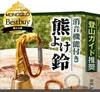
In mountain or forest locations, don't forget precautions against wildlife like bears. A bell with a silent switch won't get in the way mid-investigation.
ZAFIELD Silent-Switch Bear Bell
We may earn a referral fee on purchases made through these links.
Current Situation — The Expeditions Ended, but the Revitalization Goes On
After about five expeditions, the search activities gradually wound down. Nozaki himself, the man who came up with the idea, later remarked, “Maybe it hides when it is searched for — not even an ordinary snake shows up.” No one has ever succeeded in capturing one, and the bounty remains unpaid to this day. Even so, the framework of the “Tsuchinoko Republic” has survived, and it continues to serve as the base for other village events such as firefly-watching gatherings.
In fact, Shimokitayama is not the only place that has used the tsuchinoko for revitalization. Higashishirakawa Village in Gifu Prefecture is counted among the country’s foremost areas for frequent sightings, and has a tsuchinoko museum and even a shrine that enshrines the creature. In Chigusa Town, Hyogo Prefecture (now part of Shiso), a bounty of 200 million yen was once offered for a capture, reportedly the highest ever. Yoshii Town, Okayama Prefecture (now part of Akaiwa), began with a 20-million-yen prize and is said to have added 10,000 yen every year. Amid such competition, Shimokitayama’s one-million-yen bounty and its “republic” concept can be called a playful, distinctive approach.
We would also like to introduce the more research-minded views on its identity. Explanations offered for the tsuchinoko’s appearance include a pregnant Japanese tiger keelback or Japanese mamushi with a swollen body, a snake that has swallowed large prey whole, and the misidentification of pet blue-tongued skinks or pinecone skinks. In fact, there are several reports of specimens that made the news in various regions as “tsuchinoko carcasses” turning out, on examination, to be tiger keelbacks or lizards. That said, these explanations cannot account for every sighting.
Reflection — Not Being Found Became the Value Itself
What we find interesting is that Shimokitayama’s effort has kept its value over a long time not in “finding” the tsuchinoko, but in the very fact that it is “not found.” If a tsuchinoko were truly discovered and captured, it might make big news once, but the attention on the village would come to an end there. This is our speculation, but for Shimokitayama the tsuchinoko may have been less an object whose existence needed proving than a device that offered people “the act of searching itself.” That a depopulating mountain village, through a creature of unknown identity, built a story that drew in people from outside — expeditions, the founding of a republic, visitors from all over the country — may in itself have been the true achievement of this revitalization effort.
This too is only our imagination, but the tsuchinoko is also said to carry a deadly venom and to leap straight at people. Even when something rustles deep in the bushes and one strains to see, there are almost no accounts of anyone watching what it was to the end. Never showing itself, never being caught, and yet leaving only the presence of something that is surely “there” — that very uncertainty may be what still gives a quiet tension to those who walk the mountain paths of Shimokitayama today.
This is only our imagination, but there seems to be something like a religious pilgrimage in the act of an entire village continuing to search for a creature of unknown identity. We suspect that the sightings never cease not because of lies or misunderstandings, but because people keep wishing that something beyond human knowledge still lies hidden in these mountains. What a depopulating mountain village is guarding may be less a single cryptid than a simple, earnest awe — the feeling that something unexplained still remains in these mountains.
In Higashishirakawa Village, the view is handed down that the tsuchinoko was regarded as a messenger of the gods in a land of strong Shinto faith, so that mentioning a sighting was avoided; but after the village ran a feature in its newsletter in 1989 to mark the Year of the Snake, many sighting stories began to be told. If that is true, then the “experience of seeing” had long been shared by many people, and only came to the surface as sighting accounts once an atmosphere arose in which it was “all right to talk about it.” In our view, the number of tsuchinoko sightings may reflect not the number of animals but a change in how easy it is to speak about them.
Shimokitayama’s story looks different when reread from this angle. The rapid course from the 1987 sighting to the 1988 expedition and the 1989 founding of the republic was less the discovery of a new strangeness than an event that gave a “place where it is all right to talk” to a mysterious tale the land already had. This is our speculation, but what mattered to a depopulating village may have been not the tsuchinoko’s identity but the experience itself of “people coming from outside and listening to the stories of the mountains in earnest.” A mountain way of life that no one paid attention to any longer was lit once more through a story.
We also do not want to forget the meaning of its never being caught. No matter how many expeditions were sent out, not even an ordinary snake appeared. Yet the village did not stop searching, and has kept using the framework of the republic as the base for other activities such as firefly-watching gatherings. In the course of searching for something that cannot be found, people meet one another and the village’s activities carry on. Here we see another function of the strange: precisely because its identity is unknown, a strange being gathers people, connects them, and keeps a land alive.

A portable charging solution to keep your phone from dying during exploration of a powerless mountain or ruin haunted spot.
Anker Solix PS30 Portable Solar Panel, USB 2-Port, Max 27W Output, IP65 Dust/Waterproof, PowerIQ, for Phone Charging/Disaster Prep/Camping
We may earn a referral fee on purchases made through these links.
A Nearby Recommendation — Kinari-no-Yu
Shimokitayama, where sightings of the legendary tsuchinoko are told, has a day-use hot spring facility called “Kinari-no-Yu.” Located on the shore of Ikehara Dam, it lets visitors soak at leisure while looking out over the surrounding mountains from the large communal bath and open-air bath, and it has a dining area using local ingredients. Like the dream a depopulating village staked on a creature that cannot be found, a relaxed day-trip hot spring visit in the midst of rich nature is one more charm unique to this village.
Notes for Visitors
Shimokitayama is a deep mountain area, and exploring the mountains requires equipment and precautions on par with mountaineering or other outdoor activities. Events and their schedules can change, so we recommend checking the latest information with the village’s tourist information before visiting.
Frequently Asked Questions
Q. Is the tsuchinoko real?
A. No specimen has ever been reliably captured or confirmed, and its existence has not been scientifically proven. Some take the view that most sightings are mistaken identifications of plump snakes.
Q. Is the bounty still valid?
A. It is a fact that the village set a one-million-yen bounty, but there is no record of it ever being paid, and its current status would have to be confirmed with the village.
Q. Did KARASU CHANNEL film or research on location in Shimokitayama?
A. No. We are not currently doing fieldwork there, and a visit is under consideration. Our location videos of other haunted spots and kaidan (ghost stories) can be watched on KARASU CHANNEL (YouTube).

Supervised by Suzuking.
Affiliation: KARASU CHANNEL
Occult & horror reporting: 7 years (since 2020)
Followers: YouTube 5,000+ / X 25,000+
On-site investigations: 30+
If this appeared in your dream
What it means to dream of something from this story, read through psychology and folklore in our Dream Dictionary.
- Dreaming of a Mountain VillageStillness, a return to roots and life with nature; a peaceful village means calm and renewal, an empty one is…
Which story do you find the scariest?
If you think this story is the scariest, press the button below. One vote site-wide — you can change your vote for a different story anytime.
Was this article helpful?
Add this to your favorites to find it again anytime from your My Page.


Comments