What Is Blood-Type Fortune-Telling? History, Science, and How to Enjoy It

Supervised by Ms.M
Affiliation: KARASU CHANNEL
Traditions studied: 12+ (Western astrology, Four Pillars of Destiny, Nine Star Ki, tarot, runes, palmistry & physiognomy, name numerology, numerology, feng shui, Vedic astrology / Zi Wei, Onmyodo, spiritual reading, and more)
Personal readings: by request via Contact,
currently booked years out

Contents
“Type A is meticulous.” “Type B goes at their own pace.” “Type O is easygoing.” “Type AB has a split personality.” If you live in Japan, you have probably heard these phrases at least once. Blood type turns up as a matter of course in self-introductions with new acquaintances, in chatter at drinking parties, even in the profile fields of social media. That is blood-type fortune-telling (blood-type personality diagnosis).
Yet this kind of fortune-telling has a curious standing. Where horoscopes and Four Pillars astrology have a history of hundreds or thousands of years, the idea of linking blood type and personality is a relatively new culture born in Japan only about 100 years ago. Moreover, large-scale psychological surveys have repeatedly reported that “no relationship is seen between blood type and personality.” Even so, for some reason we cannot let go of this topic.
Our free “Blood Type Reading” is offered purely as a cultural pastime and as a prompt for looking at yourself anew. In this article, we untangle in order everything from basic knowledge about blood types themselves, to their history in Japan, to how science sees them, to why “you must not judge people by blood type,” restating technical terms in plain language as they appear. In the second half we have also added our own commentary, which goes beyond a summary of history.
Key Points (a 3-Minute Summary)
- Blood-type fortune-telling is fortune-telling based on a folk belief, spread uniquely in Japan, that the ABO blood type (four kinds: A, B, O, and AB) gives tendencies in personality and fortune.
- The blood types themselves were discovered around 1900 by Landsteiner of Austria. It was originally a medical discovery for making blood transfusion safe, with nothing to do with personality.
- The current of tying it to personality is said to have begun with a theory published in a paper in 1927 by Takeji Furukawa. This theory was rejected academically in the 1930s, and revived as a mass boom after the war, in the 1970s, through the books of Masahiko Nomi.
- In psychological surveys, including a 2014 study of more than 10,000 people in Japan and the United States combined, no meaningful relationship has been found between blood type and personality. The reasons it feels “accurate” are explained by the Barnum effect, confirmation bias, and so on.
- Words and actions that pin people down by blood type or make them feel bad are called “bura-hara” (blood type harassment), and even in the broadcasting industry, a request about program making was issued in 2004.
- The results on our site are purely entertainment. The good sides and the sides to watch out for are best taken as “one tendency,” and not fitting yourself or others into a mold is the skillful way to enjoy it.
What Is Blood-Type Fortune-Telling? A “Four-Type Personality Diagnosis” Grown in Japan
Blood-type fortune-telling uses the ABO blood type you are born with as a clue to speak of a person’s personality tendencies and the direction of their fortune in love, work, and money. There are only four types: A, B, O, and AB. Compared with star signs (12), zodiac animals (12), or Four Pillars astrology (hundreds of thousands of patterns), it is a surprisingly small number.
This simplicity is blood-type fortune-telling’s greatest feature. Many people know their own blood type from health checkups, blood donation, maternal and child health handbooks, and so on, so the single question “what’s your type?” can start a conversation with anyone. Rather than fortune-telling, it has become established as an “everyday greeting topic” in Japan.
What matters is that this fortune-telling is not based on any scientific theory that “blood decides personality.” A relationship between blood type and personality has not been scientifically demonstrated. In this article, and on our site, blood-type fortune-telling is treated as “a folk-belief culture especially beloved in Japan, South Korea, and elsewhere.”
Put simply, blood-type fortune-telling is “a game of dividing people into four groups and talking about the personality images said to be common in each group.” Rather than fortune-telling, it is closer to a common language for making conversation fun.
What Is a Blood Type in the First Place? Basics of the ABO System
Before getting to the fortune-telling, let us first sort out blood types as medicine. Getting this straight makes it easier to see “why it is a stretch to link blood type and personality.”
Decided by a “Marker” on the Surface of Red Blood Cells
The ABO blood type is divided by differences in “markers” on the surface of red blood cells (the cells in blood that carry oxygen). Type A has a marker called the A antigen and type B the B antigen; type AB has both, and type O has neither. Conversely, the liquid part of the blood (serum) contains substances (antibodies) that react to markers a person does not have. For example, a type A person has anti-B antibodies that react to the B antigen, and a type O person has both anti-A and anti-B antibodies.
When bloods whose markers and antibodies do not match are mixed, the red blood cells clump together (agglutinate). This is why blood type is always checked at a transfusion. The Japanese Red Cross Society’s explanations also show that for red blood cell transfusions, in principle the same types are chosen for each other, and that a mix-up of types can lead to serious side effects.
Put simply, blood type is a classification decided by “the kind of marker on the surface of red blood cells.” It is a very practical distinction for transfusion and medicine, and does not reflect personality.
In Japan, Roughly 40% Type A, 30% Type O, 20% Type B, 10% Type AB
According to the Japanese Red Cross Society, the proportions of blood types among Japanese people are roughly 40% type A, 30% type O, 20% type B, and 10% type AB. That type AB is the smallest minority and type B the next smallest also connects to the story of “bura-hara” mentioned later. These proportions vary greatly by country and region; for example, in some regions type O is the majority, and in others type B is relatively common.
The Mechanism of Heredity: You Receive One from Each Parent
The ABO blood type is decided by receiving one gene from each parent. There are three genes, A, B, and O, and A and B appear more strongly (dominant) than O. So a type A person’s gene combination is AA or AO, type B is BB or BO, type AB is AB, and type O is OO. A child of type O can be born to a type A parent and a type B parent (because a combination of AO and BO can produce an OO child).
Besides the ABO system, blood types have dozens of classification systems including the Rh system, and what blood-type fortune-telling uses is only the four classes of the ABO system, the best known of them.
The Discoverer Was a Pathologist, Not a Fortune-Teller
The one who discovered the ABO blood type was the Austrian pathologist Karl Landsteiner (also spelled Landsteiner in other ways in Japanese). According to Japanese Red Cross materials, in 1900 he noticed that when one person’s serum is mixed with another person’s red blood cells, sometimes they clump and sometimes they do not, and discovered that human blood has types. For this achievement he received the Nobel Prize in Physiology or Medicine in 1930.
Thanks to this discovery, deaths from transfusion accidents fell greatly, and the foundation of modern transfusion medicine was built. The discovery of blood types is one of the discoveries that saved the most lives in the history of medicine. And at that point it had nothing at all to do with personality or fortune.
Put simply, blood type is “a distinction found to prevent transfusion accidents, to protect lives.” That it connected to talk of personality was an event in Japan more than 20 years after the discovery.
Origins of Blood-Type Fortune-Telling: From the Ancient Four Humors to Furukawa, Nomi, and the Present
Prehistory: The Old Wish to “Divide Humans into Four Types”
The wish to understand personality by dividing people into a few types is much older than blood types. In ancient Greece, the “theory of four humors,” in the lineage of Hippocrates, is known. It is the idea that the human body has four humors, blood, yellow bile, black bile, and phlegm, and that their balance decides constitution and temperament. This theory was believed for a long time, into medieval Europe.
The form of dividing into four closely resembles blood types (A, B, O, AB). This is our speculation, but human beings are creatures strongly drawn to “classifications that are few in number and easy to remember,” and that simple habit may have been at work behind blood types being accepted so widely.
1916: Raifuku Hara Turns Attention to the Relationship Between Blood Type and Temperament
As a person in Japan who paid early attention to the relationship between blood type and temperament, the name of the physician Raifuku Hara, who had returned from studying in Germany, appears in the sources. In a paper discussing blood types in 1916, he is said to have presented the relationship between blood type and temperament as a subject of research. However, he is said not to have asserted a relationship, and is reported to have voiced opinions rather critical of views that lead to ranking people by race.
1927: Takeji Furukawa’s “A Study of Temperament by Blood Type”
The one who clearly tied blood type and personality together and put it to the world was the educator Takeji Furukawa (1891 to 1940). Furukawa, a teacher at the Tokyo Women’s Higher Normal School, published “A Study of Temperament by Blood Type” in the Japanese psychology journal Shinrigaku Kenkyu (Japanese Journal of Psychology) in 1927. In 1932 he published a book, Blood Type and Temperament.
As for why Furukawa took up this theme, there is research pointing to the pressing circumstances of educational practice at the time. Entrance examination results alone could not sufficiently predict academic performance after entering school. If there were a clue for telling apart “temperament,” separate from grades, it might be useful for education. Moreover, Furukawa, born into a doctor’s family, had close knowledge of blood types, the latest discovery of the day. From such a background, Furukawa is explained to have divided temperament into two large types and considered how they correspond to blood types.
Furukawa’s theory drew great attention in a wide range of fields such as medicine and education, and some sources say about 290 related papers were published between 1928 and about 1935. In the military too, research to gauge soldiers’ qualities from blood type is said to have been carried out, but it is reported to have been discontinued later.
Around 1933: Rejected Academically, and Fades for a While
Furukawa’s theory, however, drew criticism over statistical methods and bias in the data. According to sources, it is summarized as having been rejected academically, through the general meeting of the Japanese Society of Legal Medicine in 1933 and other occasions. The boom shrank rapidly, and across the war, the topic of blood type and personality almost disappeared from the academic world.
Put simply, the story of blood type and personality once reached the conclusion in Japan that “it was examined by experts and failed.” Even so, it did not vanish but came back in a different form, and that is the curious tenacity of this folk belief.
From 1971: Masahiko Nomi Revives It as a Topic of “Personality” and “Compatibility”
The driving figure of the postwar revival was the broadcast writer and author Masahiko Nomi (1925 to 1981). Influenced by Furukawa’s theory, Nomi published Blood Type Tells Compatibility (Seishun Publishing) in 1971, and the following Blood Type Human Studies (Sankei Shimbun Publishing Bureau) in 1973 became a bestseller. In the latter half of the 1970s, he drew public attention through television appearances and other means, and became the igniter of the boom that continues to the present.
A big change occurred here. In Furukawa’s day it was put as “blood type and temperament,” but Nomi rephrased it as “blood type and personality,” and moreover tied it to topics close to everyone, such as “compatibility” and “love.” Not as scholars’ research but as reading matter for ordinary readers, it entered everyday conversation. After Nomi’s death, his son Toshitaka Nomi carried on his wishes and continued the activity.
Note that it has been pointed out that the data of over 100,000 people gathered by the Nomi father and son was biased in its population from the start, with many who returned reader cards or attended lectures. It is a criticism that the way the data was gathered had an aspect of having decided the conclusion first.
The 1980s to 2000s: Songs, Sports, Television, and Then a Social Problem
In the 1980s, blood type spread across society, with songs on the theme of blood type going on sale and professional baseball managers saying they used it as a reference for player selection. There is a source stating that in 2004, terrestrial television broadcast about 70 programs in one year dealing with blood type and personality.
Meanwhile, more people who felt bad from being pigeonholed at school or work with “because you’re type B” or “type AB is odd” came to be recognized as a problem. The Broadcasting Ethics and Program Improvement Organization (BPO) Committee on Broadcasting and Youth Problems issued a request to broadcasters in December 2004 regarding programs that treat the relationship between blood type and personality as if it were proven. The reasons given include the risk that children may form the fixed idea that “blood type decides personality,” and that the view of classifying and ranking people by blood type, which they cannot change by their own will, carries a danger of leading to social discrimination.
2007 to 2008: The “Instruction Manual for Myself” Boom
Even after that, blood type’s popularity did not disappear. B-gata Jibun no Setsumeisho (My Instruction Manual: Type B), published in September 2007 (by Jamais Jamais, Bungeisha), began as a self-published run of 1,000 copies and then spread nationwide after word of mouth from bookstores. Editions for types A, O, and AB followed, and all four blood types are said to have entered the top 10 of the 2008 annual bestsellers.
The style of this book was to enjoy blood type as “relatable everyday jokes about yourself,” with humor, and had a slightly different atmosphere from serious pigeonholing. Blood type was accepted by many people once more, not as a scientific theory but as material for laughter and empathy.
Put simply, the history of blood-type fortune-telling has gradually changed form from “scholarship” to “topic” along the flow of “a medical discovery (1900) → an expert’s hypothesis (1927) → rejection (1930s) → revival as reading matter (1970s) → established as material for laughs (2000s).”

Ruins are full of dust and mold as well as damp and water, so this waterproofing spray protects shoes, work clothes, and leather goods from getting wet — a companion to protective gear and goggles.
LOCTITE Super Strong Waterproofing Spray, Multi-Purpose, for Clothing/Fabric/Leather 420ml
We may earn a referral fee on purchases made through these links.
How to Read Our “Blood Type Reading,” with Person A as an Example
So far it has been history and basics. From here we confirm, with a concrete example, what result actually comes out of our tool. In this article we take as an example a fictional “Person A” (a woman born at 12:00 on January 1, 2000; not a real person) who chose blood type “O.”
What You Enter
- Date of birth (required): the tool’s shared input field. However, the date of birth is not used in the blood-type reading’s result itself.
- Blood type (choose from A, B, O, or AB): the form shows it as “optional,” but if you do not choose, no result is shown. If you leave it at “no selection,” a message urging you to enter the additional item appears.
If you do not know your blood type or do not want to answer, there is no need to force yourself to choose. This reading is purely for enjoyment.
What the Result Shows
The result is gathered in a card for the “type,” and the following four passages appear.
- A passage on personality tendencies (one for each of the four blood types)
- A line on love fortune
- A line on work fortune
- A line on money fortune
Unlike readings that calculate finely from date and time of birth, fixed text is shown according to the blood type you choose. If you choose the same blood type, anyone gets the same text. This is our honest specification, and a direct expression of the fact that blood-type fortune-telling is, at heart, a “four-type classification.”
Output for the Four Blood Types (Our Text)
Here we introduce the content shown on our site as it is. It is our gentle summary of “images that have been spoken of as folk belief.”
[Type A] A meticulous type with a strong sense of responsibility, who values so-called “form.” While they value harmony with those around them, they can also push themselves too hard in pursuit of perfection. Strong in work that builds up trust. Love fortune: “a compatibility in which a sincere attitude gradually builds trust.” Work fortune: “suited to accounting and management work where meticulousness is valued.” Money fortune: “suited to planned household budgeting.”
[Type B] A type who goes at their own pace and is honest about their interests. Their concentration on what they love is second to none, but their thin interest in what does not interest them can cause misunderstanding. A type who produces results on their own path. Love fortune: “single-minded once in love, but match the other person’s pace.” Work fortune: “results jump when you focus on your strong field.” Money fortune: “invest without hesitation in what interests you.”
[Type O] A type who is easygoing, caring, and able to draw those around them in. Their energy toward goals is strong, but they can also overlook details. Suited to a leader role that moves people. Love fortune: “your caring nature becomes your expression of love as it is.” Work fortune: “a time when leadership that draws others in shines.” Money fortune: “planned spending toward a big goal is auspicious.”
[Type AB] A type who is rational and can hold several viewpoints at once. They have calm analytical ability but tend to be seen as having a dual nature. They come into their own in work that uses their expertise. Love fortune: “a slow-burning compatibility in which a dual nature looks charming.” Work fortune: “come into your own in work that uses your expertise.” Money fortune: “suited to management based on calm analysis.”
[In Person A’s case] Person A chose type O, so the text “a type who is easygoing, caring, and able to draw those around them in” is shown. Love fortune: “your caring nature becomes your expression of love as it is.” Work fortune: “a time when leadership that draws others in shines.” Money fortune: “planned spending toward a big goal is auspicious.” It goes on to add, together with the strength, the side to watch out for: “their energy toward goals is strong, but they can also overlook details.”
Put simply, the result of this reading is “a profile text for the blood type you chose.” Rather than a fortune-telling result, it is closer to the feeling of rereading “the words you often hear about that type.”
A Point Worth Noticing: Every Text Pairs a “Strength” with a “Side to Watch Out For”
Read the four texts closely and you notice something they share. Type A’s “meticulous” is paired with “tends to push themselves,” type B’s “concentration” with “thin interest can cause misunderstanding,” type O’s “power to draw others in” with “tends to overlook details,” and type AB’s “analytical ability” with “tends to be seen as dual.” Every one is paired.
Our texts are written in the form of “the good side and the side to watch out for are two sides of the same coin” for every type, because listing only strengths would be flattery and listing only weaknesses would be pigeonholing. At the same time, this way of writing is also a form that makes our own site prone to triggering the “Barnum effect” mentioned in the “Science” section below. We touch on this again in the commentary section.
How Have the Images of the Four Blood Types Been Spoken Of?
Here we organize the “common images” long spoken of in Japanese blood-type fortune-telling, for each of the four blood types. But let us stress first that this does not mean “people of that blood type really are so.” It is not backed by science, and is only a record of a culture: “it has been spoken of that way.”
Type A: “Meticulous, Serious, Patient”
Type A is the type most often spoken of. In Japan it is the largest group, about 40%. This is our speculation, but because there are so many of them, it may be easy for them to be spoken of as typical of “the personalities of people around you.” Images that often come up include meticulous, serious, strong sense of responsibility, and reading the room. On the flip side, worrier, too patient, and inflexible are spoken of.
In our view, there is hardly anyone who, told “you’re meticulous,” cannot think of a single occasion that fits. Everyone has both meticulous moments and sloppy ones.
Type B: “Goes at Their Own Pace, Free, Individualistic”
The standard way of speaking of type B is going at their own pace, free, and single-minded about what they love. Conversely, it also easily takes negative forms such as self-centered and moody, and this point is deeply tied to the “bura-hara” problem described later.
Type B is a minority of about 20% in Japan. Minorities stand out and are memorable, so it is thought that even minor behavior is easily tied to “it’s because they’re type B, after all.”
Type O: “Easygoing, Caring, Leader Type”
Type O is spoken of with bright images such as easygoing, sociable, and big-brother or big-sister figure. On the other hand, points such as sloppy and overlooking small things are cited. In Japan it is the second largest after type A, at about 30%.
Type AB: “Rational, Dual Nature, Genius Type”
Type AB is the smallest minority, about 10%. Standard descriptions include calm and rational, having two sides, and a genius type. On the other hand, being called “eccentric” or “split personality” was also a characteristic of this type. It has also been pointed out in a survey on bura-hara that the image of type AB has been rephrased from “eccentric” to “genius.” The psychology of wanting to give a minority some special story shows through.
Put simply, there is a tendency for blood-type images to be “spoken of in average, safe words for the types with many people, and in conspicuous words for the types with few people.” That is less about blood-type personalities than about a habit of our way of seeing.
How Does Science See Blood Type and Personality?
“Does it hit or not?” is probably what most people care about most. Psychology has investigated this question for a long time. To state the conclusion first, no meaningful relationship has been found between blood type and personality.
A 2014 Study of More Than 10,000 People in Japan and the United States
One representative study is the paper published in 2014 in Shinrigaku Kenkyu (Japanese Journal of Psychology) by the social psychologist Kengo Nawata. Using data from random samples totaling more than 10,000 people (ages 20 to 69) from two surveys in Japan and one in the United States, it examined 68 items related to personality and values.
As a result, no differences by blood type were seen in 65 of the 68 items. Even for the three items where differences were seen, their size was very small, and the share of the variation in personality that blood type could explain stayed below 0.3%. Since only slight differences were found even in such large data, the paper concluded that “blood type and personality are unrelated.”
Put simply, it is a study that checked “whether type A people are meticulous” among more than 10,000 people and found that whether you were type A made almost no difference. It was confirmation in data large enough to say “no relationship” in the language of statistics.
Other Studies: Yutaka Matsui, and Kenji Yamazaki and Akira Sakamoto
The psychologist Yutaka Matsui analyzed television-station opinion-poll data (about 12,000 people) in 1991. While differences appeared in three or four items in each year, only one item showed a difference across all years, and even that item was inconsistent, with the blood type with the highest value changing by year.
Meanwhile, Kenji Yamazaki and Akira Sakamoto in 1992 reported the possibility of “self-fulfillment,” in which, as people believe blood-type images, they bring their own behavior and self-evaluation into line with those images. On this theme, later studies also produced different results, and evaluations differ by source. In this article we limit ourselves to saying that a possible influence has been pointed out but has not been settled.
The Q&A of the Japanese Society of Personality Psychology also introduces that the view that, at present, no relationship between blood type and personality can be claimed is broadly supported.
Why Does It Feel “Accurate”?
Even so, many people who read the description of their own blood type feel “it really is accurate.” Psychology explains the reasons in several ways.
- The Barnum effect (Forer effect): the phenomenon of feeling that a vague explanation that applies to anyone applies to you alone. Famous is the 1948 experiment in which the American psychologist Forer handed students an identical personality description made from horoscope text as “your own personal diagnosis result,” and it received high ratings averaging in the low 4s on a 5-point scale (4.26 to 4.30 depending on the source).
- Confirmation bias: the tendency to remember events that fit what you believe and to forget events that do not. If you believe “type B, so they go at their own pace,” only the moments of going at their own pace stay in your memory.
- The effect of labeling: the workings by which, when told “this is a characteristic of type A,” you easily come to believe it even if it does not actually apply.
- Self-fulfillment (self-fulfilling prophecy): the phenomenon in which, by believing “I am this type,” you come to behave in a way typical of that type, and as a result it looks “accurate.”
The psychologist Masao Omura reported that, in a 1984 NHK experiment, even when the descriptions of each blood type were swapped with those of another type, around 90% of people answered that it “applied to them.” Characteristics such as “hoping for a steady life” and “hoping for a life at your own pace” were answered as applying by 70 to 80% of people of every blood type.
Put simply, we feel it is “accurate” not because the fortune-telling truly hits, but because our minds “pick up only the parts that hit.” That is exactly why, when enjoying fortune-telling, it is important “not to use it as material for pigeonholing.”
A Quick Glossary of Blood-Type Fortune-Telling Terms
Here are the terms that appeared in the article, each in a word or two. Use it as a dictionary when you are unsure.
- ABO blood type: a representative classification of blood types, divided by the presence or absence of markers on the surface of red blood cells (the A antigen and B antigen). Four kinds: A, B, O, and AB.
- Antigen: the marker on the surface of red blood cells.
- Antibody: a substance in the blood that reacts to markers you do not have and clumps red blood cells.
- Rh system: a blood-type classification separate from the ABO system. Not normally used in blood-type fortune-telling.
- Landsteiner: the Austrian pathologist who discovered the ABO blood type in 1900. Received the Nobel Prize in 1930.
- Temperament: a word for an innate way of feeling and tendency to react. Takeji Furukawa expressed it as “blood type and temperament.”
- Takeji Furukawa: the educator who published a paper in 1927 on the relationship between blood type and temperament.
- Masahiko Nomi: the author who made the boom in the 1970s by publishing books on blood type, personality, and compatibility.
- Barnum effect (Forer effect): the psychological phenomenon of feeling that a vague explanation applying to anyone is meant for you alone.
- Confirmation bias: the tendency to gather only information that fits your assumptions and overlook information that does not.
- Self-fulfillment (self-fulfilling prophecy): the phenomenon in which, by believing something is so, you act accordingly and as a result the prediction appears to have come true.
- Bura-hara (blood type harassment): pigeonholing or harassment on the grounds of blood type.
- BPO (Broadcasting Ethics and Program Improvement Organization): a private third-party body that considers the quality and ethics of broadcast programs. Issued a request in 2004 about programs dealing with blood type.
How Is Blood-Type Fortune-Telling Used Today?
In present-day Japan too, blood type is widely used as a “conversation starter.” Bookstores carry books on the subject of blood type, and magazines and websites often feature fortunes and compatibility by blood type. However, since the BPO’s request in 2004, definitive treatment on television programs, as if blood type decided personality, has greatly decreased. It is reported that programs also came to carry notes such as “blood type does not decide everything.”
On the other hand, the culture of tying blood type to personality is said to be especially rooted in parts of East Asia such as Japan and South Korea, and has barely spread in Europe and the United States. Reasons cited include that many people in the West do not know their own blood type, and that horoscopes, an earlier form of fortune-telling, were already popular.
Also, as represented by “My Instruction Manual: Type B,” blood type today is often enjoyed as material for empathy and laughter rather than as a serious verdict. There is even a source stating that a labor bureau called on companies not to ask about blood type in hiring or to provide a field for it on application forms, and in real society, “not judging people by blood type” is becoming a kind of rule.
Four Tips for Enjoying Blood-Type Fortune-Telling
- Don’t make “hit or miss” a contest: remembering only the parts that hit happens to everyone. Take it lightly, like a game.
- Your own type as “material for laughs,” another person’s type as “not to be touched”: you are free to joke about yourself, but it is safer to refrain from telling others “because you’re type such-and-such.” You cannot know how the other person feels until you say it.
- See both the good sides and the sides to watch out for as “today’s mood”: using strengths for confidence and weaknesses as a hint to “be careful today” is about the right balance.
- Don’t use it for important decisions: please do not make it a basis for decisions that affect your life, such as your career, work, marriage, or relationships.
Commentary: Why Do We Want to Talk About People by Blood Type?
From here, rather than summarizing history or science, we look at blood-type fortune-telling in our own way. We should say up front that this is our speculation and hypothesis, not established theory.
Takeji Furukawa’s Wish to See “What Entrance Exams Cannot Show”
Research points out that behind Furukawa’s turning to blood type lay pressing worries in the field of education. Even with good entrance exam scores, some students do not grow after entering school. Can something tell apart the “individuality of that child” that does not show in scores?
This is our speculation, but we think this wish was by no means off the mark. A person’s ability cannot be measured by scores alone. The danger of this theory lay in seeking that “something that scores cannot show” in a marker unrelated to one’s own effort, the blood type that never changes from birth. Blood type cannot be changed by effort or environment. That also means the verdict “you are this kind of person” has no way out.
In our view, Furukawa’s worry itself remains in us just the same today. Aptitude tests in job hunting, personality-diagnosis apps, hiring interviews. The wish to size people up, and to be sized up, continues in different forms. Blood-type fortune-telling may be called one of its simplest and oldest forms.
From “Temperament” to “Personality” to “Compatibility”: When the Words Changed, the Range of the Game Widened
Furukawa discussed “blood type and temperament.” Masahiko Nomi rephrased the words as “blood type and personality” and further widened it to the topic of “compatibility.” We think this swap of words, though it looks modest, was a big turning point.
“Temperament” is a technical term. “Personality,” on the other hand, is an everyday word. And “compatibility” is a word directly tied to every kind of human relationship, romance, friends, and the workplace. What had been a topic for scholars became a topic of everyday conversation. This change is probably what turned blood type from “a subject that experts verify” into “a game that everyone casually uses.” This is speculation, but once something becomes an everyday game, even if experts say “there is no basis,” the game lives on as a game. One reason blood-type fortune-telling did not vanish even after academic rejection may lie here.
The Convenience of the Number 4: Easy to Remember, Easy to Talk About, Easy to Divide
That the blood-type classification has only four is a big strength as a game. With the 12 star signs, people remember their own sign but tend to forget the other person’s. Blood type, with only four, is hard to forget once you have heard it and can be brought up any number of times in conversation.
Also, four is just the right number for saying to each other “what’s your type?” and “I’m type such-and-such” and feeling whether you are alike or different. People feel affinity toward those in the same group as themselves and a small discovery, “oh, is that so,” toward those in a different group. In our view, blood type is, before it is a tool for guessing personality, tremendously excellent as “a tool for creating an opening for conversation.”
But behind that excellence there is room for pigeonholing to slip in. When the “opening” of a conversation is swapped, before you know it, for a “conclusion,” that becomes the entrance to bura-hara.
“Because I’m Type B”: An Indulgence, and a Curse
“It’s because I’m type B that I go at my own pace.” This phrase sometimes makes people feel easier. Because you can blame your own faults not on a problem of character but on the “type” you were born with. Laughing together, “I’m type A, so I get picky,” can even ease the mood.
On the other hand, though, blood type can also become a “curse.” While you keep saying “because I’m type B,” it becomes harder to show a self that is not typical of type B. If people around you keep being surprised, “you’re type B, but you’re meticulous,” you get tired of being the exception. The “self-fulfillment” mentioned earlier is one idea that explains the mechanism of this curse.
This is speculation, but the more convenient blood type is as an “indulgence,” the more convenient it becomes at the same time as a “tool for pigeonholing.” An indulgence is a light joke when used on yourself, but the moment it is aimed at another person, it becomes a judgment of their character. Used on yourself, or used on others: we think this boundary is the line that separates play from harassment.
The Psychology of Wanting to Give Minorities a Story: Type AB from “Eccentric” to “Genius”
Surveys on bura-hara report that the smaller the blood-type minority, the more likely people are to feel bad. In Japan, type AB is about 10% and type B about 20%. Minorities stand out, so there seems to be a dynamic in which the story “they’re different” is easily pasted on.
What is interesting is the point that the image of type AB has, in recent years, tended to be rephrased from negative words such as “eccentric” and “split personality” to positive words such as “genius type.” In our view, this can also be read not as an improvement in attitude toward type AB but as the same psychology of “wanting to give a minority a special story” simply turning from a bad direction to a good one. Both words share the same structure in looking only at the label “type AB” without looking at the individual person in front of you.
What is truly rude may be, including not only negative labels but positive ones as well, “deciding from the type before looking at the person themselves.”
Doubting Our Own Text on Purpose
Finally, we will also write a doubt about our own site. As we saw earlier, all four of our blood-type texts pair “a strength and a side to watch out for.” This is an effort to avoid pigeonholing, but psychologically it is also a way of writing that easily triggers the Barnum effect. Reading the sentence “meticulous, but tends to push themselves,” there is hardly anyone it would not fit.
In other words, even if you read our result and feel “it’s accurate,” it is quite likely not that blood type hit, but that the text applies to anyone. This is not a denial of our fortune-telling. It expresses our wish that you take it not by “hit or miss” but by “whether it became a prompt for thinking about yourself.” If, reading a fortune, you notice “come to think of it, I may have been pushing myself a bit too hard lately,” that realization is real. It is not that blood type told you; you noticed it yourself.
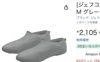
Natural-rubber shoe covers that slip right over your own shoes — a reusable, waterproof, grippy option for keeping mud off in a damp or dusty ruin, or for showing consideration at a managed, no-shoes site open to visitors.
Jefcom Waterproof Floor Shoe Cover, Size M, Gray KCW-30M-GY
We may earn a referral fee on purchases made through these links.
A Note on Using This Reading
This article and our “Blood Type Reading” are provided as entertainment and as a hint for self-understanding, and do not guarantee any result. No scientific basis has been confirmed for a relationship between blood type and personality. They are also no substitute for important decisions about medicine, law, investment, school, employment, or marriage.
Please note the following points in particular.
- Please do not judge or evaluate people by their blood type. Pigeonholing such as “I can’t trust them because they’re type B” or “type AB is hard to get along with” amounts to bura-hara (blood type harassment) and may lead to bullying and discrimination. Even in the broadcasting industry, the BPO in 2004 pointed out that the view of classifying and ranking people by blood type carries a danger of leading to social discrimination.
- Please do not use blood type in hiring, personnel matters, or evaluation at school or work. Blood type is said to have no relation to work ability or aptitude.
- Please avoid telling a child “you are type such-and-such.” Children readily believe adults’ words and may have their self-image fixed by them.
- Please do not ask others for their blood type without their consent or spread it around. Blood type is also information related to health and medicine.
- For your own blood type, please confirm the one properly checked at a medical institution or through blood donation, not a fortune-telling result. Blood type is vital information in transfusion and medical settings. Please do not misstate your self-reported blood type for the convenience of a fortune.
If you have had an unpleasant experience at school or work over blood type and are finding it hard, please do not hold it alone; consult someone you trust, the consultation service of your school or workplace, or a public support agency. If you cannot sleep or a low mood persists, please consult a medical institution.
The descriptions of history and research in this article were compiled in our own words from multiple sources. Dates, people, and figures may be described differently depending on the source. Also, the parts marked “in our view” or “speculation” are our own commentary, not established theory.
Frequently Asked Questions
Q. What is blood-type fortune-telling?
A. It is fortune-telling based on a folk belief, spread uniquely in Japan, that the ABO blood type (A, B, O, AB) gives tendencies in personality and fortune. No scientific basis has been confirmed, and it is enjoyed as culture and entertainment.
Q. Are blood type and personality really related?
A. Psychological surveys have found no meaningful relationship. In a 2014 study of more than 10,000 people in Japan and the United States combined, there was no difference by blood type in 65 of 68 items, and even where differences appeared, the effect was extremely small.
Q. When and who started blood-type fortune-telling?
A. The blood types themselves were discovered around 1900 by Landsteiner. The theory discussing the relationship with personality is said to start from the paper Takeji Furukawa published in Shinrigaku Kenkyu in 1927. After the war, in the 1970s, it became a mass boom through the books of Masahiko Nomi.
Q. What happened to Takeji Furukawa’s theory afterward?
A. It was criticized in the 1930s over statistical methods and the like, and according to sources it was rejected academically around 1933. After that, Masahiko Nomi revived it as reading matter after the war.
Q. Why did it become especially popular in Japan?
A. There is no clear established view. Cited are that it is easy to talk about with only four classes, that many people know their own blood type, and the influence of Masahiko Nomi’s books and television. In the West, many people do not know their own blood type, and horoscopes had taken root first, which are also given as reasons.
Q. Why does it feel “accurate”?
A. It is explained by the Barnum effect (feeling that an explanation applying to anyone is yours alone), confirmation bias (remembering only events that fit), self-fulfillment (behaving accordingly by believing), and so on.
Q. What are the proportions of blood types among Japanese people?
A. According to the Japanese Red Cross Society, roughly 40% type A, 30% type O, 20% type B, and 10% type AB. The proportions differ greatly by country and region.
Q. What is bura-hara?
A. It is short for blood type harassment, meaning pigeonholing or harassment on the grounds of blood type. Evaluating people by blood type, which they cannot choose themselves, may lead to bullying and discrimination.
Q. May I ask people their blood type?
A. If the atmosphere is one where the other person can talk casually, it may be fine, but some people dislike it. Even when asking, it is important not to use the answer to judge character and not to force an answer. Please avoid asking in hiring or evaluation settings.
Q. Can I get a reading without knowing my blood type?
A. In our blood-type reading, no result is shown unless you choose a blood type. If you do not know your blood type or do not want to answer, please enjoy our other readings.
Q. Does the result of our blood-type reading change with the date of birth?
A. No. The date of birth is a shared input field of the tool but is not used in the blood-type reading’s result. The result is the text decided by the blood type you choose.
Q. Can blood type change?
A. Normally, the ABO blood type does not change in a lifetime. However, it can change in cases of special medical treatment such as bone marrow transplant. For details, please check with a medical institution.
Q. How is blood-type fortune-telling different from other fortune-telling?
A. Horoscopes and Four Pillars astrology calculate a result from the date and time of birth. Blood-type fortune-telling takes the form of reading an explanation fixed in advance for each of four classes, and its history is relatively new, about 100 years.
Q. Can compatibility also be told by blood type?
A. Our site also has a “Blood Type Compatibility Reading.” However, no scientific basis has been confirmed for a relationship between blood type and compatibility either. Its ideas and how to read it are explained in detail in a separate article.
Q. Is our blood-type reading free to use?
A. Yes, it is free. Just choose your date of birth and blood type, and the result is shown.
Related Readings to Try Together
Like blood-type fortune-telling, this is a reading that looks at yourself from “something you were born with.” Comparing the two may help you notice something.
For Those Who Want to Read Deeper
These articles dig into the same theme from a different angle.
- Explainer article on blood type compatibility
- Explainer article on physiognomy (face reading)
- Explainer article on the Deep Psyche Diagnosis
Sources Consulted
This article was compiled in our own words with reference to the following sources (not copied from the text). The texts for each blood type and the example of Person A in the article are the content actually built into our “Blood Type Reading” tool.
- Blood-type fortune-telling – Wikipedia (Japanese)
- Blood type personality classification – Wikipedia (Japanese)
- Takeji Furukawa – Wikipedia (Japanese)
- Masahiko Nomi – Wikipedia (Japanese)
- On the formation of Takeji Furukawa’s theory of blood type and temperament correlation (J-STAGE, in Japanese)
- Kengo Nawata, “No relationship between blood type and personality” (Japanese Journal of Psychology, J-STAGE, in Japanese)
- No relationship between blood type and personality: analysis of a survey of 10,000 people in Japan and the US (Mynavi News, in Japanese)
- December 8, 2004: Request regarding programs dealing with blood type (BPO, in Japanese)
- About blood types (Hyogo Red Cross Blood Center, Japanese Red Cross Society, in Japanese)
- A History of Transfusion vol. 2 (Red Cross NEWS, Japanese Red Cross Society, in Japanese)
- Blood type harassment – Wikipedia (Japanese)
- Jibun no Setsumeisho (My Instruction Manual) – Wikipedia (Japanese)
At KARASU CHANNEL, we publish investigation videos on ghost stories and haunted places on our YouTube channel, KARASU CHANNEL (YouTube).
Supervised by Ms.M
Affiliation: KARASU CHANNEL
Traditions studied: 12+ (Western astrology, Four Pillars of Destiny, Nine Star Ki, tarot, runes, palmistry & physiognomy, name numerology, numerology, feng shui, Vedic astrology / Zi Wei, Onmyodo, spiritual reading, and more)
Personal readings: by request via Contact,
currently booked years out
Which story do you find the scariest?
If you think this story is the scariest, press the button below. One vote site-wide — you can change your vote for a different story anytime.
Was this article helpful?
Add this to your favorites to find it again anytime from your My Page.









Comments