Why Is a Snapped Geta Thong Considered Ominous? The Taboo on Night Footwear and the Memory of Funeral Sandals
Supervised by Suzuking. (KARASU CHANNEL / Occult & horror reporting, 7 years)
Contents
View sources and last-checked date
- Source
- Kotobank, “Footwear” (Japanese)
- Source 2
- Wikipedia, “Geta” (Japanese)
- Source 3
- Tokushima Prefectural Library, funeral rites study of Kamiyama (PDF, Japanese)
- Source 4
- Japanese reference on hanao and footwear folklore (tkgje.jp)
- Last verified
- 2026-09-30
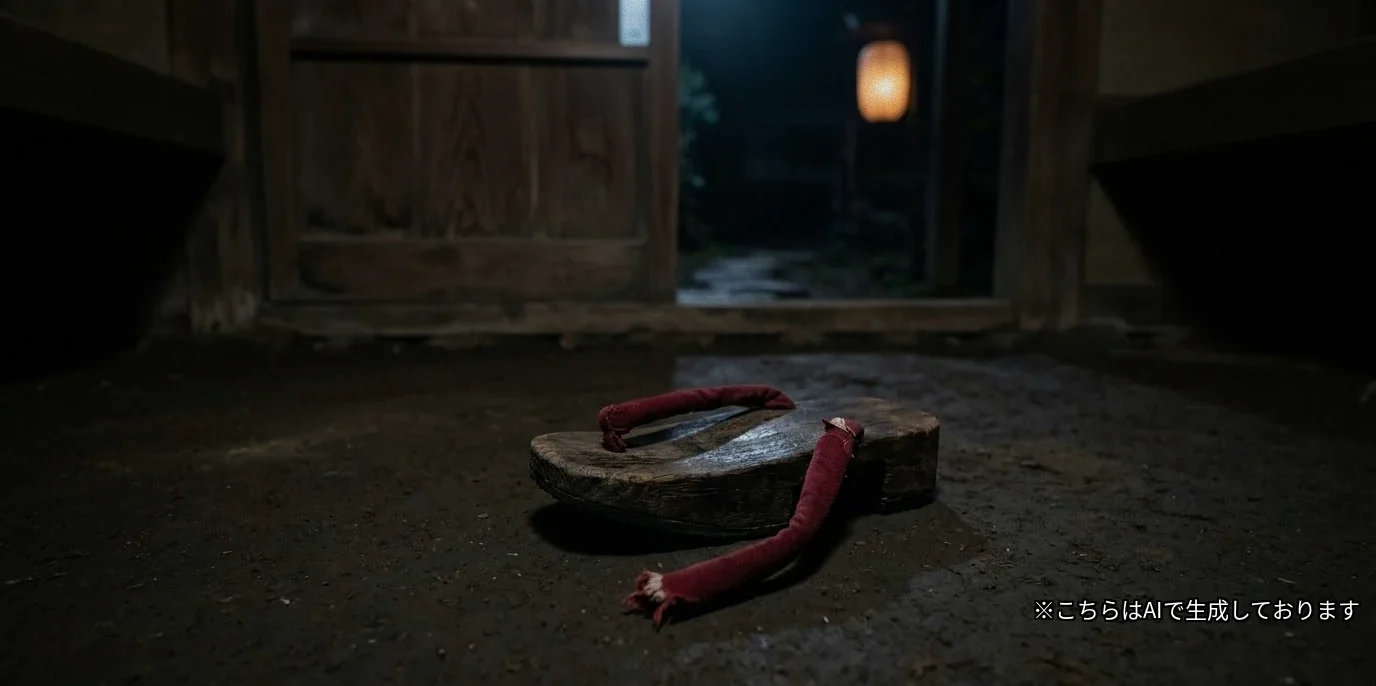
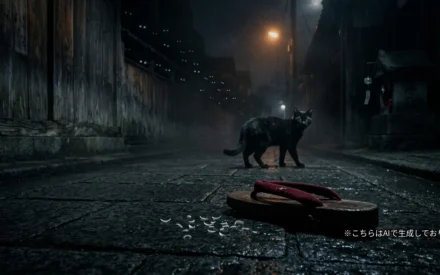
Stepping into your geta to leave the house in the morning, the thong (hanao) suddenly snaps. As you catch your balance from nearly tripping, you somehow feel a bad premonition. Period dramas and old novels have often used such a scene as a signal that “something bad is about to happen.” Even now that people no longer wear geta, many have heard somewhere the saying that a snapped thong is ominous.
Yet if you think about it again, it is a strange thing. A thong is a cord made of cloth or leather, and if you keep using it, it will break someday. Why was it taken not as simple wear and tear but as bad news? In some places it was even said to foretell the death of someone close. Starting from the superstitions around geta thongs, this article traces the meaning people of old put into footwear and why footwear and death came to be linked.
Origins: From a Farm Tool to the Feet of Common People
First, let us briefly go over the history of geta themselves. The ancestor of geta is said to be the “ta-geta,” worn so that feet would not sink in rice paddies. It has been unearthed from Yayoi-period sites such as the Toro site in Shizuoka Prefecture, and at first it was a tool for farm work. Geta as everyday footwear rather than farm tools are said to appear in sites from around the fifth century.
Still, it took a long time before geta became something everyone wore. Even from the Muromachi to the Edo period, geta were worn in daily life mainly by people of status, and they spread among commoners only in the latter half of the Edo period, and mostly in big towns like Edo and Osaka. The time when geta were worn most across Japan was around the 1950s and 1960s, when mass production by machine advanced; after that they were pushed out by rubber-soled and Western-style shoes and quickly disappeared. The impression that “everyone has always worn geta” is in fact not that old.
The thong (hanao) of geta and zori is the cord that runs from the front peg, held between the big toe and the second toe, to the left and right sides. If this cord breaks, the footwear is useless as footwear. And superstitions about footwear had piled up across the regions, around zori and waraji, long before geta spread. According to the entry “Footwear” in Heibonsha’s World Encyclopedia, many superstitions accompany footwear, and it was considered unlucky if geta split by themselves or a tooth chipped. A snapped thong, too, was one of the representative bad omens.
There are also cases in which the thong superstition was clearly linked to death, beyond mere “bad luck.” In a report investigating funeral rites in Kamiyama, Tokushima Prefecture, the snapping of a geta thong is listed as a sign before a person’s death, alongside crows crying abnormally, the dying person appearing at one’s bedside in a dream, and a dog’s long-trailing howl. The thong was actually told of as a small sign announcing the death of someone close.
Why Was Footwear Linked to Death?
Behind the thong’s snapping being ominous lie many customs linking footwear and death. Above all important is the handling of footwear in funerals. In the funeral procession that once sent the dead to the grave, known as nobe-okuri, the participants sometimes wore special zori. Such zori were called “atchi zori” or “kongo zori” depending on the region, and it is said there was a custom of casting them off at the graveyard or crossroads and going home. One does not bring home the footwear of the road on which the dead were seen off. Behind this lay the idea of leaving, at the boundary, the pollution of death and the presence of the dead who might try to follow.
The dead’s own footwear was also treated specially. Waraji were sometimes placed in the coffin as attire for the journey to the other world, and there was also a custom of offering zori or ashinaka, short heelless zori, at the grave. The dead are travelers, and footwear is indispensable to that journey. That is why footwear took on special weight as a tool for going back and forth between the living and the world of the dead.
That footwear was a “tool for crossing boundaries” can be seen also from daily habits. According to the encyclopedia, there was a custom of wearing geta when going to the toilet or the well, even within the grounds of one’s own house. In old houses, the toilet and the well were also places where beings not of this world were thought to come and go. One did not step into such places barefoot but went with a layer of footwear in between. Footwear did not merely protect the feet; it was a thin barrier set between a person and “the other side.” The breaking of that barrier presumably meant that one layer of protection had been peeled away.
The taboo against breaking in new footwear at night is also well known. The same encyclopedia entry says that putting on new geta at night was avoided, giving as the reason that night is the time that leads to the world of death. Old funerals were often held at night, and the act of first wearing new footwear at night would have directly recalled the preparations for the dead’s departure. In some regions there is a saying that when one absolutely must break them in at night, one should mark the sole of the footwear with ink or the like.
Set these customs side by side and the meaning of a snapped thong becomes visible. Footwear is what carries a person to “somewhere that is not here,” and that included the land of the dead. And that footwear breaks the very moment one is about to go out. This is our own inference, but the people of old may have taken it as a warning that “you must not go,” or as a sign that “someone is about to depart on a far journey.”
On long investigations or drives between locations, a dead phone or flashlight battery can end the trip early. A spare power source is worth carrying.
Anker Power Bank 10000mAh, 22.5W Max Output
We may earn a referral fee on purchases made through these links.
Present Day: The Sayings Remained Even After Geta Disappeared
Today, hardly anyone wears geta in daily life. They are worn perhaps only in yukata at hot-spring towns or in summer-festival outfits. Even so, the saying that “a snapped thong is bad luck” survives in altered form. Not a few people feel vaguely uneasy when a shoelace suddenly snaps. In introductions of Japanese superstitions for overseas readers, too, broken thongs and shoelaces are often taken up as a bad omen when going out.
On the other hand, cheerful footwear divinations also remain. It is a children’s game in which they chant “ashita tenki ni nare” (“let it be fine tomorrow”) while kicking a shoe up into the air and telling tomorrow’s weather by how it lands. The common reading is that face up means clear, face down rain, and on its side cloudy. The encyclopedia entry on footwear also records the divining of weather by tossing footwear up and seeing which side lands, and this too is one of the long-standing footwear divinations. Even as geta changed to sneakers, children have kept up this game.
Footwear has also been treated as an auspicious gift. In some places footwear was given as a wedding gift or betrothal present, and in some regions giving zori carried the meaning of a proposal. Footwear was both a dead person’s travel gear and an item celebrating a departure into a new life. The depth of footwear as an object lies in its carrying both ill omen and good fortune.
KARASU CHANNEL’s Take: Why Did a Snapped Thong Sound Like “Don’t Go”?
In thinking about the thong superstition, what first deserves attention is that it is often told in connection with “the moment of setting out.” A story of a thong snapping inside the house sounds far less ominous than one of it snapping as you step out of the entrance or on the morning of a journey. In our view, at the core of this superstition may be the fear of stepping out from the safe interior of the house into the world outside.
For people of old, leaving the house was far more dangerous than it is now. Roads were unpaved, nights were pitch dark, and a journey could bring illness, accidents, and bandits. It was not rare for a family member who set out never to return. In such an age, footwear breaking just as one left could not be dismissed as coincidence. This is our own inference, but the snapped thong may have given visible form to the “I don’t want to go” and “I have a bad feeling” that were already deep in the heart of the person about to leave. People look outside for the reason for their anxiety. The thong took on that reason.
Another thing not to overlook is the overlap with funeral footwear. The zori of the funeral procession were cast off at graves and crossroads and never worn again. The sight of footwear cut off from its owner and thrown down by the roadside must have been burned into the eyes of people of the time as “a mark of having seen off the dead.” In our view, a geta with a snapped thong was ominous perhaps because it turns into “footwear that can no longer be worn,” that is, into the same form as the discarded funeral zori. For a moment, the footwear of the dead appears at the feet of the living. That eeriness seems to cast a cold shadow over the thong superstition.
Let us also consider the meaning of the thong as a “knot.” The thong is the only cord that holds foot and footwear together, and also a thin thread linking a person to the earth. Its breaking is easily received as a symbol of a connection cut. This is our own inference, but the thong may have been told of as a sign of the death of someone close because people felt the severing of an “invisible cord” tying oneself to a distant family member or someone on a sickbed, and overlaid it onto the cord at their feet. People often entrust their premonitions of losing someone dear to small events around them.
Even so, people of old were not simply frightened by this superstition. A snapped thong can be replaced and worn again by tearing a hand towel. That is why scenes of offering a hand towel to a person in trouble by the roadside have been drawn in stories as an occasion for meeting. An ominous sign could also become an occasion for people to reach out to one another. In the thong superstition also lives human wisdom that tries to tie again a connection that has been cut.
Natural-rubber shoe covers that slip right over your own shoes — a reusable, waterproof, grippy option for keeping mud off in a damp or dusty ruin, or for showing consideration at a managed, no-shoes site open to visitors.
Jefcom Waterproof Floor Shoe Cover, Size M, Gray KCW-30M-GY
We may earn a referral fee on purchases made through these links.
Engaging With This Legend
The sayings that a snapped thong, or putting on new footwear at night, is ominous are only superstitions. A thong snapping does not mean misfortune will come to anyone. If you are bothered, you may try the traditional charms, but please avoid stoking anxiety by saying “that’s ominous” when someone else’s belongings break.
Customs about footwear in funerals differ greatly by region and by family, and in some places they are still carefully kept. For someone who has just seen off a loved one, such topics are by no means light. When talking about the origins of these sayings, please choose the place and the listener, and do not forget respect for the deceased and their families.
Also, walking in geta with a snapped thong or cracked footwear can cause a fall or injury. Apart from the meaning of the superstition, if footwear has a defect, we recommend fixing or replacing it rather than forcing yourself to keep wearing it. Perhaps people of old were sensitive to a thong’s change partly because they knew such real dangers.
If the grief of losing someone close, or a low mood, keeps weighing on you, please do not carry it alone. In Japan, you can turn to a support line such as the Yorisoi Hotline (0120-279-338, 24 hours, free of charge; Japanese-language service).
Frequently Asked Questions
Q. Why is a snapped geta thong ominous?
A. Footwear is a tool that carries a person far away, and it was deeply tied to death, as in preparing the dead for their journey and the custom of casting off funeral-procession zori at graves and crossroads. Snapping just as one was about to go out was sometimes read as a warning against going out or a sign of the death of someone close.
Q. Why shouldn’t you break in new shoes or geta at night?
A. Night is regarded as the time that leads to the world of death, and it is thought that putting on new footwear at night recalled the preparations for the dead’s journey. There is also a saying that when you must break them in at night, you should mark the sole with ink or the like.
Q. How do you read the “ashita tenki ni nare” geta fortune?
A. You kick footwear up and tell tomorrow’s weather by how it lands. The usual reading is face up for clear, face down for rain, and on its side for cloudy. The custom of telling weather by tossing footwear is said to be old.
Q. What should I do if the thong snaps?
A. Whether you mind the superstition is up to you, but walking in snapped geta is dangerous, so first replace the thong or change your footwear. In the past, it was common to tear a hand towel and re-thread the thong as an emergency fix.
You can try the footwear game of predicting tomorrow in KARASU CHANNEL’s Geta Divination. Besides thongs, sayings about other small events around you can be looked up in the Superstition and Omen Dictionary.
Q. Has KARASU CHANNEL researched or filmed superstitions about geta thongs on location?
A. No. We are not currently researching superstitions about geta thongs, though we are considering doing so. Videos of our research into other haunted spots and ghost stories can be viewed on KARASU CHANNEL (YouTube).

Supervised by Suzuking.
Affiliation: KARASU CHANNEL
Occult & horror reporting: 7 years (since 2020)
Followers: YouTube 5,000+ / X 25,000+
On-site investigations: 30+
Which story do you find the scariest?
If you think this story is the scariest, press the button below. One vote site-wide — you can change your vote for a different story anytime.
Was this article helpful?
Add this to your favorites to find it again anytime from your My Page.










Comments