What Are Zokushin and Omens in Japanese Folklore?

Supervised by Ms.M
Affiliation: KARASU CHANNEL
Traditions studied: 12+ (Western astrology, Four Pillars of Destiny, Nine Star Ki, tarot, runes, palmistry & physiognomy, name numerology, numerology, feng shui, Vedic astrology / Zi Wei, Onmyodo, spiritual reading, and more)
Personal readings: by request via Contact,
currently booked years out

Contents
“If you cut your nails at night, you won’t be there when your parents die.” Many of us were told this as children and hurriedly put the nail clippers away. Hide your thumb when a hearse passes. Never sleep with your head to the north. When you sneeze, someone must be gossiping about you. Nobody ever explained the reasons, yet somehow our bodies remember. Small sayings like these survive in our daily lives in astonishing numbers.
In folklore studies, such sayings are called “zokushin” (folk beliefs). Among them, the ones told as signs of what is about to happen are called “zenchō” or “yochō” (omens or portents). Our free fortune-telling tool, the Zokushin and Omen Dictionary, collects 225 folk beliefs and omens from across Japan. You can look up a word you are curious about or draw one saying for today. It is a dictionary meant to be read as a story.
First, two important points. One: most folk beliefs have never been verified scientifically. Two: for many of them no clear record of their origin survives, so all we can usually say is “there is a theory that…”. What the dictionary says is not a “verdict” on your fate. Please use it as a clue for reading what people of the past feared and what they hoped for.
When a technical term appears, we rephrase it in a quote box marked “Put simply.” If something feels difficult, you can skim just those boxes. Later in the article we have also added our own original reflections, which go beyond summarizing origins.
Key Points (a 3-minute summary)
- Zokushin are “wisdom that people believed in even though it cannot be proven,” passed down through daily life. They include omens (yochō), divination (bokusen), taboos (kinki), and charms and spells (jujutsu).
- Folklore studies do not lump zokushin together as mere “superstition.” Researchers have treated them as clues to why people thought the way they did. Some also use the word “superstition” specifically for beliefs that cause real harm to society.
- Familiar beliefs such as cutting nails at night, sleeping with your head to the north, sneezing, and tomobiki come with several theories each: wordplay, Buddhism or the calendar, and warnings meant to keep daily life safe. For most of them, no single theory can be called correct.
- Our dictionary organizes the 225 folk beliefs and omens into 12 categories: numbers, days and calendar; animals; home and daily life; funerals and death; weather and nature; night; food; dreams and sleep; body and grooming; bodily sensations; travel and going out; and others. You can search by keyword or press “Draw one saying for today” to display a single entry. Your date of birth is never used.
- Each entry includes “Theories on the origin” and “Our view.” We intentionally excluded beliefs that lead to discrimination and prejudice, such as Hinoeuma and tsukimonosuji.
- Matching a bad omen does not decide anything. Please stay alert to sales pitches that stir up anxiety and push expensive purification rituals or goods.
What Are Zokushin and Omens? The “Invisible Rules” Woven into Daily Life
Put in one phrase, zokushin means “things that have long been said.” Dictionaries and encyclopedias describe them as knowledge built up through observing, experiencing, and interpreting nature and everyday events, or as knowledge and techniques for living with a belief in powers beyond humans, especially where the link between cause and effect is hard to prove.
What matters is that zokushin were not teachings created by scholars or religious figures. They were passed on by ordinary, nameless people from mouth to mouth. We almost never know who first said them. Yet they were handed down over hundreds of years: in one household from grandmother to grandchild, in one village from the elders to the young.
If we sort their contents, they are generally described as falling into the following kinds.
- Omens (yochō): signs of what is about to happen. For example, “If a crow caws badly, someone will die,” or “If tea stalks stand upright in your cup, something good will happen.”
- Divination (bokusen): reading good or bad fortune, or the weather, from signs. For example, “Kick a geta sandal into the air, and if it lands face up it will be sunny,” or listening to the words of passersby at a crossroads in the evening (tsujiura).
- Taboos (kinki): things you must not do. For example, “Do not whistle at night,” or “Do not stand chopsticks upright in rice.”
- Spells and charms (jujutsu): charms for avoiding disaster or attracting happiness. For example, chanting “kuwabara, kuwabara” when thunder rolls, or placing piles of salt by the front door.
- Yōkai and possessing spirits: sayings about beings that are not human. For example, “A cat that lives long becomes a nekomata.”
The word “zenchō” (omen) is used with almost the same meaning as “yochō.” We put “omen” in the name of our dictionary because, among folk beliefs, the feeling that “before something happens, the world quietly sends a signal” is deeply tied to ghost stories and the occult.
Put simply, zokushin are like a blend of “grandma’s bag of tricks” and “slightly scary sayings.” If you remember the four kinds (omens, divination, taboos, and charms), you can fit almost any saying into one of them and think about it more easily.
How Do Zokushin Differ from “Superstition”?
In everyday conversation, people often call zokushin “meishin,” or superstition. A remark like “That’s just superstition” carries the meaning “It has no basis, so don’t worry about it.”
In folklore studies and encyclopedias, however, the two words are sometimes used a little differently. The whole body of sayings born from lived experience is called “zokushin,” and among them, the ones that cause real harm to society, such as discrimination or damage to health, are specifically called “meishin” (superstition). In other words, not all zokushin are superstition; superstition is the “troublesome part” within zokushin.
Of course, this boundary is not clearly fixed. Read as a piece of wisdom warning against the danger of handling a blade in the dark, “Don’t cut your nails at night” can even be seen as a useful saying. On the other hand, some sayings that speak ill of people born in a certain year, or of people from a certain family, have deeply hurt people since long ago.
Put simply, zokushin are the whole body of “things long said,” while superstition is “the part of it that ends up causing real harm to people and society.” When you enjoy zokushin, always keep in a corner of your mind the question, “Is this hurting anyone?”
The History of Zokushin Research: How “Trivial Talk” Became a Field of Study
Sayings labeled “backward” amid modernization
In the Meiji era, Japan hurried to adopt Western scholarship and technology. In that flow, old sayings and charms were often treated as “backward ideas that hinder civilization and enlightenment.” As science spread and daily life modernized, the view grew stronger that groundless sayings should be cast aside.
In fact, some zokushin were a matter of life and death, such as relying on charms instead of seeing a doctor when ill. We should not forget that the critical eye turned on zokushin had an honorable motive: protecting people from such harm.
Yanagita Kunio and folklore studies: collecting the culture people “know with the heart”
On the other hand, a movement arose that did not simply throw such sayings away but collected them as valuable material for understanding “why people thought this way.” At its center was Yanagita Kunio, who founded Japanese folklore studies.
In 1913 (Taishō 2), the journal “Kyōdo Kenkyū,” in which Yanagita and others were involved, was launched. One of the early uses of the word “zokushin” is said to appear in an article in this journal. In works such as “Minkan Denshō-ron” (1934) and “Kyōdo Seikatsu no Kenkyūhō” (1935), Yanagita also presented a way of dividing folklore materials into three: visible forms of life (material culture), things known by ear such as folktales and words (verbal art), and beliefs and ways of thinking felt by the heart (mental phenomena). Zokushin form an important part of this third, “known by the heart” culture.
Put simply, Yanagita Kunio was a man who thought that “what people of the past believed and what they feared” was just as important a record of culture as tools and buildings. By carefully collecting trivial sayings from all over the country, he tried to paint a history of the Japanese heart.
Postwar zokushin research: interviews across the country
After the war, research on zokushin expanded further. In his 1975 book “Nihon no Zokushin,” the folklorist Inokuchi Shōji organized the folk beliefs gathered nationwide into a framework of omens, divination, taboos, spells, yōkai, and possessing spirits, and understood zokushin as “knowledge and techniques for believing in powers beyond humans and dealing with them.” The book was reissued in 2025 as a Kodansha Academic Paperback and has drawn fresh attention.
What is interesting about Inokuchi’s research is reported to be his caution about explaining everything as “the rational wisdom of people in the past.” For example, if we rephrase the saying “If your shoelace breaks, something bad will happen” as “a lesson warning against carelessness,” it becomes easier to understand, but the eeriness of the event of the lace snapping, and the sense of unseen forces that the saying itself carried, might slip away.
The “Nihon Zokushin Jiten” compiled by the folklorist Suzuki Tōzō is known as an enormous collection of folk beliefs from around the country, arranged by themes such as animals, plants, clothing, and food, and can now be read as a Kadokawa Sofia Bunko paperback. Records gathered by researchers like these teach us that a single saying can be told with completely different meanings depending on the place.
The “Kizashi, Kotae, Imashime, Majinai” framework
In folklore research, zokushin are sometimes discussed by organizing them with four characters: “kizashi” (omen), “kotae” (response), “imashime” (prohibition), and “majinai” (charm). A sign appears (omen), you read what it means (response), you observe what must not be done (prohibition), and you take steps to avoid disaster (charm). These four are not separate things; they can be seen as connected in one flow.
For example, the omen story “a crow caws badly (omen) → someone nearby may die (response)” and the customs “purify yourself with salt on the way home from a funeral (charm)” and “don’t hold funerals on tomobiki (prohibition)” are both born from the same question: how to face death, which cannot be avoided.
Put simply, zokushin can be seen as one continuous movement of the heart: “notice a sign → think about its meaning → avoid it → protect yourself with a charm.” If you read the 12 categories of our dictionary by fitting them into one of these four, they become much easier to understand.
Origins of Representative Zokushin: Lining Up the Theories
Here we introduce several well-known zokushin and the theories about their origins. No zokushin has an origin we can call “the right answer”; it is normal for several theories to sit side by side.
Cutting your nails at night means you won’t be at your parents’ deathbed
This is one of the most famous zokushin. Two theories are often cited for its origin. One is a wordplay theory: “yozume” (night nails) sounds like “yozume” (shortening one’s life), so it was considered ill-omened. The other is a theory that it was a warning for safe living: in the era before electric lights, using a blade by moonlight or the dim glow of an andon lantern made it easy to cut too deep or get hurt, and the wound could get worse, so people warned against it. A theory linking it to the samurai household’s night duty (“yozume”) has also been handed down.
What deserves attention is why such an extremely heavy phrase as “you won’t be at your parents’ deathbed” was chosen instead of just “you’ll hurt yourself.” We will come back to this in the reflections in the latter half.
Don’t sleep with your head to the north
The most widely known reason for avoiding a north-facing pillow is the tradition that when the Buddha died (entered nirvana), he lay with his head to the north, his face to the west, and his right side down. This posture is called “zuhoku menzai ukyōga,” and reclining Buddha statues are also made in this orientation. From this, the custom of laying the dead with their heads to the north spread, and sleeping that way while alive came to be considered unlucky because it recalls death.
What was originally a sacred orientation, following the Buddha’s final moments, came to be avoided as “the direction of the dead.” Here we can see a twist typical of zokushin: reverence and fear overlapping in the same direction.
Sneezing: praised once, hated twice
“One sneeze means you’re praised, two means you’re hated, three means you’re loved, and four means you’ve caught a cold.” This saying, whose meaning changes with the number of sneezes, is said to come from the folk belief that a sneeze is a sign that someone is talking about you. The wording varies by region and era, but it is amusing that it so often ends with “in the end, a cold.”
On the other hand, there were older and more serious sayings about sneezing. People are said to have believed that when you sneeze, your soul escapes through your nose or your lifespan shortens. So when someone sneezed, they would quickly recite a spell to ward off disaster. That spell was “kusame.” There are various theories: that it is a rapid recitation of “kyūsoku banmyō,” a wish for long life, or that it comes from a word for cursing evil things. One theory holds that “kusame” eventually became the very word “kushami” (sneeze). Even in the Kamakura-period “Tsurezuregusa,” there is a story of a nun walking along chanting “kusame, kusame.”
Funerals must not be held on tomobiki
“Tomobiki” is one of the “rokuyō,” the six-day cycle often printed on calendars. The rokuyō are said to originate in China and to have reached Japan around the Muromachi period. Tomobiki was originally written with a character meaning “together” instead of “friend,” and is said to have meant a day when no one wins or loses, a draw. From the look of the characters, it then came to be read as “pulling a friend,” that is, “the dead person takes a friend along to the other world,” and it became a day to avoid funerals. That is the generally accepted view. Some explanations say this reading spread from the end of the Edo period onward.
The fact that many crematoria have been closed on tomobiki has also supported this custom. In recent years, however, as the number of deaths increases and crematoria get crowded, some municipalities have begun to hold cremations on tomobiki too. Sapporo was reported to have announced a plan to begin cremations on tomobiki after surveying residents’ attitudes. It is a clear example of a folk belief slowly changing shape as society changes.
Tea stalks standing up bring good luck
A “chabashira” is a tea stalk floating upright in a cup. Because it rarely happens, its very rarity is said to have been taken as a good omen. There is also a theory that it links to the “pillar” (hashira) that holds up a house.
There is also a somewhat surprising theory. In the Edo period, tea merchants in Suruga (present-day Shizuoka Prefecture) are said to have spread the saying “Good luck comes when a tea stalk stands” in order to sell second-flush tea, which tends to contain more stalks. They also added that it is best to drink it without telling anyone. Whether true or not, the idea that good fortune sometimes joined hands with commercial cleverness is an interesting point when we think about how folk beliefs spread.
Put simply, a single zokushin usually carries several overlapping theories: “wordplay,” “religious or calendar rules,” “daily safety,” and “commercial or social convenience.” It is more natural to think it survived for so long because various reasons piled up, rather than because any one of them is the answer.
The Zokushin We Chose Not to Include in Our Dictionary
Our Zokushin and Omen Dictionary intentionally leaves out certain folk beliefs. Representative examples are the sayings about “Hinoeuma” and “tsukimonosuji.”
Hinoeuma is one of the zodiac signs, and it comes around once every 60 years. In the Edo period, a saying spread that “a woman born in a Hinoeuma year has a fierce temper and shortens her husband’s life.” It is also said to have been reinforced by the tale that Yaoya Oshichi, connected with the great fire of 1682, was born in a Hinoeuma year. In 1966, the previous Hinoeuma year, Japan’s number of births dropped by about 25 percent from the year before, which shows how this saying actually shaped many families’ life plans. And 2026 is precisely a Hinoeuma year.
Tsukimonosuji refers to the saying that the bloodline of a certain family is attached by a “possessing spirit,” such as a fox. Such sayings were used as a reason to keep away members of a certain family, for example in matters of marriage, and human-rights education materials in various regions point out that they have produced serious discrimination.
These sayings are important materials for research on zokushin. But if they are placed in the casual form of a reading experience where “you look up the dictionary and a saying relevant to you today appears,” there is a risk of unknowingly spreading the idea of judging people by their year of birth or family background. For that reason, we decided not to include folk beliefs that are tied to people’s birth or family lineage and may lead to discrimination or prejudice. Please think of this as the line we drew, in our own way, between “zokushin” and “superstition” discussed in the earlier chapter.

Outdoor haunted spots in the mountains, old tunnels, and abandoned schools can see the weather turn fast, with sudden rain or strong wind. A wind-resistant, oversized umbrella lets you stay dry while still holding a flashlight or camera in one hand, and at 116cm across it can cover two people.
Wpc. Folding Umbrella 'WIND RESISTANCE', Extra Large, Sun & Rain Use, Navy RWS-UXW2406-002
We may earn a referral fee on purchases made through these links.
How to Read and Use Our Zokushin and Omen Dictionary
From here, we explain in order what our tool can do. Knowing how it works will make it easier to find the sayings you care about.
Two ways to look things up: keyword search and “today’s saying”
The dictionary has two ways of use.
- Search by keyword: enter a word you are curious about in the input field. The trick is to use short words, for example “nail,” “north pillow,” “sneeze,” “tea stalk,” or “crow.” The sayings related to that word are displayed.
- Draw one saying for today: when you press the button, one saying is chosen from the 225 and displayed. You can enjoy it like an omikuji, drawing a “topic for conversation” for the day.
You are never asked to enter your date of birth, name, gender, or anything similar. It is not a fortune-telling that decides your luck from your information; it is only a “dictionary you draw sayings from.”
What it contains: 225 entries in 12 categories
The dictionary contains 225 folk beliefs and omens handed down across Japan. By content, they are organized into the following 12 categories (the number of entries is in parentheses).
- Numbers, days, and calendar (39): sayings about days and numbers, such as the rokuyō including taian and butsumetsu, ichiryūmanbai-bi, Setsubun, the winter solstice, and Obon.
- Animals (30): sayings about familiar creatures such as crows, cats, snakes, spiders, swallows, and owls.
- Home and daily life (19): sayings and customs about living space and daily habits, such as piled salt, the demon gate (kimon), thresholds, mirrors, and nanten.
- Funerals and death (19): customs and sayings for seeing people off, such as tomobiki, purifying salt, the left-over-right kimono, and how to put out incense sticks.
- Weather and nature (19): signs of sky and nature, such as sunsets, halos around the moon, shooting stars, and kuwabara.
- Night (18): warnings about after dark, such as cutting nails at night, whistling at night, the hour of encountering demons (ōmagatoki), and the hour of the ox (ushimitsu).
- Food (17): tea stalks, first harvests, pickled plums, food combinations, chopstick manners, and so on.
- Dreams and sleep (16): north-facing pillows, the first dream of the year, the baku, sleep paralysis, and dream visitations.
- Body and grooming (11): big earlobes, how to throw a lost tooth, the umbilical cord, protective back stitching, and so on.
- Bodily sensations (10): sneezes, ringing in the ears, twitching eyelids, premonitions (mushi no shirase), and so on.
- Travel and going out (9): a broken sandal strap, striking a spark for protection, having your name called in the mountains, crossroads, and so on.
- Others (18): picking up a comb, camellia flowers, taboo words, pinky promises, tying omikuji, and so on.
When we count them, “numbers, days, and calendar” and “animals” alone account for nearly 30 percent of the total. The number of entries shows how large a source of “signs” the calendar and living creatures were for people in the past.
What is shown for each entry
An entry mainly displays the following.
- The name of the saying and its actual wording (example: “If you cut your nails at night, you won’t be at your parents’ deathbed”).
- Theories on the origin: why the saying is thought to have arisen. Most are presented as several theories, in the form of “there is a theory that…” or “it is said that…”.
- Our view: a short reflection in which we read, in our own way, the feelings and daily life of the people of the past behind the saying.
At the bottom of the page we also list all 225 entries. If a search does not find what you want, or if you want to browse what sayings exist all at once, we recommend looking through the list.
Put simply, this dictionary is “something like a proverb dictionary, where you can look up the meaning of each saying together with its origin.” Unlike fortune-telling, it does not decide your personal luck.
Examples: Ms. A and Mr. B Look Things Up in the Dictionary
In this article, we look at how to use the dictionary with a made-up “Ms. A” and “Mr. B” using the tool (neither is a real person). Ms. A is a woman born on January 1, 2000, and Mr. B is a man born on May 15, 1990. Since this dictionary does not use dates of birth, birthdays have no effect on the results.
Ms. A’s case: about to cut her nails at night, she stopped
Late at night, Ms. A was about to cut her nails when she suddenly remembered the words she was told as a child. So she entered “nail” in the input field. In the recorded data, the entries related to “nail” are two: “Cutting nails at night” and “White spots on nails.”
The entry “Cutting nails at night” introduces the view that warning against injuries from using a blade in the dark is the leading theory, and also mentions the wordplay theory that “yozume” (night nails) sounds like “yozume” (shortening one’s life) and the theory linking it to the night duty of samurai households. As our view, it adds a reading that this was a piece of wisdom that tied a warning about injury to the most dreaded farewell, “not being at your parents’ deathbed,” in order to make children reliably obey.
The other entry, “White spots on nails,” is a happy saying: “If white spots appear on your nails, something good will happen.” Even for the same “nails,” one is a warning and the other a good omen. Ms. A decided to cut her nails calmly in a bright room. If you take a saying not as a “threat” but as the voice of people of the past saying “be careful,” that is enough.
Mr. B’s case: on a morning when crows were cawing constantly
On his commute one morning, Mr. B noticed that crows were cawing more insistently than usual. When he entered “crow” in the input field, the entry “Crow caws badly” appeared. It is a slightly chilling saying: “If a crow caws badly, someone nearby will die.”
But when he read the theories on the origin, his impression changed. Crows were thought to be birds that carry souls and birds sensitive to the presence of death, and cawing for a long time in an unusual voice or making a fuss in a flock was told as a sign of ill omen. In our view, because they are clever birds living right beside people’s lives, people thought they knew something people did not. Our reading is that the unease at the cawing was an expression of concern for the lives of those close to us.
Mr. B also pressed “Draw one saying for today.” What appeared was “Do not kill a spider in the morning, because it brings good luck.” Learning that the same creature can mean the opposite depending on the time, with a spider in the morning being lucky and one at night unlucky, Mr. B seemed to feel a little easier.
Tips for when you can’t find it
If a keyword search does not turn up a saying, please try the following.
- Use a shorter word: a short word such as “whistle” is more likely to be found than a long sentence like “I whistled in the middle of the night.”
- Change the wording: changing between hiragana, katakana, and kanji, or using another word with the same meaning, may help.
- Search the list: look for a similar saying in the list of all 225 at the bottom of the page or in the 12 categories.
- It may not be included: Japanese folk beliefs are said to number in the tens of thousands. The 225 are chosen mainly from the widely known ones across the country. Sayings handed down only in your hometown may not be included.
The “Shape” of Folk Beliefs Seen in the Dictionary’s 225 Entries
Looking over all 225 entries side by side, some tendencies appear that you would not notice by reading each saying alone.
Warnings outnumber good omens
When we sorted the recorded data, of the 225 entries, 102 were warnings or bad omens such as “do not do…” and “if you do…, something bad will happen,” 67 were good omens or luck-bringing sayings such as “if you do…, something good will happen,” and 56 were neutral, such as weather signs and folk explanations.
We think warnings are the majority because many folk beliefs were told to protect safety in daily life and the rules of the community, as in “this is dangerous” and “this is better avoided.” Of course, this is a tendency within our own dictionary and does not indicate the proportions among all Japanese folk beliefs.
Even “nationwide” sayings differ from place to place
Many of the sayings we record are widely known across the country. Yet it is not unusual for the same saying to have the opposite meaning depending on the region. For example, “a mirror breaks” is treated as an ill omen, while some regions think that the mirror “broke in place of its owner and prevented disaster.” What is said to “come” when you whistle at night also changes by region: a snake, a thief, a demon, or a kidnapper.
Because folk beliefs spread by word of mouth, they gradually changed shape to suit the daily life, faith, and language of each place. Please think of what the dictionary contains as the “representative form” of many such variations.
The same thing can be lucky or unlucky
A spider is lucky in the morning and unlucky at night. A black cat is ominous if it crosses in front of you, but a lucky cat if you keep it. A snake means money if seen in a dream, a white snake is a messenger of the gods, but if you point at one your finger will rot. As you use the dictionary, you notice that the same creature or tool appears sometimes as lucky and sometimes as unlucky.
This shows that folk beliefs do not decide luck or ill luck by the “thing itself,” but read meaning in “when,” “where,” and “how” you met it. It is very similar to the way dream interpretation is said to change the meaning of the same dream depending on the dreamer’s situation.
A Quick Glossary of Zokushin and Omen Terms
Here are the terms that appeared in the article, summarized in a phrase each.
- Zokushin: sayings passed down in daily life. They include omens, divination, taboos, and charms.
- Meishin (superstition): a word sometimes used for the zokushin that especially cause real harm to society.
- Zenchō / yochō (omens): “signs” said to foretell what is about to happen.
- Bokusen (divination): reading good or bad fortune, or how things will go, from signs.
- Kinki (taboo): things said not to be done.
- Jujutsu / majinai (charms): words or actions for avoiding disaster or attracting good luck.
- Imikotoba (taboo words): words avoided on certain occasions, such as “cut” at a wedding or “fall” in exams.
- Shin’i genshō (mental phenomena): one of the categories of folklore materials presented by Yanagita Kunio, referring to the culture “known by the heart,” such as beliefs and ways of thinking.
- Rokuyō: six labels for the luck of days, such as taian, butsumetsu, and tomobiki. Said to originate in China.
- Hinoeuma: a zodiac sign that comes once every 60 years. Sayings about birth in that year had a great social impact. Not included in our dictionary.
Five Tips for Enjoying Zokushin
- Read the “theories” of origin, several of them: a single saying almost always has several theories side by side, such as wordplay, religion, and daily safety. Rather than settling on one, think that various reasons piled up and let it survive, and it becomes much more fun.
- Imagine “who said it, to whom”: “Don’t cut your nails at night” was usually said by a parent or grandparent to a child. If you picture the face of the person behind the saying, words of threat begin to look like words of concern.
- Keep bad omens as “a chance to be careful”: matching a bad saying decides nothing. Taking it as “let’s be a little careful today” is enough.
- Compare with your family’s and hometown’s sayings: finding the difference, “in our house it was said like this,” is also one way to enjoy zokushin. If you ask your family, unexpected sayings may come up.
- Never use them in ways that hurt people: do not use a saying as a reason to speak ill of someone’s birth, family background, or physical features. Zokushin are to be read not to divide people but to know the hearts of people of the past.
Reflection: Why Did People Entrust Their Lives to Small Sayings?
From here, rather than summarizing origins and mechanisms, we look at zokushin in our own way. Please note in advance that what follows is speculation and hypothesis by this site, not established theory.
Why the words “at your parents’ deathbed” were chosen
“If you cut your nails at night, you won’t be at your parents’ deathbed.” As you browse the dictionary, you notice that the phrase “won’t be at your parents’ deathbed” appears again and again. Night sewing, seeing a hearse: the same ending is told for both.
If the aim was only to warn about injury, “you’ll cut your finger” would have been enough. So why was such a heavy phrase chosen? This is speculation, but for people of the past, not being present at a parent’s last moments may have been an irreparable misfortune, more frightening than their own death. In an age of scarce medicine and inconvenient transportation, even after being told a parent had collapsed, it could take days to rush to their side. Stories of children who had gone far away to work and never saw their parents’ faces again must have been far from rare.
In our view, the words “you won’t be at your parents’ deathbed” were both a threat and a prayer by the speaker. A parent who tells a child not to cut their nails at night may also have been wishing somewhere in their heart, “When I die, I want you at my side.” A warning meant to protect the child was quietly carrying the parent’s own hard-to-voice wish. Seen this way, the saying stops being merely scary.
Fear of boundaries: night, dusk, crossroads, thresholds
The “night” category of the dictionary lists as many as 18 sayings: whistling at night, mirrors at night, a name called at night. Under “travel and going out” there are crossroads, mountains, and the middle of a shrine approach. Under “home and daily life” there are sayings that you must not step on a threshold or the edge of a tatami mat.
What these have in common is “boundaries.” Dusk, the boundary between day and night, was called “ōmagatoki,” the hour of meeting demons; crossroads, where roads meet, were thought to be where demons live; and thresholds, which divide inside from outside a house, were things not to be stepped on. In our view, people of the past felt the “in-between” places and times, where things switch over, as unstable places where the not-of-this-world could easily slip in.
This is speculation, but at the root of this feeling may have been an ordinary fear of what cannot be seen. At dusk, the face of a person coming toward you is hard to make out. The theory that the question “tasokare,” “who is that?”, is the origin of the word “tasogare” (twilight) is well known. Nights in the era before electric lights were far darker and deeper than we imagine today. In that darkness, people had no means of confirming whether a voice calling their name was truly a human one. The saying “Don’t answer when your name is called once” may have been the last-ditch wisdom for protecting one’s soul in such darkness.
Rites to keep death away, rites to protect the dead
Reading the “funerals and death” category of the dictionary, you notice a curious duality. A north-facing pillow, the left-over-right kimono, rice with chopsticks standing in it: these are rites for the dead, and for that very reason the living usually avoid them. There is a theory that behind such rites lies the idea that the world of the dead is the “reverse” of this world.
On the other hand, the “guardian sword” placed by the pillow of the deceased, the custom of not letting the incense burn out at the wake, and the saying to keep cats away from the body are rites to protect the dead from demons and from “turning into something else.” In our view, two feelings flow together here: the wish to fear death and keep it away, and the wish to protect a beloved person who has died until the very end.
This is speculation, but the people who sat all night beside a body at a wake, in a room lit only by flickering candles, must have had their hearts shaken by the slightest sound or shadow. The saying “if a cat steps over the body, the dead person will rise” was a ghost story born of that tension, and at the same time surely the flip side of a prayer from the bereaved: “please, let them sleep quietly.” And the saying “until the forty-ninth day, the soul is still on the roof of the house” gave people who could not part at once time to prepare their hearts. Zokushin are also a quiet record of how people came to terms with death.
Omens are born “afterward”
There is the phrase “mushi no shirase,” a premonition. When something happened to a relative far away, you felt an inexplicable unease. A teacup suddenly broke. A sandal strap snapped. Then later the news arrived, and you realized, “That was a sign.”
In our view, many omens may have been given meaning not before the event but “after” it happened. When we lose someone dear, perhaps we cannot bear that the parting came without any warning. By looking back and saying, “That morning, the crows were cawing so much,” or “That person’s watch had stopped,” a sudden parting turns into a “parting the world had told us about in advance.”
This is speculation, but telling omens may have been one way of accepting a parting. Omens were not so much tools for guessing the future as stories for accepting the past. Seen this way, we begin to see why omen sayings are tied so closely to death.
When sayings become ghost stories
Zokushin and ghost stories are very close. “If you whistle at night, snakes will come” connects to the theory that whistling was a signal to call spirits. “A devil is reflected in the depths of facing mirrors” has been passed down through generations as a school ghost story. “If three people take a photo, the one in the middle will die early” is said to have spread in the Meiji era, when photography arrived, tied to the fear of “having one’s soul taken.”
In our view, every time something new came into daily life, people made new sayings. The saying to hide your thumb when you see a hearse is also said to have spread in the Shōwa era, when motorized hearses became common. Zokushin are not fossils that stopped long ago; they are alive even now, continuing to change shape. Someday sayings about smartphones and social media may be in a dictionary.
An attitude of not over-rewriting things as “wisdom”
Finally, one hypothesis of this site. When introducing zokushin, we tend to want to rewrite them in rational terms: “This was actually wisdom to prevent injury,” or “This was actually a teaching for hygiene.” Our dictionary too carries many such theories.
However, it is reported that some researchers in folklore studies are cautious about such rephrasing. If every saying is explained again as “the rational wisdom of people in the past,” the awe of unseen forces and the inexplicable eeriness that were surely there get cleanly erased.
We think there is no need to choose one side. That it was wisdom warning against the danger of cutting nails at night, and that people felt something lurking in the darkness, must both have existed at once within the same person. We believe that reading both the rational reason and the inexplicable awe, without letting go of either, leads us to receive zokushin truly as “the hearts of people in the past.”
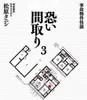
The third entry in the "Scary Floor Plans" series, a true-story report that also touches on how stigmatized properties have changed since the pandemic — a reference for our stigmatized-property articles.
Stigmatized Property Ghost Stories: Scary Floor Plans 3 (Tanishi Matsubara / Futami Shobo)
We may earn a referral fee on purchases made through these links.
A Note on Using This Dictionary
This article and our “Zokushin and Omen Dictionary” are offered as reading material for entertainment and for learning about Japanese sayings, and do not guarantee any outcome. They are not a substitute for important decisions about medicine, law, investment, education, employment, marriage, housing, and the like. Please make such decisions yourself after consulting experts or people you trust.
For many zokushin, no clear record of the origin remains, and the explanations in the dictionary and in this article are limited to presenting traditions in the form of “there is a theory that…” or “it is said that….” The meaning and wording of even the same saying can differ greatly by region and by family.
Matching a saying regarded as a bad omen does not decide anything. If someone stirs up anxiety with claims like “this omen is the beginning of misfortune” or “your family will meet disaster if this continues,” and recommends expensive purification, prayer, readings, or the purchase of lucky charms, please do not decide on the spot; take it home and think calmly. If you are in trouble, you can also consult a service such as the Consumer Hotline (188).
Using a saying as a reason to speak ill of or keep away from someone because of their birth year, family background, or physical features leads to discrimination. Our site does not include folk beliefs that carry such a risk.
Please do not try to deal with physical ailments only through sayings or charms; if you have symptoms of concern, see a medical institution. Also, if reading sayings about the death of someone close makes your sadness or anxiety stronger, please do not carry it alone; consult someone close to you or a specialized service.
The historical statements in this article are compiled in our own words from several sources. The parts marked “our view” or “speculation” are this site’s own reflections, not established theory.
If the pain of losing someone close or a low mood continues, please do not bear it alone; rely on a consultation service such as the Yorisoi Hotline (0120-279-338, free, 24 hours, in Japanese).
Frequently Asked Questions
Q. What are zokushin?
A. They are sayings passed down in daily life that people believed in even though their logic cannot be verified. They include omens (yochō), divination (bokusen), taboos (kinki), and charms (jujutsu), and they are also a subject of folklore studies.
Q. What is the difference between zokushin and superstition?
A. One view calls the whole body of sayings born from lived experience “zokushin,” and specifically calls those that cause real harm to society, such as discrimination or damage to health, “meishin” (superstition). However, the boundary between the two is not clearly fixed.
Q. Do zenchō and yochō mean the same thing?
A. They are used with almost the same meaning. Both refer to “signs” said to foretell what is about to happen. In our dictionary, among folk beliefs, sayings told as forewarnings of something are called “omens” (zenchō).
Q. Do folk beliefs come true?
A. For most zokushin, scientific grounds have not been confirmed. On our site we present them not as something to be judged right or wrong, but as reading material for learning what people of the past feared and hoped for.
Q. Is it really true that if you cut your nails at night, you won’t be at your parents’ deathbed?
A. There is no evidence of such a causal link. Theories on the origin include a warning about using a blade in the dark and a wordplay theory that “yozume” (night nails) sounds like “yozume” (shortening one’s life). If you cut them calmly in a bright place, you will be fine.
Q. I slept with my head to the north. Is that unlucky?
A. North-facing pillows are avoided because, according to tradition, the Buddha lay with his head to the north when he died, and the custom of laying the dead with their heads to the north spread from that. It was originally also a sacred direction, and nothing happens if a living person sleeps with their head to the north.
Q. Is it true that the meaning changes depending on the number of sneezes?
A. Wordings such as “one is praised, two are hated, three are loved, and four is a cold” are said to come from the belief that a sneeze is a sign someone is gossiping about you. The wording differs by region and era, and it has been enjoyed as a playful saying.
Q. What should I do if I match a bad omen?
A. Matching one does not decide anything. If you are worried, read the explanation of the origin and think about what people of the past wanted to warn against. Most of these sayings were born from concern for safety and for family.
Q. Why does the meaning of the same saying differ by region?
A. Because folk beliefs spread by word of mouth, they are thought to have gradually changed shape according to local daily life, faith, and language. It is not unusual for something to be lucky in one region and unlucky in another. The dictionary mainly introduces representative forms and theories.
Q. Why are sayings about Hinoeuma not included?
A. Zokushin such as Hinoeuma and tsukimonosuji, which are tied to people’s birth or family lineage and may lead to discrimination or prejudice, are intentionally not included. This is because such sayings have actually hurt many people in the past and had a large effect on society.
Q. I can’t find a saying from my hometown.
A. The dictionary contains 225 entries, chosen mainly from those widely known across the country. Sayings handed down only in one locality may not be included. Try shortening the keyword, changing the wording, or looking for something close in the list at the bottom of the page.
Q. Is “Draw one saying for today” a fortune-telling result?
A. No. It is a function that displays one saying from the 225 and does not judge your luck. Please enjoy it casually as a topic of conversation for the day or a chance to learn about life in the past.
Q. Why must funerals not be held on tomobiki?
A. Tomobiki is said to have originally meant a day when no one wins or loses, but from the look of the characters it came to be read as “pulling a friend” (the dead person takes a friend along), and it became a day to avoid funerals. In recent years, some municipalities have begun to hold cremations on tomobiki too.
Q. What should I do if I receive a pitch that stirs up anxiety?
A. Even if you are told things like “this omen is the beginning of misfortune” and are urged to buy expensive purification rituals or goods, do not decide on the spot; take it home and think calmly. If you are in trouble, you can consult a service such as the Consumer Hotline (188).
Q. Is our Zokushin and Omen Dictionary free to use?
A. Yes. You can use it for free just by entering a keyword or pressing “Draw one saying for today.” You do not need to enter personal information such as your date of birth.
Related Fortune-Telling to Try Next
Like zokushin, these are fortune-telling forms that listen closely to “signs” around us and signals from the unseen. Reading them side by side, you can savor how people in the past felt things from various angles.
For Deeper Reading
Here are articles that dig into the same theme from a different angle.
Sources Consulted
This article was compiled in our own words with reference to the following sources (it is not a copy of their text). The examples of “Ms. A” and “Mr. B” in the article, the number of entries in the dictionary, the number per category, and the tendencies of good and bad omens are the results of checking the recorded data of our “Zokushin and Omen Dictionary.”
- Zokushin – Kotobank
- Zokushin – Wikipedia
- Folklore studies – Kotobank
- Inokuchi Shōji, “Nihon no Zokushin” (Kodansha Academic Paperback) – Kinokuniya
- Article on “Nihon no Zokushin” – Gendai Business
- Koike Jun’ichi, “Folklore of the Eye: One Foundation of Kizashi, Kotae, Imashime, Majinai” – Bulletin of the National Museum of Japanese History
- Suzuki Tōzō, “Nihon Zokushin Jiten: Animals” – KADOKAWA
- Why you should not cut your nails at night – All About
- North-facing pillow – Kotobank
- The origin of the word for sneezing – Oggi.jp
- Tomobiki – Kotobank
- Cremation is possible even on tomobiki, Sapporo City – Hokkaido Shimbun
- Why tea stalks standing up bring good luck – Wraku Web
- What is “Hinoeuma,” the saying that led people to have fewer children? – Zeirishi.com
- Article on Hinoeuma and birth numbers – Resemom
KARASU CHANNEL publishes investigation videos of ghost stories and haunted spots on KARASU CHANNEL (YouTube).
Supervised by Ms.M
Affiliation: KARASU CHANNEL
Traditions studied: 12+ (Western astrology, Four Pillars of Destiny, Nine Star Ki, tarot, runes, palmistry & physiognomy, name numerology, numerology, feng shui, Vedic astrology / Zi Wei, Onmyodo, spiritual reading, and more)
Personal readings: by request via Contact,
currently booked years out
Which story do you find the scariest?
If you think this story is the scariest, press the button below. One vote site-wide — you can change your vote for a different story anytime.
Was this article helpful?
Add this to your favorites to find it again anytime from your My Page.







Comments