Mount Osore and the Itako — The Misconception of a ‘Spirit-Channeling Mountain,’ and Its Vanishing Shamans
Supervised by Suzuking. (KARASU CHANNEL / Occult & horror reporting, 7 years)

Contents
View sources and last-checked date
- Source
- Wikipedia, "Itako" https://ja.wikipedia.org/wiki/イタコ
- Source 2
- nippon.com https://www.nippon.com/ja/japan-topics/g02228/
- Source 3
- Bunshun Online https://bunshun.jp/articles/-/86765
- Source 4
- Wikipedia, "Bodaiji Temple (Mutsu City)" https://ja.wikipedia.org/wiki/菩提寺_(むつ市)
- Last verified
- 2026-09-16
In the northern part of Mutsu City, Aomori Prefecture, Mount Osore rises around Lake Usoriyama and is counted, alongside Mount Hiei and Mount Kōya, as one of Japan’s Three Great Sacred Sites. Its barren, sulfur-belching rock face is called “Hell,” while the white sand beach along the lake is known as “Paradise Beach” — a landscape where this world and the next seem to run together, drawing worship for generations as a mountain for memorializing the dead. And Mount Osore is almost always associated with the itako, blind female shamans said to channel the words of the dead. In fact, however, digging into the facts reveals that the itako have no direct connection to Mount Osore itself.
Origin — A Mountain of Walking Through “Hell” and “Paradise”
According to temple tradition, Osorezan Bodai-ji was founded in 862 by the Tendai monk Ennin (Jikaku Daishi), who visited the site. After a period of decline, the monk Shūkaku revived it in 1522 with the support of the Nanbu clan, and it was reorganized at that time as a Sōtō Zen temple. In the early Meiji era, the temple’s main hall, Entsu-ji, also served for a time as the administrative seat of Tonami Domain, where the defeated former Aizu clan was relocated after the Boshin War — making this site deeply tied not only to religious worship but to the history of the region itself. Hot springs and steam vents dot the temple grounds, alongside terrain called Sai no Kawara (“the dry riverbed of souls”) and Paradise Beach. The piles of stacked stones are the very image of the Sai no Kawara legend, in which children who died before their parents endlessly stack stones to atone for the grief they caused — a sight said to leave many visitors speechless.
The Itako and Mount Osore — Actually Unrelated?
The itako are shamans who perform kuchiyose — channeling the spirits of the dead into their own bodies to let them speak. The practice is said to have begun in the mid-Edo period in the Nanbu region of Aomori Prefecture, when a blind shaman named Taisoba passed the technique to a yamabushi ascetic named Chorinbō and his wife, Takadateba, who then organized blind women into the profession. It’s a rigorous, professional discipline: an apprentice trains under a master for several years, learning exorcism formulas and techniques, and is only recognized as fully qualified after passing rites of passage such as a mountain retreat. As it happens, though, the itako were never based at Mount Osore itself. Each lived in her own local community, and visited Mount Osore only during the great festivals held in summer (July) and autumn (October), setting up temporary stalls there to attract clients. In other words, the image of “Mount Osore as the mountain of the itako” is something closer to a popular misconception — an outside merging of two separate things: the mountain’s own standing as a place close to the world of the dead, and the itako who simply happened to gather there during the festivals.

Essential gear for documenting places like this: a light bright enough to properly illuminate the ground underfoot. Here’s the high-output LED light we use in our own fieldwork.
GENTOS LED Light 600lm, IP66 Compliant RX-022DS
Why It Became Famous Nationwide
The image of Mount Osore and the itako as one and the same is largely credited to media coverage from the Shōwa era onward. Television and magazines repeatedly ran the pairing of “the itako of Mount Osore,” cementing an image among viewers and readers that “you can meet an itako by going to Mount Osore.” Shamans performing similar kuchiyose exist under different names elsewhere too — called ogamisama in southern Iwate and Miyagi Prefectures, onakama in Yamagata, and mikosama in Fukushima — so this is by no means unique to Mount Osore. Still, Mount Osore became disproportionately famous as the “sacred site of spirit-channeling” likely because the combination of a visually striking landscape of death — Hell and Paradise — together with someone actually present to relay the words of the dead, carried more narrative power than any other location.
The Itako and Mount Osore Today — Spirit-Channeling on the Brink of Extinction
Today, waiting for an itako’s kuchiyose during Mount Osore’s great festival can mean standing in line for several hours — sometimes close to ten. The reading itself, by contrast, lasts only about ten minutes. This extreme imbalance between supply and demand reflects the itako’s own rapidly shrinking numbers. Traditionally an occupation for blind or visually impaired women, advances in medicine have reduced the number of people with such impairments, and the generation of masters who would train new apprentices has already aged into retirement, leaving almost no one entering the profession. Only a handful of traditionally trained itako remain, and it’s said that a single woman in her nineties, blind from birth, is nearly the last of her kind. A skill once passed down as a livelihood is quietly reaching its end for lack of successors.
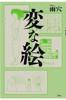
A horror mystery by Uketsu that unravels the unease hidden in a single painting. A useful reference for our analysis-style articles.
Strange Pictures (Uketsu / Futabasha)

A portable shovel for clearing dirt from poor footing at a ruin or mountain haunted spot, or for digging a car out if it gets stuck in snow or mud.
CAPTAIN STAG Steel Folding Shovel with Bag M-3249, Portable, Outdoor/Camping/Car Use
We may earn a referral fee on purchases made through these links.
Reflection — Why Do People Choose “Ten Hours in Line for Ten Minutes”?
From here on, this section reflects our own speculation. Experts have often pointed out that much of what happens in an itako’s kuchiyose resembles cold reading — a technique of making general statements and adjusting them based on the listener’s reactions. And yet many people still endure a long wait to receive one. We suspect this is because the value lies less in whether the words turn out to be “accurate” than in the experience itself of getting to “speak” with the deceased once more. Through the voice of a third party — the itako — the bereaved can say things they could never say on their own, or receive answers they never got to hear. In other words, we think the itako has functioned less as a device for summoning spirits than as a device that lets the bereaved confront their own grief.
One more thing worth not overlooking is that the itako have historically been women with visual impairments. In an era without a developed welfare system, options for a blind woman to live independently were limited. The itako profession, while demanding rigorous training, can also be seen as a system that gave these women both a skill and a place in society. Even as Mount Osore’s landscape of “Hell and Paradise” drew worship of the dead, at its foot, a quieter story was being woven — one of living women achieving independence. Now that the line of itako successors is fading, what we may be watching disappear is not just a spiritual culture, but this very system by which the vulnerable achieved independence through skill.
Notes for Visitors
Osorezan Bodai-ji is an active religious institution, and should be visited first and foremost as a sacred site for memorializing the dead, not as a place to receive a kuchiyose reading. Itako readings are offered only at temporary stalls set up on the grounds during the great festivals (typically July and October) and are not available year-round. Anyone considering a visit should check the dates and reception procedures with the temple or local tourism information beforehand. Some areas of the grounds emit volcanic gas, so please follow all posted signage and instructions. This article is published to document the site, not to encourage visiting it as a test of courage or out of idle curiosity — please refrain from disrespectful behavior.
![Kao Biore u Hand Sanitizer Spray Skit Guard, Portable 30ml [Quasi-Drug] product image](https://karasu-ch.com/wp-content/uploads/2026/09/kao-biore-u-hand-sanitizer-spray-3096.webp)
A palm-sized portable alcohol sanitizer spray — for a quick disinfect of door handles, gear, and hands right after exploring a ruin or haunted spot.
Kao Biore u Hand Sanitizer Spray Skit Guard, Portable 30ml [Quasi-Drug]
We may earn a referral fee on purchases made through these links.
Frequently Asked Questions
Q. Do the itako live at Mount Osore year-round?
A. No. Each itako lives in her own local community and travels to Mount Osore only during the great festivals, typically held in July and October. There’s no direct institutional link between Mount Osore and the itako.
Q. Can you still request a kuchiyose reading from an itako today?
A. It’s said to be possible during the great festival periods, but the number of traditionally trained itako has fallen sharply due to a lack of successors, and whether this can continue in the same form is uncertain. We recommend checking the latest situation before visiting.
Q. Has KARASU CHANNEL filmed at Mount Osore?
A. No, we haven’t filmed there yet, though we’re considering it. You can watch our footage from other haunted locations and ghost stories on our YouTube channel, KARASU CHANNEL.
Japanese horror 鴉番組

Supervised by Suzuking.
Affiliation: KARASU CHANNEL
Occult & horror reporting: 7 years (since 2020)
Followers: YouTube 5,000+ / X 25,000+
On-site investigations: 30+
Which story do you find the scariest?
If you think this story is the scariest, press the button below. One vote site-wide — you can change your vote for a different story anytime.
Was this article helpful?
Add this to your favorites to find it again anytime from your My Page.









Comments