What Is Yakudoshi? Kazoedoshi, Mae-yaku, Hon-yaku and Ato-yaku, and the Theories Behind “Yaku” Once Meaning “Duty”

Supervised by Ms.M
Affiliation: KARASU CHANNEL
Traditions studied: 12+ (Western astrology, Four Pillars of Destiny, Nine Star Ki, tarot, runes, palmistry & physiognomy, name numerology, numerology, feng shui, Vedic astrology / Zi Wei, Onmyodo, spiritual reading, and more)
Personal readings: by request via Contact,
currently booked years out

Contents
“This year is a yakudoshi, so be careful.” Has a family member or friend ever said that to you? Or perhaps you saw banners advertising “yaku-barai” (purification rites) at a New Year shrine visit and found yourself counting your own age. Yakudoshi is a long-standing Japanese custom tied to the milestones of a lifetime.
Yet the word “yaku” carries such a strong impression that many people brace themselves, assuming it means a year when something bad will happen. This article walks through it in plain language, one step at a time: what yakudoshi is, which ages are affected, what kazoedoshi (the traditional way of counting age) is, what mae-yaku, hon-yaku and ato-yaku mean, and where the custom came from.
First, something important. There is no solid scientific research showing that your fortune actually worsens in a yakudoshi year. How the custom is understood also differs from shrine to shrine, temple to temple and sect to sect. This article is not meant to stoke anxiety. It is meant to help you learn about a custom rooted in Japanese life and quietly look at your own milestones.
Whenever a specialist term appears, I rephrase it in a quote box labeled “Put simply.” In the second half I have also added our own reflections, which go beyond a summary of the history. Parts that reflect our own view or speculation are clearly marked as such.
Key Points (a 3-Minute Summary)
- Yakudoshi refers to ages at which changes in body and circumstances are said to come more easily, so that it has traditionally been considered wise to live carefully. It is an old Japanese custom, and its origins are debated.
- The count uses “kazoedoshi.” You are 1 at birth and add a year every New Year (this year’s calendar year minus your birth year plus 1). It differs from your Western-style age by one or two years.
- The target ages (all in kazoedoshi) are 25, 42 and 61 for men, and 19, 33, 37 and 61 for women. A man’s 42 and a woman’s 33 are called “taiyaku” (major yaku years).
- The year before hon-yaku is “mae-yaku” and the year after is “ato-yaku,” so the idea is to stay mindful for three years in total.
- One theory holds that the “yaku” of yakudoshi (meaning misfortune) was originally a different “yaku” meaning a duty in shrine festivals, and that it was an honorable, celebratory year. The origin is not firmly established, however.
- No statistics or scientific evidence confirm that misfortune increases in yakudoshi years. Treat it calmly, as a prompt to check in on your body and life.
What Is Yakudoshi? A Japanese Custom of Living Carefully for a Year
Yakudoshi are the ages at which people are said to be more prone to illness or to changes in their home and work lives. It is often explained as a “year when misfortune is likely,” but the Association of Shinto Shrines (Jinja Honcho) describes it as a time of turning points in physical strength, family life and one’s relationship with society. In other words, it is closer to the original meaning to see it not as “a year when bad things will surely happen” but as “a milestone year, so let’s spend it more carefully than usual.”
The target ages differ for men and women. It is also customary to be mindful not only of the central year, called hon-yaku, but of the years before and after it. This set of three is explained in the next section.
Put simply, yakudoshi is a uniquely Japanese custom of “creating a chance to review your health and life at the ages that mark milestones.” It helps to think of it as closer to an annual event or a rite of passage than to fortune-telling.
Mae-yaku, Hon-yaku, Ato-yaku: Thinking in Sets of Three Years
Yakudoshi does not end with a single target age. The year before hon-yaku is called “mae-yaku” and the year after is called “ato-yaku,” and you stay mindful for three years in a row. Mae-yaku is explained as the year when signs of yaku begin to appear, hon-yaku as the year at its center, and ato-yaku as the year when the worry gradually fades.
- Mae-yaku: one year before hon-yaku. A run-up year, preparing for the milestone.
- Hon-yaku: the year of the target age. The center of the three years.
- Ato-yaku: one year after hon-yaku. A year of crossing the milestone and settling back down.
For example, if a man’s hon-yaku is at 42 in kazoedoshi, then 41 is mae-yaku and 43 is ato-yaku. For men, the three years of 41, 42 and 43 therefore form one block.
Put simply, mae-yaku is the “run-up,” hon-yaku is the “main event,” and ato-yaku is the “cool-down.” It does not mean bad things continue for all three years. It is a way of being gently mindful around a milestone.
What Is Kazoedoshi? You Are 1 at Birth, and Everyone Ages Together at New Year
Yakudoshi ages are counted not in the “man-nenrei” (Western-style age) you use every day, but in “kazoedoshi.” This way of counting is the easiest thing to get wrong about yakudoshi.
In kazoedoshi, the year you are born counts as age 1. Then, every time New Year’s Day arrives, everyone adds a year at once. Your birthday does not matter. As a formula:
- Kazoedoshi = this year’s calendar year − birth year + 1
The difference from Western-style age is one or two years, depending on whether your birthday has passed. If your birthday has not yet come this year, your kazoedoshi is two above your Western-style age; if it has passed, it is one above. For example, in 2026 someone born in 1990 is 2026 − 1990 + 1 = 37 in kazoedoshi. Their Western-style age is 35 before the birthday and 36 after, so the two numbers look quite different.
Put simply, kazoedoshi is a way of counting in which “the birth year is age 1, and everyone gets one year older all at once at New Year.” It is often explained that the time spent in the womb is counted as the first year.
Kazoedoshi was once the ordinary way of counting age in Japan. Later, Western-style age came into use in law and institutions, and today kazoedoshi is hardly used in daily life. Even so, the idea survives in yakudoshi, in longevity celebrations such as kanreki, koki and kiju, and in events like Shichi-Go-San.
There is one point to be careful about. The day kazoedoshi changes is generally New Year’s Day, but some shrines hold that it changes at Setsubun to Risshun (usually around February 4). There is also a view that uses the lunar New Year, but it is complicated to calculate and seems seldom adopted. Because of these differences, between January and early February the applicable year can shift by one depending on the shrine or calendar site. Our tool uses New Year’s Day as the switch for the yakudoshi judgment (only the hoppo-fusagari from Kyusei Kigaku, which we display alongside it, uses Risshun as the year boundary). If you are unsure, it is safest to ask the shrine or temple you plan to visit.
Which Ages Are Yakudoshi? The Target Ages for Men and Women, and Taiyaku
The target ages (hon-yaku) are shown consistently in multiple sources, including the official website of the Association of Shinto Shrines and specialist calendar sites, as follows. All are in kazoedoshi.
- Men: 25, 42 and 61
- Women: 19, 33, 37 and 61
Among these, a man’s 42 and a woman’s 33 are called “taiyaku” (major yaku years), and have been treated as years requiring special care. Including the years before and after, the yakudoshi periods are: for men, ages 24-25-26, 41-42-43 and 60-61-62; for women, 18-19-20, 32-33-34, 36-37-38 and 60-61-62.
Put simply, taiyaku is “the biggest milestone among the yakudoshi years.” It applies to men at 42 and women at 33. Note that a woman’s 37 is hon-yaku but not taiyaku.
For women, only age 35, between 33 (ato-yaku at 34) and 37 (mae-yaku at 36), is left as a gap. As a result, women’s yakudoshi periods run on and off from the early 30s through the late 30s.
The 61st Year Coincides with Kanreki
Age 61, common to both men and women, is the year of kanreki. Kanreki means returning to the same zodiac sign as the year you were born, after 60 years. At 61 in kazoedoshi you return to the zodiac sign of your birth year, which is why kanreki is explained as “61 in kazoedoshi.”
Kanreki is a milestone for celebrating long life, so the 61st year as a yakudoshi can be seen as a year when celebration and caution overlap. I return to this point in the reflections in the second half.
Birth Years Falling on Yakudoshi in 2026
Running the judgment logic of our yakudoshi tool for 2026 gives the following (kazoedoshi = 2026 − birth year + 1).
- Men’s mae-yaku: born 1986 (41), 2003 (24) and 1967 (60)
- Men’s hon-yaku: born 1985 (42, taiyaku), 2002 (25) and 1966 (61)
- Men’s ato-yaku: born 1984 (43), 2001 (26) and 1965 (62)
- Women’s mae-yaku: born 1995 (32), 1991 (36), 2009 (18) and 1967 (60)
- Women’s hon-yaku: born 1994 (33, taiyaku), 1990 (37), 2008 (19) and 1966 (61)
- Women’s ato-yaku: born 1993 (34), 1989 (38), 2007 (20) and 1965 (62)
The birth year is one unit running from New Year’s Day to New Year’s Eve, regardless of your birth month and day. Someone born on January 1 and someone born on December 31 of the same year get the same judgment. Note, however, that because hoppo-fusagari uses Risshun as the year boundary, people born from January 1 up to just before Risshun are judged as born in the previous year (explained in “How to Read Our Yakudoshi Fortune Tool”).
A Worked Example: Ms. A’s Yakudoshi Calendar
Ages are hard to feel when described only in words. So this article uses a fictional “Ms. A” and results actually calculated with our tool’s logic. Ms. A is a woman born on January 1, 2000 (not a real person).
In 2026, Ms. A is 2026 − 2000 + 1 = 27 in kazoedoshi. The target ages for women are 19, 33, 37 and 61, and the years before and after (18, 20, 32, 34, 36, 38, 60 and 62) do not apply either, so the result for this year is “not mae-yaku, hon-yaku or ato-yaku.”
So when will Ms. A’s yakudoshi arrive? Calculated year by year with the tool’s logic, it looks like this.
- 2031 (age 32): mae-yaku for 33
- 2032 (age 33): hon-yaku and taiyaku for 33
- 2033 (age 34): ato-yaku for 33
- 2034 (age 35): not applicable (the gap)
- 2035 (age 36): mae-yaku for 37
- 2036 (age 37): hon-yaku for 37 (not taiyaku)
- 2037 (age 38): ato-yaku for 37
Neither 2026 through 2030 nor 2038 through 2040 apply. Of the seven years from 2031 to 2037, six, all except 2034, fall in a yakudoshi period. Laid out like this, it becomes clear that “yakudoshi is a limited stretch of a lifetime, and other years are perfectly ordinary years.”
Incidentally, someone born on January 1 like Ms. A and someone born on December 31, 1999 are one day apart in birth, yet their kazoedoshi differs by two (someone born on December 31, 1999 is 28 in kazoedoshi in 2026). This is because kazoedoshi is set by birth year, not birthday.
Here is one more example. The people who fall exactly on taiyaku in 2026 are men born in 1985 (42 in kazoedoshi) and women born in 1994 (33 in kazoedoshi). Enter your date of birth and gender in the tool, and it shows something like “This year is hon-yaku (target age 42, taiyaku).”
Where Yakudoshi Came From: From Heian Aristocrats to Edo Commoners
When, and by whom, was yakudoshi decided? In fact this is not clear. Many sources say it originates in Onmyodo (a Japanese system of divination and calendrical practice), but encyclopedias also note that there is no firm source for this. Here I follow the records that can be confirmed, in chronological order.
The Heian Period: “Yaku” in Tales and Dictionaries
The earliest known records of yakudoshi come from Heian-period texts. Among tales, “Utsuho Monogatari” has a scene in which the Minister of the Left refrains from activity because it is his yakudoshi, and this is often cited as the earliest appearance in literature. “The Tale of Genji” also has a scene in which a woman of 37 is said to be in a year to be careful about, suggesting the idea of yakudoshi already existed in aristocratic society at the time.
In addition, “Iroha Jiruisho,” a Heian-period dictionary, is said to list ages such as 13, 25 and 37 under the entry for “yaku.” It is interesting that this differs a little from today’s list of ages. The ages of yakudoshi may have changed over time. However, within the sources we could confirm, it is not clear when the current form (men 25, 42, 61; women 19, 33, 37, 61) settled.
From an Aristocratic Custom to the Common People
In the Heian period yakudoshi was mainly a custom among the aristocracy. It is said to have spread to commoners through the Edo period. For ordinary people it took root in daily life as visiting shrines and temples to have yaku-barai (yaku-yoke) performed. Even today, many shrines and temples hold purification and yaku-yoke prayer services.
The Wordplay Explanation
Wordplay is also often used to explain the yakudoshi ages. For example, a man’s 42 can be read as “shi-ni” (to die), and a woman’s 33 as “san-zan” (terrible). There are other theories that explain each age through wordplay or the numbers of yin and yang, but none has firm grounds as an established theory. Some see them as reasons added afterward that spread through the public. One Shinto scholar calls such wordplay “nothing but superstition” and warns that being too fixated on it may actually bring you a terrible time.
Put simply, the wordplay “42 is ‘to die,’ 33 is ‘terrible'” spread because it is easy to remember, but it has not been confirmed as the origin. It is best taken as “that is how it has been explained.”
Was “Yaku” Once “Duty”? Another Way of Reading It
There is another interesting theory. The official website of the Association of Shinto Shrines explains that yakudoshi were originally celebratory ages, like the age celebrations (toshi-iwai) of kanreki and koki. These were the ages at which one joined the “miyaza” that supports the festival of the ujigami (the local guardian deity), took part in Shinto rites, and took on responsible roles in the community. In that sense, the idea is that “yaku” (misfortune) really meant “yaku” (duty), serving the deity. One Shinto scholar also argues that yakudoshi were originally “yakudoshi” in the sense of “years of duty”, and that taiyaku was the year one was given a “great duty.”
If this theory holds, yakudoshi was not a year to fear, but the start of being entrusted with social responsibility and recognized by those around you. However, it is only one of several explanations and cannot fully account for the origin of yakudoshi. It is safest to see the understanding of a “year to avoid disaster” and that of a “year of taking on a role” as having overlapped over a long period.
Put simply, in the theory that the character for “yaku” comes from “duty,” yakudoshi was originally an “honorable year in which you were given an important role in the local festival.” Somewhere along the way it came to be spoken of as a “year to be careful about disaster.”
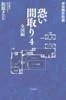
The fourth entry in the "Scary Floor Plans" series, a nationwide edition reporting on stigmatized properties from Hokkaido to Okinawa — worth introducing alongside our region-by-region spot articles.
Stigmatized Property Ghost Stories: Scary Floor Plans 4 - Nationwide Edition (Tanishi Matsubara / Futami Shobo)
We may earn a referral fee on purchases made through these links.
The Custom of Yaku-barai and Yaku-yoke: Shrines, Temples, and Differences in Outlook
Receiving prayers at a shrine or temple when yakudoshi arrives is generally called “yaku-barai” or “yaku-yoke”. Some distinguish the two, with shrines calling it yaku-barai and temples calling it yaku-yoke, but both are ceremonies performed with the wish to “pass this milestone year in peace.”
Many people receive it between New Year, when kazoedoshi changes, and Setsubun (around February 3). The Association of Shinto Shrines explains, however, that there is no legal rule or deadline, and that unless the region has a special custom, there is no rule that you must go by a certain date. Rest assured: it is not the case that “since I couldn’t go, it’s all over.”
Shrines, Temples and Sects Differ in Their Views
Views on yakudoshi differ by religion and sect. Many shrines and temples perform yaku-barai and yaku-yoke prayers, but not all are the same. For example, the head of the Jodo Shinshu Hongwanji-ha, Ohtani Kojun, has said in essence that Jodo Shinshu has no concept of “yaku” itself, so there is no need to watch out in yakudoshi or to receive yaku-yoke. This rests on the teaching that one does not judge the good or bad of life by human standards alone.
It is not a matter of which view is correct. Some find in a shrine’s yaku-barai a way to compose their hearts so as to properly greet a milestone, while others, from the standpoint of their teachings, make no distinction of yakudoshi. Each faith and outlook deserves respect, and this site has no intention of ranking the differences. It is a good idea to check the views of your own or your family’s sect and temple.
Put simply, yaku-barai is “a ceremony in which, in a milestone year, you settle your heart and put your hands together before the gods or the Buddha.” Whether to do it is up to you, and views differ by sect. It is not something that is “dangerous if you don’t do.”
What to Know If You Receive Yaku-barai
- Schedules, reception and fees (hatsuho, gokito-ryo) differ by shrine or temple. It is reassuring to check the official website or call ahead.
- If you are told “it’s your yakudoshi” and urged to buy an expensive prayer service or lucky charms, do not decide on the spot. Take it home and think it over.
- Even if you do not receive yaku-barai, many people feel that having a health checkup or putting your life in order is itself an important form of yaku-yoke.
How to Read Our “Yakudoshi Fortune” Tool
Let me connect what we have covered to the items on our tool’s result screen. Our yakudoshi tool works as follows.
- Kazoedoshi: calculated from your date of birth for this year (the calendar year to which today’s date belongs) and displayed. The formula is this year’s calendar year − birth year + 1. The year changes on New Year’s Day; the approach of switching at Setsubun, Risshun or the lunar New Year is not adopted.
- If gender (optional) is not entered: your kazoedoshi and a list of target ages (men 25, 42 [taiyaku] and 61; women 19, 33 [taiyaku], 37 and 61) are displayed for reference. Mae-yaku, hon-yaku and ato-yaku are not judged.
- If gender (optional) is entered: the tool judges whether this year is mae-yaku, hon-yaku or ato-yaku, and shows the target age and whether it is taiyaku. For years that do not apply, it displays “not mae-yaku, hon-yaku or ato-yaku,” with that gender’s list of target ages added for reference.
- Note: a short line explains that yakudoshi is a traditional custom that warns, as the wisdom of our predecessors, about a period when changes in body and mind are said to occur easily, and that this is a year in which many people receive yaku-yoke and yaku-barai at shrines and temples.
- Hoppo-fusagari: from your date of birth, the tool finds your honmeisei (natal star) in Kyusei Kigaku and shows whether this year is a hoppo-fusagari year for that star. The year boundary is Risshun.
- Etiquette for yaku-yoke and yaku-barai, and the origin of yakudoshi: short columns follow on general etiquette such as when to receive it, what it is called and the custom of giving gifts, and on how yakudoshi came about.
Hoppo-fusagari (“blocked in all eight directions”) is a separate idea from yakudoshi, from a calendar divination called Kyusei Kigaku (Nine Star Ki). In Kyusei Kigaku, depending on your birth year, one of nine stars from Ippaku Suisei (One White Water Star) to Kyushi Kasei (Nine Purple Fire Star) becomes your “honmeisei.” In the yearly chart of star positions (nenban), the year when your honmeisei enters exactly the center (chugu) is called hoppo-fusagari, a year when you are blocked on all eight sides and find it hard to move. Because the stars’ positions shift by one each year, it comes around about once every nine years. In 2026, the One White Water Star enters the center.
What to note is that in Kyusei Kigaku the year boundary is not New Year’s Day but Risshun (usually around February 4). So people born from January 1 up to just before Risshun are counted as born in the previous year when finding their honmeisei. For example, the example Ms. A (born January 1, 2000) was born before Risshun, so her honmeisei is the same One White Water Star as people born in 1999. The result is that 2026, which is not a yakudoshi for her, is a hoppo-fusagari year. Because the way of counting and the thinking are different from yakudoshi, view the two side by side as loose guides.
Below the result, we also summarize the general etiquette for yaku-yoke and yaku-barai. Many people receive it between the start of the year and Setsubun; shrines often call it “yaku-barai” and temples “yaku-yoke”; and there is a custom of giving people in their yakudoshi “long things” such as obi sashes and neckties, or small items with a scale pattern. We also added a short column on the origin of yakudoshi. Customs and names vary by region and shrine or temple, so when you actually visit, follow the guidance of the place you are visiting.
The target ages used in the judgment were adopted after confirming that two independent sources, the official website of the Association of Shinto Shrines and a Japanese calendar specialist site, match completely. On the other hand, because it is a simple version, the following points are not included.
- Adjustments for fine differences in date of birth (birthday, Risshun, Setsubun) in the yakudoshi judgment (the hoppo-fusagari judgment uses Risshun as the year boundary)
- Differences in custom by region and shrine (such as differences in the day kazoedoshi changes)
- The judgment for people who choose “do not select” in the gender field (three options are offered: “male,” “female” and “do not select,” and the judgment is made only when male or female is chosen. Even if you do not choose, you can still compare both lists of target ages)
- Any judgment of whether fortune is good or bad during yakudoshi
Please take the result as one of many views, and as a guide for checking the milestones of your own age. The gender field is optional, so if you would rather not enter it, you can leave it blank and see only your kazoedoshi and the list of target ages.
Yakudoshi Quick Glossary
Here are the terms from the article, each in a phrase. Use it as a dictionary when you are unsure.
- Yakudoshi: ages at which changes in body and circumstances are said to come more easily, so that it has been considered wise to live carefully.
- Kazoedoshi: a way of counting in which the birth year is age 1 and everyone adds a year at each New Year.
- Man-nenrei (Western-style age): the current common way of counting, in which the day of birth is age 0 and you add a year at each birthday.
- Mae-yaku: one year before hon-yaku. The year when signs of yaku are said to begin to appear.
- Hon-yaku: the year of the target age. The center of yakudoshi.
- Ato-yaku: one year after hon-yaku. The year when the worry is said to fade.
- Taiyaku: the yakudoshi years that have been treated with special caution. A man’s 42 and a woman’s 33.
- Yaku-barai / yaku-yoke: prayers received at shrines and temples wishing for a safe milestone year.
- Toshi-iwai: the custom of celebrating specific ages such as kanreki, koki and kiju.
- Kanreki: the milestone at 61 in kazoedoshi, returning to the zodiac sign of the year of your birth.
- Onmyodo: a system of divination, magic and the calendar that developed in Japan from the ancient Chinese theory of yin-yang and the five elements.
- Ujigami: the deity said to protect the people living in a locality.
- Miyaza: an organization in which local people take turns carrying out the rites for the ujigami.
- Hoppo-fusagari: in Kyusei Kigaku, the year in which your honmeisei enters the center (chugu) of that year’s chart. Said to come about once every nine years. The year boundary is Risshun.
How Yakudoshi Is Used Today
Yakudoshi is widely known in Japan today. Around New Year, many shrines and temples take applications for yaku-barai, and quick-reference charts by age, showing who falls under it that year, appear on many shrine and calendar sites. Some people also get purified, replace items around them, or get a health checkup to coincide with their yakudoshi.
On the other hand, more people are not conscious of yakudoshi or think “there’s no point worrying about it.” Some sects do not adopt the idea of yakudoshi at all. It is a custom on which views differ greatly from person to person.
As far as I could find in the sources I consulted, there are no statistics showing that disasters or illness actually increase in yakudoshi years. Encyclopedias also state that yakudoshi has no scientific basis and that no statistics prove it. This site introduces yakudoshi not as a scientific fact but as a culture and custom rooted in Japanese life, and as a chance to look again at your own body and life.
Still, it is often pointed out that the ages regarded as yakudoshi tend to overlap with milestones in life: ages when responsibility at work grows, when child-rearing or caring for parents begins at home, and when the body becomes less able to take strain. This is not a scientifically verified conclusion, but the view of “it’s a milestone, so let’s pause a little and take stock” is also a practical one.
Five Tips for Getting Along Well with Yakudoshi
- Think of it as a “checkup year,” not a “year when bad things will surely happen”: It has not been confirmed that disasters increase in yakudoshi years. Take it as a good chance to review your body and life.
- Count kazoedoshi correctly: Counting by Western-style age puts you off by one or two years. Check your kazoedoshi with this year minus your birth year plus 1.
- Take health checkups and full medical exams more carefully than usual: This matters whether or not it is a yakudoshi year, but using a milestone year to check your body is a very practical way to spend it.
- Move ahead with big decisions “once you have prepared”: You do not need to mechanically avoid a job change, marriage or a move because it is a yakudoshi year. It is fine to decide for yourself once your preparations are in order.
- Do not carry strong anxiety alone: Talk to someone close to you, such as family, friends, your family doctor, or a person at a temple or shrine.
Reflection: Why Do People Keep Seeking “Milestone Years” While Fearing Them?
From here, rather than summarizing history and mechanisms, I look at yakudoshi in our own way. I should say in advance that what follows is our own speculation and hypothesis, not established theory.
When “Duty” Became “Yaku”: Why Honor Turned into Fear (Speculation)
This is speculation, but if yakudoshi was originally a “celebratory year of taking on a role,” why did it change into a “year of disaster”? I suspect the clue lies in the weight of “taking on a role.”
Taking a role in the festival of the ujigami is an honor, but it is also a job that demands a great deal of care. Shinto rites call for approaching with a pure mind and body, and a failure might affect the whole community. So the person given the role would have restrained their conduct, purified their body, and been looked after by those around them, before and after. Seen from the outside, the act of “restraint” can also look as if “something bad is going to happen, so they are being careful.”
In our view, the sight of people restraining themselves for a “role” may, as time passed, have produced a reversed understanding: “a year in which you must restrain yourself = a year of disaster.” The fact that the word “yaku” carries the meaning of disaster may also have helped push that reinterpretation. Of course, it is a hypothesis that cannot be tested. Still, honor and fear being bound together as two sides of one sheet of paper seems to me a feeling often seen in Japanese festivals and Shinto rites.
Words Stick “Meaning” onto Ages: The Power of Wordplay
42 is “to die,” 33 is “terrible.” As we saw earlier, this wordplay is not solid evidence of the origin. Even so, why do so many people know this explanation and still feel uneasy?
This is speculation, but Japanese has a culture of giving words with the same sound the same shade of meaning. The custom of avoiding “four” and “nine” is one example. The sense that words have the power to carry meaning (the sense of kotodama) has taken root in daily life. Wordplay is easy to remember and easy to say, and once it enters the ear it is hard to shake off.
In our view, the wordplay of yakudoshi may be a case where an easy-to-remember verbal “label” was later stuck onto ages that had been milestones handed down in the community. Labels are convenient, but if only the label walks off on its own, the original meaning (milestone, duty, restraint) becomes hard to see. When thinking about yakudoshi, it seems good to imagine a little “what was behind the label.”
The Three-Year Design: A Period of Anxiety, or of Preparation? (Speculation)
I find something intriguing in the design of thinking of yakudoshi not as one year of hon-yaku but as three years including mae-yaku and ato-yaku. This is our speculation, but might this three-year structure be the wisdom of “treating a milestone not as a point but as a gentle hill”?
Change in life does not arrive suddenly as a point. Responsibility at work grows, strength slowly declines, the shape of the family changes. Such changes usually unfold over several years. You sense “it’s about time” in mae-yaku, meet the milestone in hon-yaku, and settle the afterglow in ato-yaku. This three-year flow resembles the actual course of change: preparing your heart, the main event, and recovery.
Of course, the length of three years also has the side of a longer period of anxiety. In our view, how you take the meaning of those three years, as “a long bad stretch” or as “a period when you can give yourself and those around you permission not to overdo it,” greatly changes the experience of yakudoshi. Taken the latter way, yakudoshi becomes rather a kind system.
Kazoedoshi: A Society Where Everyone Ages on the Same Day
Kazoedoshi has a distinct character that Western-style age lacks. Instead of on individual birthdays, everyone adds a year at once on New Year’s Day. It is a way of counting that puts the rhythm of the community ahead of the individual birthday.
This is speculation, but this way of counting seems to be a very good match for community events like yakudoshi. At New Year, people of the same age all become the same “kazoedoshi.” That makes it easier to share the feeling that “this year is a yakudoshi for our generation.” In fact, the custom of going for yaku-barai with friends of the same age and then having a meal together is still seen in various places. Anxiety that you would have carried alone becomes something you can share with peers. The custom of yakudoshi may have had that role of “crossing a milestone together.”
What Do the Different Ages for Men and Women Reflect? (Speculation)
Yakudoshi ages differ between men and women. What does this difference reflect? Since the origin is unclear, we cannot be definitive, but here is our own speculation.
In old society, men and women had different expected roles and different timetables for life. For men, perhaps the ages when they took responsible positions in the community and at work, and for women, the ages when big changes in body and life, such as marriage, childbirth and child-rearing, gathered, were each thought of as milestones. Our view is that the difference in yakudoshi ages may reflect traces of the division of roles that society of the time expected of life.
Today, however, how one walks through life is not decided by gender alone. Marriage, childbirth and the way one works differ from person to person. So the distinction of “42 because you are a man” and “33 because you are a woman” is enough to know as a framework of a traditional custom, and there is no need to fit the milestones of your own life to it. Our tool likewise simply applies the traditional list of ages mechanically; it does not decide your life or fortune for you.
The 61st Year: The Zodiac Comes Full Circle, and a Fresh Start
The 61st-year yakudoshi common to men and women coincides with kanreki, the year the zodiac comes full circle and returns to the year of birth. Sixty years is, in the zodiac system, one completion. It is quite interesting that the longevity celebration for having “come full circle” and the restraint of yakudoshi’s “live carefully” overlap in the same year.
This is our speculation, but might kanreki, which has been celebrated by wearing red clothes with the meaning of returning to being a baby and being born again, and the restraint of yakudoshi be connected at the root? A year of being born again is, in a way, also a vulnerable year. So while celebrating with joy, those around you look after your body. Celebration and restraint are gathered into one year. Incidentally, 2026 is the year of Hinoe-Uma (Fire Horse), and people born in 1966 reach kanreki at 61 in kazoedoshi.
Why Yakudoshi “Somehow Seems to Come True”
Accounts of bad things piling up in a yakudoshi year are heard often. How does this site see it? Here too, it is speculation.
First, life is long, and everyone has several years that do not go well. But when the “label” of yakudoshi is there, it becomes easy to remember that year’s events as tied together by “it’s because it was yakudoshi after all.” Conversely, things that went well in yakudoshi and days that passed peacefully are forgotten, unconnected to the label. This closely resembles what psychology calls “confirmation bias” (the tendency to remember only the information that fits your beliefs).
On the other hand, yakudoshi also has the function of “explaining” bad things. When you face a sudden health problem or failure and agonize over “why me,” the words “because it was yakudoshi” can ease that feeling. If you can think that the cause lies in the year’s alignment and not in your own fault, it becomes easier to recover. In our view, this “explaining function” may be one of the reasons yakudoshi has lasted so long.
But if that function turns into anxiety that “bad things will surely happen,” it becomes a burden on body and mind instead. Whether you use yakudoshi as words for care and checkups, or as words to stir up anxiety: the same custom becomes something entirely different depending on how you face it. That is our view.

Spray it on a handkerchief or towel and the mist instantly turns icy, ready to cool overheated skin — a highly portable, on-the-spot cooling item for when your body temperature rises walking around a ruin or haunted spot in midsummer heat.
Icenon (Hakugen Earth) Instant Ice Spray 230mL
We may earn a referral fee on purchases made through these links.
Cautions When Engaging with This Fortune
This article and our site’s “Yakudoshi Fortune” tool are provided as entertainment and as hints for self-understanding, and results are not guaranteed. Nothing here scientifically supports the idea that your fortune worsens or disasters increase in yakudoshi years, and it does not substitute for important decisions about medical care, law, investment, school, employment, marriage or childbirth. If you are worried about your health, please see a medical institution early, whether or not it is a yakudoshi year.
If you are told things like “this year is a yakudoshi, so bad things will happen” or “if you don’t have yaku-barai, you will be unhappy,” and are urged to buy expensive prayer fees, charms or lucky goods, do not decide on the spot; take it home and think it over calmly. Yaku-barai is something to receive only when you are satisfied with it yourself.
Views on yakudoshi differ by shrine, temple, sect and region. The day kazoedoshi changes, the timing of yaku-barai and the way of reception also differ. If you actually receive yaku-barai, follow the guidance of the shrine or temple you visit. This site neither denies nor recommends the teachings of any particular shrine, temple or sect, or its prayers.
If your anxiety about yakudoshi is strong, and you cannot sleep or your low mood continues, please do not carry it alone, and consider consulting a medical institution or a public consultation service such as Japan’s Yorisoi Hotline (0120-279-338).
The history and origin statements in this article were compiled in our own words from multiple sources. The origin of yakudoshi and how its ages came about are debated, and descriptions differ by source. Parts marked “our view” or “speculation” are this site’s own reflections, not established theory.
Frequently Asked Questions
Q. What is yakudoshi?
A. It refers to ages at which changes in body and circumstances are said to come more easily, so that it has traditionally been considered wise to live carefully. It is an old Japanese custom, and its origins are debated. The Association of Shinto Shrines describes it as a time of turning points in physical strength, family life and one’s relationship with society.
Q. Which ages are yakudoshi?
A. In kazoedoshi, they are 25, 42 and 61 for men, and 19, 33, 37 and 61 for women. A man’s 42 and a woman’s 33 are called “taiyaku” and have been treated as years requiring special care.
Q. What is kazoedoshi? How does it differ from Western-style age?
A. It is a way of counting in which the birth year is age 1 and everyone adds a year at each New Year. You can calculate it as this year’s calendar year minus your birth year plus 1, and it comes out one or two years above Western-style age. Your birthday is not involved.
Q. What are mae-yaku, hon-yaku and ato-yaku?
A. Hon-yaku is the year of the target age, mae-yaku is the year before it, and ato-yaku is the year after. The idea is to stay mindful for three years in a row: mae-yaku is said to be the year when signs of yaku begin to appear, and ato-yaku the year when the worry fades.
Q. What is taiyaku?
A. It refers to the yakudoshi years that have been treated with special caution, and applies to a man’s 42 and a woman’s 33. In wordplay, 42 is said to sound like “to die” and 33 like “terrible,” but it has not been confirmed that this is the origin.
Q. When does the yakudoshi year change? On my birthday?
A. It changes not on your birthday but on the day kazoedoshi rolls over. That is generally New Year’s Day, but some shrines change at Setsubun to Risshun (usually around February 4). Our tool switches on New Year’s Day for the yakudoshi judgment (the hoppo-fusagari judgment uses Risshun as its boundary).
Q. What is hoppo-fusagari? Is it different from yakudoshi?
A. In Kyusei Kigaku, it is the year when your honmeisei enters the center of that year’s chart, and it comes around about once every nine years. It is a different idea from yakudoshi, which is set by kazoedoshi, and its year boundary is Risshun, not New Year’s Day. Our tool shows, alongside yakudoshi, whether this year is a hoppo-fusagari year.
Q. What is the origin of yakudoshi?
A. It is not clearly known. Many explanations say it originates in Onmyodo, and the idea appears in the Heian-period “Utsuho Monogatari,” “The Tale of Genji” and other works. Another theory holds that it was originally an honorable year of taking on a role in Shinto rites.
Q. Do I have to have yaku-barai?
A. No, it is not an obligation. Whether to receive it is for you to decide according to your own views and faith. The Association of Shinto Shrines also says there is no legal rule about when to receive it, and no deadline unless the region has a special custom.
Q. When should I receive yaku-barai?
A. Many people receive it between New Year, when kazoedoshi changes, and Setsubun (around February 3), but there is no rule, and any convenient time is fine. Schedules and reception differ by shrine or temple, so it is reassuring to check in advance.
Q. What should I give as a gift to someone in their yakudoshi?
A. There are no rules, but there is a custom of giving “long things” such as obi sashes, neckties and necklaces, or small items with a scale pattern. Long things are said to carry wishes for long life, and the scale pattern the wish to shed misfortune as a snake sheds its skin. Customs differ by region, so choose according to the person’s tastes.
Q. May I marry, move or change jobs in a yakudoshi year?
A. You do not need to mechanically avoid them just because it is a yakudoshi year. Prepare well, then decide for yourself. Whether or not it is a yakudoshi year, the basic approach to big decisions is to proceed while consulting family and specialists.
Q. Do views on yakudoshi differ by sect?
A. Yes. Many shrines and temples perform yaku-barai and yaku-yoke, but in the Jodo Shinshu Hongwanji-ha, for example, there is no concept of “yaku” itself and yaku-yoke is said to be unnecessary. It is good to check the views of the shrine, temple or sect you visit.
Q. Is there any scientific basis for bad things happening in yakudoshi?
A. As far as I could find in the sources I consulted, there are no statistics or established scientific research showing that disasters or misfortune increase in yakudoshi years. This site introduces it as Japanese culture and custom, and as a chance to look again at your body and life.
Q. Is 61 a yakudoshi for both men and women?
A. Yes, 61 in kazoedoshi is a yakudoshi for both men and women. Age 61 in kazoedoshi is kanreki (the milestone of returning to the zodiac sign of the year of birth), so celebration and restraint overlap in that year.
Q. If I do not enter my gender, can I not find out about yakudoshi?
A. In our tool, even without entering gender, your kazoedoshi and the lists of target ages for men and women are shown. The judgment of mae-yaku, hon-yaku and ato-yaku is made only if you choose gender (male or female).
Q. Is our yakudoshi fortune tool free to use?
A. Yes, you can use it for free just by entering your date of birth. Gender is optional. What you enter is calculated within your browser.
Related Fortunes Worth Trying
These fortunes, like yakudoshi, connect to Japanese shrine and calendar customs. Trying them together lets you see more three-dimensionally how the idea of “omen” (gen) has taken root in Japanese life.
For Those Who Want to Read Deeper
These are articles that dig into the same theme from another angle.
- Article on the zodiac (the twelve animal signs)
- Article on the fortune calendar
- Article on purification rites (oharai)
Sources Consulted
This article was compiled in our own words with reference to the following sources (it is not a copy of their text). The yearly judgments for Ms. A in the article and the birth years falling on yakudoshi in 2026 are results calculated with the calculation logic of our yakudoshi tool.
- Yakudoshi – Wikipedia (Japanese)
- Yaku-barai (yakudoshi for men and women, hon-yaku, etc.) – Association of Shinto Shrines official website
- Yakudoshi quick-reference chart – Nihon Koyomi
- An introduction to the origin of yakudoshi – Muramatsu Kokuzoson newsletter
- Yakudoshi is neither misfortune nor disaster: a Shinto scholar says “if anything, a chance” – PRESIDENT Online
- Is there anything to watch out for in yakudoshi? Is yaku-yoke necessary? (Teachings of the Buddha, Reiwa edition / Ohtani Kojun) – Gentosha Plus
At Karasu Channel we publish investigative videos on ghost stories and haunted places on KARASU CHANNEL (YouTube).
Supervised by Ms.M
Affiliation: KARASU CHANNEL
Traditions studied: 12+ (Western astrology, Four Pillars of Destiny, Nine Star Ki, tarot, runes, palmistry & physiognomy, name numerology, numerology, feng shui, Vedic astrology / Zi Wei, Onmyodo, spiritual reading, and more)
Personal readings: by request via Contact,
currently booked years out
Which story do you find the scariest?
If you think this story is the scariest, press the button below. One vote site-wide — you can change your vote for a different story anytime.
Was this article helpful?
Add this to your favorites to find it again anytime from your My Page.



Comments