Kinosaki Onsen: A Bird and a Monk, Two Origin Legends
Supervised by Suzuking. (KARASU CHANNEL / Occult & horror reporting, 7 years)

Contents
View sources and last-checked date
- Source
- Kinosaki Onsen Tourist Association, "Legends of Kinosaki Onsen" (https://kinosaki-spa.gr.jp/about/history/beginning-part1/); Wikipedia, "Kinosaki Onsen"; Wikipedia, "Onsen-ji (Toyooka)"; Wikipedia, "1925 Kita-Tajima earthquake"
- Last verified
- 2026-09-16
Kinosaki Onsen, in Toyooka City, Hyogo Prefecture, is one of Japan’s leading hot spring towns, its inns lining the banks of the Otani River. This hot spring, said to have opened roughly 1,300 years ago, actually carries two separate legends about its origin: a simple story involving a single wounded bird, and another about the prayers of a single monk.
Origin (1) — The Stork Whose Wound Healed
The story is set roughly 1,400 years ago, in the era of Emperor Jomei. A stork had built its nest in a pine tree upstream along the Otani River. One day, the stork, having injured its leg, landed in a rice field and soaked its leg in the water there. A few days later, it had fully recovered and flew back up into the sky. When curious villagers investigated the spot, they found that warm water was welling up from the ground. This is said to be the origin of Kinosaki Onsen, and the spring is still known and loved today as “Ko-no-yu” (the Stork’s Bath). Some versions say it was a pair of storks, husband and wife, who healed together there, and the spring has been passed down as a bath said to bring long life and marital harmony.
Origin (2) — Priest Dochi’s Thousand Days of Prayer
A second story tells that, roughly 1,300 years ago, a Buddhist priest named Dochi Shonin visited Kinosaki and, wishing to save people suffering from illness, chanted sutras continuously for a thousand days. On the day his vow was finally fulfilled, a miraculously effective hot spring is said to have welled up from the ground. This story is set slightly later than the stork legend, and the two — a simple discovery story involving a bird, and a story of miraculous grace born from a monk’s devoted prayer — are very different kinds of origin story that have survived side by side, without either ever being erased, right up to the present day.
Following the tradition in a little more detail, Dochi appears at the beginning of the Nara period, in the Yoro era. Wishing to save people suffering from illness, he is said to have recited a sutra called the Hachimandara Sutra for a thousand days. In the fourth year of Yoro (720), the day his vow was fulfilled, a miraculous spring is said to have welled up. That is the storyline handed down by the temple and the hot spring town. “Mandara-yu,” now counted among the seven public bathhouses, takes its name from this sutra.
Dochi is also said to have later founded Onsen-ji Temple on Mount Daishi, which overlooks Kinosaki. According to the temple’s own tradition, in the tenth year of Tenpyo (738) Emperor Shomu bestowed on it its mountain name and temple name. Onsen-ji still draws devotion today as the guardian temple of the hot spring town, and its main hall, built in the early Muromachi period, is designated a National Important Cultural Property. In this way the spring’s origin is tied to a “visible place” too: a temple on the mountain above the town.
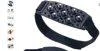
A simple slip-on spike that turns any shoe into a non-slip one for exploring a ruin or icy mountain road in winter. Less bulky than full crampons, this compact type is easy to carry, guarding against falls during a snow-season test-of-courage trip or ruin exploration.
CAPTAIN STAG Shoe Anti-Slip Grips 'Suberanzo', Compact Soft Type
We may earn a referral fee on purchases made through these links.
Current Conditions — “Ko-no-yu” Still Flowing Today
Ko-no-yu, the bath connected to the stork legend, is still operating today as one of Kinosaki Onsen’s signature “sotoyu” (public bathhouses), known for its design overlooking a garden. The whole of Kinosaki Onsen promotes its 1,300-year history and remains a thriving, active hot spring resort that continues to draw large numbers of visitors.
One event that must not be forgotten in Kinosaki’s history is the Kita-Tajima Earthquake of May 1925 (Taisho 14). The town was burned by fires and many lives were lost. Much of the townscape seen today, built mainly of three-story wooden buildings, is said to have been put in place during the recovery from this disaster, or to derive from the buildings of that time. It is also recorded that visitors never stopped coming as long as the water kept flowing, which suggests that the hot spring remained the town’s lifeline.
After the earthquake came another turning point. Until then, Kinosaki’s inns had no baths of their own, and guests naturally walked to the public bathhouses. When one inn installed a bath inside during the reconstruction, it was condemned as destroying the hot spring town’s tradition, and the matter grew into a long dispute. It was settled in 1950 (Showa 25): in-house baths would be permitted but kept small, and guests who wanted a large bath would go to the public bathhouses as before. The source water came to be managed collectively by the whole town and distributed to each inn. The promise that no one should keep the water to themselves remained in place as a system.
Reflection — Why Weren’t the Two Origins Narrowed Down to One?
Ordinarily, when a hot spring town has two competing origin legends, one tends to get chosen as the “real” story while the other fades into obscurity. At Kinosaki, though, the bird legend and the monk legend have continued to be told side by side, neither one ranked above the other. What we find genuinely interesting is that these two stories aren’t really contradictory at all — they complement one another. The bird legend symbolizes the healing power inherent in nature itself, while the monk legend symbolizes the power that human prayer and faith can bring into the world. This is only our speculation, but rather than choosing one story and discarding the other, we suspect the people of Kinosaki wanted to hold on to both kinds of “narrative power” — the gift of nature, and the power of human prayer. That generosity of spirit — refusing to settle on a single answer, holding multiple stories at once — may be one reason this hot spring town has continued to be loved for well over a thousand years.
This is only our own speculation, but we suspect the fact that a legend brought by a bird and a legend brought by a monk have coexisted for so long also reflects something else: that this hot spring town chose not to rely on a single authority, but instead built up multiple “memories of a miracle” over time. Relying on only one legend leaves a town’s very worth vulnerable the moment that single legend is doubted. Telling two origins side by side may have been, in effect, an unconscious form of wisdom — one that kept people’s trust in this spring alive for well over a thousand years.
Another viewpoint we would like to highlight is the question of “whose water it is.” The legendary spring has been treated not as the property of a single inn or a single powerful person, but as the asset of the whole town. This is speculation, but both stories — the spring the bird found, and the spring Dochi’s prayer called forth — speak of water that was “already there, before anyone owned it.” Because it was offered by nature and opened by prayer, no one in particular may fence it off for themselves. We wonder whether that ground of belief led, later on, to the long dispute over in-house baths and to the system of managing the source water jointly. In our view, the legends were not just old tales; they worked as an ethical root supporting the town’s own agreements.
Furthermore, the “time gap” between the two origins seems meaningful too. The bird story tells us that the water was there before people came; the story of Dochi tells us the moment people began to face the water. The former, in other words, is a tale of “discovery,” and the latter a tale of “gratitude and awe.” A hot spring heals wounds and illness, yet it is also a wild force bursting up from deep in the earth. For people long ago, receiving that power safely may have required both the gentle story of an animal’s guidance and the ritual story of sutra chanting. This too is only speculation, but the two legends seem to quietly preserve a trace of an age when entering the water was not mere recreation but a small act of prayer.
Layering in the memory of the earthquake deepens the picture further. In a land where the town burned once and many lives were lost, people still rebuilt the town relying on the water. The weight of the word “healing” must have differed for travelers and for the townspeople, who saw it as renewal. When we think that behind the lights glowing at the bathhouses and the wind stirring the willows along the river lie such accumulated lives, the bustle of the tourist town looks a little different.
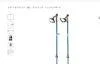
Trekking poles you can use like a walking stick to cut the risk of falling on the way to an abandoned mountain shrine, an old tunnel, or an animal trail with poor footing. Steps and tree roots are hard to see at night, so using two poles makes it easier to keep your balance.
CAPTAIN STAG FEEL BOSCO Trekking Poles, Set of 2 CSI-004
We may earn a referral fee on purchases made through these links.
Everyday Face — A Hot Spring Town Built Around Bathhouse Hopping
Kinosaki Onsen, home to two origin legends involving a bird and a monk, is now one of the Kansai region’s leading hot spring towns, known for visitors strolling in yukata robes along its willow-lined riverside streets as they hop between its seven public bathhouses, a custom called “sotoyu meguri.” The view of the hot spring town from Mount Daishi, reachable by ropeway, is also popular, and the number of foreign visitors has been growing year by year. Ko-no-yu, the very bath that appears in the origin legend, is still an active public bathhouse today, making Kinosaki one of the rare hot spring towns where you can literally walk through the rest of its own legend.
A Note on Visiting
Kinosaki Onsen is an active hot spring resort today and is not a dangerous place. Bathhouse hours and admission fees can change, so we recommend checking with the Kinosaki Onsen Tourist Association for the latest details before visiting.
The origin stories introduced here are traditions handed down by temples and the tourist association; there are no contemporary historical records that confirm the dates or events. Also, although the Kita-Tajima Earthquake happened a century ago, it was an event in which many people died, and we should take care not to treat it as a light topic. If you are concerned about the effects of the water on your health or condition, please consult a medical institution or your inn.
Frequently Asked Questions
Q. Can you still bathe at “Ko-no-yu” today?
A. Yes. It’s still operating today as one of Kinosaki Onsen’s signature public bathhouses.
Q. Which is the real origin — the stork legend or the monk legend?
A. Neither has been established as historical fact; both have been passed down as oral legends. At Kinosaki, neither has ever been chosen over the other, and both are still told today.
Q. Has KARASU CHANNEL filmed on location at Kinosaki Onsen?
A. No, we have not filmed there yet; a visit is currently under consideration. Location footage for other haunted spots and kaidan stories can be viewed on KARASU CHANNEL (YouTube).

Supervised by Suzuking.
Affiliation: KARASU CHANNEL
Occult & horror reporting: 7 years (since 2020)
Followers: YouTube 5,000+ / X 25,000+
On-site investigations: 30+
If this appeared in your dream
What it means to dream of something from this story, read through psychology and folklore in our Dream Dictionary.
- Dreaming of a Hot SpringA lucky symbol of healing and recovery; fatigue easing and relationships softening.
Which story do you find the scariest?
If you think this story is the scariest, press the button below. One vote site-wide — you can change your vote for a different story anytime.
Was this article helpful?
Add this to your favorites to find it again anytime from your My Page.



Comments