North Breakwater Dome (Wakkanai)
Supervised by Suzuking. (KARASU CHANNEL / Occult & horror reporting, 7 years)
Contents
View basic details of this location (address, history, status, etc.)
- Location
- Kaiun, Wakkanai, Hokkaido (within Wakkanai Port)
- Built
- March 1936
- First Rumored
- Unknown (needs further research; most mentions come from social media and paranormal-investigation videos)
- Current State
- Still in active use as a breakwater. The surrounding area has been developed as a park within Wakkanai Port and also hosts concerts and light-up events.
- Access
- Open to the public (a 24-hour open-air public space; camping is prohibited)
- Last Verified
- 2026.09.10
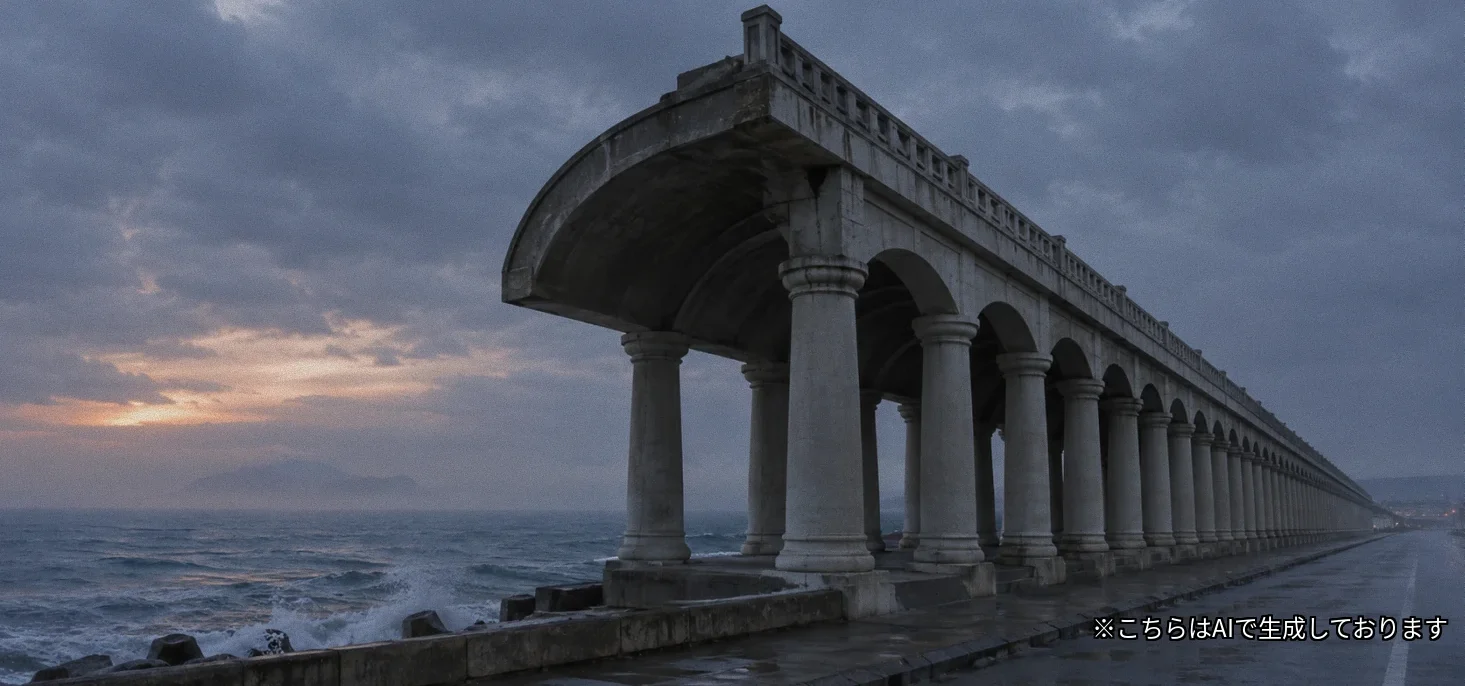
A five-minute walk from Wakkanai Station, a 427-meter colonnade lies along the quay of Wakkanai Port. With its half-moon arches and 70 connected columns, it looks almost like the ruins of an ancient temple. The North Breakwater Dome — officially the Wakkanai Port North Breakwater Dome — is a tourist landmark, a Hokkaido Heritage site, and, in some circles, also known as "Japan’s northernmost haunted location." It is currently an open-air public space anyone can enter, with no signage prohibiting entry. Camping, however, is prohibited.
History — A Corridor That Protected Those Crossing to Karafuto
In 1931, Wakkanai Port faced a serious problem. Strong winds blew roughly 130 days a year, and the port’s 5.5-meter breakwater wasn’t tall enough to stop high waves from crashing over the quay and endangering anyone standing there. Tsuchiya Minoru, a 26-year-old engineer with the Hokkaido government at the time, designed a solution, and the construction firm Hazama-gumi (now Ando Hazama) carried it out. Five years later, in 1936, the North Breakwater Dome was completed.
At 427 meters long and roughly 13.6 meters high, its structure — 70 columns tapering in an entasis curve, joined into a continuous half-arch — is said to be unlike anything else in the world. At the time, passengers on the Wakutai Ferry, which connected Wakkanai to Otomari on Karafuto (present-day Sakhalin), would ride a rail line from Wakkanai Station straight through the dome to Sanbashi Station, where they boarded their ships. In other words, it was built as a covered walkway, designed to shield passengers from wind and waves before and after their crossing.
When the war ended in 1945, the sea route to Karafuto was lost, and the station and rail line inside the dome — no longer needed — were removed. Only its function as a breakwater remained, and it underwent a full renovation in 1981. A steam locomotive once preserved there was dismantled in 1996. The dome was designated a Hokkaido Heritage site in 2001 and a Selected Civil Engineering Heritage by the Japan Society of Civil Engineers in 2003. Today it serves as a gathering place for residents, hosting concerts, light-up events, and the Wakkanai Peace Marathon.
Why Is It Called a "Haunted Location"?
To be honest, as far as our research could find, there are almost no concrete ghost stories tied to the North Breakwater Dome — accounts of who saw what, and when. What we found far more of was the phrase "Japan’s northernmost haunted location" itself, circulating on its own, often cited as a filming location for paranormal-investigation livestreams and videos. Even visitors who have actually been there report things like "the lights were on, so it wasn’t scary at all," suggesting the reputation has outrun the actual fear factor. For what it’s worth, some say Wakkanai has another supposed haunted location even farther north than this one — so even the claim to "Japan’s northernmost" is a bit shaky, in a very Hokkaido sort of way.
So why does the place still carry an air of "something might be here"? Perhaps it has something to do with the history this land has carried. This was once a place many people crossed to reach Karafuto — or crossed back from. War, and then repatriation. It may be that the weight of Wakkanai’s memory is what lends extra presence to the light and shadow falling through this empty colonnade — though this is only the author’s speculation, without any hard evidence behind it.
We were unable to determine, in this investigation, when the rumor first appeared or who first called it a "haunted location." Here, what remains unknown outweighs what’s known.
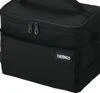
Drinks warm up fast during summer haunted-spot exploration, so a 5-layer insulated soft cooler with an ice pack gives peace of mind. At 3–5L, holding about two 500ml bottles, it's easy to carry beside a car seat or as a secondary bag on foot.
THERMOS Soft Cooler 5L, All Black RFD-0051
We may earn a referral fee on purchases made through these links.
Access & Location
The location is 1-chome Kaiun, Wakkanai, Hokkaido, along the quay of Wakkanai Port. It’s about a 5-minute walk from Wakkanai Station — unusually convenient access for a haunted location in Hokkaido. It sits right in the middle of Japan’s northernmost city center.
On-Site Conditions
It’s an open-air colonnade accessible 24 hours a day, with no fence and no locked gates. During the day, tourists and locals pass through, and in summer it hosts concerts and markets — very much the face of Wakkanai. After dark, though, while the streetlights stay on, foot traffic thins out, and a distinct quiet settles in between the columns as the sea wind passes through. If there’s anything "scary" about the place, it may be less a paranormal presence than this emptiness and silence itself.
Speculation — If Something Can Be "Seen," Who Might It Be?
Everything from here on is nothing more than our own speculation. As noted above, we found no concrete ghost stories tied specifically to the North Breakwater Dome itself. And yet, if this place still gives off an air of "something might be here," the source of that feeling is probably not any one specific spirit, but rather the accumulated weight of memory this land has carried.
Wakkanai Port was once the starting point of the shortest sea route to Karafuto (present-day Sakhalin). The dome itself was built to shield passengers from wind and waves before and after boarding. Then, after Japan’s defeat in 1945, this same port became a place that received people fleeing back from Karafuto amid the chaos of repatriation. Among those who crossed the sea with only the clothes on their backs, finally setting foot on their home soil, it’s said that many were separated from family members during the crossing or in the confusion of repatriation. If any presence lingers in this colonnade, it may belong less to someone who died in an old maritime accident, and more to the countless people who longed for home but never made it back.
Or, consider it this way: standing alone at night in this empty corridor, the sight of 70 columns receding into the distance at equal intervals is, on its own, enough of a shape to trigger the human brain’s instinct that "something is back there." Layer onto that the memory this land carries as a "port of farewells," and it quietly stirs the imagination without anyone realizing it. What gets described as a haunting here may not be any specific ghost at all, but rather an "air of parting" that people sense in their bones even without knowing the history — transformed, in the telling, into fear. This, too, is only one way of looking at it.
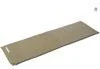
A self-inflating sleeping mat for conserving energy during a late-night stakeout or wait in the car. Laid across a seat or the cargo area, it softens the hard, cold surface and eases fatigue during a long haunted-spot stakeout.
CAPTAIN STAG Inflating Sleeping Mat UB-3005
We may earn a referral fee on purchases made through these links.
Notes
This isn’t an off-limits location, but there are a few things worth knowing. Camping is prohibited inside and around the dome. Wakkanai sees strong winds and high waves year-round, and given that this is a breakwater structure, stay away during bad weather. If visiting at night, please be considerate of other visitors and nearby residents — keep noise and livestreaming to a minimum, and mind where you park. We publish this article for the record, not as an invitation to visit.
*KARASU CHANNEL does not encourage entering haunted locations.
Frequently Asked Questions
Q. Can you still enter the North Breakwater Dome today?
A. Yes. It’s an open-air public space accessible 24 hours a day, with no admission fee and no locked gates. That said, camping inside or around the dome is prohibited.
Q. Are there any specific eyewitness accounts of paranormal experiences?
A. As far as our research could find, there were almost no concrete accounts tied to a specific person or time. In reality, the label "Japan’s northernmost haunted location" seems to have taken on a life of its own.
Q. Did KARASU CHANNEL film at the North Breakwater Dome?
A. No, we haven’t filmed at the North Breakwater Dome yet, though we’re considering it. You can watch our footage from other haunted locations on our YouTube channel, KARASU CHANNEL.
Japanese horror KARASU CHANNEL

Supervised by Suzuking.
Affiliation: KARASU CHANNEL
Occult & horror reporting: 7 years (since 2020)
Followers: YouTube 5,000+ / X 25,000+
On-site investigations: 30+
If this appeared in your dream
What it means to dream of something from this story, read through psychology and folklore in our Dream Dictionary.
- Dreaming of hokkaidoWide freedom, a fresh start and a reset; vast views mean expanding chances, being lost in a blizzard warns of…
Kaidan Tales from This Area

Which haunted location do you find the scariest?
If you think this location is the scariest, press the button below. One vote site-wide — you can change your vote for a different location anytime.
Was this article helpful?
Add this to your favorites to find it again anytime from your My Page.

Comments