Marugame Castle: The Stonemason Killed in a Well
Supervised by Suzuking. (KARASU CHANNEL / Occult & horror reporting, 7 years)

Contents
View sources and last-checked date
- Source
- coffeespark「羽坂重三郎~丸亀城主に殺されてなお主君のために働いた石職人の霊~」 http://www.coffeespark.com/juzaburo/
- Source 2
- Yahoo!ニュース エキスパート「丸亀城に伝わる2つの伝説」 https://news.yahoo.co.jp/expert/articles/638acdaa78ac77c0102e92832a4753206bb4448a
- Last verified
- 2026-09-16
Marugame Castle in Marugame City, Kagawa Prefecture, is known as a famous castle whose stone walls are said to be the tallest in Japan in total height. A skilled craftsman is said to have built these magnificent walls, and a sad story is still told today: that same craftsman met a tragic death inside the very castle he had built.
Origins: A Craftsman Who Climbed the Walls With a Single Iron Bar
Jūzaburō Hasaka is said to have been the craftsman who built Marugame Castle’s stone walls. One day, the castle lord, Chikamasa Ikoma, saw with his own eyes Jūzaburō glide up the towering stone wall using nothing but a single iron bar. So great was the skill that the lord was seized by a strong unease: if a man with such ability were to defect to the enemy, might these solid walls not be breached with ease?
There are several ways of telling who the lord in this story was. Here we have given the name of Chikamasa Ikoma, but another tradition names Yoshiharu Yamazaki as the lord. Tracing the castle’s history, the castle built by the Ikoma family dates to the Keichō era (the late 16th to early 17th century), and large renovations were repeated afterward under the Yamazaki and Kyōgoku families. In particular, a great renovation that took 32 years and was completed in the first year of Enpō (1673) is said to have finished most of the stone walls that survive today. The legendary craftsman’s name may be less the work of one era than a name standing for the countless craftsmen who built the walls.
Marugame Castle’s stone walls are stacked in four tiers from the foot of the hill to the summit, reaching a total height of about 60 meters, and are regarded as the tallest in Japan in total height. They begin with a gentle slope and grow closer to vertical the higher they go, a distinctive curve called the “fan slope”. That said, the tallest single stone wall in Japan is that of Osaka Castle; Marugame Castle holds the record for “total height.” It is tempting to imagine that the tale of a man climbing the top of a nearly vertical wall with a single iron bar could only have arisen because of this distinctive curve.
Summoned to a Well, and Killed
Unable to shake his unease, the lord summoned Jūzaburō and ordered him to inspect the well in the second bailey, saying there was a suspicion that someone had intruded into the castle. Jūzaburō, suspecting nothing, climbed down to the bottom of the well, and large stones were thrown down on him one after another from above. Without understanding what was happening, he is said to have taken the direct hits and died. Precisely because he had superior skill, that skill itself was feared, and his life was cut off as if to silence him.
A skeptical study of the prehistory behind postwar Japan's occult boom — a reference for our occult-history columns.
A Study of Pre-War Showa Occult History (ASIOS / Cyzo)
We may earn a referral fee on purchases made through these links.
Current Conditions: A Loyal Spirit That Kept Serving Its Lord Even in Death
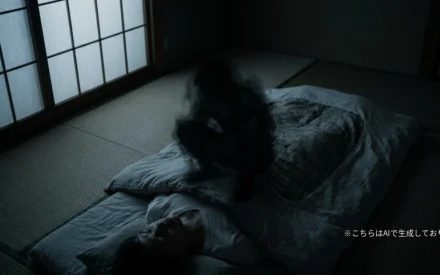
After Jūzaburō’s death, rumors spread inside the castle that the sound of water could be heard around the well and that pale blue flames rose from it, and people are said to have gradually stopped going near it. In time, a tale is also told that Jūzaburō’s ghost appeared in the lord’s bedroom, covered in blood, and reported in the same loyal tone as in life, “There is no suspicious person in the well.” This anecdote, in which he dutifully carries out the task he was given even though the lord was the one who killed him, has been passed down as a story showing the depth of Jūzaburō’s loyalty. Marugame Castle is today designated an Important Cultural Property of Japan and welcomes many visitors as one of the twelve surviving original castle keeps.
Apart from Jūzaburō’s story, Marugame Castle has another sad legend. Because work on the stone walls was going badly during construction, a human pillar sacrifice was decided upon, and on a rainy evening a tofu seller who happened to be passing nearby was seized and buried alive. It was said to be his bad luck that, because the rain kept him from selling any tofu, he took a road he did not usually take. Afterward, on rainy nights, a voice crying “Tofu, tofu” was said to be heard from around the stone walls. No record has been confirmed to show that this happened, but it shows that a feeling, that there were sacrifices of nameless people behind the work on the walls, remained in people’s memory.
In recent years, too, Marugame Castle has been tested through its stone walls. Because of the July 2018 torrential rains and a typhoon, part of the wall of the obi-kuruwa (belt bailey) in the southwest of the castle grounds and part of the wall at the site of the Hitsujisaru (southwest) Turret in the third bailey collapsed, and restoration work has continued since. During dismantling, it was found that the third bailey’s wall extends down to the bedrock, and it was reportedly confirmed to be 31 meters high, the second highest in Japan. Completion of the work is said to be scheduled for the end of March 2028. The soundness of the craft of stacking stone is being confirmed anew by the hands of modern engineers reading the collapsed walls.
Reflection: What Was Feared Was Not an Enemy’s Skill, But an Ally’s
What we find fascinating is that Jūzaburō was killed not because he had committed any wrong, but because the skill he held as an ally was simply too excellent. The decision to remove a craftsman of his own side, one who should have served him faithfully, precisely because of his high ability seems to reveal the deep-rooted suspicion that holders of power carry. This is only our speculation, but perhaps the story has been told for so long not merely as a tragedy but because it contains a universal lesson that resonates across eras: “the more excellent a person is, the more their power can be feared and shunned.” The anecdote of a ghost that kept reporting faithfully on its duties even after death may express the very pride of the craftsman Jūzaburō, which was not lost even when his life was taken unjustly.
From a religious perspective, we feel a deep sadness in the anecdote that the killed Jūzaburō’s spirit appeared not to voice a grudge but to make the same loyal report as in life. In many vengeful-spirit tales, someone who met a violent death appears to settle a grudge, but Jūzaburō’s spirit tries only to see his duty through. This is only our speculation, but behind the long telling of this anecdote there may have been an interpretation, something like a wish of the people of that time, that even when a life was taken unjustly, the value of loyalty itself had not been betrayed. That he met his end in a well, a place like a boundary between above and below ground, between the living and the dead, also seems to us to give this tale a distinctive weight.
This, too, is only our imagination, but if Jūzaburō’s body, sunk at the bottom of the well, stayed there for a long time without anyone pulling it up, then the voice said to have gone on reporting from deep in the well night after night sounds less like the same conscientiousness as in life than like a ritual repeated by one who could not rest in peace. That a saying survives to this day that a person who peered at the well’s surface saw something like a human figure in the dark of the deep bottom may not be mere coincidence.
Stone walls are the part of a castle least seen by people and the part that lasts the longest. Keeps and turrets burn or are torn down, but stone walls go on standing in the same form for hundreds of years. In our view, the fact that Jūzaburō’s legend has been told as a story about stone walls may be an unconscious respect for the “unseen human work” left in the walls. In each stone whose builder’s name does not survive, the lives of real, nameless craftsmen like Jūzaburō dwell.
This is a speculation, but the story of the tofu seller’s human pillar and the story of Jūzaburō’s well may be twin legends born of the same feeling. Both are tales of “nameless people” who lost their lives for the convenience of power behind the vast undertaking of the stone walls. One was a peddler who happened to pass by, the other a craftsman too excellent. Their stations differ, but we think a dark, shared sense among the people that “for the sake of the castle, human life was treated lightly” was handed down in two forms.
And the scene in which Jūzaburō’s ghost reports, “There is no suspicious person in the well,” feels less frightening than poignant the more one reads it. Even after being suspected and killed, he reports in a way that denies the very grounds of the suspicion. In other words, through the mouth of the dead he tells us that he never had any intention of betraying anyone from the start. The people who passed this legend down may have been able, at last, to voice the bitterness Jūzaburō must have felt by wrapping it in the word “loyalty.”

Outdoor haunted spots in the mountains, old tunnels, and abandoned schools can see the weather turn fast, with sudden rain or strong wind. A wind-resistant, oversized umbrella lets you stay dry while still holding a flashlight or camera in one hand, and at 116cm across it can cover two people.
Wpc. Folding Umbrella 'WIND RESISTANCE', Extra Large, Sun & Rain Use, Navy RWS-UXW2406-002
We may earn a referral fee on purchases made through these links.
An Everyday Face: Marugame Castle, One of Japan’s Twelve Surviving Keeps
Marugame Castle, where the stonemason’s tragedy is told, is today a beloved tourist destination, counted alongside Matsuyama Castle as one of the “twelve surviving original castle keeps.” Its stone walls boast the greatest total height in Japan, and the beauty of their many stacked curves is said to be a must-see. From the keep, the view stretches across the Seto Inland Sea to Mount Sanuki-Fuji, and in spring the cherry trees along the moat draw crowds of flower viewers. The fact that the skill of excellent stonemasons still holds up the castle today is perhaps the greatest sight of all.
A Note on Visiting
Marugame Castle is an active tourist site and an Important Cultural Property, and it is not a dangerous place. Viewing hours and admission fees can change, so we recommend checking the information from Marugame City or the tourism association before you visit.
The tales of the human pillar and the killing introduced in this article are oral traditions without backing in historical documents, and they are not meant to encourage anything in real life. If you are feeling distressed, please do not bear it alone; contact a consultation service such as the Yorisoi Hotline (0120-279-338, available 24 hours, in Japanese).
Frequently Asked Questions
Q. Does the well where Jūzaburō Hasaka is said to have been killed still exist?
A. A well called the “Ninomaru Well” survives in the second bailey, and it is passed down as a place connected with this legend.
Q. Is this story historical fact?
A. No backing in historical documents has been confirmed. It is a legend passed down by oral tradition.
Q. Has KARASU CHANNEL filmed on location at Marugame Castle?
A. No. We are not currently conducting fieldwork there, and are considering doing so. You can watch our other filmed visits to haunted places and ghost-story sites on KARASU CHANNEL (YouTube).

Supervised by Suzuking.
Affiliation: KARASU CHANNEL
Occult & horror reporting: 7 years (since 2020)
Followers: YouTube 5,000+ / X 25,000+
On-site investigations: 30+
If this appeared in your dream
What it means to dream of something from this story, read through psychology and folklore in our Dream Dictionary.
- Dreaming of a CraftsmanSteady skill building, or the power to rebuild.
Which story do you find the scariest?
If you think this story is the scariest, press the button below. One vote site-wide — you can change your vote for a different story anytime.
Was this article helpful?
Add this to your favorites to find it again anytime from your My Page.








Comments