Yamata no Orochi: The Memory of a Raging River Hidden in a Monster-Slaying Myth
Supervised by Suzuking. (KARASU CHANNEL / Occult & horror reporting, 7 years)

Contents
View sources and last-checked date
- Source
- Kojiki (primary source); Izumo Tourism Association, "Myth Tour 1: The Yamata no Orochi Legend" https://izumo-kankou.gr.jp/6340
- Last verified
- 2026-09-16
The Hii River flows through Izumo City in Shimane Prefecture. It is said to be the setting of the legend of “Yamata no Orochi” (the eight-forked serpent), the greatest monster-slaying myth in Japanese mythology, in which the exiled god Susanoo defeats a giant serpent with eight heads and eight tails by getting it drunk on sake. It is thought to be more than a simple tale of a hero and a monster: it may symbolize a natural threat that tormented the people of this region for generations.
Origins: A Tale of Cunning, Not Brute Force
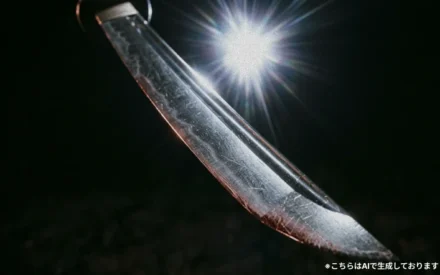
According to the Kojiki, when Susanoo was banished from Takamagahara (the realm of the gods) and descended to the land of Izumo, he saw chopsticks floating down from upstream and realized that people lived nearby. There he met an elderly couple, Ashinazuchi and Tenazuchi. Every year a giant monster, the Yamata no Orochi, with eight heads and eight tails, had devoured one of their daughters, and they lamented that the last one left, Kushinadahime, would soon have to be offered up as well. Susanoo offered to slay the Orochi on the condition that he could take Kushinadahime as his wife. He had strong sake prepared in eight vats, and when the Orochi plunged each of its eight heads into a vat and collapsed in a drunken stupor, he hacked it to pieces with his sword. The sword found inside the Orochi’s tail was the Kusanagi no Tsurugi, later to become one of the Three Sacred Treasures of Japan.
Susanoo’s preparations were meticulous. According to the Kojiki, he first transformed Kushinadahime into a fine-toothed comb and tucked it into his hair, separating the girl from danger. He then had the old couple brew a strong sake, fermented again and again until it was concentrated (yashiori no sake), build a fence with eight gates, and place a sake vat at each gate. When the Orochi arrived, it dipped its eight heads into the vats, drank them dry, and fell asleep drunk. Susanoo then swung his Totsuka sword and cut the serpent to pieces. After the slaying, Susanoo is said to have built a palace at Suga in Izumo and sung “Yakumo tatsu, Izumo yaegaki…”, which is sometimes called the oldest waka poem in Japan.
Incidentally, the direction from which the Orochi comes is recorded as “Koshi.” Some say this refers to the Koshi (Etsu) region along the Sea of Japan, others to the Koshi district within Izumo, and nothing is certain. The way the Kojiki tells it carries the implication that the serpent was something that came from outside, year after year.
Why the Hii River? A Myth That Remembers Flood Control
The setting of this myth has traditionally been identified as the Hii River basin in the Izumo region. The Hii River has long been known as a so-called “rampaging river”: it carried huge amounts of sediment down from the mountains, raising its bed and flooding again and again. One theory, told since ancient times, holds that the Orochi’s eight heads and eight tails represent the river itself, splitting into many channels upstream and repeatedly overflowing, and that its red, inflamed belly symbolizes river water reddened and clouded by tatara ironmaking (the traditional Izumo industry of smelting iron sand into iron).
The number eight deserves a mention too. In ancient Japan, eight meant “many,” and it was also treated as a sacred number. Eight heads and eight tails were probably an expression of something too numerous to count, a being beyond the bounds of ordinary creatures. That the Nihon Shoki describes pines and cypresses growing on the serpent’s back may also, seen another way, show that the serpent was perceived as a living creature and, at the same time, as the mountains and valleys themselves. A river flows out of the mountains. If the entire course of the river was imagined as one giant creature, the number eight makes sense.

Sudden rain during haunted-spot exploration can soak a backpack full of camera gear and batteries and cause equipment trouble. A waterproof cover that wraps around the whole backpack protects everything a rain poncho alone can't reach.
CAPTAIN STAG FEEL BOSCO Backpack Cover 25, Black M-9866
We may earn a referral fee on purchases made through these links.
Current Status: A Myth Still Alive as Izumo’s Signature Story
Shrines and historic sites connected to the Yamata no Orochi legend, beginning with Susa Shrine, still dot the Hii River basin today, and the story is cherished and passed down by the whole region as the central narrative of Izumo tourism.
The details of the myth differ from record to record. In the Kojiki, Susanoo descends at Torikami (present-day Torikami in Okuizumo Town), at the upper reaches of the Hii River in Izumo, and goes into battle with Kushinadahime transformed into a comb and tucked into his hair. When he cuts the tail, the edge of his sword chips, and a great sword emerges from inside the tail; this is said to be Ame no Murakumo no Tsurugi. In the Nihon Shoki, the Orochi’s eyes are like red winter cherries (hozuki), pines and cypresses grow on its back, and it is so huge that it spans eight hills and eight valleys. Other versions recorded in the Nihon Shoki place the story in Aki Province or say that poisoned sake was used, so several versions exist side by side.
Many interpretations of the Orochi’s true identity have been offered since ancient times: that it is a water god or the embodiment of floods, with Kushinadahime representing the rice paddies; the story that the physicist Terada Torahiko remarked it recalls a lava flow; and the theory that it represents molten iron flowing from a furnace, with the slaying expressing the subjugation of the clan that made iron. In fact, many ironmaking sites of unclear date have been found in the mountains near Izumo. On the other hand, the philosopher Umehara Takeshi, noting that the Kojiki writes “Koshi no Yamata no Orochi,” argued that it might represent an invasion by a powerful clan from Koshi (Etsu) on the Sea of Japan coast. No theory is decisive, which shows that the myth allows for a wide variety of readings.
A well-known related site is Susa Shrine. Located in Sada Town, Izumo City, it is also said to enshrine what is called the bones of the Yamata no Orochi. A concrete object like “bones” remaining in a place of worship shows that the monster was no mere fantasy but lived on for a long time in people’s memory. The story has also spread far beyond Izumo: even in Saku City, Nagano Prefecture, there is a tale of a snake stone where the Orochi’s spirit is said to have remained as a rock. All of these are traditions that cannot be verified and should not be treated as historical fact.
Reflection: Was Monster-Slaying a Story of Flood Control?
What we want to draw attention to is that the true nature of the terrifying Yamata no Orochi can be read not as a mere product of imagination but as a memory of how people of the time actually dealt with a natural disaster. If the Orochi is a symbol of a rampaging river, then Susanoo’s slaying of it may not have been a simple tale of martial valor, but the result of steady flood-control work, such as building embankments and rerouting waterways, retold as a heroic epic. This is what we believe. The method of slaying, too, getting the enemy “drunk” before defeating it rather than a head-on contest of strength, seems to reflect the trial and error of people who gradually tamed a natural threat that could not be controlled by force, using wisdom and ingenuity. The ending in which a sword is obtained may likewise be not just a trophy but a metaphor for gaining the very “technology” to control nature.
From a religious perspective, we cannot help but feel a certain weight in the fact that the sword found inside the Orochi went on to be enshrined as one of the Three Sacred Treasures, and continues to be worshipped at Atsuta Shrine. The structure in which a sacred sword supporting the very authority of the imperial house was born from within the threat that tormented people seems to us to show a distinctly Japanese way of pacifying spirits and conferring authority: rather than simply forgetting the memory of a calamity, it is enshrined forever as proof that it was overcome. As long as the Hii River remains a river that still carries the memory of flooding, this myth is both a record of a past threat and a device that keeps conveying awe of the power of nature itself.
This is only our own imagination, but if we picture the Yamata no Orochi just as described, with eight heads and eight tails, eyes burning red, and a belly always raw and bloodied, it must have been a formidable presence even while lying asleep in a drunken stupor. Considering that the villagers, who had to hand over one daughter every year, must have spent their nights trembling, wondering whether their own daughter would be next, this story can be said to be, before it was told as a heroic tale of slaying, a record of the very fear that lasted eight years.
Let us return to the heaviest scene in the myth. Every year, one daughter was devoured. There had been eight daughters, and year by year they dwindled, until only the youngest remained. When calamity comes, it is always the weak who are offered up first and lost, in every age. This is our own speculation, but we wonder whether that number holds the memory of a village that lost loved ones year after year to floods and pressure from outside. The ending in which the serpent is made drunk and put to sleep may have been a telling that finally set a limit to that chain of sorrow.
No single interpretation settles the matter. Readings have differed by scholar and commentator: a flooding river, a lava flow, the red-hot iron flowing from a tatara furnace, and the invasion of a powerful clan from Koshi. Since Koshi was a strong land that held a source of jade (hisui), there is even a conjecture that the Orochi’s true identity was that power, which held the mountains and rivers of Izumo. In our view, rather than naming any one of them the answer, it fits the depth of this myth better to think that each of the eight heads bore a different fear. River, fire, iron, invaders. Layer upon layer of dread may have been bundled into the form of a single great serpent.

Attach an AirTag to your car keys, bag, or the car itself before exploring an unfamiliar ruin or mountain haunted spot, and you can check its location in the Find My app if you forget where you parked or lose track of a bag in the dark. Even deep in the mountains with poor reception, its location updates via nearby Apple devices — a safety and anti-loss measure for solo exploration.
Apple AirTag (2nd Generation) Item Tracker, Find by Sound, Water & Dust Resistant, Works with Find My Network
We may earn a referral fee on purchases made through these links.
A Nearby Recommendation: The Shimane Museum of Ancient Izumo
The myth of slaying the Yamata no Orochi, which overlays the memory of the raging Hii River, can be learned about in greater detail at the Shimane Museum of Ancient Izumo, which stands just east of Izumo Taisha. Its displays, including the actual giant Uzubashira pillars of Izumo Taisha and recreations of the world of the Izumo no Kuni Fudoki, are impressive and make clear that the myth has been passed down not as a mere story but as a record of the people who lived in this land. Visiting it together with a look at the history of flood control on the repeatedly flooding Hii River should deepen your understanding of the legend.
Notes for Visitors
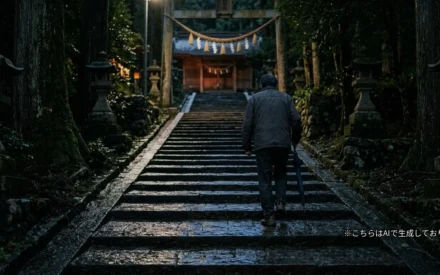
The legendary sites and related shrines in the Hii River basin are active places of worship and public rivers, not dangerous places. When visiting a shrine, please check the visiting hours and etiquette in advance and behave in a manner appropriate to a place of worship.
Frequently Asked Questions
Q. Did Yamata no Orochi really exist?
A. It is considered a mythological being rather than a real monster. The leading theory is that it symbolizes the flooding of the Hii River and the river water clouded by tatara ironmaking.
Q. Where is the Kusanagi sword today?
A. It is considered one of the Three Sacred Treasures, and is said to be enshrined today as the sacred object of Atsuta Shrine (Nagoya, Aichi Prefecture).
Q. How was Yamata no Orochi slain?
A. The tale says Susanoo prepared strong sake in eight vats; the Orochi plunged each of its eight heads into a vat and collapsed drunk, and he cut it to pieces.
Q. Where does the Yamata no Orochi tradition survive?
A. Related sites and traditions are scattered across the Izumo region, centered on Okuizumo Town in Shimane, at the upper reaches of the Hii River, including Susa Shrine. Far away in Saku City, Nagano Prefecture, there is also a snake-stone tale in which the Orochi’s spirit turned to stone.
Q. Did KARASU CHANNEL film or research on location in the Hii River basin?
A. No. We are not currently conducting fieldwork there, but are considering it. Our location videos of other haunted spots and kaidan stories can be viewed on KARASU CHANNEL (YouTube).

Supervised by Suzuking.
Affiliation: KARASU CHANNEL
Occult & horror reporting: 7 years (since 2020)
Followers: YouTube 5,000+ / X 25,000+
On-site investigations: 30+
If this appeared in your dream
What it means to dream of something from this story, read through psychology and folklore in our Dream Dictionary.
- Dreaming of a MonsterA symbol of fears or problems grown too big. Confronting one shows your courage is growing.
- Dreaming of susanooThe stormy god who slew the serpent: strong emotion, rightly aimed, becomes strength.
Which story do you find the scariest?
If you think this story is the scariest, press the button below. One vote site-wide — you can change your vote for a different story anytime.
Was this article helpful?
Add this to your favorites to find it again anytime from your My Page.



Comments