Hotaka Shrine (Kawaba Village, Gunma Prefecture)
Supervised by Suzuking. (KARASU CHANNEL / Occult & horror reporting, 7 years)
Contents
View basic details of this location (address, history, status, etc.)
- Location
- Kawaba Village, Tone District, Gunma Prefecture (exact location withheld)
- Built
- Unknown (founding date unconfirmed)
- Closed / Decommissioned
- — (no record of decommissioning; extant as private property)
- First Rumored
- 2021 / after a YouTuber's video was published
- Current State
- Private property fenced and monitored by security cameras. Repeated trespassing and property damage
- Access
- Not permitted (private property; monitored by security cameras)
- Last Verified
- 2026.09.11
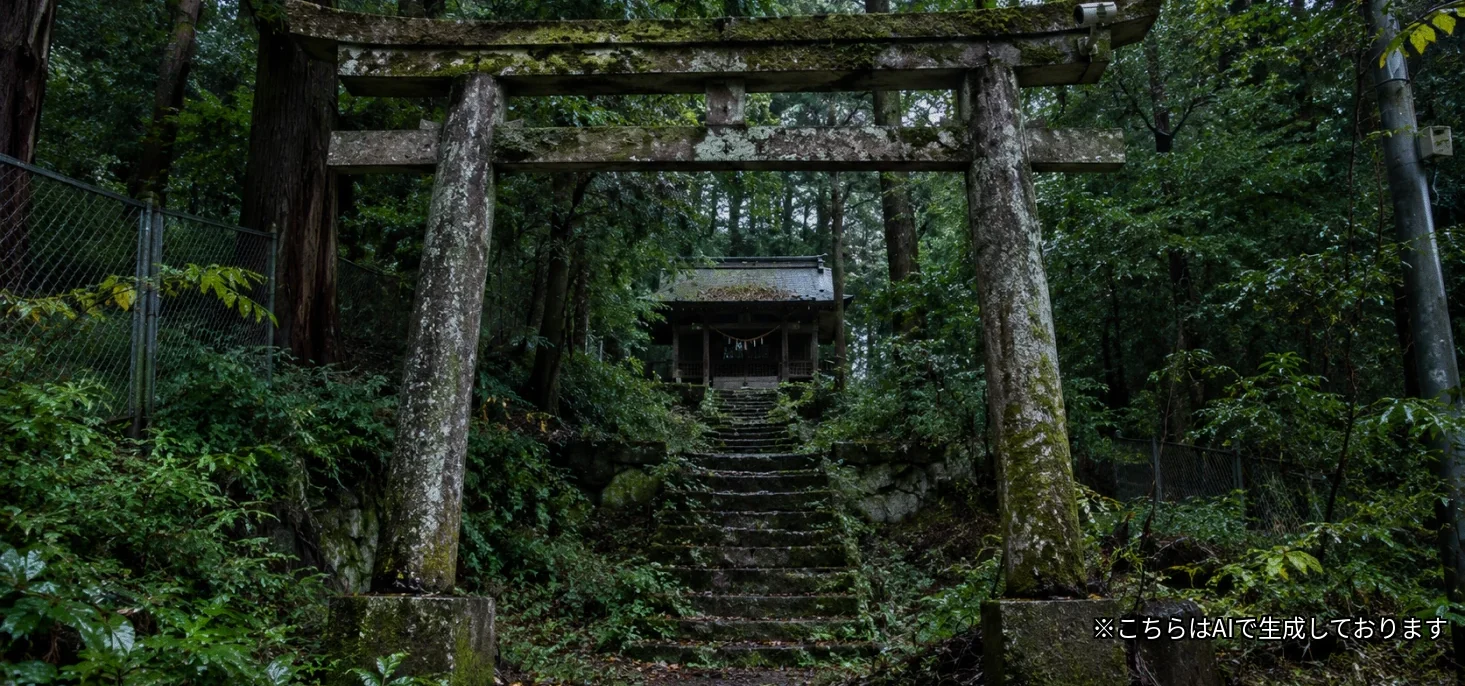
Hotaka Shrine, enshrined on the southern foot of Mount Hotaka in Kawaba Village, Tone District, Gunma Prefecture, was a shrine long known locally. In 2021, however, a YouTuber’s video suddenly made it widely known as a “haunted spot,” and unauthorized visitors began arriving one after another. Today the grounds are fenced and fitted with security cameras, and entry is prohibited as private property.
Origin — A Shrine Enshrined at the Foot of Mount Hotaka
“Hotaka” is a shrine name derived from Mount Hotaka, a well-known peak rising in northern Gunma Prefecture, and shrines enshrining Yamato Takeru no Mikoto under this name are scattered across the prefecture. The Hotaka Shrine in Kawaba Village appears to be one of these, but this investigation found no public source recording its founding date or history. It’s thought to have long been a modest local shrine, watched over by the community.
Some tourism sites give its location as “Azuma-chō, Midori City,” but reporting by the Jōmō Shimbun and other sources, along with several map services, place it in “Kawaba Village, Tone District,” and this article follows that designation. The discrepancy may stem from confusion with another shrine of the same name elsewhere in the prefecture.
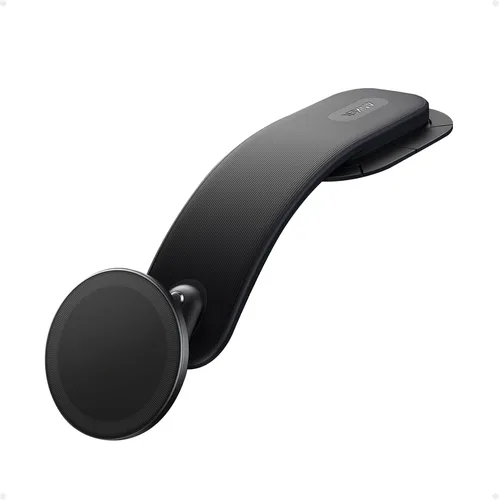
Driving mountain roads or old byways at night for haunted-spot exploration often means navigating by phone. A strong magnetic mount that holds your phone to the dashboard keeps you from driving one-handed or fumbling with it in your lap.
Anker Nano Car Mount (Magnetic Car Phone Holder, Detachable Pad)
We may earn a referral fee on purchases made through these links.
Why It’s Called a “Haunted Spot”
What made this shrine nationally known was a video posted in 2021 by a pair of YouTubers introducing it as a “haunted spot.” After the video spread, the number of curious visitors surged, leading to property damage and prompting the shrine to file a police report. The incident was covered by the Jōmō Shimbun, and the video’s creators later commented that they regretted having introduced it as a haunted spot.
Online, rumors circulate of “seeing the spirit of an old woman” and of “a couple who filmed a video there later dying in a traffic accident on their way home.” However, this investigation found no record confirming the source or timing of these rumors, and the possibility that they arose after the site was introduced as a haunted spot — as an after-the-fact embellishment — cannot be ruled out.
Access & Location
The site is located in Kawaba Village, Tone District, Gunma Prefecture (exact location withheld). It sits on the southern foot of Mount Hotaka, somewhat removed from the village’s settled areas. It’s private property, not a tourist destination open to the public.
Current Conditions
The shrine building itself still stands, but following repeated trespassing and property damage, a fence has been installed around the grounds and the site is monitored by security cameras. As private property, entry by outsiders is clearly prohibited. The very circumstance of a shrine, likely once a modest place of local faith, ending up surrounded by security equipment after being consumed as a “haunted spot” tells the story of this place’s present.
Reflection — Who Made This a “Haunted Spot”?
What follows is only our own speculation. The case of Hotaka Shrine illustrates a typical process by which a haunted spot is born. There was no specific ghost story or incident to begin with; rather, a modern trigger — a posted video — attached the label “haunted spot” after the fact, and the behavior of people drawn in by that label (trespassing, property damage) ended up prompting the shrine to respond with security measures, as though it really were a dangerous place.
The rumors of an old woman’s spirit and a couple’s fatal accident may also have been “story reinforcement” added after the fact, within this same flow. The phrase “haunted spot” took on a life of its own ahead of any actual paranormal phenomenon, and that phrase itself went on to draw in new rumors — Hotaka Shrine may be a clear example of the pattern that today’s internet-born haunted spots tend to follow.
Here we want to add another perspective. A shrine is a place of faith that its parishioners (ujiko) and local people have protected through festivals and daily prayer, and for some, simply standing within its grounds is an important part of daily life. When another meaning, “haunted spot,” is laid over that, the original faith and the life of the community become harder to see. In our view, what the Hotaka Shrine case shows is less about whether anything uncanny exists than about the violence of overwriting a place’s “original meaning.”
Also, the rumors of an “old woman’s spirit” and a “fatal accident” that began circulating after the video spread were born in a situation where many viewers already knew where the place was. Viewers visited as if retracing the video, layered their own experiences on top of it and posted them, and those became the next rumors. This is our own inference, but stories born this way are closer to “a tale that participants kept adding to, one after another” than to a kaidan handed down through generations. That the source cannot be pinned down is probably because there was never a single source to begin with.
As a result, the shrine ended up surrounded by security fences and cameras. A place that was meant to be one of prayer became, at once, something that needs protecting and a place under surveillance. Rather than condemning this course of events in terms of “who is to blame,” we would like to record it as a structure. The culture of enjoying kaidan and the lives of the people in the places that serve as their settings ought, in principle, to be able to coexist. For that, it is essential that those who tell these stories keep to a minimum set of lines: do not enter, do not damage, and do not pinpoint locations to stir up interest.
This article touches on topics of death and victims. If you are struggling right now, please don’t carry it alone; consider contacting a support line such as the Yorisoi Hotline (0120-279-338, free, 24 hours; in Japanese).
Nearby Recommendation — Michi-no-Eki Kawaba Denen Plaza
Near Hotaka Shrine, Kawaba Village is home to Michi-no-Eki Kawaba Denen Plaza, consistently ranked among the top roadside stations nationwide. It offers dishes made with local vegetables and dairy products, and its brewery restaurant and bakery are also popular. Surrounded by rich nature, the grounds are a popular destination where families can spend a full day.
Notes
Hotaka Shrine is private property, currently fenced and monitored by security cameras, with entry prohibited. Trespassing and property damage have led to police reports in the past, and unauthorized entry could result in charges of trespassing or property damage. This article is published as a record, not as an invitation to visit.
Note: KARASU CHANNEL does not encourage entering haunted locations.
Summer ruin exploration traps heat under a roof and walls, and combined with the walk there and back, heatstroke risk runs high. An ice vest that cools your core directly just by slipping ice packs into pockets at the sides and back needs no power and layers over or under your other gear.
TULTEX Ice Cooling Vest (with 4 Ice Packs), Black AZ-865948 (Aitoz)
We may earn a referral fee on purchases made through these links.
Please note that the coordinates shown on the map are an approximate location based on publicly available information and may differ from the exact site.
Frequently Asked Questions
Q. Can you still visit Hotaka Shrine today?
A. No. Following repeated trespassing and property damage, it’s now private property fenced and monitored by security cameras, with entry prohibited.
Q. Are there specific firsthand accounts of paranormal phenomena?
A. Rumors such as “seeing the spirit of an old woman” are told online, but no record confirming their source or timing has been found. The “haunted spot” framing itself may have helped fuel the rumors.
Japanese horror KARASU CHANNEL
Q. Has KARASU CHANNEL filmed on location at Hotaka Shrine?
A. No, we have not filmed there yet; a visit is currently under consideration. Location footage for other haunted spots and kaidan stories can be viewed on KARASU CHANNEL (YouTube).

Supervised by Suzuking.
Affiliation: KARASU CHANNEL
Occult & horror reporting: 7 years (since 2020)
Followers: YouTube 5,000+ / X 25,000+
On-site investigations: 30+
If this appeared in your dream
What it means to dream of something from this story, read through psychology and folklore in our Dream Dictionary.
- Dreaming of a ShrineA symbol of protection, cleansing and wishes. Praying at a shrine hints your wish will be heard.
Kaidan Tales from This Area
Which haunted location do you find the scariest?
If you think this location is the scariest, press the button below. One vote site-wide — you can change your vote for a different location anytime.
Was this article helpful?
Add this to your favorites to find it again anytime from your My Page.

Comments