Namahage — The Visiting Deity Long Mistaken for a Demon
Supervised by Suzuking. (KARASU CHANNEL / Occult & horror reporting, 7 years)

Contents
View sources and last-checked date
- Source
- Wikipedia, "Namahage" https://ja.wikipedia.org/wiki/なまはげ
- Last verified
- 2026-09-16
On New Year’s Eve on the Oga Peninsula in Akita Prefecture, figures dressed in straw and wearing fearsome masks go door to door through the village, shouting, “Any crying children here? Any children who won’t listen to their parents?” This event, known nationwide as Namahage, is often introduced as “the festival where demons come.” But the true Namahage is not a demon at all — it is a sacred visiting deity that comes once a year to bring good fortune to the people.
Origin — A God Who Comes to Peel Away “Namomi”
The name Namahage is said to come from namomi, a low-temperature burn mark that forms on the legs or shins from sitting too long by the fire in winter. Getting a namomi was proof that you’d been lazy, sitting idle by the hearth for far too long. From this came the figure of the “namomi-peeler,” who visits to strip away that mark of laziness, and the term is said to have slurred over time into “Namahage.” In other words, Namahage was never simply a demon meant to frighten children — it originally carried the meaning of a divine messenger who comes to admonish “wrongs” like laziness and discord, and to drive away misfortune. The kanji spelling “生剥” (literally “raw peel”) commonly seen for the name is only a phonetic approximation and is said to differ from the word’s true origin.
A God Long Mistaken for a Demon
Because the Namahage mask has a fearsome, horned face, it came to be widely perceived as a type of demon over the course of modernization. Folklorists, however, place Namahage within a form of belief known as raihōshin — visiting deities, often mountain gods or ancestral spirits, who visit human settlements at seasonal turning points. The event was originally held on the old lunar calendar’s Koshōgatsu (January 15), then moved to January 15 on the new calendar after the Meiji calendar reform, and after the war many districts shifted it to New Year’s Eve. When Namahage visits a home, the head of the household greets it in formal dress and offers sake and rice cakes. This is no mere test of courage — it retains strongly the character of a religious rite, one that respectfully welcomes a deity bringing blessing.
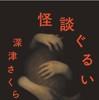
A collection of real-life ghost stories. A reference for our reading-focused articles.
Obsessed with Ghost Stories (Sakura Fukatsu / Futami Shobo)
A Tradition Recognized Worldwide, Yet Its Practitioners Are Quietly Dwindling
In November 2018, Namahage was among 10 visiting-deity events nationwide registered as UNESCO Intangible Cultural Heritage under “Raihō-shin, ritual visits of deities in masks and costumes.” Already designated a National Important Intangible Folk Cultural Property in 1978 as “the Namahage of Oga,” it’s a tradition recognized both at home and abroad. And yet, the shortage of practitioners is serious. Namahage has traditionally been a role for unmarried young men in each district, but due to Japan’s declining birthrate and aging population, roughly 35 districts had discontinued the event over the 25 years leading up to 2015, and a 2012–2015 survey found that only about 80 of Oga City’s 148 districts were still able to carry it out. Oga City has introduced a subsidy program for neighborhood associations to help sustain the tradition, but its effect is said to be limited, given both the shrinking number of households with children and changing lifestyles around year-end work schedules and travel.
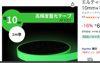
A high-brightness glow tape you can stick at entrances or junctions in unlit haunted locations like ruins or caves, marking your way back out. It absorbs sunlight or flashlight beams and glows for 6 to 8 hours in the dark — no batteries needed, and useful for avoiding getting lost.
LTI Alpha Flash High-Brightness Glow Tape (10mm x 1m) AF1001
![Kao Biore u Hand Sanitizer Spray Skit Guard, Portable 30ml [Quasi-Drug] product image](https://karasu-ch.com/wp-content/uploads/2026/09/kao-biore-u-hand-sanitizer-spray-3096.webp)
A palm-sized portable alcohol sanitizer spray — for a quick disinfect of door handles, gear, and hands right after exploring a ruin or haunted spot.
Kao Biore u Hand Sanitizer Spray Skit Guard, Portable 30ml [Quasi-Drug]
We may earn a referral fee on purchases made through these links.
Reflection — Was “Frightening Children” Really For Their Own Good?
From here on, this section reflects our own speculation. At first glance, Namahage looks like a device built purely to scare children into obedience. But viewed through its original form, its true nature looks a little different. Namahage comes asking after “crying children” and “children who won’t listen to their parents” — which, read the other way around, may have been a yearly ritual for the whole community to check in on whether the children of each household were being raised well. Rather than fear for its own sake, it can be understood as a mechanism that used a powerful, frightening experience to leave children with the sense that they were being watched over and cared about by their family and community. In practice, the people who dress up as Namahage are often relatives or familiar young men from the neighborhood — take off the mask, and in most cases everyone already knows each other. In other words, this event may not have been about being one-sidedly terrified by some outside menace, but rather a kind of “engineered fear,” with members of the community taking turns in the role, continuing to watch over one another’s children as they grew up.
The decline in practitioners may mean more than just the fading of a single traditional event. If the very mechanism by which local adults take turns playing a “frightening role” to watch over children’s growth is disappearing along with the shrinking of local communities, then what’s at stake in Namahage’s survival may not just be the passing down of a traditional culture — it may be the survival of a community’s very capacity to watch over its own children.
Notes for Visitors
Namahage is a religious rite that visits individual homes, and one cannot enter a private household’s ceremony without permission. For visitors, facilities such as the Oga Shinzan Folklore Museum offer demonstration-style Namahage events, and tourism events like the Namahage Sedo Festival are available — please make use of these instead. This article is published to document the tradition, not to encourage visiting it, and we ask that visitors keep in mind its character as a local religious rite.
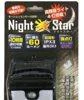
A solar-charged sensor light that needs no wiring or battery changes — it brightens when someone approaches and dims to a night-light glow otherwise. Rain-resistant (IPX3) for outdoor use.
Trade One Motion-Sensor Light 'Night Star', High-Brightness 4-Lamp, Solar-Powered
We may earn a referral fee on purchases made through these links.
Frequently Asked Questions
Q. Is Namahage a demon?
A. Folklorically, it’s not a demon but classified as a raihōshin, a visiting deity said to come from the mountains or ancestral spirits to visit human settlements once a year. Its horned, fearsome mask led to it being widely described as a “demon” in the modern era, but it was originally considered a divine messenger bringing good fortune.
Q. Can Namahage still be seen today?
A. A growing number of districts can no longer carry out the original household-visiting event, mainly held on New Year’s Eve, due to a shortage of practitioners, but it can still be seen at facilities such as the Oga Shinzan Folklore Museum or at tourism events like the Namahage Sedo Festival.
Q. Has KARASU CHANNEL filmed Namahage in Oga?
A. No, we haven’t filmed it yet, though we’re considering it. You can watch our footage from other haunted locations and ghost stories on our YouTube channel, KARASU CHANNEL.
Japanese horror 鴉番組

Supervised by Suzuking.
Affiliation: KARASU CHANNEL
Occult & horror reporting: 7 years (since 2020)
Followers: YouTube 5,000+ / X 25,000+
On-site investigations: 30+
Which story do you find the scariest?
If you think this story is the scariest, press the button below. One vote site-wide — you can change your vote for a different story anytime.
Was this article helpful?
Add this to your favorites to find it again anytime from your My Page.









Comments