Yato-no-Kami — The Legend of a Snake God Whose Gaze Could Destroy a Clan, Driven from Its Land
Supervised by Suzuking. (KARASU CHANNEL / Occult & horror reporting, 7 years)

Contents
View sources and last-checked date
- Source
- Kotobank, "Yato-no-Kami" https://kotobank.jp/word/夜刀神-1116660
- Source 2
- Kusanomido https://kusanomido.com/study/history/japan/105938/
- Last verified
- 2026-09-16
The legend of Yato-no-kami, handed down in Namegata, Ibaraki Prefecture, is a record of a conflict over a snake god more than a thousand years old, preserved in one of Japan’s oldest regional texts, the Hitachi no Kuni Fudoki (compiled in the 8th century). This god, depicted as a horned serpent, was feared to be so dangerous that a single glimpse of it could destroy an entire clan. The account of its collision with people trying to clear farmland is recorded in startlingly vivid detail.
Origins — The Man Who Struck Down the Snake God and Planted a Boundary Staff
The Hitachi no Kuni Fudoki records events said to have taken place in the early 6th century, during the reign of Emperor Keitai. Yahazu no Matachi, a powerful local clan leader living in Namegata, was trying to clear the reed marsh west of the district office into new rice paddies. But the land was said to be home to a swarm of horned, snake-shaped gods called Yato-no-kami, who violently resisted the reclamation. Matachi put on armor, struck down the Yato-no-kami one after another as they interfered, and drove them back into the mountains. At the mouth of the mountain valley he planted a boundary marker called a “shirushi no tsue,” declaring: “Above this line is the gods’ land; below it is the people’s rice fields. I will become your priest and worship you forever, so do not curse us.” He is then said to have built a shrine and enshrined the Yato-no-kami as water gods.
A Century Later, the Conflict Returns
More than a century after Matachi’s episode, during the reign of Emperor Kōtoku, Mibu no Muraji Maro, the provincial governor of Hitachi, tried to build a dam at a pond where Yato-no-kami lived. The Yato-no-kami gathered in a chinquapin tree in protest, but unlike Matachi, Maro chose not to draw a boundary and coexist. He ordered his people to “strike them all down without exception” — a policy of total elimination that left no room for coexistence — and the Yato-no-kami were finally driven from the pond. It came to be known afterward as Shiii-no-ike, “Chinquapin Well Pond.” Though both episodes concern the same god, the first chose a path of coexistence through boundary-drawing, and the second a path of total elimination through force — a shift that reflects how people’s relationship with nature, or with the gods of the land, changed over time.

A digital thermo-hygrometer that records temperature and humidity changes objectively — the kind behind classic accounts of "it suddenly got chilly" or "the air changed." Its large display is easy to read in a dark room, useful for fixed-point observation during exploration and adding credibility to a verification video.
TANITA Thermo-Hygrometer, Large Display, Clock & Calendar, Digital, Wall-Mount/Tabletop, Gray, Magnetic TT-559 GY
We may earn a referral fee on purchases made through these links.
What Was Yato-no-kami, Really?
Folklorists generally favor the view that Yato-no-kami was a water and snake deity inhabiting wetlands and “yato” — valley marshes — and that the place-name element “yato” itself refers to that kind of damp valley terrain. The horned-serpent form is thought to be a deification of the fear people of the time felt toward snakes such as the tiger keelback, which they would have actually encountered while developing paddies, and toward the wetlands themselves, which repeatedly flooded. Today, Namegata is home to an actual shrine dedicated to Yato-no-kami, Atago Shrine (also called Yato Shrine), and Shiii-no-ike, said to be the setting of the Fudoki legend, still exists. That the memory of a conflict between a small local god and human beings, written down more than a thousand years ago, still survives on the ground today as concrete place names and a shrine is an unusually rare case, even by national standards.
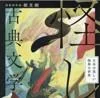
A book that reads through the strange phenomena and vengeful spirits appearing in classics like the Kojiki and the Konjaku Monogatarishu — a reference for our legend and kaidan articles.
Strange Classical Literature: Japan's Beautiful World of the Uncanny (Itsuki Asazato / Asahi Shimbun Publications)
We may earn a referral fee on purchases made through these links.
Our Take — From Coexistence to Elimination, a Changing Relationship
From here on, this is our own view, mixed with speculation. What stands out first in Matachi’s episode is that he did not wipe out the Yato-no-kami entirely. He struck them down and drove them off, yes, but he ultimately built a shrine, worshipped them as gods, and planted a boundary marker showing a measure of respect — “beyond this line is your domain.” There is a visible effort to force development and faith, human convenience and the presence of the land’s gods, to coexist somehow. Yet in Maro’s episode a century later, that balance collapses, and an order comes down to “strike them all down without exception” — total elimination with no room left for coexistence. We read this shift as reflecting less a difference in the two men’s characters than a process in which, as farmland development advanced, people gradually lost the humility they once held toward nature and the gods of the land.
A god once feared enough that a single glimpse of it could destroy an entire clan ended up driven from its pond, surviving only in place names — this outcome may be one of the oldest recorded instances of a story repeated across Japan: the local god pushed out by development. The fact that Yato Shrine and Shiii-no-ike still remain on the ground today may be a sign that some sense of guilt and awe toward the god that was driven away has not entirely faded from this land, even after more than a thousand years.
A Note on Visiting
Yato Shrine (Atago Shrine) is still a shrine actively worshipped by the local community, and Shiii-no-ike remains on-site as a historical landmark. Both are close to residential areas, so please be considerate of local residents’ daily life when visiting, and avoid trespassing onto private property. This article is published to record this place, not to encourage going there.
Frequently Asked Questions
Q. Is the Yato-no-kami legend a real historical event?
A. It is a legend recorded in the Hitachi no Kuni Fudoki, an ancient regional gazetteer compiled in the 8th century, not a historical record proving that a snake god actually existed. That said, place names and historical sites connected to the legend, such as Shiii-no-ike and Yato Shrine, really do exist on site.
Q. Can Yato Shrine still be visited today?
A. Yes. It is still worshipped today as Atago Shrine (Yato Shrine) in Namegata. Please visit with the same courtesy and etiquette you would show at any shrine.
Q. Has KARASU CHANNEL filmed a report in Namegata?
A. No, we have not filmed there yet, though we are considering it. Other haunted-spot and kaidan field-report videos can be viewed on KARASU CHANNEL (YouTube).
Japanese horror 鴉番組

Supervised by Suzuking.
Affiliation: KARASU CHANNEL
Occult & horror reporting: 7 years (since 2020)
Followers: YouTube 5,000+ / X 25,000+
On-site investigations: 30+
If this appeared in your dream
What it means to dream of something from this story, read through psychology and folklore in our Dream Dictionary.
- Dreaming of a Serpent DeityA god in snake form: blessings of water, abundance and life, with a call to reverence.
Which story do you find the scariest?
If you think this story is the scariest, press the button below. One vote site-wide — you can change your vote for a different story anytime.
Was this article helpful?
Add this to your favorites to find it again anytime from your My Page.









Comments