Inou Mononoke Roku: A Real Boy’s 30-Day Record of Supernatural Terror
Supervised by Suzuking. (KARASU CHANNEL / Occult & horror reporting, 7 years)
Contents
View sources and last-checked date
- Source
- 三次市公式サイト「稲生物怪録」 https://www.city.miyoshi.hiroshima.jp/soshiki/49/3524.html
- Source 2
- 三次もののけミュージアム「稲生物怪録」 https://miyoshi-mononoke.jp/introduction/introduction-inoo/
- Source 3
- Wikipedia「稲生物怪録」 https://ja.wikipedia.org/wiki/稲生物怪録
- Last verified
- 2026-09-16
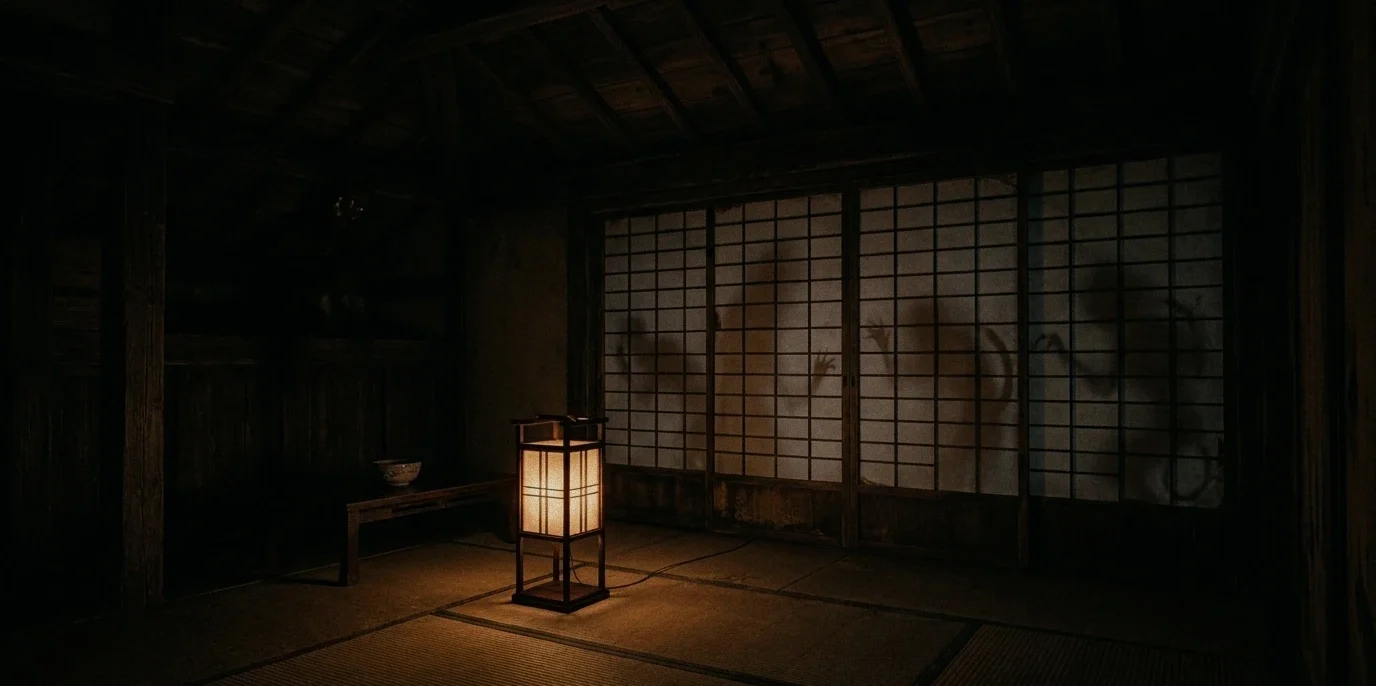
Miyoshi City in Hiroshima Prefecture is home to “Inou Mononoke Roku,” one of the most detailed firsthand accounts of the supernatural in Japan, said to have been experienced by a real boy during the mid-Edo period. While most kaidan are told in the vague form of “long ago, in a certain place,” this story was recorded with a specific date, location, and named individuals, making it an extraordinarily rare document of the supernatural.
Origins: Thirty Nights That Tormented a 16-Year-Old Boy
On the first day of the seventh month of Kanen 2 (1749), a 16-year-old boy who actually lived in Miyoshi, Inou Heitaro (later known as Inou Butayu), is recorded to have been visited by a monstrous “demon king,” after which a parade of different yokai continued to terrorize him every night for a full month. What makes this story unusual is that it was preserved not as a vague piece of folklore but as multiple handwritten manuscript copies naming Heitaro himself and real people who lived in Miyoshi at the time. Although the details have shifted slightly over the years, the story has been the subject of detailed scholarly verification, including research into who first wrote it down and when, making it an unusually well-documented account of the supernatural.
The story begins that May. According to the surviving accounts, Heitaro agreed to a test of nerve with Gonpachi, a sumo wrestler living next door, and climbed Mt. Higuma, a mountain said to be cursed. The huge monster that attacked him in the dead of night on July 1 came after that climb. For the next month, strange events continued every night, yet Heitaro is said to have stayed unshaken. On the last night, a “demon king” calling himself Yamamoto Gorozaemon appeared in the form of a samurai, explained the circumstances, and left with a great retinue of monsters. That is the skeleton of the tale. The scene in which the demon king hands Heitaro a mallet on his way out is considered an element added by later tradition.
This record is not a single original faithfully copied down the generations. There are several manuscript lines that differ from one another: the “Kashiwa-bon,” said to have been written down by one of Inou’s colleagues in the Hiroshima domain from Inou’s own telling; the “Miyoshi Jitsuroku Monogatari,” presented as written by Inou himself as an adult; and the “Hirata-bon,” compiled by the nativist scholar Hirata Atsutane and his disciples. Even the number of yokai varies by copy: 50 in the Miyoshi Jitsuroku Monogatari, 48 in the Kashiwa-bon, and 67 in the Hirata-bon. The Miyoshi Jitsuroku Monogatari also mentions that a hyakumonogatari (a hundred-tales session) was held at the courage test with Gonpachi, and some researchers speculate that the 50 yokai stories Heitaro told were later rewritten into the form of a factual record.
Current Conditions: The Miyoshi Mononoke Museum and the Wooden Mallet Monument
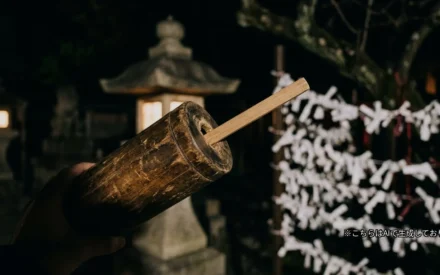
Today, a stone monument called the “Kizuchi no Hi” (Wooden Mallet Monument) stands in Miyoshi-cho, Miyoshi City, at the site said to be the setting of this story. The city is also home to the Yumoto Koichi Memorial Japan Yokai Museum (Miyoshi Mononoke Museum), which holds and displays a large collection of materials related to Inou Mononoke Roku and other yokai lore. Miyoshi City carefully preserves and shares this real account of the supernatural as a cultural resource of the region.
The story was spread to the wider world by Hirata Atsutane in the late Edo period. After the Meiji era, Izumi Kyoka, Inagaki Taruho and Orikuchi Shinobu worked it into their writing, and Mizuki Shigeru adapted it as a manga titled “Invitation of the Mallet.” Even today, commentaries and modern-Japanese translations by yokai scholars and authors continue to be published. Inou Butayu’s grave is said to be at Honsho-ji in Naka Ward, Hiroshima, and he is enshrined as one of the deities at Inou Shrine in Minami Ward, Hiroshima. That shrine was founded in the early 17th century, burned down in the atomic bombing, and was rebuilt afterward. The Miyoshi Mononoke Museum, which opened in 2019, gathers materials on Inou Mononoke Roku and holds a permanent exhibition.
For staying warm during winter ruin or outdoor haunted-spot exploration.
IRIS OHYAMA Disposable Body Warmers, Mini, Stick-On, 30-Pack, Made in Japan, 'Pokapoka Kazoku' PKN-30HM
We may earn a referral fee on purchases made through these links.
Reflection: Why Was This Preserved as a “Record”?
What we find fascinating is that Inou Mononoke Roku was not spread vaguely by word of mouth like most kaidan, but was instead preserved as multiple manuscript copies bearing real names and dates. This is only our speculation, but for the people of that time, this story may not have been mere entertainment, a scary tale to be told for fun, but rather an “incident” that had actually happened in their own town and needed to be accurately recorded for future generations. While most kaidan spread as tellers change the details along the way, the fact that Inou Mononoke Roku survived in manuscript form suggests that people of the time received this experience not as a “made-up story” but as “reality that needed to be recorded.” The very ending of the story, in which young Heitaro is tormented night after night for thirty days yet survives to the end, is likely both a record of terror and a tale honoring a young man’s courage, which is probably why the people of Miyoshi have long cherished it.
This is only our speculation, but we also find meaning in the fact that Inou Mononoke Roku is preserved as a record bounded to a fixed period of “thirty days.” Rather than an endless, formless terror, its structure, almost as if a set period had been predetermined, can be read as a kind of rite of passage, in which young Heitaro was given a trial and, by overcoming it, was recognized as having come of age. Even as a record bearing real names and dates, its true nature and purpose remain unexplained to this day. What we do know is simply this: not a nameless terror, but a boy who certainly had a name, faced something for a certain thirty days. That frustrating gap between “we know this happened, yet we don’t understand it” may be the biggest reason this story has been passed down for nearly three hundred years.
This, too, is only our speculation, but the thirty days recorded in Inou Mononoke Roku include descriptions that would still count as nightmarish by modern standards: a severed head flying through the air, a mass of eyeballs raining down from the ceiling, the giant face of an old woman jutting out from a wall. The fact that such vivid, gruesome supernatural events were recorded day after day, as a “record” bearing real names and dates, may be the single biggest reason this document has never been dismissed as mere fiction.
What especially catches our attention is that the whole affair began with “climbing a cursed mountain on a dare.” Two young men deliberately set foot in a forbidden place to test their nerve, and then tell a hundred tales. That combination is the very template of a ritual for summoning the uncanny. This is our speculation, but the heart of the story may lie not in Heitaro having been “attacked by something” but in having “called it upon themselves.” We see the boy taking on responsibility for the terror as the reason this tale holds a charm that goes beyond an ordinary kaidan.
The way the “demon king” appears is also interesting. At the end of the month he does not rampage; he explains the circumstances and leaves with courtesy. Calling himself by a samurai-like name, Yamamoto Gorozaemon, and leading his retinue, he looks less like a raging apparition than like the close of negotiations with a rival “power.” In our view, this shows a narrative pattern in which only one who has endured the fear is accepted by the uncanny side as an “equal.” The boy did not win by being unafraid; he was acknowledged.
We also see meaning in the fact that the number of yokai and the details differ from manuscript to manuscript. Perhaps this story was not a fixed “fact” but a “shared kaidan,” grown by readers, copyists and illustrators each adding a little of their own fear and imagination. The difference between 50, 48 and 67 seems less a sign of vagueness in the record than evidence of how many people wanted to retell these thirty days as their own. That a boy’s experience, with real name and dates, swelled in so many hands may itself count as a kind of supernatural phenomenon.

For footing during exploration of a ruin or mountain spot in the rain or mud.
Atom Unisex Adult No.2620 'Green Master' Rain Boots, for Farm Work/Gardening/Outdoor, Waterproof, Non-Slip, Lightweight, Maroon
We may earn a referral fee on purchases made through these links.
A Nearby Recommendation: Ozekiyama Park
A short walk along the Eno River from the Miyoshi Mononoke Museum brings you to Ozekiyama Park. Built on a small hill on the former site of a villa belonging to the Asano family, senior retainers of the Miyoshi domain, the park is lined with nearly a thousand cherry trees in spring and colored with autumn foliage in fall, while its summit offers a view of the “sea of fog” formed where several rivers converge in the Miyoshi basin. Popular locally as a seasonal outing spot, the park also holds a stone monument at its base dedicated to Inou Butayu, the protagonist of Inou Mononoke Roku, making it a fitting quiet stroll to end a visit to the sites of this supernatural record.
A Note on Visiting
The Wooden Mallet Monument is a historic site within the city, and the Miyoshi Mononoke Museum is a public museum facility. Neither is a dangerous location, and both can be visited with peace of mind. Opening hours and closing days may change, so we recommend checking the facility’s information before visiting.
Frequently Asked Questions
Q. Is Inou Mononoke Roku a true story?
A. It is a record featuring Inou Heitaro and other people who really lived in Miyoshi at the time, but the supernatural events themselves cannot be scientifically proven. The very existence of a record treated as a true account is what makes this story so unusual.
Q. What can be seen at the Miyoshi Mononoke Museum?
A. It holds and displays materials and picture scrolls related to Inou Mononoke Roku and other yokai lore.
Q. Has KARASU CHANNEL filmed on location in Miyoshi City?
A. No, we have not filmed there yet; a visit is currently under consideration. Location footage for other haunted spots and kaidan stories can be viewed on KARASU CHANNEL (YouTube).

Supervised by Suzuking.
Affiliation: KARASU CHANNEL
Occult & horror reporting: 7 years (since 2020)
Followers: YouTube 5,000+ / X 25,000+
On-site investigations: 30+
Which story do you find the scariest?
If you think this story is the scariest, press the button below. One vote site-wide — you can change your vote for a different story anytime.
Was this article helpful?
Add this to your favorites to find it again anytime from your My Page.

Comments