Why Was the Makura-gaeshi Feared? The Yokai That Flips Pillows in Sleep, and Where the Wandering Soul Goes
Supervised by Suzuking. (KARASU CHANNEL / Occult & horror reporting, 7 years)

Contents
View sources and last-checked date
- Last verified
- 2026-09-30
The pillow that was certainly under your head when you went to bed lies at your feet in the morning. Or your body, futon and all, has turned around, and your feet stretch toward where your head should be. You could laugh it off as simply bad sleeping habits, but in many regions of Japan people long told of this as the work of a yokai called the “makura-gaeshi” (pillow-turner).
The makura-gaeshi is a yokai that almost no one has seen. It does not attack people or burn houses. All it does is flip the pillow of a sleeping person or change the direction they lie. Yet this small prank was, up to a certain age, seriously feared as a phenomenon bearing on life and death. Why was a flipped pillow so frightening? The answer lies in old ways of thinking about sleep and the soul.
Origins: Edo Yokai Paintings and the “Bedroom Strangeness” Scattered Across Regions
The name makura-gaeshi became widely known in clear form in the Edo period. Toriyama Sekien, known for yokai paintings, took up this yokai in his picture collection Gazu Hyakki Yagyo, drawing a small figure standing beside a sleeping person. Its build looks like a Nio guardian at a temple gate shrunk down, at once endearing and impudent. Sekien’s picture carries almost no explanation, leaving to the viewer’s imagination who this yokai is and why it flips pillows.
Meanwhile, tales of the makura-gaeshi were handed down scattered through the daily lives of various regions, apart from Sekien’s picture. As to its form, some regions say it is a child, others a shaven-headed young monk, and it is not consistent. In other words, rather than the makura-gaeshi having existed from the start as one fixed yokai, it is closer to the truth to think that each place gave a name and form to the strange experience of “the pillow or the direction of the body changing during sleep.”
In Tohoku, especially Iwate Prefecture, the makura-gaeshi was told of as one of the pranks of the zashiki-warashi. According to records by Sasaki Kizen and others who collected Tono folktales, in a house with a zashiki-warashi, people were pressed down from above at night, had their pillows flipped, or found small footprints left on the tatami. Yanagita Kunio’s Tono Monogatari also has a being called “makura kozo” (pillow boy) make an appearance. The makura-gaeshi here is close to the innocent mischief that a child spirit who brings fortune to a house sometimes shows.
Around Iwata District in Shizuoka Prefecture, it is told that when one sleeps alone the “makura kozo” appears and meddles with the pillow, and its height is said to be three shaku, about ninety centimeters, a child. Yet even for the same makura-gaeshi, the temperature of the tale drops sharply as places change. In Kanazawa, Ishikawa Prefecture, there is a tradition of a makura-gaeshi in the form of a beautiful woman, and a man smiled at by that woman lost his life. In Hidaka District, Wakayama Prefecture, it is told that woodcutters who had felled a great tree in the mountains had their pillows flipped that same night by the tree’s spirit and died one after another. There is also a variant in which only the one who had been chanting sutras escaped harm.
In Hiroshima Prefecture there is also a place-name origin tale: a man who went out to catch fish to offer to a god woke each time he slept there to find his pillow’s direction reversed, and so the place itself came to be called “Makura-gaeshi.” From tales that end as pranks, to tales that summon death, to tales engraved in a place’s name, the range of makura-gaeshi traditions is astonishingly wide.
Why Is “Having Your Pillow Flipped” Said to Be Dangerous?
To think about why the makura-gaeshi was feared, we first need to know how people of old regarded sleep. In old Japan, it was thought that while a person slept, their soul left the body and wandered out. Walking to faraway places in dreams or talking with the dead was understood as the soul actually going there. Sleep was not mere rest but a small “departure” repeated every night.
Where does the soul that has slipped out return to, then? The pillow bore the role of that marker. The pillow was both a tool on which to rest the head and, it was thought, a temporary place where the soul takes shelter for a while. The etymological theory that the word “makura” is a contraction of “tama” (soul) and “kura” (seat) reflects this way of thinking. The etymology is of course not settled, but it does suggest that the pillow was treated as a special tool.
The folklorist Takeda Akira argued that the living spirit of the sleeper dwells in the pillow, so flipping the pillow is an act that brings that person close to death. Miyata Noboru pointed out that for people of old a dream was a move to a world other than this one, and the pillow was the boundary where those different worlds meet. Thinking so, the fear of the makura-gaeshi becomes clear. If, while the soul is outside, the pillow that marks the way home is turned over, the soul might be unable to find its own body and unable to return. A soul that cannot return means death.
The fear of having head and feet direction swapped can be explained by the same reasoning. If the soul enters and exits from the head side, a body whose direction is reversed is, for the soul, like a house whose entrance has moved. In some regions, moreover, the direction of sleeping was itself tied to the handling of the dead. In Gunma Prefecture a tale is told in which a bakeneko turns into a yokai called kasha and changes a person sleeping facing east to face west. West overlaps with the direction in which the dead depart. We have touched on the relation between sleeping direction and death in our separate article on “kita-makura” (sleeping with the head to the north), so we will not go deeper here, but it should be noted that the direction of the pillow was thought to concern the boundary between life and death.

A window net that fits over the car window, letting air in while keeping insects and prying eyes out. It lets you leave the window open without bugs getting in during a late-night car stay or stakeout, and also makes the interior harder to see from outside — good for security and privacy while parked or napping near a haunted spot for a long time.
meltec Car Window Net for Front Door, W1200 x H800mm (1-Piece) WP-30
We may earn a referral fee on purchases made through these links.
Present Day: A Yokai Whose Fear Faded into a “Prankster”
The modern makura-gaeshi has become a thoroughly softened figure. In yokai encyclopedias and children’s books it is often introduced as a small prankster who teases people in the bedroom, and there is hardly any sense of death in it. It is also sometimes used lightly, as in saying to a child with bad sleeping habits, “The makura-gaeshi came.”
Behind this change is the fading from daily life of the very idea that the soul slips out during sleep. Once people no longer seriously worry about the soul leaving, a flipped pillow is only the result of tossing and turning. As faith weakened, the makura-gaeshi was demoted from a “strangeness that summons death” to a “strangeness one can laugh off.”
Even so, the memory of the makura-gaeshi has not vanished completely. At several temples, sayings and pictures of the makura-gaeshi are carefully kept and passed down as symbols of bedroom mysteries. In yokai-themed creative works and card games too, the makura-gaeshi remains a popular member of the cast. Because its form is indistinct, each artist adds free interpretations, giving birth to a new makura-gaeshi each time.
And above all, that odd feeling of waking suddenly in the night and, for an instant, not knowing which way you are lying still happens to anyone. Even without knowing the name makura-gaeshi, people remember that unease in the body. That is probably why this yokai never quite disappears.
KARASU CHANNEL’s Take: Why Did Sleepers Fear Their Own Defenselessness?
Lining up the tales of the makura-gaeshi, what we notice is that this yokai never once appears “before your eyes.” What people can know is always only the result: I woke and the pillow was flipped, the direction had changed, footprints remained. The state in which no one saw the culprit yet it is certain that something was there lies at the core of this yokai’s fear. In our view, the makura-gaeshi may be a name given to a fundamental human anxiety: “I do not know myself while I sleep.”
Sleep is the time when a person is most defenseless in a day. Old houses at night were poorly lit and not as securely locked as now. In the darkness after the hearth fire died, with only the family’s breathing audible, one’s body leaves one’s own will and cannot resist whatever is done to it. This is our own inference, but such night-time helplessness may have joined with the belief that “the soul slips out during sleep” and swelled into the imagination that “someone might do something in the meantime.” The makura-gaeshi is the most familiar form of fear the sleeper directs at himself.
Another point not to overlook is that, among the makura-gaeshi traditions, many that take lives take the form of “punishment.” In the Wakayama woodcutters’ tale, the makura-gaeshi comes as retribution for felling a great tree. The Kanazawa beauty tale too can be read as reproaching the carelessness of a man who lowered his guard to a strange woman. In our view, reflected here is awe toward mountain trees and land gods, that is, the guilt of having “stepped too far.” The plot in which retribution comes exactly during sleep, when one’s body is at its weakest, knows well where guilt torments a person. The regrets and fears one could forget by day return at night, when one lies alone.
On the other hand, there are places like Tohoku that accepted the makura-gaeshi as the prank of a house’s guardian spirit, like the zashiki-warashi. Here the breadth of the Japanese way of dealing with strangeness shows well. The same event of “the pillow flipping” was feared in one place as a foreboding of death and laughed at in another as proof that fortune dwelt in the house. This is our own inference, but the difference may have had to do with how stable the house or village was, and whether people lived in a way that let them believe in tomorrow. For someone whose tomorrow is uncertain, a nighttime disturbance is an ill omen. For someone who can believe in tomorrow, the same disturbance is endearing. What decided the meaning of the strangeness was not the strangeness itself but the lives of those receiving it.
It is also interesting that the makura-gaeshi’s form varies by region: child, monk, Nio, beautiful woman. That the form is not fixed means people did not “see” this yokai but “felt” it. To something unseen, each person gives the face of what they most fear or feel most attached to. The makura-gaeshi’s face is, as it is, the face of the hearts of those who told of it. When you find the flipped pillow in the morning, whose face do you picture there? That too is a mirror reflecting what kind of nights that person is spending.
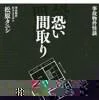
The first entry in the "Scary Floor Plans" series — a firsthand report by Tanishi Matsubara, the comedian famous for living in stigmatized properties, and a reference for our stigmatized-property articles.
Stigmatized Property Ghost Stories: Scary Floor Plans (Tanishi Matsubara / Futami Shobo)
We may earn a referral fee on purchases made through these links.
Engaging With This Legend
The makura-gaeshi is a yokai tradition, and there is no need to attribute disordered sleeping posture or a change in pillow position to strangeness.
It is also known that experiences such as feeling pressed down at night or strong confusion on waking can arise from the state of the body during sleep. If problems with sleep continue, please consult a medical institution rather than seeking answers in tradition.
At temples and in regions where makura-gaeshi tales remain, they are often treasured sayings for the local people. If you visit the setting of a tale, please remember that it is a place of faith and daily life and treat it quietly with respect. Being amused by a tradition and mocking the people who have cherished it are different things.
Sayings about kita-makura and the direction of the pillow are also received in various ways depending on the region and household. Even if you do not mind, please avoid pushing “it’s just superstition” on those who do. Conversely, there is no need to stoke anxiety in those who do not mind.
Frequently Asked Questions
Q. What kind of yokai is the makura-gaeshi?
A. It is a Japanese yokai said to flip the pillow of a sleeping person or swap the direction of head and feet. Besides being drawn in Edo-period yokai paintings, traditions exist in Tohoku, Shizuoka, Ishikawa, Wakayama and other regions, and its form is said to be a child, a young monk, or a small Nio guardian, differing by place.
Q. Why was having your pillow flipped considered frightening?
A. It was believed that the soul leaves the body during sleep, and the pillow was regarded as a marker or temporary resting place for that soul to return to. It was feared that if the pillow were flipped, the soul could not return and one would draw near death.
Q. Is the makura-gaeshi related to the zashiki-warashi?
A. In Tohoku, including Iwate Prefecture, the makura-gaeshi was told of as one of the pranks of the zashiki-warashi. Stories remain that in houses with a zashiki-warashi, pillows were flipped and people were pressed down at night.
Q. Are the makura-gaeshi and kita-makura the same story?
A. They are different stories, but both rest on the idea that the direction of sleeping and the pillow concern the boundary between life and death. Kita-makura is covered in more detail in another article on our site.
This yokai can also be drawn as the “Makura-gaeshi” card in KARASU CHANNEL’s Oracle Card Divination.
Q. Has KARASU CHANNEL researched or filmed the makura-gaeshi on location?
A. No. We are not currently researching the makura-gaeshi, though we are considering doing so. Videos of our research into other haunted spots and ghost stories can be viewed on KARASU CHANNEL (YouTube).

Supervised by Suzuking.
Affiliation: KARASU CHANNEL
Occult & horror reporting: 7 years (since 2020)
Followers: YouTube 5,000+ / X 25,000+
On-site investigations: 30+
If this appeared in your dream
What it means to dream of something from this story, read through psychology and folklore in our Dream Dictionary.
- Dreaming of a YokaiA symbol of emotions you cannot handle or strange relationships. Befriending one hints you can accept what yo…
Which story do you find the scariest?
If you think this story is the scariest, press the button below. One vote site-wide — you can change your vote for a different story anytime.
Was this article helpful?
Add this to your favorites to find it again anytime from your My Page.










Comments