Sado Island — Why Did One of the “Three Exiles” Survive the Executioner’s Blade at the Last Moment?
Supervised by Suzuking. (KARASU CHANNEL / Occult & horror reporting, 7 years)
Contents
View sources and last-checked date
- Source
- Japaaan, "History of Sado Island"
- Source 2
- Wikipedia, "Zeami"
- Source 3
- toku-japan.com, "Complete Guide to Zeami," and others
- Last verified
- 2026-09-16
Sado Island, floating in the Sea of Japan, is said to have received three exceptionally famous “exiles” for a mere place of banishment: a retired emperor, a persecuted religious teacher, and the man who perfected Noh theater. While some were cut off from the capital and sent somewhere they could never return from, one of them, Nichiren, encountered an event just before being sent to Sado that has been passed down not as mere political tragedy, but as a miracle.
Origin — The Exile Island Called a “Miniature Japan”
Sado Island is said to have received three famous “exiles”: Emperor Juntoku, banished after his defeat in the Jōkyū War; Nichiren, persecuted for preaching the Lotus Sutra; and Zeami, who perfected the art of Noh theater. Despite being a remote island cut off from the capital, the fact that such eminent figures were gathered there led Sado to be called “a miniature Japan” — an island that developed uniquely as a place where the culture of the capital flowed in and settled.
The institution of exile was not mere banishment; it carried a strong psychological meaning as well, cutting the condemned off from the capital and sending them to “the ends of the earth” from which there was no return. Of the three, Emperor Juntoku’s fate is said to have been especially harsh. He was never pardoned, spending more than twenty years on the island, and is said to have died on Sado in 1242 without ever setting foot in the capital again. Sado is thought to have been chosen again and again as a place of exile because its isolation made it ideal for containing political prisoners — but that also means the island has received countless people who ended their lives here, cut off forever from any hope of returning home.
An easy, illustrated guide to folklore, from annual festivals to urban legends — a beginner-friendly reference for our folklore articles.
Illustrated: Folklore So Interesting You Won't Be Able to Sleep (supervised by Yasunori Shimamura / Nihon Bungeisha)
We may earn a referral fee on purchases made through these links.
What Happened Before Nichiren Was Sent to Sado
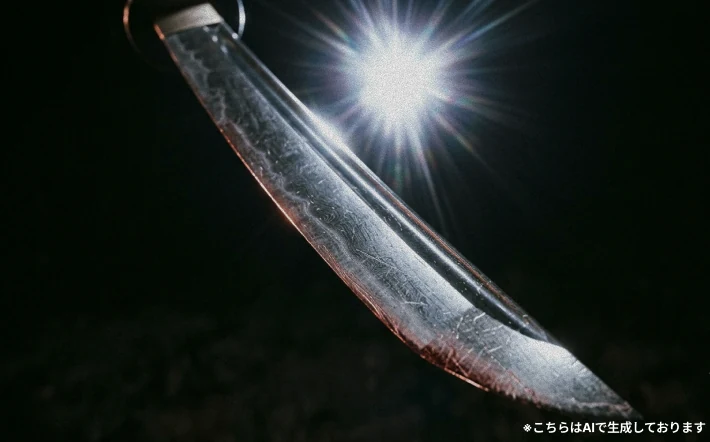
Just before he was exiled to Sado, Nichiren is said to have nearly been executed by the Kamakura shogunate at Tatsunokuchi in Kamakura (in present-day Fujisawa). As the executioner’s blade was about to fall, a glowing object is said to have suddenly streaked in from the direction of Enoshima, its brilliance blinding the executioner and halting the execution. This episode, known as the “Tatsunokuchi Persecution,” has been passed down within Nichiren Buddhism to this day. Some traditions within the sect interpret the light as the protection of Myōken Bosatsu, guardian deity of the Lotus Sutra. Having narrowly escaped death, Nichiren was then sentenced to exile on Sado.
Because of this miraculous episode, exile on Sado came to hold special meaning within the sect — not simply as punishment, but as a new trial given to Nichiren after he had survived persecution. For people of the time, the fact that a man saved by a flash of light at the moment of execution was then sent to a place of exile from which there was supposedly no return may have stood as powerful proof that Nichiren was no ordinary criminal.
Sado Today — An Island Where the Memory of the Exiles Lives On
Sado Island today still holds numerous historic sites connected to the three exiles: Mano Shrine, dedicated to Emperor Juntoku; Konpon-ji and Myōsen-ji, both associated with Nichiren; and historic sites said to be where Zeami performed Noh. Together with the globally recognized history of the Sado gold mines, the island as a whole carries layers of historical memory into the present.

A power source for long shoots or phone charging during haunted-spot exploration.
IRIS OHYAMA Portable Power Station IBT-A60100-W, Large Capacity 60000mAh/222Wh, 200W Rated Output, Pure Sine Wave, PSE Compliant, AC/DC/USB Output, White
We may earn a referral fee on purchases made through these links.
Reflection — Why Did a Place of Isolation Become a Treasury of Culture?
This is speculation on our part, but Sado’s isolation from the capital as a place of exile may, ironically, have sealed the capital’s sophisticated culture onto the island, allowing it to mature in its own distinct way. The fact that Nichiren arrived on the island carrying the miraculous story of his narrow escape from death was likely received by the islanders not as the arrival of a mere criminal, but as an event of special significance.
In our view, Sado is called “a miniature Japan” not simply because so many famous figures were exiled there, but because the island’s very isolation from the mainland allowed it to serve as a quiet vessel, preserving memories and culture that had already faded in the capital.
From a religious perspective, exile can be seen as a kind of slow execution — one that kept the condemned’s body alive while treating them as socially “dead.” Emperor Juntoku’s death on the island, without ever setting foot in the capital again, was exactly that kind of ending. For people of the time, being sent to Sado may not have felt like a mere change of residence, but like being severed from the bonds of this world while still alive — one foot already placed in the next. The fact that historic sites such as Mano Shrine are still reverently maintained today may be less a simple memorial to famous figures than an unbroken act of prayer, meant to console the unfulfilled longing of those who died here, never able to return to the capital.
This is only our own imagining, but perhaps Sado continues to be loved as “a miniature Japan,” drawing people to it, not only because it became a vessel where the capital’s culture drifted ashore, but because the longing of those who ended their lives here, still yearning for home, feels as though it has quietly accumulated somewhere on the island. Precisely because it is a land layered with the twenty years Emperor Juntoku spent here and the days of exile Nichiren walked after his narrow escape from death — each marked by its own solitude and prayer — Sado may remain, more than just a tourist destination, an island that leaves visitors with a quiet weight in their hearts.
Another Side — Sado as the Island Where the Crested Ibis Dances
Sado Island is known not only for its history of exile, but also as the site of the wild reintroduction of the crested ibis (toki), a Japanese national Special Natural Monument. At the Sado Japanese Crested Ibis Conservation Center, visitors can observe the birds up close, and in the island’s rice paddies it is sometimes possible to see ibis that have truly returned to the wild in flight. An island once known for tales of exiles who escaped execution, Sado now continues to write new history alongside a bird that returned from the brink of extinction.
A Note for Visitors
Nichiren Buddhist temples on Sado Island and Mano Shrine remain active places of worship today. Visitors are asked to approach them quietly and with respect.
Frequently Asked Questions
Q. Who were the “three exiles” sent to Sado Island?
A. They are said to be Emperor Juntoku, defeated in the Jōkyū War; Nichiren, who endured religious persecution; and Zeami, who perfected the art of Noh.
Q. What was the Tatsunokuchi Persecution?
A. It refers to the episode in which, as Nichiren was about to be executed, a glowing object is said to have flown in from the direction of Enoshima, blinding the executioner and causing the execution to be called off.
Q. Why was Sado repeatedly chosen as a place of exile?
A. Because it was a remote island cut off from the mainland, it was considered ideal for completely severing political prisoners from the capital.
Q. Has Karasu Channel filmed on location at Sado Island?
A. No, Karasu Channel has not filmed there yet; a visit is currently under consideration. Location footage for other haunted spots and kaidan stories can be viewed on Karasu Channel (YouTube).

Supervised by Suzuking.
Affiliation: KARASU CHANNEL
Occult & horror reporting: 7 years (since 2020)
Followers: YouTube 5,000+ / X 25,000+
On-site investigations: 30+
Which story do you find the scariest?
If you think this story is the scariest, press the button below. One vote site-wide — you can change your vote for a different story anytime.
Was this article helpful?
Add this to your favorites to find it again anytime from your My Page.









Comments