What Is Dream Interpretation? What Have People Tried to Read in Their Dreams for Thousands of Years?

Supervised by Ms.M
Affiliation: KARASU CHANNEL
Traditions studied: 12+ (Western astrology, Four Pillars of Destiny, Nine Star Ki, tarot, runes, palmistry & physiognomy, name numerology, numerology, feng shui, Vedic astrology / Zi Wei, Onmyodo, spiritual reading, and more)
Personal readings: by request via Contact,
currently booked years out

Contents
Everyone has had the moment of waking in the morning and thinking, “What a strange dream.” Teeth falling out, being chased by someone, flying through the sky. Somehow the same kinds of scenes appear again and again for different people. And we usually wonder, “Does this mean something?” and end up looking it up. The practice of trying to read meaning into dreams is dream interpretation.
Our free divination, “Dream Interpretation (Keyword Dictionary),” is a dictionary where you enter the memorable scenes of a dream in a few words and look up how that dream has traditionally been read. It contains 2,527 kinds of dreams, and you can look them up by a single word or by a sentence describing the dream just as you saw it (as of September 2026). In this article, besides how to use that dictionary, we trace how the interpretation of dreams has changed over thousands of years.
First, two important things. One is that dream interpretation is not a scientifically proven method. The other is that the meaning of a dream changes with the situation and feelings of the person who saw it. Please use the dictionary’s words not as “answers” but as “prompts” for asking questions of your own heart.
Whenever a technical term appears, we rephrase it in a quotation box that begins “Put simply.” If it feels hard, you can skim just those boxes. In the second half we have also added our own reflections, which go beyond a summary of history.
Key Points (a 3-minute summary)
- Dream interpretation is a divination that reads meaning into the motifs and events that appear in a dream. It has a long history in many parts of the world: ancient Mesopotamia, Egypt, Greece, China and Japan.
- An ancient Egyptian dream book (a manuscript from around the 13th century BC) lines up verdicts of “good” and “bad” for each dream scene. Artemidorus of Greece in the 2nd century taught that the same dream changes in meaning depending on the dreamer’s occupation and status.
- In Japan, divine messages in dreams appear in the Kojiki, and in the Heian period people practiced “Yumeawase (Yumetoki),” dream reading, and “Yumetagae,” making a bad dream harmless. The New Year’s “Hatsuyume” (first dream) is a remnant of that.
- In modern times, around 1900, Freud made dreams an object of study of the mind in The Interpretation of Dreams, and Jung developed his own dream analysis. Since the discovery of REM sleep in 1953, dreams have also been studied in brain science, but why we dream is still not fully understood.
- Our dictionary contains 2,527 kinds of dreams in 29 categories. When you enter what you dreamed as words or a short sentence, it shows interpretation cards in order from the closest dream, and you can read the marker of good or bad omen, readings by scene, and psychology, folklore and our own reflections. It does not use your birth date.
- If nightmares continue, you cannot sleep, or daytime life is affected, please consult a medical institution rather than divination.
What Is Dream Interpretation? A Culture of “Reading” Dreams
Dream interpretation is a divination that holds that the people, animals, places and events that appear in a dream have meaning, and reads from them the present state of the mind and coming fortune. It has been called by various names depending on the era and region, such as dream reading, dream judgment and Yumeawase.
At the root of dream interpretation are two big ideas. One is that dreams are messages from beings beyond humans, such as gods and buddhas, ancestors, or heaven. The other is that dreams reflect the state inside your own mind. Tracing history, we see that the centre of gravity has gradually shifted from the former to the latter. We will speak of this movement again in the reflection later.
What makes dream interpretation a little different from other divinations is that you “cannot choose” the material. Your birth date and name are fixed from the start, but a dream’s material is whatever you happened to see one night. That is probably why dreams carry a special weight: “perhaps it is trying to tell me something now.”
Put simply, dream interpretation is “a divination that thinks about your present feelings and situation using what appeared in the dream as a clue.” It is close to reading your dream like a letter from yourself.
History of Dream Interpretation 1: Ancient Mesopotamia and Egypt
Dreams carved into clay tablets: Mesopotamia
One of the oldest records of dream interpretation survives in Mesopotamia (around present-day Iraq). It is said there are traces that the Sumerians were already interpreting dreams around 3100 BC. For kings, dreams were an important clue to the will of the gods. Gudea, king of Lagash around 2144 to 2124 BC, is said to have rebuilt a temple on the basis of instructions received from a god in a dream. The Epic of Gilgamesh too contains several dreams that hint at the future.
The Babylonians and Assyrians divided dreams into “good dreams (dreams from the gods)” and “bad dreams (dreams from evil spirits).” There is also a story that the Assyrian king Ashurbanipal (reigned 668 to 627 BC) received a dream from the goddess Ishtar promising victory in battle. And a book gathering dream omens, the Ishkar Zaqiqu (the Dream Omen Collection), has come down, lining up dream scenes and the events expected from them.
One of the world’s oldest “dream dictionaries”: ancient Egypt
Ancient Egyptian dream books are very much like today’s dream dictionaries. The manuscript of “Chester Beatty Papyrus III,” held by the British Museum, is thought to date from around 1220 BC (19th Dynasty, around the early reign of Ramesses II). As for when the original text was composed, there is a theory that it goes back to the Middle Kingdom (roughly 2040 to 1640 BC), but this is not settled.
About 222 dream entries survive in this book (with some parts missing). Every entry begins with the fixed opening, “If a man sees in a dream…,” followed by the scene, a verdict of “good” or “bad,” and the expected result. The word “bad” was written in red ink.
- Dreaming of immersing yourself in a river: good (interpreted as evil being washed away).
- Dreaming of seeing your face in a mirror: bad (interpreted as taking another wife).
- Dreaming that you are dead: good (interpreted as a long life awaiting you).
- Dreaming of writing on papyrus: bad (interpreted as your sins being counted by the god).
We know that the person who kept this manuscript at hand and used it was Kenherkhepeshef, a scribe of the craftsmen’s village of Deir el-Medina. A book for divining dreams was not something of a distant palace but a tool in daily life. In Egypt, “incubation,” sleeping in a temple to receive a message in a dream (sleeping in a sacred place to seek a divine message), was also practiced, and it is said Thutmose IV restored the Sphinx because of a dream.
Put simply, the ancient Egyptian dream book is like an ancestor of today’s dream dictionary, listing “dream scene, then good or bad, then the result.” So for over 3,000 years people have been “looking dreams up in a dictionary.”
History of Dream Interpretation 2: Artemidorus of Greece, the Bible and the Islamic World
Artemidorus’s Interpretation of Dreams: the meaning changes with “who saw it”
In ancient Greece too, dreams were tied to messages from the gods. It is also known that sick people practiced incubation, sleeping in the temple of Asclepius, the god of medicine, and receiving a cure in a dream.
The culmination of dream interpretation in the Greek and Roman world is Artemidorus’s Interpretation of Dreams (Oneirocritica). Artemidorus came from a region in present-day Turkey and is said to have lived around the 2nd century (the Japanese Wikipedia says “1st century BC,” but English-language sources and many explanations say the 2nd century, so descriptions of the date differ by source. In this article we follow the 2nd-century theory). It is a great work in five books: the first three are like an encyclopedia covering various motifs such as the human body, the natural world and animals, and the gods; the last two are tips on interpretation addressed to his son, and a collection of 95 real examples.
The distinctive feature of Artemidorus was that he stated clearly that the meaning of a dream “changes with the background of the person who saw it.” The same dream, he said, has a different meaning depending on the dreamer’s occupation, health, status, habits and age. Further, he is said to have valued not mere theory but experience and the testimony of cases where dreams actually came true, and is said to have travelled through Greece, Italy and Asia Minor collecting dream stories.
Put simply, Artemidorus was someone who thought that “even the same snake dream means different things to a fisherman, an official and a sick person.” About 1,800 years ago he was already saying, “Do not apply what the dream dictionary says just as it is.”
Dreams in the Bible: Joseph and Jacob
In the Book of Genesis of the Old Testament, dreams appear many times as messages from God. The story of Jacob dreaming of a ladder reaching to heaven, and the story of Joseph interpreting the Egyptian Pharaoh’s (king’s) dreams and being made vizier, are widely known as tales of dream interpretation. They convey that “solving” dreams was a skill valued in politics.
To the Islamic world: translation and development
Artemidorus’s book is said to have been translated into Arabic in the 9th century (877) by Hunayn ibn Ishaq. Dream interpretation also developed in the Islamic world, and Ibn Sirin (654 to 728) of the 7th to 8th centuries is known for his book of dream interpretation. Interpretation that values culture and context is said to be its characteristic.
History of Dream Interpretation 3: China’s “Zhou Gong Jie Meng”
In Japanese too, the phrase “Shuko Kaimu” (Zhou Gong Jie Meng) is used as almost a synonym for dream interpretation. In China, the existence of officials who divined dreams is recorded from very ancient times. In the “Chunguan” volume of the Confucian classic the Rites of Zhou (Zhouli), there was an office called “Zhanmeng” (dream diviner). Its duty is said to have been to divine the good and bad omens of six kinds of dreams by the sun, moon and stars, and the six dreams are given as the Zhengmeng (ordinary dream), Emeng (startled dream), Simeng (thinking dream), Wumeng (waking dream), Ximeng (joyful dream) and Jumeng (fearful dream).
These six are often explained as being divided by the “trigger” from which a dream arises: for example, the “thinking dream” is a dream in which what you think about daily comes out, the “joyful dream” is a dream seen from joy, and the “fearful dream” is a dream seen from fear (interpretations of each differ). What we want to note here is that there was already a viewpoint on the circumstances in which a dream arises, not only a dictionary-like listing of what motifs mean.
Meanwhile, the Zhou Gong Jie Meng Quanshu, a book that borrows the name of the Duke of Zhou, known as regent of the Zhou dynasty, was familiar in Japan too as a reference for dream interpretation. Today, however, the view that it is a forgery attributed to the Duke of Zhou (only borrowing his name) is dominant. Because the text mentions figures from a much later time than the Duke of Zhou (Zhuang Zhou and Ding Gu) and vocabulary related to Buddhism, it is thought to have been made in a later period. In the early 20th century, the Xinji Zhou Gong Jie Meng Shu, estimated to have been copied in the Tang period, was found in the Mogao Caves at Dunhuang. The real author and date of composition are not clear.
Put simply, “Zhou Gong Jie Meng” is a later dream dictionary that borrowed the name of the great figure of antiquity, the Duke of Zhou. Attaching a famous person’s name makes a book easier to trust. In that, past and present have not changed.
History of Dream Interpretation 4: Japanese Dreams, from the Kojiki to Hatsuyume
Dreams in the Kojiki: plague, and a god who appeared in a dream
In Japan too, dreams have been valued since ancient times. In the Kojiki there is a story that in the reign of Emperor Sujin, when a plague spread and the people were on the verge of perishing, the god Omononushi appeared in a dream while the emperor slept on the god’s bed (Kamutoko). The god said: “This plague is my will. If you have a man called Otataneko worship me, the curse will stop and the land will be at peace.” When messengers searched, Otataneko was found in Minu village in Kawachi, and when he worshipped the god, it is written that the plague subsided and the people prospered.
Notice that the dream here is an oracle that decides the fate of the country. The dream here was not an individual’s inner life but a “window” through which a god spoke to people.
The Heian period: Yumeawase and Yumetagae
The aristocrats of the Heian period were very concerned about dreams. People who divined the meaning of dreams were called “Yumeawase” or “Yumetoki,” and Sei Shonagon wrote in the Pillow Book to the effect that it is pleasing when a dream reader gives a good judgement. On the other hand, the author of the Sarashina Diary, the daughter of Sugawara no Takasue, records that she deliberately ignored a dream oracle telling her to study the Lotus Sutra. Rejoicing in convenient dreams and letting inconvenient ones pass: there seems to have been such a supple way of dealing with them.
Fujiwara no Sanesuke, a courtier of the same period, in his Chinese-language diary Shoyuki, speaks of a rumour of a dream predicting a powerful man’s death to the effect that “dreams connect the false and the real, so believing them is questionable,” which shows there were aristocrats who viewed dreams calmly. The historian Kazuhiro Kuramoto’s Heian Aristocrats’ Dream Analysis, from an analysis of diaries, depicts how aristocrats used dreams practically, as an excuse to avoid duties or as material to back their wishes for promotion.
There was also a way to deal with a bad dream: “Yumetagae.” When one had a nightmare, it means performing a charm so that it would not come true. A bad dream is “changed (shifted)” into a good one. The Kannon statue of the Hakuho period at Horyu-ji Temple in Nara, “Yumetagae Kannon,” is said to be known by that name from the tradition that praying to this statue turns a nightmare into a good dream (a National Treasure).
Put simply, Yumeawase is “having the meaning of a dream divined,” and Yumetagae is “when you have a bad dream, driving away its bad meaning with a charm so it will not become reality.” Divination and care for the heart came as a set.
The Edo period: dream-divination books, and Hatsuyume
In 1713 (Shotoku 3) in the Edo period, the dream-divination book Shomu Kikkyo Wagosho was published, and the habit of looking up whether dreams are auspicious in books reached ordinary people widely.
The New Year’s “Hatsuyume” (first dream) is a remnant of that. The first appearance of Hatsuyume in literature is said to be in the Kamakura-period Sankashu, and at that time it seems to have meant the dream seen on the night from Setsubun to the start of spring. In the Edo period three theories appeared: the night from New Year’s Eve to New Year’s Day, from New Year’s Day to the 2nd, and from the 2nd to the 3rd. For the origin of the well-known “Ichi Fuji, Ni Taka, San Nasubi” (first Mt. Fuji, second hawk, third eggplant), there are various theories: that it ranks tall things in Suruga Province (present-day Shizuoka), that they were favourites of Tokugawa Ieyasu, that it is wordplay (Fuji for “safe,” hawk for “high,” eggplant for “achieve”), and that they were local specialties of the Komagome area.
From around the Muromachi period, the custom of putting a picture of the treasure ship carrying the Seven Lucky Gods under the pillow to wish for a good dream also spread. There is also a custom, when you have a bad dream, of floating that picture down a river the next morning to set the luck right. Here too the idea of Yumetagae lives on.
History of Dream Interpretation 5: Freud, Jung and Brain Science
Freud’s Interpretation of Dreams: dreams as expression from “inside the mind”
A great turning point in the history of dreams is The Interpretation of Dreams (Die Traumdeutung) by Sigmund Freud, the founder of psychoanalysis. It is said to have been published from 1899 to 1900 (sources say it was published in 1899 or 1900). Freud thought of dreams as repressed wishes appearing in altered form. In the mind there are wishes we do not want to bring into consciousness as they are, and to slip past the censor they are changed into metaphors or unexpected forms and appear in dreams. He is often said to have lifted dreams from divination to an object of learning.
Jung’s dream analysis: dreams as clues to the “self to come”
Carl Jung, who had worked with Freud, parted from him in 1914 and built his own dream analysis. Jung thought that images in dreams are manifestations of “archetypes” arising not only from individual experience but from the foundation of the mind common to humankind (the collective unconscious). He saw the unconscious not as a dumping ground for the repressed but as a treasure house in which the history of humankind sleeps. In Jung’s method, the meaning of a dream is not fixed by a dictionary of set symbols; one explores the multi-layered meaning for that person while conversing on equal terms with the dreamer.
The arrival of brain science: the discovery of REM sleep
In 1953 the stage of “REM sleep,” in which the eyeballs move rapidly during sleep, was discovered, and dreams became an object of full-fledged scientific research. In 1957 it became clear that dreams appear mainly during REM sleep. As for why we dream, there are the “memory consolidation theory,” in which fragmentary images become a story in the process of the brain organizing memories during sleep, and the “activation-synthesis hypothesis,” in which stimulation in the brain calls up memory images that are put together into a story, but none has been conclusively proven, and many mysteries remain about dreams.
Put simply, the way of seeing dreams has gradually widened over time: “a message from the gods,” then “a deep wish of the mind (Freud),” then “a hint for the self to come (Jung),” then “perhaps a by-product of the brain organizing memories (brain science).” It has not been settled that any one is the right answer.
Dream Interpretation Basics: Frequently Heard Words, Simply
Dream interpretation has several words we often hear in daily life. Let us sort out their meanings again.
- Masayume (true dream): a dream that comes true in reality. In the world of dream interpretation it means “it happens just as in the dream.” However, it differs in meaning from the “Zhengmeng” (Seimu) of the Rites of Zhou (one of the six dreams).
- Sakayume (reverse dream): a dream whose content and reality are opposite. A reading such as “because I had a bad dream, something good will rather happen.”
- Kichimu (auspicious dream) and Kyomu (inauspicious dream): a lucky dream and a bad dream. However, even the same dream can reverse depending on circumstances.
- Yumeawase / Yumetoki: divining the meaning of a dream, or the person who does. Words used since the Heian period.
- Yumetagae: performing a charm so that a nightmare does not come true.
- Incubation (Fumu): sleeping in a temple or sacred place to seek a message in a dream. Practiced in ancient Egypt and Greece.
- Hatsuyume: the first dream of the new year. Valued as a divination of the year’s fortune.
- Manifest dream and latent dream: terms from Freud. The content of the dream you remember on waking is the manifest dream, and the meaning behind it is the latent dream.
Put simply, a “true dream” is “the dream becomes reality,” and a “reverse dream” is “dream and reality turn out opposite.” There is no reliable way to decide beforehand which it will be, so thinking “even a bad dream might be a reverse dream” makes you feel lighter.
Worked Example: Looking Up Person A’s and Person B’s Dreams in the Dictionary
In this article, we look at how to use our dream keyword dictionary by supposing that fictional “Person A” and “Person B” actually used the tool (neither is a real person). Person A is a woman born on January 1, 2000, and Person B is a man born on May 15, 1990. Note that this dream interpretation does not use birth dates, so birthdays have no bearing on the result.
Person A’s dream: her teeth fell out, and she was chased by a snake
One morning, Person A remembered this dream: “My teeth fell out, and I was chased by a snake.” When she enters this just as it is in the input box and presses “Look up,” three cards appear.
- “Dream of being chased by a snake” (marker “○ A dream that reflects the mind”): a hint that a desire or attachment you have been avoiding, or a sign of change, is drawing near. It is displayed as being said that escaping is only a stopgap, while facing it becomes a turning point.
- “Dream of being chased” (marker “▲ Leaning inauspicious (a sign to take care)”): a dream said to be easily seen when you are mentally or physically cornered in reality. It is displayed as being said to be either an expression of wanting to escape pressure, or a sign that it is time to face a problem you have not noticed.
- “Dream of teeth falling out” (marker “▲ Leaning inauspicious (a sign to take care)”): a classic motif said to be a sign that worries and stress are building up. However, it is displayed that when someone already in a hard situation sees it, it is also said to turn into the positive meaning that “things will soon improve.”
The cards line up starting with the dream closest to the sentence entered. Because it matched not just “snake” but the scene “chased by a snake,” “Dream of being chased by a snake,” which we record by scene, comes first instead of “Snake dream.” When several dreams overlap, a summary that reads the whole sentence is also added, and for dreams where signs of caution overlap, the old tradition of “Yumetagae” is also shown. Reading the three together, a loose story emerges: “I feel anxiety and pressure, but it may become the trigger for change.” Of course, this is only one example of stringing together the dictionary’s words; far more important is whether Person A herself feels “work has been piling up lately.”
Person B’s dream: he was flying in the sky
Person B entered “I was flying in the sky.” One card, “Dream of flying in the sky,” appears with the marker “◇ Good or bad depends on the scene.” Its content says it is a dream said to express ambition and longing for freedom, an auspicious dream in which the higher you fly the more easily your wishes come true, and one that is often interpreted as leaning inauspicious if you cannot fly well and fall.
Person B recalling here “whether he flew comfortably or nearly fell partway” is exactly thinking about what Artemidorus called “the dreamer’s situation.” The dictionary is a tool that reminds you of the “questions” that come after. If you open “If it was this scene” on the card, you can also check readings that vary with how you flew and how you felt.
An example where the dictionary did not respond
On the other hand, when you enter words for which the dictionary has no near dream, “No dream containing (the word you entered) was found” appears. For example, “drone” and “dating app” were not recorded as of September 2026. Below it, a report box opens for telling us about a dream not in the dictionary. For reported dreams we write a reflection and add them to the dictionary bit by bit. Conversely, near dreams are often found even when the wording differs: “I fell off a cliff” brings up “Dream of falling off a cliff or into a hole,” and “my late grandpa” brings up “Dream of grandparents.” We explain this point in detail in the next chapter.
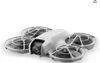
A 135g lightweight drone for aerial shots of a ruin or a sprawling haunted spot from angles you can't reach on foot. Built-in propeller guards make it relatively safe to fly indoors, and its subject-tracking feature can follow the exploration automatically, giving more range to the visuals in a YouTube verification video.
DJI Neo Drone with Camera, 4K UHD Camera, Compact Drone, Aircraft Only
We may earn a referral fee on purchases made through these links.
How to Read Our “Dream Interpretation (Keyword Dictionary),” and How It Works
From here we tell you exactly how our tool actually works. Knowing the mechanism lets you understand “why no result came up” and “why an unexpected card appeared,” so you can use the dictionary well.
What you enter, and what is not used
There is only one input box: “Keywords of the dream you saw (a sentence is fine too).” As an input example, “Snake, teeth falling out, I was scared when chased by a white snake” is shown. You may enter a single word or write the dream just as you saw it as a sentence. Words of feeling such as “I was scared” and “I was happy” are used in the reading of the whole sentence. Birth date, time of birth and gender are not used.
What it contains
It contains 2,527 kinds of dreams (as of September 2026). Common dreams, such as “a dream of being chased by a snake” and “a dream of a red snake,” are also recorded separately by scene. Each dream has registered the phrasings used for searching in Japanese and English (variations in notation, such as kanji, hiragana and katakana). The interpretations are compiled in our own words, based on psychological thinking and folklore of Japan and the world. The dreams are divided into the following 29 categories.
- Ghosts and spiritual / Japanese yokai / Urban legends and internet ghost stories / Overseas monsters and myths / Strange phenomena and mysteries
- Regional lore and folktales / Names of gods and buddhas / Gods of world mythology / Omens and auspicious dreams
- Love and sex / Money and luck / Emotions and states of mind / People and human relations / School and youth / Life milestones
- Body and health / Actions and events / Animals and living things / Nature and weather / Places and buildings
- Objects and tools / Home appliances and daily goods / Gems and natural stones / Numbers and days of the week / Seasons and the 24 solar terms / Occupations / Sounds and voices / Vehicles / Food
For each category there is also an explanatory page summarizing how to read those dreams. You can open it from “How to read dreams by category” under the dream interpretation page.
How keywords are found (the matching rules)
It compares the words you entered against the dream names, search phrasings and readings in the dictionary, picks up every dream that fits, and lines them up from closest. The order of closeness is: (1) those whose name or phrasing is exactly the same as the input; (2) those whose phrasing is contained in the sentence you entered (for example, an entered sentence about being bitten by a snake matches “Dream of being bitten by a snake”); (3) those in which the input is contained in the dream’s name (an entered word for “snake” in another script matches dreams about snakes); and (4) those in which the input is contained in the explanation. If a sentence contains a dream that matches in more detail, a shorter match (such as “snake” for a sentence about being chased by a snake) is left out. Upper and lower case in English letters are not distinguished, and in English it does not react in the middle of a word (for example “scar” in “scared”).
When nothing is found, “No dream containing (the word you entered) was found. Try entering a memorable scene again in a short word (such as ‘snake’ or ‘chased’), or look through the list below.” is shown, and a box for reporting a dream that is not in the dictionary opens. Words that were not found are recorded, in a form that does not identify individuals, as a reference for expanding the dictionary. If you press it without entering anything, “Please enter keywords of the dream you saw.” is shown.
What appears on the results screen
- Card heading: the dream’s name, such as “Snake dream,” and the English subheading “DREAM DICTIONARY.”
- Marker of good or bad omen: which of five: “◎ Auspicious dream,” “▲ Leaning inauspicious (a sign to take care),” “◇ Good or bad depends on the scene,” “▽ There is a tradition of a reverse dream,” “○ A dream that reflects the mind.”
- Interpretation text and category: a short sentence on how that dream is generally read, and which of the 29 categories it belongs to.
- If it was this scene: readings by scene, such as approaching, attacked, colour and how you felt in the dream.
- Read this dream more deeply: four readings, “From a psychology viewpoint,” “Folklore and history,” “Our reflections” and “What you can do on the morning you wake.”
- Yumetagae: for dreams that show a sign of caution, we add an old tradition for changing a bad dream toward the good, and a psychological way of coping.
- Link to a detailed explanation page: for each dream there is an explanation page, one per dream, that also gathers frequently asked questions and dreams of the same category.
- Reading of the whole sentence: a summary of how to read the whole when several dreams overlap.
- A button to save or share the result as an image. The image is made inside your own device and is not sent anywhere.
- Note: one sentence, “Dream interpretation is an interpretation for entertainment based on psychology and folklore, and has not been scientifically proven.”
Members can keep the dreams they see in a “dream diary.” As records grow, readings of recurring dreams and rhythms of the mind open up.
Quirks and limits of the dictionary worth knowing
This method has several quirks. Knowing them beforehand makes it easier to use.
- It may not come up depending on the wording: because it is a method that reacts to registered phrasings and notation variations, unusual expressions and dialect may not bring anything up. For example, a phrasing such as “I dreamed someone died,” which does not say what died, does not connect. Entering it concretely, such as “I die” or “a person who died,” brings it up.
- Short words react broadly: if you enter just “water,” dreams that contain that character, such as a dream of a water baby (Mizuko), a crystal ball, and Wednesday, are lined up along with water dreams. The more you include the scene, as in “muddy water” or “water overflowing,” the more it narrows.
- It contains 2,527 kinds: it contains many dreams, but not every dream is in it. If you cannot find a dream, please tell us from the report box.
- The dreamer’s situation is not reflected: what the dictionary gives is only “how it is generally read” and readings by scene. It cannot give an interpretation tailored to your occupation or human relations.
These limits are also the fate that a dream-interpretation dictionary has inherently carried. This is because, as Artemidorus pointed out about 1,800 years ago, the meaning of a dream changes with the person who saw it. Please use the dictionary as an aid to that first step.
Person A’s case: Because the sentence Person A entered, “My teeth fell out, and I was chased by a snake,” contained the dictionary’s phrasings for “teeth fell out,” “chased by a snake” and “chased,” three cards appeared. Since “chased by a snake” is a more detailed match than “snake,” “Dream of being chased by a snake” appeared rather than “Snake dream.”
Person B’s case: Because the sentence Person B entered, “I was flying in the sky,” matched the dictionary’s “flying in the sky,” one card, “Dream of flying in the sky,” appeared.
Reading 18 Classic Dreams with a Historian’s Eye
Of the dreams in our dictionary, we sort out 18 classic ones that are especially often spoken of in dream interpretation, together with the rough direction of their interpretation. The interpretations gather the shared core of several dream-interpretation sources, and every item carries the premise that “the reading changes with the situation of the person who saw it.”
- Dream of teeth falling out: a classic said to be a sign of worries and stress. For someone in a hard situation it can also be read as a sign of improvement.
- Dream of being chased: said to be a sign of a cornered feeling or a problem you are not facing.
- Snake dream: a two-sided symbol, said to be an auspicious sign of life force, rebirth and money luck, while a dream of being bitten is also said to warn about health.
- Water dream: a symbol reflecting the state of the mind. Clear water is said to mean stability and rising, muddy water a caution about disorder.
- Dream of flying in the sky: ambition and longing for freedom. The reading splits by whether you can fly well.
- Dream of your own death: looks ominous, but is often said to be an auspicious dream meaning not an end but rebirth and a new beginning.
- Dream of falling from a high place: said to be a warning dream that tells of pressure and stress.
- Dream of a fire: a symbol of “change” that burns the old and lets it go. It is a dream whose good or bad readily reverses by circumstance.
- Dream of an earthquake: said to foretell a great change in life, and to call for special caution when seen repeatedly.
- Dream of a wedding: not a prediction of an actual marriage, but said to express a turning point in life and a wish for stability and recognition.
- Dream of being pregnant: a symbol of new possibilities and the budding of talent. Said not to foretell an actual pregnancy.
- Dream of a toilet: a symbol of “purification,” letting go of the unneeded, and rising money luck. The reading changes by whether it is clean.
- Dream of getting lost / losing your way: hesitation about the direction to go. Said to be a sign of a time to stop and reconsider.
- Dream of being late: said to express impatience, pressure and anxiety about lack of preparation.
- Dream of a ghost: a symbol of “anxiety.” Said to be a hidden true feeling, fatigue or unresolved emotion changed in form.
- Dream in which a dead person appears: often said to be not ominous but an expression of a message from, or watching over by, the departed.
- Dream of losing your wallet: said to warn against waste, and also read as a reverse dream, a sign of improving money luck.
- Dream of a mirror: a symbol of facing your own inner self. A spotless mirror is said to be a sign that your judgement is in the right direction.
Some of you may have noticed it. Many items, such as “teeth falling out,” “fire,” “losing your wallet” and “being pregnant,” carry room for the reading to reverse, such as “a sign of improvement if the dreamer is in a hard situation” or “auspicious as a reverse dream.” This is a major feature of dream interpretation, and it connects to the Japanese idea of the “reverse dream.”
Quick Glossary of Dream Interpretation Terms
Here is a one-line summary of the people and books that appeared in the history chapters.
- Artemidorus: a Greek dream interpreter of around the 2nd century. Author of the five-book Interpretation of Dreams (Oneirocritica). He taught that the meaning of a dream changes with the dreamer’s background.
- Chester Beatty Papyrus III: an ancient Egyptian dream book, said to be a manuscript of around 1220 BC. It records “good” or “bad” for each dream scene.
- Ishkar Zaqiqu: a Mesopotamian (Assyrian) book gathering dream omens.
- Zhouli and Zhanmeng: an office for divining dreams in the Chinese classic the Rites of Zhou. It divined the good and bad omens of six dreams.
- Zhou Gong Jie Meng (Zhou Gong Jie Meng Quanshu): a Chinese dream-interpretation book that borrows the Duke of Zhou’s name. Its real author and date of composition are not clear.
- Yumeawase / Yumetoki: divining the meaning of a dream, or the person who does. Used since the Heian period.
- Yumetagae: performing a charm so that a nightmare does not come true.
- Yumetagae Kannon: a Kannon statue of the Hakuho period at Horyu-ji Temple in Nara (a National Treasure). There is a tradition that it turns a nightmare into a good dream.
- Hatsuyume: the first dream of the new year. Known for the treasure-ship picture and the custom of “Ichi Fuji, Ni Taka, San Nasubi.”
- Freud: the founder of psychoanalysis. In The Interpretation of Dreams he thought of dreams as expressions of repressed wishes.
- Jung: a person who left Freud and built his own psychology. He treated dreams as related to the collective unconscious and archetypes.
- REM sleep: the stage of sleep in which the eyeballs move rapidly. Discovered in 1953, and said to be the time when dreams mainly appear.
- Nightmare disorder: a sleep problem in which frightening dreams recur and affect mood and daily life. It is an object of treatment.
How Is Dream Interpretation Used Today?
In present-day Japan too, dream interpretation is a popular genre. Books, magazines, apps and countless websites offer dream dictionaries. The meanings of dreams are sometimes introduced on morning information programmes. On social media we often see the scene where a post saying “I had a weird dream” gets the reply “I hear that’s a sign of…”.
In psychological counselling there is a method of using the content of dreams as a trigger for noticing your own feelings. However, when a specialist does it, it differs from a way of deciding meaning with a dictionary. They listen closely to the dreamer’s story and search together for the meaning it has for that person. This connects with the stance of Artemidorus and Jung.
On the other hand, caution is needed with uses that stir up anxiety by asserting illness, accidents or someone’s life or death from the content of a dream alone. We have found no established research that scientifically backs the idea that having a dream causes or predicts anything in reality.
Five Tips for Enjoying Dream Interpretation
- Jot it down as soon as you wake: Dreams tend to fade the moment you wake. Keep a notepad or smartphone by your pillow and write down, in short words, even just the memorable scenes.
- Write not only the scene but the “feeling”: Was it scary, happy, embarrassing? Even for the same scene, the meaning changes greatly with the feeling you had.
- Turn the dictionary’s words into “questions”: If it says “a sign of stress,” ask yourself, “Have I been feeling stress lately?” If it does not apply, feel free to let it go.
- Even if a bad reading comes up, remember the reverse dream: Even if a bad reading appears, it is fine to shrug it off with “it may be a reverse dream” or “it has nothing to do with me now.” Japanese dream interpretation originally came together with ways to let go of nightmares skilfully.
- Recurring dreams are a chance to look back on your life: When you see the same dream many times, it can be a hint to review recent life rhythm, sleep and stress.
Reflection: Why Do People Keep Seeking Meaning in Dreams?
From here, rather than summarizing history and mechanism, we look at dream interpretation in our own way. We should say in advance that this is not established theory, only our speculation and hypotheses.
Artemidorus’s homework: why must a dictionary be turned into “questions”?
Our dictionary is a method that shows an interpretation for each dream. We add readings by scene, but the basic idea is the same. Yet Artemidorus, about 1,800 years ago, taught that the same dream changes meaning with the dreamer’s occupation, health, status, habits and age. In fact he himself also wrote a “dictionary”-like book covering motifs. In other words, while making a dictionary, he knew that “a dictionary alone is not enough.”
In our view, this contradiction is the essence of dream interpretation. A dictionary is only a starting point. The words written there, “a sign of stress,” serve not as an answer but as a prompt for asking the question “How are you now?” Even for the same tooth dream, the realities that come to mind for a student before exams, an office worker thinking of quitting and a person caring for family would be completely different. From the moment you use the dictionary’s one line as a clue to picture your own reality, that dream first becomes an interpretation of “your dream.”
The “addressee” of dreams moved from gods to individuals
The god Omononushi who appeared in Emperor Sujin’s dream told him how to quell the plague. The addressee of the dream was not so much the emperor as an individual, but the state and its people. What Joseph of the Old Testament interpreted was also a king’s dream, one concerning the country’s famine. In ancient times a dream was not an image of an individual’s inner life but a “public message” tied to the fate of the community.
In the Heian period, dreams were written down in aristocrats’ diaries in large numbers as personal events. Even so, it was the specialist, the Yumeawase, who decided the meaning of a dream. And when Freud appeared in the 20th century, dreams were at last treated as “something born from that person’s own mind.” This is speculation, but the shift of the dream’s addressee from “gods and the state” to “each individual” seems to overlap with the history of humans coming to value their own inner life. When we now think, “What is my dream saying to me?” that is also a new way of seeing that we have won over thousands of years.
A cultural device to make a nightmare “harmless”: from Yumetagae to today
A great feature of Japanese dream interpretation lies in how it faces nightmares. When you have a bad dream, you perform the Yumetagae charm. You float a treasure-ship picture down a river to set the luck right. You pray to the Yumetagae Kannon. All of these are supported by the idea that “a bad dream does not have to become reality.”
In our view, this was an excellent piece of wisdom for entrusting fear to a ritual and letting it go. It is hard to have a nightmare and go through the day carrying the anxiety as it is. But if you can think “I performed the charm, so it will be all right,” the heart becomes somewhat lighter.
In modern medicine too, for people troubled by recurring nightmares there is a treatment called “imagery rehearsal therapy,” in which one rewrites the plot of the nightmare into a positive ending and practises it in one’s head. This is speculation, but it seems to resonate somehow with the idea of Yumetagae, “shifting a bad dream into a good one.” People of old tried to rewrite dreams with the power of words and charms. Although the methods differ, the intuition that “a dream is not only something you passively see but something you can handle” may be shared.
The same dream of “death” reverses by era and place
In the ancient Egyptian dream book, “a dream that you are dead” was judged “good (a long life awaits).” In our dictionary too, the “dream of your own death” is an auspicious dream meaning not an end but rebirth and a new beginning. The reading of a death dream as auspicious is shared across a gap of more than 3,000 years.
On the other hand, what about the “mirror”? In the Egyptian dream book, dreaming of seeing your own face in a mirror was “bad (you will take another wife).” Yet in our dictionary it is a “symbol of facing your own inner self,” and a spotless mirror is a sign that your judgement is in the right direction. Even for the same motif, the meaning differs greatly.
In our view, this shows that the meaning of a dream lies not in the “motif itself” but on the side of the life and values of the person who reads it. It may be because marriage and family matters were great concerns in daily life for the ancient Egyptians that the mirror was tied to such a meaning. A dream-interpretation dictionary is also a “mirror of culture,” reflecting what the people of that time worried about and wished for.
Between dreams and ghost stories: the old pattern of “standing at the pillow”
When you collect ghost stories and tales of the supernatural, you notice how many stories have a dream as their stage. Stories in which a dead person appears in a dream and tells something, known as “standing at the pillow (Yumemakura ni tatsu),” are a representative pattern. The scene in the Kojiki in which the god Omononushi appeared in Emperor Sujin’s dream and said, “The plague is my will,” is, from one viewpoint, one of Japan’s oldest “standing at the pillow” tales, and also a tale of a curse.
Our dictionary introduces the “dream in which a dead person appears” as “often said to be not ominous but an expression of a message from, or watching over by, the departed,” and says that, when seen repeatedly, it is also said to be a sign of the process of accepting the person’s death and the heart settling. This is speculation, but for people facing grief, the experience of meeting the departed in a dream may often have had the meaning of consolation rather than fear. That a “pillow visit” in a ghost story becomes frightening may be because the teller and listener carry the tension that “we might be cursed.” Depending on whether you bring fear or consolation to it, the same dream becomes a completely different story.
When you “solve” a dream, the dream can be “remade”
Finally, one hypothesis of ours. After you look up the meaning of a dream in the dictionary, doesn’t the memory of that dream change a little? A person who has read that “a tooth dream is a sign of stress” will next time recall that dream as a story of stress. Interpretation dyes the memory of a dream in the colour of the interpretation.
We do not think this is bad. Rather, it is by telling and interpreting dreams that we first make them “our own story.” The Heian aristocrats who had their dreams divined, and the people who wrote dreams in their diaries, surely did the same. We think dream interpretation is a culture that gives us a shared language less for hitting the dream than for retelling it.

High-brightness glow tape to stick at an entrance or fork in the path as a marker back out of a ruin or cave with no lighting. It absorbs sunlight or flashlight light and glows for 6–8 hours in the dark, needing no battery, helping prevent anyone from getting lost.
LTI Alpha Flash High-Brightness Glow Tape (10mm x 1m) AF1001
We may earn a referral fee on purchases made through these links.
Cautions When Engaging with This Divination
This article and our “Dream Interpretation (Keyword Dictionary)” are offered as entertainment and a hint for self-understanding, and do not guarantee any result. They are not a substitute for important decisions in medicine, law, investment, education, employment, marriage and so on. Please make such decisions yourself after consulting specialists or people you trust.
If you keep having nightmares, are afraid to sleep because of them, or your daytime mood, work or studies are affected, we recommend consulting a medical institution (a sleep clinic, psychiatry, psychosomatic medicine and so on) rather than dream interpretation. A sleep problem of recurring nightmares is called “nightmare disorder,” and improvement can sometimes be expected with treatment. If nightmares continue along with memories of painful events, please do not bear it alone; consult a specialist.
If you see a dream such as “your own death” or “a dead person,” and your anxiety grows or painful feelings continue in reality too, please do not hold it alone; consult someone close to you or a specialist service. There are counselling services such as Japan’s Yorisoi Hotline (0120-279-338, free counselling, 24 hours).
Illness, accidents or someone’s life or death cannot be asserted from the content of a dream. If anyone stirs up anxiety, saying “If you see this dream you will become unhappy” or “expensive prayers or purification are needed,” and urges you to buy readings, prayers or luck-boosting goods, please do not decide on the spot but take it home and think calmly.
The historical descriptions in this article are compiled in our own words from several sources. Especially for people and dates of ancient times, descriptions differ by source. The parts marked “our view” or “speculation” are our own reflections and are not established theory.
FAQ
Q. What is dream interpretation?
A. It is a divination that holds that the people, animals, places and events that appear in a dream have meaning, and reads from them the present state of the mind and coming fortune. It has a long history in many parts of the world, including ancient Mesopotamia, Egypt, Greece, China and Japan.
Q. Does dream interpretation come true?
A. We have found no established research that scientifically backs the idea that the content of a dream predicts reality. We introduce it as a chance to look back on your own feelings and situation, within the range of entertainment and a hint for self-understanding.
Q. How do a true dream and a reverse dream differ?
A. A true dream is one whose content happens in reality just as dreamed. A reverse dream is one whose content and reality turn out opposite. There is no reliable way to tell beforehand which it will be, and the reading that “a bad dream may be a reverse dream” has long been familiar.
Q. If I have a bad dream, is it ominous?
A. In dream interpretation, a bad dream does not necessarily mean something bad as it is. There are also the ideas of “reverse dreams” and “Yumetagae,” and our dictionary too has items that can be read as signs of improvement depending on circumstances. Please don’t worry excessively; use it as a chance to settle your feelings.
Q. What does a dream of teeth falling out mean?
A. In our dictionary it is a classic dream-interpretation motif said to be a sign that worries and stress are building up. However, when someone already in a hard situation sees it, it is also said to turn into the positive meaning that things will soon improve.
Q. Is a dream of my own death unlucky?
A. It looks ominous at first sight, but in dream interpretation it is often said to be an auspicious dream meaning not an end but “rebirth and a new beginning.” It is also said to be a sign that your present worry is heading toward resolution. If your anxiety is strong, please do not hold it alone; consult someone close to you or a specialist service.
Q. I dreamed of a dead person. Does it mean anything?
A. In our dictionary it is a dream often said to be not ominous but an expression of a message from, or watching over by, the departed. When seen repeatedly, it is also said to be a sign of the process of accepting the person’s death and the heart settling.
Q. Why do I keep seeing the same dream?
A. The reason we dream is still not fully understood scientifically. In dream interpretation, a repeated dream is sometimes read as a sign of something on your mind or a problem you want to face. It may also be a chance to review your stress and sleep.
Q. I don’t remember my dream. Can it still be read?
A. Our dictionary is a method in which you enter the scenes you remember as words or a short sentence. There is no need to worry if you don’t remember the dream. Making a habit of jotting it down right after you wake can help you remember more scenes.
Q. Does the meaning of a dream differ by person?
A. Yes, it is thought to. Artemidorus, the Greek dream interpreter of the 2nd century, stated that even the same dream changes in meaning by the dreamer’s occupation, health, status, habits and age. The dictionary is only a guide: “generally it is read like this.”
Q. The dictionary can’t find it and no result appears.
A. Please try entering it again in a short word, or change the notation (kanji or hiragana). Sentences such as “I fell off a cliff” or “my late grandpa” bring up near dreams, but there are dreams that are not even in the 2,527-kind dictionary. In that case, please tell us from the report box below the result, “I saw this kind of dream.” We will write a reflection and add it to the dictionary bit by bit.
Q. When is the dream called Hatsuyume seen?
A. There are various theories. In literature it is said to first appear in the Kamakura-period Sankashu, and at that time it seems to have meant the dream seen on the night from Setsubun to the start of spring. In the Edo period three theories appeared: the night from New Year’s Eve to New Year’s Day, from New Year’s Day to the 2nd, and from the 2nd to the 3rd.
Q. How do Freud and Jung differ about dreams?
A. Freud thought of dreams as repressed wishes appearing in altered form. Jung saw dreams as also containing images that arise not only from individual experience but from the foundation of the mind common to humankind, and valued the stance of exploring meaning while conversing with the dreamer, rather than deciding meaning with set symbols.
Q. What should I do when nightmares are painful?
A. If you keep having nightmares, are afraid to sleep, or your daytime life is affected, please consult a medical institution such as a sleep clinic, psychiatry or psychosomatic medicine. There is also a treatment in which you practise rewriting the plot of a nightmare positively. We recommend borrowing a specialist’s help rather than trying to solve it with divination.
Q. Is our dream interpretation free to use?
A. Yes. You can use it for free just by entering words or a sentence about the dream you saw. There is no need to enter personal information such as a birth date.
Related Divinations Worth Trying Together
Like dream interpretation, these are divinations that turn your eyes to the depths of the mind and to unseen signs. Comparing them lets you look at your inner self from various angles.
For those who want to read more deeply
These are articles that dig into the same theme from another angle.
- Explainer article on past-life divination
- Explainer article on spiritual sensitivity
- Explainer article on meditation
Sources Consulted
This article was compiled with reference to the following sources, in our own words (it is not a copy of their text). The worked examples of “Person A” and “Person B,” the number of dreams contained in the dictionary, and the words that do and do not bring up results are results we confirmed with our “Dream Interpretation (Keyword Dictionary)” tool (as of September 30, 2026).
- Dream divination – Wikipedia (Japanese)
- Dream interpretation – Wikipedia
- Oneirocritica – Wikipedia
- The Egyptian Dream Book and the Scribe Who Kept It – Spoken Past
- Rites of Zhou, Chunguan Zongbo – Chinese Text Project
- Zhou Gong Jie Meng Quanshu – Wikipedia (Japanese)
- Outline of the Kojiki – Kokugakuin University Classical Culture Project
- “Is believing it really wise?” Dreams and the people of the Heian period, as Fujiwara no Sanesuke also remarked – WAraku web
- Daihozoin Hall (Kudara Kannon Hall) – Horyu-ji Temple, head temple of the Shotoku sect
- Hatsuyume – Wikipedia (Japanese)
- Dream – Wikipedia (Japanese)
- Nightmare disorder – Wikipedia
At Suzuking.’s KARASU CHANNEL, we publish investigation videos on ghost stories and haunted places on KARASU CHANNEL (YouTube).
Supervised by Ms.M
Affiliation: KARASU CHANNEL
Traditions studied: 12+ (Western astrology, Four Pillars of Destiny, Nine Star Ki, tarot, runes, palmistry & physiognomy, name numerology, numerology, feng shui, Vedic astrology / Zi Wei, Onmyodo, spiritual reading, and more)
Personal readings: by request via Contact,
currently booked years out
Which story do you find the scariest?
If you think this story is the scariest, press the button below. One vote site-wide — you can change your vote for a different story anytime.
Was this article helpful?
Add this to your favorites to find it again anytime from your My Page.

Comments